Baz Luhrmann

  • Romeo + Juliet (1996)

    Romeo + Juliet (1996)

    (On DVD, March 2017) Going into Romeo + Juliet, I only knew two things: I usually like director Baz Luhrmann’s work (I usually love the first half-hour of his movies); and I have a lot of trouble with Shakespearian dialogue. Despite my best intentions, I bounced off hard from the recent contemporary reimagining of Coriolanus and Much Ado About Nothing: my brain can’t process that language even with subtitles to help. In that context, Romeo + Juliet’s central conceit, to reimagine Shakespeare’s best-known romantic play with the same dialogue but in a mid-1990s Californian-ish context with warring crime families using fancy guns rather than swords, seemed like courting trouble. Fortunately, Luhrmann’s typical verve was enough to get me over the initial hump. The opening sequence of the movie not only indelibly imprinted IN FAIR VERONA in my mind, but was stylish and action-packed enough to get me interested in the (more sedate) rest of the film. Leonardo DiCaprio is fine as Romeo, while Claire Danes makes for a fair wide-eyed Juliet. Able supporting presences by actors such as John Leguizamo, Pete Postlethwaite and Harold Perrineau (plus a very young Paul Rudd) complete the already wild portrait. Add to that Luhrmann’s usual energy and visual flair and the Shakespearian dialogue becomes far less important—knowing the basic beats of the classic story means that we’re free to appreciate the adaptation rather than the words, and so Romeo + Juliet comes alive. While much of this energy dissipates in the latter half of the film, there are enough elements of interest in the modernization of the story (complete with car chases, helicopters and news media commentary) to keep watching until the end. As pure piece of style, this is a film that is both precisely dated in mid-nineties aesthetics yet timeless because of them. It’s breathless, witty, just sappy enough to qualify as a true version of Romeo and Juliet, and an experience in itself. Maybe I’m getting ready to take another look at Coriolanus and Much Ado About Nothing

  • Batman Returns (1992)

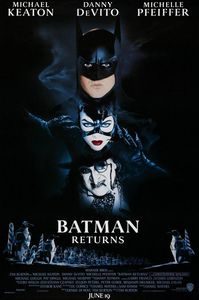
    Batman Returns (1992)

    (Second Viewing, On Cable TV, June 2016) Significantly darker and grimmer than its 1989 predecessor, Batman Returns is at once more frustrating than Batman while being better in some regards. Director Tim Burton is back and obviously has more confidence in his ability to use the character’s mythology to serve his own pet obsessions. Adding two villains works well, although Michelle Pfeiffer’s iconic Catwoman is far more interesting than Danny DeVito’s Penguin. While Batman had a straightforward hero-versus-villain structure, this sequel mixes the cards a bit with additional villains and allies, gets going into heavier themes of abandonment and social validation (Daniel Waters wrote the script!), and seems far more comfortable in its cinematography than the previous film. Alas, some moments don’t work as well: At least twice (the nose bite, the death of the beauty queen, arguably the sad conclusion), the film gets significantly too dark for its own good and wastes some of the viewer’s best intentions. Some rough CGI work is fascinating, but decisively date the film. Still, the set design is arresting, the film moves briskly from one plot point to another, offering a few high points (such as the Masquerade Ball) and smaller rewards from beginning to end. Christopher Walken has a great villainous role, while Michael Keaton remains better than more people remember at Batman/Bruce Wayne. In context, it would take another twelve years (and a superhero wave of movies kicked off by 2000’s X-Men) until Batman got any better on the big screen. Hey, I remember seeing Batman Returns in theatres with friends, back when I actually started going to the movies (which, given that the nearest theatre was twenty kilometres away, was a significant endeavour for a small-town teenager). I can still echo the TV/radio ads: “The Bat, the Cat, The Penguin!”

  • Australia (2008)

    Australia (2008)

    (On TV, July 2015) I probably could have written the following review without seeing Australia, so consistent is director Baz Luhrmann when he gets to work: Fantastic visual style, great performances by the lead actors, a bit of an underwhelming script and a sense of excess that overflows from every frame.  As it turns out, that’s an accurate assessment: This take on World-War-Two northern Australia is every bit as lush and excessive as we could expect it from the creator of Moulin Rouge!  Nicole Kidman is radiant as a widow taking on her deceased husband’s ranch, running against cattle barons trying to take it from her, but meeting a charming cattle driver played by the always-photogenic Hugh Jackman.  Thematically, Australia is more concerned about aboriginal exploitation, spending a lot of time fretting over a young boy’s problems as he’s taken away from the ranch.  Still, this is all an excuse for razzle-dazzle epic, perhaps none more over-the-top than the cliff-side stampede.  To its credit, Australia is about show and spectacle, and there’s definitely a place for that kind of stuff.  The landscape is impressive, and shot in consequence.  Less fortunately, this tendency toward excess can lead to unchecked lengths and meandering storytelling – and yet, for a movie so grandiosely titled, Australia doesn’t always feel as epic as it should be.  It’s not as innovative as it could have been either, as Luhrmann giving a lot of energy trying to re-create familiar sequences.  Still, it’s decently entertaining –often on the sole basis of its wide-screen ambition.  I suppose that it could have been worse –at least we get almost exactly what we expected from the film.

  • The Great Gatsby (2013)

    The Great Gatsby (2013)

    (Video on Demand, September 2013) As a certified Moulin Rouge fan, I had been waiting a while for Baz Luhrmann to return to the same overblown wide-screen film style.  Fortunately, the wait is over: The first half of his adaptation of F. Scott Fitzgerald’s The Great Gatsby is crammed with visual excess, lush 3D cinematography, frantic energy and flashy camera work.  As a way to portray the excesses of the Roaring Twenties (along with a not-so-anachronistic hip-hop soundtrack), it works splendidly and I can see myself gleefully revisiting that part of the film before long.  The film reaches an apex of sorts as it magnificently introduces the titular Gatsby (a perfectly-cast Leonardo DiCaprio) with fireworks and a wink.  Toby Maguire makes for a good everyday-man audience stand-in through this madness and the film eventually calms down during its increasingly somber second half as the true themes of the story play out and reach their tragic conclusion.  Luhrmann is the real star of The Great Gatsby, but the actors he brings on board all have their chance to shine.  I’m not a fan of Casey Mulligan, but she couldn’t have been better that she is here as a flapper; Joel Edgerton also does well as he goes toe-to-toe with DiCaprio.  As an adaptation, the film faithfully keeps the plot, overplays the symbolism, dispenses with a few subtleties, adds a framing device that’s not entirely useless and provides enough of a thematic slant on the material to keep fans of the book arguing in depth about intended meaning.  On a surface level, The Great Gatsby is well worth-watching for its visual sheen (especially its first 30 minutes): this is an indulgent, no-budget-limits style of filmmaking that I enjoy tremendously, and as a way to present a classic curriculum novel, it’s invigorating.

  • Batman (1989)

    Batman (1989)

    (Second viewing, on DVD, June 2009): With the critical and commercial success of Christopher Nolan’s Batman Begins and The Dark Knight, it’s becoming easier to forget about Tim Burton’s reinvention of the character, before it slid once again in franchise-killing high camp during the Joel Schumacher years. And that’s a shame, because despite some increasingly dated aspects, Batman still keeps an operatic grandeur that resonates even today. The story is thin and eighties-fashion still peeks through the self-conscious blend of historical references, but the entire film remains intriguing. Health Ledger may have taken over the Joker’s look, but Jack Nicholson’s take on the character remains magnetic. Only an underwhelming finale falters visibly: While everyone remembers the Batman/Joker showdown in the streets of Gotham, fewer will recall the following sequence taking place in a cathedral. Two decades after the film’s release, the special edition DVD can afford to be candid about the film’s rushed production, last-minute producer-driven script changes and casting choices. Alas, director Burton’s commentary track could have benefited from judicious editing: His “you know?”s start grating early on and never fade away.

    (Third viewing, On Cable TV, June 2016) I hadn’t watched Batman in more than ten years, but another look was more than warranted given rapid evolution of superhero movies since then. Tim Burton’s Batman turns out to be a significant step in the evolution of Batman’s movie portrayal from sixties silliness to Nolan’s grimmer portrayal. It’s certainly trying to be more serious, but it can’t completely manage it. It doesn’t help that Burton’s vision for his characters (and particularly the joker) is so colourful and exuberant: it’s tough to keep a straight face at what Jack Nicholson pulls off in his completely unrestrained performance. Otherwise, it’s fascinating to see in here the seeds of the modern superhero blockbuster, albeit with pre-digital effects, restrained cinematography and somewhat more silliness. (Not included in the movie, but far more important, are the media tie-in and marketing effort surrounding the film, which I remember more than the movie itself) Michael Keaton is better than anyone may remember as Bruce Wayne/Batman, while Kim Basinger is spectacular as Vicki Vale. The ending is a bit dull (the Joker shooting down the batwing is memorable, but the subsequent cathedral sequence isn’t), but there are enough good scenes along the way to make it worthwhile. It’s probably impossible to overstate Batman’s impact on the modern blockbuster industry, but there’s actually a worthwhile film underneath the hype.

  • Moulin Rouge! (2001)

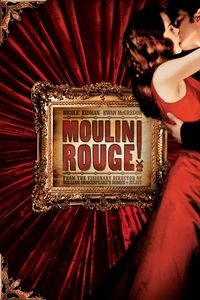
    Moulin Rouge! (2001)

    (In theaters, September 2001) As someone who sees nearly a hundred films per year, it’s often difficult to justify seeing so many when so many of them are just crap. Then comes the odd one-in-a-hundred moment, the one that is so good, so original, so perfect that it fully justifies the rest of the dreck in theaters. That moment is the highlight of Moulin Rouge!, the introduction of the nightclub and of the Satine character, a raucous musical number featuring and blending “Diamonds are a Girl’s Best Friend”, Madonna “Material Girl”, Nirvana’s “Nevermind”, the latest “Lady Marmalade” remix and a brand-new Fatboy Slim track. You have to see it and hear it to believe it. But don’t be surprised to find yourself stuck with a silly grin during the first half of Moulin Rouge!, even occasionally shaking at how good it is. A triumphant revival of the musical with an initial hyperkinetic approach reminiscent of Fight Club, this is one unique film, a jewel in the rough for everyone who loves movies and pop songs. Gleefully using twenty-five years of pop music like a toolbox to tell his story, writer/director Baz Lurhmann does things with the raw material that will leave you breathless at his audacity. Postmodernism at its best. Top-notch editing, a wonderful screenplay and excellent musical talent will leave you gasping for more. Granted, the second half of the film is more dramatic, less impressive than the first half, but that first half is likely to be the best thing you’ll see in 2001. Even the dependence on raw sentimentalism works to some degree. Don’t miss Moulin Rouge!

    (Second viewing, On DVD, August 2002) Wonderful stuff any way you choose to see it. Boffo set designs, exceptional music, enjoyable acting and some dynamite movie moments. It doesn’t stop, and you’ll wish it never did. The DVD is stuffed with an embarrassing amount of extras, commentaries, on-set documentaries and oodles of other fun stuff, such as co-writer Craig Pearce discussing an early draft of the script which contained a character called “Baron von Groovy”. (I want to see that film!). Warning, though: While the audio commentaries are great, the film perceptibly loses a lot of its impact stripped of the music, which makes the completely-muted commentary track a very curious choice from the DVD makers (as opposed to a track where the audio plays at a greatly reduced volume throughout.) I still think it’s a fantastic film.

    (Third Viewing, On Blu-ray, November 2021) I’ll admit it – in choosing what movies to rewatch, I will give precedence to decent films with good set-pieces, but shy away from amazing movies – what if they’re not as good as I remembered them? It took me a while to get back to Moulin Rouge: Nothing could possibly match my over-the-top reaction to viewing the film’s first half-hour for the first time, which pretty much ignited my fascination with movie musicals. The music! The colours! The pacing! I was not expecting a second look to come close to that, especially after watching a few hundred musicals in the interval. Well, improbably enough, a rewatch does come close to recapturing the magic of the original viewing: Twenty years later, Baz Luhrmann’s Moulin Rouge is as vibrant, joyful and exhilarating as it was meant to be. The fizzy blender mix of 1990s pop songs remixed against a backdrop of 1900s Paris is still remarkably effective, and carries quite an audio-visual punch. It’s good enough to make even a cynic like myself embrace the film’s refreshingly uncool credo of “Truth, Beauty, Freedom and Love.”  It’s all high-gloss romanticism, and it’s worth indulging into the film’s unabashed mawkishness. The music is terrific, even though I remembered a few moments wrongly after multiple reruns of the soundtrack:  Fatboy Slim’s “Because we Can-Can” is a mere snippet in the film, and my memory completely failed me in remembering that the anthemic “Lady Marmelade” cover barely makes up a few seconds in a much more expansive number. (Conversely, the “Lady Marmelade” music video is well worth rewatching a few times, but it doesn’t include a single snippet of the film.)  Fortunately, the music numbers make the film: “Zidler’s Rap Medley” is frantic, while “The Pitch” is hilarious and “El Tango de Roxanne” heartbreaking. Ewan MacGregor and Nicole Kidman have taken a few hits over the years for their vocal performance here, but they are honestly giving it everything they’ve got in addition to their acting, and I prefer this authenticity to autotune or being dubbed by others. I may not have loved the result as much as I did in theatres twenty years ago, but Moulin Rouge hasn’t aged all that much, nor lost most of its effectiveness – if anything, it exceeded my pessimistic expectations on a re-watch: it’s still one of my top musicals of all time (OF ALL TIME!) and I may revisit it more frequently knowing that it doesn’t dull too much on a re-watch.