David Yates

  • Fantastic Beasts: The Secrets of Dumbledore (2022)

    (On Cable TV, June 2022) I am not convinced at all that there’s anyone competent at the helm of the “Wizarding World” franchise. Not writer J. K. Rowling, clearly unable to keep the story straight now that she’s out of the Harry Potter cycle. Not perennial series director David Yates, who can helm efficiently but is unable to improve the material he’s given. And certainly not the executives at Warner Brothers mismanaging yet another franchise into the ground. How else to explain the zig-zags and multi-level inconsistencies to plague even a trilogy with the same creative people? The first Fantastic Beasts film was laborious, but had a few interesting ideas about how to reinvent a fantasy series protagonist. Then the second film went crazy in another direction with magic Nazis, incoherent plotting, a bunch of new characters and inconsistent characterization for those that returned. Now, in Fantastic Beasts: The Secrets of Dumbledore, the good news is that this third entry is a marked step better than the previous one… but that the inconsistency and incoherencies are worse than ever, and any trust that the series knows where it’s going has been shattered. The story is more focused on a specific plot, what with the accession of the evil wizard Grindlewald to political power, and the merry crew associated with Dumbledore trying to prevent that. There are glimpses of competence in the way it’s put together, whether we’re talking at the surface level of the presentation or the deeper mechanics of storytelling and worldbuilding. (Although those wizards are certifiable morons when it comes to democratic institutions.)  Still, it’s hard to be all that enthusiastic about the result when it’s jerking around so much – I’ve seen unrelated triple-bills with more narrative and thematic consistency than this so-called trilogy. As with the new Star Wars sequel trilogy, it’s rather amazing that no one sat down to write a coherent plan for a massive filmmaking/cultural investment and then stuck to it. Although that same elementary mistake may become amusing if you’re the kind of person that despairs at the algorithmic determinism of powerful profit-making entities. No matter the cold alien mindset that leads to “intellectual property management” taking over “plain old storytelling,” everyone is humanly fallible, from writers trying to craft narratives to megacorporations built for quarterly earning report maximization. The Secrets of Dumbledore may not be worth buying on 4K UHD, but it’s almost comforting in how the evil wizards of corporate accounting don’t get to win over the merry crew of messy creations.

  • Fantastic Beasts: The Crimes of Grindelwald (2018)

    Fantastic Beasts: The Crimes of Grindelwald (2018)

    (On Cable TV, July 2019) As someone who liked Fantastic Beast and Where to Find Them more than most, I was primed for more of the same with The Crimes of Grindelwald: Another trip through J.K. Rowling’s universe, perhaps a bit of fantastical sightseeing and enough special effects fit for a blockbuster. I got all of that indeed, except that it came with a scattered script and a barely-sensical plot. Reading about the making of the movie, or specifically its post-production reassured me: Many of the most nagging plot points in the film are explained by the overenthusiastic editing process that took away several explanatory scenes. Director David Yates has a lot to answer for. Unfortunately, the films’ lackadaisical plotting, which seems to be spinning in circles for most of its first half, is not so easily explained. Nor are the convoluted coincidences. They do end up robbing The Crimes of Grindelwald of most of its urgency, not helping the added confusion of the truncated narrative content. Adding further strangeness is the retconning of some plot elements of the first film, which is particularly vexing considering that the whole cycle of movies is said to have been planned well beforehand. (I think there’s more to the story here, considering the constantly changing plans for the overall series.) Plot weirdness aside, at least there is something to see when the film gets cracking: heading for Paris rather than New York, The Crimes of Grindelwald multiplies vintage visuals, even though it squanders quite an opportunity to ground its wonders in French magic—whatever glimpse we get at Paris’s magical societies feel exceptionally generic. The images aren’t bad in their non-specific ways, though. The actors are also usually good. Eddie Redmayne doesn’t have as much to do here than in the prequel, but Johnny Depp has one of his most dynamic roles in years here, with Jude Law offering a bit of support along with Carmen Ejogo, Zoe Kravitz and Claudia Kim. Still, the overall mix doesn’t quite gel— The Crimes of Grindelwald seems to be loitering in place for its first hour and a half, then rushes through predetermined plot points in a way that doesn’t seem organic. There’s some dodgy ethnicity stuff that seems tacked on a pre-existing mythology (many of the convoluted plot points have to do with integrating non-white characters in a very Caucasian mythology—I appreciate the attempt, but wish it had been done more gracefully) and some eye-raising revelations that feel forced. I still mildly enjoyed it, but more as a visual showcase than an actual fantasy film. By the end of this second volume, it seems as if Rowling has clumsily placed a lot of cards on the table, but it doesn’t feel as if we’re ready for the real story to start yet. Suddenly, I don’t feel so optimistic about the rest of the series.

  • Fantastic Beasts and Where to Find Them (2016)

    Fantastic Beasts and Where to Find Them (2016)

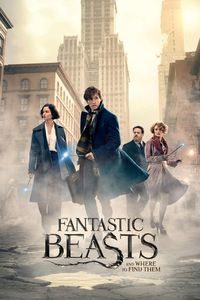
    (On Cable TV, August 2017) As a mild Harry Potter fan, I wasn’t expecting much from spinoff Fantastic Beasts and Where to Find Them. With Colin Farrell lurking in a supporting role, I was even envisioning a Winter’s Tale-sized debacle. But the result, thanks to J.K. Rowling’s savvy script and Warner Brothers’ willingness to bankroll a lavish production, is surprisingly good. Eddie Redmayne is very good as Newt Scamander, an awkward wizard with more affinity with fantastic animals than people. He arrives in New York City in time for us to get a long good satisfying look at a lavish re-creation of 1920s NYC, crammed with details and enough CGI to impress anyone. Director David Yates moves the story along at a good clip, first as light comedy and then increasingly as a full fantastic drama. The ending deserves a special mention, as it is more thematically resonant than most other forgettable CGI fantasy fests of recent years—the hero doesn’t get to pulverize his opponent out of brawn, and whatever clichés remain (city in peril, memories wiped) and handled far more gracefully than elsewhere. Production design is important: The rebuilding-the-city sequence that so annoyed me in Jupiter Ascending is transformed here in a delightful sequence by sheer accumulation of details. Spending time in 1920s NYC turns out to be a lot of fun, and no expense seems to have been spared in putting details on-screen. Redmayne is backed-up with a good cast: while Katherine Waterston has a mostly unglamorous role as a flapper voice of reason, Alison Sudol is a lot more fun as her blonde bombshell sister, gaining importance as the story goes on and falling for Dan Fogler’s unexpectedly likable character. As far as big-screen CGI spectacles go, Fantastic Beasts and Where to Find Them is far more tolerable than most of the recent fantasy epics, and it feels substantially more sophisticated than many franchise-building attempts. It’s got a heart despite the big budget, and it’s so different from the Potter movies that it can be appreciated as a standalone effort. Its nature as a prequel doesn’t hamper its effectiveness or ability to surprise, and the way it leisurely reveals its fantastic assets is wondrous rather than slow. All in all, a better-than-expected effort at a time when we’ve grown used to the commodification of the fantastic in movies. All it takes is a good script and enough resources to do it justice…

  • The Legend of Tarzan (2016)

    The Legend of Tarzan (2016)

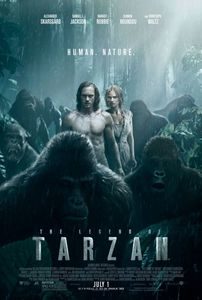
    (On Cable TV, February 2017) Count me as slightly surprised by this two-fisted adventure film. Most reviewers haven’t been kind to The Legend of Tarzan, and their lowering of my expectations surely played into the film’s favour. Once past the prologue and some tiresome rehashing of the classic Tarzan myth, The Legend of Tarzan gets its own identity as an anti-colonialist sequel to the original Burrough. As Tarzan returns to Africa to fight against slavers, the film becomes the straight-up adventure that it should be. Alexander Skarsgård (and his CGI double) is pretty good as the titular hero, Margot Robbie is fine (but no more) as a damsel able to fight her way out of distress, Samuel L. Jackson is dependably enjoyable as an action sidekick and Christoph Waltz is also up to his usual standards as a slimy antagonist. Director David Yates uses his experience helming visual-effects-heavy projects to deliver a swooping, dynamic series of action sequences grounded in the real world: the film reaches its apex by the time Tarzan flies through the jungle. The script isn’t too bad—despite some uninspiring lines, the anti-colonial themes are ambitious and nicely serve the character despite some white-saviour qualms. The Legend of Tarzan doesn’t amount to a remarkable movie, but it does make up most of a decent blockbuster entertainment film. It’s quite a bit better than some of the harshest reviews may suggest, and works just fine at what it wants to be.