George Stevens

  • The Greatest Story Ever Told (1965)

    (On Cable TV, April 2022) If there’s one adjective that I don’t often use in talking about film, it’s “monumental” – but it fits unusually well in describing The Greatest Story Ever Told, a staggering three-hour-plus epic film tackling the biggest topic in Christianity: the story of Jesus, seemingly unabridged. Writer-director George Stevens spent years getting this film completed and was rewarded with five Academy Awards nominations for his efforts – and you’re going to feel every minute of the film’s production history, as it unhurriedly (even in the now-abridged version cut down from an original four-hour running time) paces through Jesus’ life in the most pedantic, obvious way. If you know about circa-1962ish Hollywood, one of the film’s attractions lies in spotting celebrity cameos, big and small (such as John Wayne’s infamous “Truly, he is the son of God”) from a star-studded cast of supporting characters. You don’t watch The Greatest Story Ever Told as much as you let it impose itself as the blandest take possible on the story of Jesus from birth to resurrection. If that feels like a backhanded document, it’s because it is: this thing is impossible to watch for fun. It’s too long, meandering, unfocused. It’s the epitome of the 1950s religious epic, and audiences at the time weren’t any more receptive to it than modern audiences: it flopped hard at the box office (enough to kill the religious epic genre) and got uniformly bored reviews. It shows up at Easter as a kind of station of the cross for viewers, but there’s a reason why it’s rarely trotted out at other times of the year. I might have seen it once or twice in Catholic grade school, projected in the auditorium around Easter time, but I would not be surprised to find out that it was the shorter King of Kings we saw instead. In any case – it’s a monumental film for all of the right and wrong reasons: it’s lavishly produced, deliberately paced and more readily admired than enjoyed. You don’t go to monuments to be entertained but rather to be impressed.

  • The Diary of Anne Frank (1959)

    The Diary of Anne Frank (1959)

    (On Cable TV, December 2019) Let’s get the unpleasantness out of the way first: The Diary of Anne Frank is very, very long. Clocking in at three hours, it feels even more interminable by dint of almost taking place in a single location—this isn’t about a globe-spanning multi-decade story: this is about a group of people stuck in an attic for two years, and we start feeling the claustrophobia at times. This significant criticism put aside, it does remain an affecting film and a very effective portrayal of a classic book. While it condenses, dramatizes and bowdlerizes (according to what was known at the time and what the public could tolerate) the book, The Diary of Anne Frank remains an effective character study, and by the time it builds to the classic “In spite of everything, I still believe that people are really good at heart,” there shouldn’t be a single dry eye left in the house. Even seen through the lenses of a 1950s movie, with its theatrical acting and carefully restrained emotions, it’s still an engrossing story. I would still like to see a much shorter version, but there’s nothing wrong in sticking close to the original text. Director George Stevens makes effective use of the elements at his disposal, and Millie Perkins sustains having the entire film depend on her as the title character. Long but worth the investment, The Diary of Anne Frank was nominated for a Best Picture Academy Award and it’s not hard to see why.

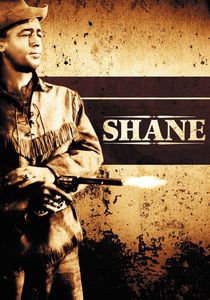
  • Shane (1953)

    Shane (1953)

    (On Cable TV, November 2019) Often hailed as a western genre classic, it’s worth wondering if Shane still holds up today. Many of its innovations—notably its use of widescreen colour cinematography, as one of the first films to be produced in a format aiming to outclass television—could be seen as temporary and outclassed by several better movies. The then-shocking use of violence and reflections on its consequences, for instance, marked a departure from the trigger-happy standard of the genre throughout the 1930s and 1940s but was soon outclassed by far bloodier westerns to come in the next decades. But thanks to director George Stevens, there’s a welcome texture and complexity to Shane that works even today—layers of subtlety overlaid over the “gunman comes to a divided town” classic plot template. Forbidden attraction between the mysterious protagonist and a married woman; longing for permanent fatherhood; some acknowledgement of the costs of violence; and that classic ambiguous finale that skirts between a poignant finale and a feel-good one. (I could do with less of the kid, though.)  Add to that the still-effective colourful widescreen cinematography and, yes, Shane does remain a reference all these years later: sometimes outclassed, but no less effective on the fundamentals.

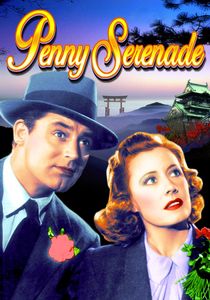
  • Penny Serenade (1941)

    Penny Serenade (1941)

    (On Cable TV, April 2019) I didn’t think it was possible to dislike a Cary Grant film, but here I am, looking at Penny Serenade. Oh, it’s not virulent hatred, nor wall-to-wall dislike. It’s just … not that enjoyable. Part of it has to be that in trying to show the first few years of a marriage, the film becomes an episodic melodrama, meant to make people sob and then rebuild them back into happiness even if it doesn’t quite make sense. It could have worked had it been executed well, but it’s not: instead, there’s a jerky-jerky rhythm to the plot that stops and goes and throws in tragedy instead of plot development and then caps it off with a cheap resolution that doesn’t actually resolve anything. Some of the early moments showing the courtship between our male lead (Grant, in a role with more serious moments and emotional range than many of his other roles—he was nominated for an Oscar for it) and our female lead (the beautiful Irene Dunne, at ease playing Grant’s on-screen wife for the third time but limited by a very traditional script) base their courtship on vinyl records. But the cavalcade of misery that awaits our characters at every turn gets increasingly ludicrous. Raking my brain for a way to make it make sense, the best I came up with was having a secondary character (played by Beulah Bondi) being an actually supernatural fairy godmother—at that point, Penny Serenade makes some kind of plotting sense rather than a collection of drama. Alas, I’m sure that this wasn’t the intended meaning of this melodrama. Unfortunately, that means that the ending (in which a new baby is meant to make everything all right) is hollow and unconvincing: It feels as if Penny Serenade had lasted twenty more minutes, the new kid would have died, some other tragedy would have tested our protagonist (place your bets on WW2!) and we’d be back at the starting point with yet another kid on the way. There are a few good moments along the way—and a few good bits of direction from George Stevens, as ham-fisted and obvious as they may seem to us. But Penny Serenade was never meant to be an audacious film—it’s old-school Hollywood mawkishness, and it’s not unusual that it would feel too broad, too on-the-nose for twenty-first century audiences.