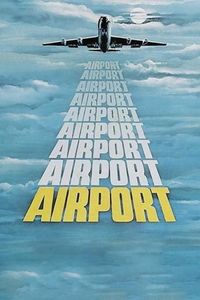
(On DVD, July 2021) The big irony about Airport is that even if it’s credited with launching the disaster movie boom of the 1970s, it’s not quite a disaster film through and through: Adapted from a thick procedural novel from the legendary Arthur Hailey, it spends more than an hour and a half detailing the professional and personal struggles of an airport manager during a particularly trying snowstorm. Launching an ensemble cast’s worth of subplots, Airport does gradually build the suspense of its impending disaster, but it remains quite an intimate affair compared to the excesses of its later imitators. For much of the first hour, it remains a remarkably sedate affair. Our airport manager (a solid turn by Burt Lancaster) struggles with a status-seeking wife, a bickering brother-in-law (Dean Martin, playing a playboy pilot), protesting homeowners and that’s all before the film starts, because in the opening moments a pilot error blocks the airport’s main runway even as the snow piles up. Plenty of other subplots are brewing as well — including a charming elderly stowaway (Helen Hayes in an Oscar-winning role), a cigar-chomping maintenance chief tasked with resolving the problem of the stuck plane (George Kennedy in a delightful role — no surprise that he reprised it in the three sequels), and, most crucially, a psychotic engineer with plans to bring down a plane over the Atlantic (Van Heflin in his last role, really not looking as trim as he was twenty years earlier). The all-star ensemble cast is something that other disaster films would reprise with gusto (indeed, watching all four entries in the Airport series is like getting a reunion of classic Hollywood celebrities) even if the formula would eventually be tweaked to bring the disaster earlier in the film. It’s amusing to see the hostile reviews that Airport got upon release, even as it topped the box office for weeks: By 1970, the New Hollywood was getting all of the critical attention, and holdovers like Airport were treated with disdain even as audiences lapped it up. Decades later, Airport’s filmmaking style has become the standard, meaning that it still plays rather well once you get past the slow opening. It’s clear that Airport often gets dinged for the excesses of its successors — the sequels are progressively wilder, cheaper and dumber and that’s not mentioning the other disaster films of the decade—but it’s best seen as a slow-burn suspense film with a still-realistic execution. It’s hardly perfect — the dialogue is often ordinary and there are scenes with as bad a case of “as you know, Bob,” as I can recall seeing—but it’s quite entertaining in its own way, and almost charming in its insistence on sticking to tried-and-true formulas.