Robert Mitchum

  • The Big Sleep (1978)

    (On TV, March 2022) Forty-five years later, the decision to remake a classic 1940s Los Angeles-based film noir as a 1970s London-based thriller smacks more of a stunt than a modernization of the story. There is, to be fair, a rather amazing cast in the 1978 version of The Big Sleep. With Robert Mitchum playing the private investigator to an elderly James Stewart, the film then goes on to have Joan Collins in a small role… even if Sarah Miles gets most of the appreciative stares playing a mop-topped redhead. While updated elements include colour cinematography and free mentions of elements too racy to have been acknowledged by classic Hollywood, the deliberately labyrinthine plotting has been kept almost intact. It makes for interesting viewing, but that may have more to do with the incongruity of the adaptation than its success. It’s a fun ride, but it would be an exaggeration to call it a good movie. Mitchum is easily twenty or thirty years too old for the role, and the film tortures itself to justify the American-accented Mitchum and Stewart in the middle of an otherwise very British film. Director Michael Winner’s pacing is slack, and Mitchum relies a bit too much on his tough taciturn persona rather than inhabiting the character. The period feel is more flashy than transparent (exactly the opposite of what the filmmakers intended for audiences at the time) and the direction is much flatter than expected, with the actors not always fully engaged in their roles. Oh, I still liked this The Big Sleep remake—but I liked it as a perversion of a much-admired original rather than its own thing.

  • Home from the Hill (1960)

    (On Cable TV, February 2022) There’s something familiar to the point of boredom in the very 1950s-style small-town melodrama Home from the Hill. Technicolor cinematography can’t hide that it’s all convoluted histrionic without a millimetre of ironic distance. (There’s a reason why the near-contemporary Written on the Wind is far more beloved today.)  Oh, the film does have its traditional assets: Directed by Vincente Minelli, it features a cast with Robert Mitchum (in a role that anticipates his shift from tough guys to more elderly character-driven roles), veteran George Peppard and the young George Hamilton. MGM spared few expenses, giving this the big-budget colour treatment at a time when most such dramas were made in black-and-white. Mitchem is quite good here, using his tough-guy persona to project a character whose influence is steadily decaying. Still, the film does feel overly long and artificial: the southern atmosphere doesn’t impress, the scenes take too long to get to the point, the contrivances feel laboured and the rigidly mannered execution of the film is at odds with its raw melodrama. (But then again, that remains a problem with 1950s dramas: Hollywood did not yet have the neorealist tools to do them justice, and it would take until the New Hollywood of post-1967 to get there.)  It doesn’t help that there are several other films along the same lines as Home from the Hill, and that they usually have a distinct quality that makes them more memorable than this one. Fans of the actors, the style, and the melodrama may enjoy this, but everyone else won’t find much to remember.

  • Nightkill (1980)

    (In French, On Cable TV, February 2022) Many Classic Hollywood stars ended their filmography with lower-end horror films, and it’s Robert Mitchum’s turn in the wringer in Nightkill, as he plays a gruff police officer whose role in the film only comes into focus rather late in the story. He’s obviously the box-office draw here in a film more concerned about cheap mean last-minute twists than anything else. There’s some promise to the initial premise, as two lovers plot the demise of her husband and then must deal with his body. But that’s far from the end of the murders and twists, all the way to a mean-spirited finale that shifts the film closer to horror than thriller. Murkily shot in dark grainy 1970 style, Nightkill was a German production that only saw release in the United States as a TV movie-of-the-week: The lack of good technical qualities shows up in slack editing, a meandering script (even at 97 minutes) and a failure to capitalize on the elements at its disposal. Mitchum’s gruffness is used effectively, but it’s clear that he’s slumming in a short easy role made to make the film more financially attractive to the production side. Nightkill is not much of a movie, but the sadistic ending helps (if that’s the word) make it more memorable than it should be. The premise could be used for a much better film, but in the world of low-budget films, in 1980 as of now, sometimes a bankable name and a quick shooting schedule are really all the producers are looking for.

  • The Grass Is Greener (1960)

    The Grass Is Greener (1960)

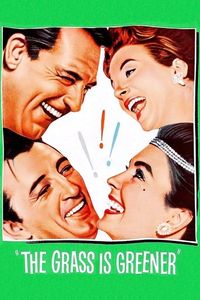
    (On Cable TV, September 2021) The cast alone would make The Grass is Greener worth a look: Robert Mitchum playing the cad trying to romance Deborah Kerr away from Cary Grant, while Jean Simmons looks on in amusement? Yes, that is the kind of film that even twenty-first viewers can enjoy. It’s not that good of a movie, but it has enough high moments to be fun. Grant isn’t quite in his persona here, as a British aristocrat fallen on hard times that must find a way to keep his wife away from a charming American oil baron while keeping the decorum we expect from his social class. As expounded in long but enjoyable soliloquies to other characters, too forceful a response would drive her farther away — he’s looking for a better solution. That eventually leads him to invite his rival to the estate for a weekend, and eventually initiate a pistol duel (!) in the corridors of the mansion. Mitchum plays an interesting mixture of wolfishness in a meek presentation, being utterly charming even as he tries to steal a wife away from her husband. Kerr does modulate carefully between her temptation and her duties as a rather bored wife, while Grant couldn’t have been better in a tricky role. It’s all presented in the very entertaining style of the 1950s looking back at the sophisticated Lubitschian comedies of adultery of the 1930s, but clearly anticipating the more permissive 1960s. There’s one standout sequence from director Stanley Donen in which split screens are brilliantly used to show parallel conversations taking place by phone — the rest of the film is far more sedate from the directorial aspect, but that one scene is terrific. The cast is great, but the story also works well. The Grass Is Greener all wraps up in schemes revealed, the lead couple reuniting and the oil magnate getting a quirky American heiress for his trouble. In other words, the kind of amusing romantic comedy that pokes at temptation but makes sure everyone goes home happy.

  • El Dorado (1966)

    El Dorado (1966)

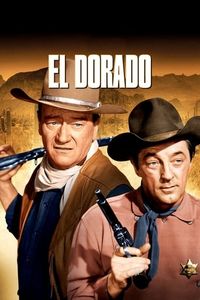
    (YouTube Streaming, August 2021) When watching classic western films, I often have the impression of déjà vu, and that’s even more pronounced for El Dorado considering that it seems built from many of the same elements as director Howard Hawks’ previous Rio Bravo. Once again, John Wayne is presented as a hero, as he assembles a group of helpers to help fend off the film’s antagonist. It’s an interesting crew, though: In-between the protagonist (Wayne) being subject to bouts of paralysis due to an injury, he’s joined by an alcoholic sheriff played by Robert Mitchum, an unbelievably young James Caan as a naïve gunslinger and Arthur Hunnicutt playing one of his usually grizzled mentors. That four-man crew is the focus of the various action sequences, occasionally enlivened by a good supporting cast — perhaps the most remarkable being Michele Carey’s eye-catching turn as a vengeful daughter. It’s all conventional, sure, but rather well-executed. If it takes too long for the crew to get together, El Dorado really starts working once they are, and there are a few modest twists on the formula to keep things entertaining. I’m not that enthusiastic about the result, but it steadily gets better as it goes on, and does manage to wrap everything up in a satisfying fashion. I doubt I’ll remember much more than Carey within a few days, though.

  • The Friends of Eddie Coyle (1973)

    The Friends of Eddie Coyle (1973)

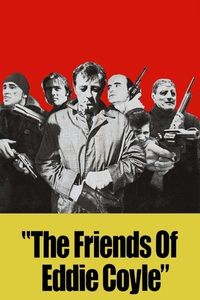
    (On Cable TV, July 2021) The 1970s were not a fun time at the movies, and movies like The Friends of Eddie Coyle certainly drive the point home. The story of an aging small-time gunrunner (Robert Mitchum) trying to navigate a tricky path between criminal friends and police officers who want him to become an informer in the hope of staying out of prison, it’s bleaker-than-bleak, uglier than sin and about as much fun to watch as your least favourite nightmare. Mitchum is quite good here — some call this performance his last great role, and he certainly fits the part of an older criminal with few other prospects, trying to protect his homely wife and daughters against the consequences of doing three-to-five in a state penitentiary. Spilling what he knows about his criminal associates seems like the least awful course of action, but there are consequences for such a thing. Peter Boyle also makes an impression as one of Coyle’s “friends.”  One of the film’s biggest draws as far as I’m concerned is hopping into the time machine to take a look at early-1970s Boston — It’s the big American city that I know best, so it was interesting to see the film tackle some landmarks, whether it’s the brutalist city hall, an already-familiar skyline or spending some time watching the accursed Bruins. (Alas, they play the Chicago Black Hawks rather than the Habs.)  There’s also a nice lime-green muscle car driving through big chunks of the plot. As an oft-mentioned representative of the neo-noir movement, it almost goes without saying that there is no happy ending in store for The Friends of Eddie Coyle, but even those who know what to expect will still be caught off-guard at the brutality of the conclusion. You have to have a solid stomach before delving into 1970s cinema in the first place, but this one goes a few extra steps further.

  • His Kind of Woman (1951)

    His Kind of Woman (1951)

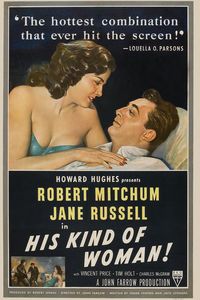
    (On Cable TV, June 2021) I’m not going to say that His Kind of Woman is a good or great movie, but I will say that if you’re looking for something halfway between romantic drama and film noir, this is a very representative example of form as of the early 1950s — and that does double if you start looking at the film’s typical production problems. The story itself sees a tough guy (Robert Mitchum) travelling to a Mexican resort, where he encounters a beautiful singer (Jane Russell) and a movie actor (Vincent Price) with marital problems. After various shenanigans, the film eventually realizes it has to go with dead bodies, gunfights and something more suspenseful. The escalates to a tidy action-driven conclusion with a heavy helping of dumb comedy and that’s that. Even if you don’t know about His Kind of Woman’s rocky production history, you can certainly see the evidence of an abrupt change of direction. In front of the camera, you have a few icons of the time being used as per their specifications. Mitchum is reliably enjoyable, Russell is the bombshell and Price plays to type as an actor prone to hamming it — he was never subtle, but maybe this is the film that validated his approach. The film’s genre-hopping is almost like getting an anthology of many of the era’s most distinctive genres. The last half feels like a desperate afterthought of action and comedy, but the film is strong whenever you have Mitchum and Russell going through their romantic material, or contemplating Hollywood’s backstage through one actor’s behind-the-scenes insecurities. His Kind of Woman’s representativeness grows even stronger one you read about the film’s production and find out that this was another one of RKO’s films that eccentric billionaire-producer Howard Hugues endlessly tinkered with during his tenure as the studio’s owner, much to the detriment and belated release of the film. The result speaks for itself as a bit of a mess, but a very pleasantly circa-1950 kind of mess.

  • The Lusty Men (1952)

    The Lusty Men (1952)

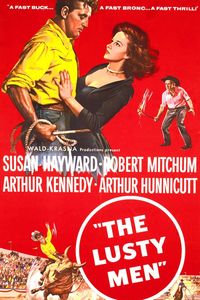
    (On Cable TV, June 2021) Even as countless male leads of classic Hollywood have been forgotten or become undistinguishable from others, Robert Mitchum endures as an icon. His performance in director Nicholas Ray’s The Lusty Men will show you why. Playing a rodeo competitor who decides to retire but ends up partnering with a young man trying to save enough money to buy a house for him and his wife. Matters predictably escalate into full-blown drama, as the life of a rodeo competitor is dangerous, and few of the characters seem able to keep their hands to themselves. (I mean, it’s right there in the title.) Ray directs the film in a more naturalistic fashion than was usual in the 1950s, going for the raw authenticity of its hardscrabble characters. Real rodeo footage is integrated within the film, giving The Lusty Men a patina of authenticity as a modern-day western that now feels like a period piece. Mitchum delivers a good, even great performance here, helped along by the melancholy tone of the script and Ray’s careful directing process. While the result isn’t as flashy as the epic films that Hollywood was producing at the time, The Lusty Men has aged well and remains a high point in both Ray and Mitchum’s careers.

  • Story of G.I. Joe (1945)

    Story of G.I. Joe (1945)

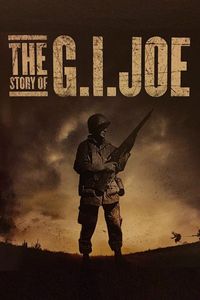
    (On Cable TV, April 2021) You could be forgiven for assuming, from the opening credits, that Story of G.I. Joe is going to be focused on Pulitzer-winning American journalist Ernie Pyle, who famously reported while embedded in WW2 campaigns in Tunisia and Italy. The film contains narration inspired (or copied) from Pyle’s columns and was filmed as Pyle was reporting from the Pacific Front. (Pyle, who was involved in the film’s production, was killed on Okinawa two months before the film premiered.)  But when you get into the film, you eventually notice that Pyle’s character ends up a supporting character reporting the actions of the company he’s with, and so Story of G.I. Joe indeed becomes the story of the grunts working the frontlines. Robert Mitchum gets a first great role as an officer who provides material for the reporter’s columns, easily (and by design) outshining the less flamboyant Burgess Meredith playing Pyle. Entirely produced during WW2, the film ends up being a convincing portrayal of ground troops during the campaigns of Tunisia and Italy. It does have some added interest in having a journalist act as a narrator (one who finds out, in the field, that he won the Pulitzer), giving an additional dimension to what could have been another war movie.

  • Dead Man (1995)

    Dead Man (1995)

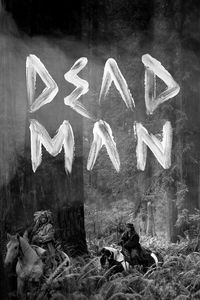
    (Criterion Streaming, December 2020) After going through much of writer-director Jim Jarmusch’s filmography over the past few months, I’m no closer to liking his films… but I think I can begin to understand where he’s coming from, and maybe even be satisfied with what he’s doing. Dead Man is like that: Surprisingly, I do like quite a bit of it, but the longer it goes on, the more exasperating it becomes… even if I get what Jarmusch is going for. It’s a western, certainly – it starts on a train where an accountant is about to begin a job in a frontier town; later, most of the action takes place in the woods, as three bounty hunters pursue the protagonist and the Native American who saved him. Other than that, though, it gets a bit weird: The frontier town of Machine is a proto-steampunk nightmare of industrialization leading to decay, and the protagonist spends a lot of time in a delirious state of mind, spurred to consider himself the reborn poet William Blake. Casting counts for a lot – a young Johnny Depp plays the accountant-turned-murderer, while the legendary Robert Mitchum has his last role here as a patriarch. Notables such as Crispin Glover, Lance Henriksen, John Hurt, Iggy Pop, Gabriel Byrne, Jared Harris, Billy Bob Thornton and Alfred Molina all turn up at some point, sometimes very briefly. It’s all shot in black-and-white, with strange visions from time to time. I greatly preferred the opening half-hour of the film – the arrival in town, the walk through the dangerous main street, the nightmarish vision of a factory and the complications of meeting a pretty girl. After that, Dead Man runs out of steam until the ending as it walks deep into the woods and loses itself in pontification. Quirky to the extreme, it zigs where every other western zags, and that’s reason enough to have a look even for those who can’t stand western or remain dubious about Jarmusch.

  • The Racket (1951)

    The Racket (1951)

    (On Cable TV, November 2020) Probably the best thing about The Racket is seeing bad-boy Robert Mitchum take on the role of a two-fisted police captain hellbent on taking down a major organized crime leader played by Robert Ryan. The film, a remake of one of the first movies ever nominated for the first Oscars, is essentially a grand strategy game between the two, as they vie for the affection of a cabaret singer (Lizbeth Scott), try to manipulate politicians in doing their bidding, and have proxy battles through surrogates. There’s some awareness here of the tricky intersection between justice, politics, the media and the personal emotions of the characters themselves. Mitchum may not be ideally cast as a square-jawed icon of law and order (his celebrated arrest and conviction for drug offences were still fresh in the public’s mind at the time), but I found that his screen persona actually worked in his favour here, as the character didn’t seem above a few horrible actions in order to fight his criminal counterpart. Having seen and rather enjoyed the 1928 original, I wasn’t bowled over by the remake—while Mitchum is remarkable, Scott is good and Ryan isn’t bad (switching roles may have been a better casting decision, but then again no one would have cheered for the police in that case), the rest of the film is merely solid, whereas the original had a few moments of innovative brilliance. (Although the remake keeps the spectacle factor: woo-hoo, a big car crash!) But it may be more fascinating for its behind-the scenes drama, as producer Howard Hugues kept tinkering with the film (as was often his habit) and brought in no less than five directors to complete it. The result can occasionally feel disconnected with too many subplots and plot turns underdeveloped. I still enjoyed The Racket—it’s compelling viewing as a film noir (which the first one wasn’t really, instead heralding the gangster movies of the 1930s) and it clicks in the same ways a competent crime story does.

  • River of No Return (1954)

    River of No Return (1954)

    (On Cable TV, September 2020) It took a lot to combine Robert Mitchum, Marilyn Monroe and director Otto Preminger on the set of a colour widescreen Western shot in Canada. But was it worth it? Watching River of No Return and then reading about its eventful production history suggest that a film about the making of the film would be more interesting than the film itself. While not strictly a failure, this is a movie that seems oddly conceived, awkwardly executed and barely worth the trouble. Mitchum stars as a taciturn farmer who’s robbed and forced to race to town on a raging river, alongside an estranged son and a saloon singer (Monroe). A very 1950s script doesn’t make things better, considering that it includes a near-rape scene between “hero” and “heroine” and a retrograde portrayal of Native Americans. Technical aspects have not aged well, with obvious differences between studio footage and on-location shooting (which is the kind of thing you learn to tolerate from period films, except this one tries to be an action movie). In the end, River of No Return barely claws its way to mediocrity, which is a far deal less than what we could expect from the talent involved. If you’re even remotely familiar with Mitchum, Monroe and Preminger, then the feeling that all three are out of their urban environment persists throughout River of No Return—and reading about the troubled production of the film only reinforces the idea that there was no way this was going to turn out to be a good movie. As a Mitchum fan, I’m not impressed; as someone who’s not a Monroe fan, I am still disappointed; and as a Preminger fan, I understand why he walked away from the film in post-production.

  • The Enemy Below (1957)

    The Enemy Below (1957)

    (On TV, September 2020) While The Enemy Below may, at first glance, be nothing more than a naval WW2 adventure between an American destroyer and a German submarine, a few rewards await those looking a little deeper. For one thing, it’s shot in pretty good Technicolor, giving further life to a wartime adventure. For another, it’s directed by none other than Dick Powell, in the third act of his life as a filmmaker after being a musical matinee idol and then a film-noir tough guy. The result of his fourth directorial effort, adapted from a novel, is a tense cat-and-mouse game between two experienced military officers with unequal means. The destroyer does not have an advantage over the submarine, and that keeps the action going throughout most of the film, and provides a spectacular climax between the two war machines. It took two great actors to fill the shoes of the characters, and we get that with Robert Mitchum (surprisingly credible as a military officer) and Curd Jürgens as the Hitler-hating German submarine commander. The Enemy Below won an Oscar for special effects and looks like it. It’s all quite enjoyable—relatively light at 98 minutes, and buoyed by capable lead performances. Even in the generally good subgenre of submarine movies, it’s above average.

  • Undercurrent (1946)

    Undercurrent (1946)

    (On Cable TV, June 2020) Wait, wait! There’s a film in which Vincente Minelli directs both Katharine Hepburn and Robert Mitchum? Why did no one tell me? Well, it’s probably because they’ve seen it, considering how all three are playing outside their wheelhouse in Undercurrent. A domestic thriller the likes of which were popular at the end of WW2, it features a demure spinster who marries a mysterious rich man but ends up having a closer affinity with his brother. There’s a bit of gothic romance to the story as hints of mental instability creep in and the action moves to murder: it doesn’t escalate to noir, but there’s still a creepy drama underscoring the entire film. The threat may come from inside the house, but Undercurrent’s biggest twist is that Hepburn plays a meek character, Mitchum plays a sensitive guy (for barely three scenes), Robert Taylor plays the creepy villain, and Minnelli tries his hand at suspense, all of which is completely at odds with their strengths. One of Hepburn’s last role as a debutante (she was 39!), the film isn’t particularly good nor terrible: it’s interesting for the eyebrow-raising use of familiar names in unfamiliar roles, but if you’re looking for a good domestic thriller of the era, you might as well have another look at Gaslight.

    (Second Viewing, On Cable TV, July 2021) The only thing better than a film that brings familiar names together is a film that uses those familiar names against type. Of course, saying that about Undercurrent is misleading, as it takes place early in the career of two of its three marquee names. So here we have MGM musical director Vince Minelli going for a quasi-gothic thriller, steely Katharine Hepburn settling for a soft and weak character, and noir icon Robert Mitchum playing a refined and good-hearted character. (Plus, leading man Robert Taylor going for moustache-twirling psychopathy.)  It’s quite a ride if you’re coming to it with different expectations, and it’s probably that which distinguishes my second better-informed viewing for the first – in between the two, I developed my own appreciation for those three names, and Undercurrent clearly plays against them. Otherwise, well, there’s not much more to say: from a detached narrative perspective, the film does go hard for gothic mysteries, as the new wife of a mysterious man gets to gradually unveil the secrets surrounding his brother. The film is designed to be overly melodramatic, and feels long at something like 115 minutes. It’s not a bad watch but not a particularly fine example of a form perfected by Rebecca or Gaslight – but it’s worth a look if you’re too comfortable in what to expect from any of the marquee names.

  • Crossfire (1947)

    Crossfire (1947)

    (On Cable TV, April 2019) 1947 was an interesting year when it comes to social-issues drama films at the Academy Awards. Two films in nomination for the Best Picture Oscar were squarely about antisemitism—a bold statement at the time. One of them, the serious and finely controlled major studio picture Gentleman’s Agreement, won the award. But it’s the other, Crossfire, that clearly exceeded expectations. A production of a major studio (RKO) but clearly intended as a B-movie in the disreputable crime thriller genre (now identified as a film noir), the picture went beyond its strict murder-and-investigation formula by tying it to a sensitive social issue—the victim having been the victim of an antisemitic hate crime. (Tellingly enough, the film is based on a novel where the victim was homosexual rather than Jewish.)  It is, in many ways, more overly hard-hitting than Gentleman’s Agreement—the price to pay for discrimination being death rather than social ostracism. Its execution may be less refined, but it’s well in the norms for a film noir—a darkly-lit tale of murder and the investigation to find not only the killer, but his motive. Crossfire is merely one in a long line of crime dramas being used to illustrate deeper issues, but it has the distinction of being the first to punch through the Academy’s prejudice against genre films to earn a handful of nominations. It’s still quite watchable today even if you don’t care about the historical context: Robert Mitchum stars as a police detective, making the film just a bit better every time he’s on-screen. Director Edward Dmytryk keeps things moving through a tight 86-minute running time, delivering a very satisfying film that exceeds noir motifs to deliver a stark and still relevant discussion of hate-fuelled murder. You may watch Gentleman’s Agreement and find that it has aged poorly in its well-mannered depiction of prejudice, but Crossfire will still grab you by the throat.