Zoe Kazan

  • The F Word aka What If (2013)

    (On Cable TV, March 2022) It’s not necessarily a bad thing to discover a film several years after its release. In The F-Word’s case, it means not only finding a thoroughly engaging romantic comedy after the twilight of the genre’s commercially successful years at the box-office, but also a film that captures a few actors in an earlier phase of their career, in a way that makes us appreciate them even more. Daniel Radcliffe, for instance, has now pretty much overcome the weight of his Harry Potter years and become an interesting actor in his own right—but that wasn’t necessarily as true nine years ago upon The F Word’s release. Adam Driver has accessed to stardom since them, but here he is playing the protagonist’s best friend. Zoe Kazan is bubbly and fun here, while Mackenzie Davis has also become far more recognized in the interval. It helps that The F Word, faithful to its theatrical origins, trades on sharp dialogue and likable characters. In this case—a single disillusioned man agreeing to be friends with a woman in a long-distance relationship. Whether it can work is irrelevant—this is a good-natured romantic comedy and while the film plays with its ultimate release, it’s smart enough to recognize that we want those crazy kids to end up together. It would be a stretch to call the dialogue insightful or universal, but it is fun to listen to as the characters exchange ideas on the nature of relationships and whether to take it up to the next level. There are some weird turns here (including a wholly useless side-trip to Ireland), a deliciously misleading moment toward the very end of the film, and a few choice words between sarcastic leads. But The F Word, to its credit, knows when to let go and when to reel them in—the result is a wonderfully Torontonian romantic comedy. I’m glad I saw it, even if it took me nine years.
  • The Kindness of Strangers (2019)

    (On Cable TV, January 2022) Prepare for misery as you approach The Kindness of Strangers, an ensemble drama that nonetheless focuses on the torrent of pain, fear, danger, humiliation and precarity experienced by a young mother and her two sons as they seek to escape their abusive husband/father by running away to Manhattan. Their journey takes them as far down in society as anyone would imagine, but by the end of the film they’re able to bond with people ready to help them. (Plus, a violent action from the antagonist that ensures that even he, as a cop, is put away for a long time.)  There are many noble intentions here, whether it’s rooting for a vulnerable woman and her kids, or trying to portray the web of interactions that becomes necessary to offer help to someone in need. Unfortunately, The Kindness of Strangers often feels like a mechanical exercise. An international production where simply figuring out the country of origin is an adventure, writer-director Lone Scherfig’s film feels pulled and pushed in various directions so frequently that, by the time we’re done, nothing remains except platitudes and easy decisions. The ensemble cast is not bad—Zoe Kazan does make for a likable protagonist, Andrea Riseborough remains intriguing throughout, Bill Nighy plays to his strengths as a sympathetic but somewhat befuddled figure and Jay Baruchel makes the most out of a supporting character. Still, it feels rote, arbitrary, overly manipulative and yet not terribly effective at it. In other words, The Kindness of a Strangers often feels like a slog that doesn’t lead anywhere interesting. Sure, things get better for the characters—but in a film where the interconnection between strangers is supposed to be an important thematic element, it falters when it comes to the moment to make a point. Not worth a look considering much stronger films dealing with similar issues.

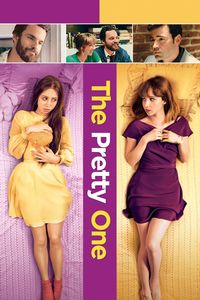
  • The Pretty One (2013)

    The Pretty One (2013)

    (In French, On TV, March 2021) Strange plotting things start to happen when you use twins as a plot device. In the case of The Pretty One, it means being able to treat a quasi science-fictional device in a realistic fashion, as a young woman takes over her dead twin sister’s life after a case of meticulously engineered identity confusion. Zoe Kazan carries the film on her shoulders in the dual lead role, both as the unpleasant outgoing glamorous career-driven Audrey, and the likable shy frumpy homebound Laurel. Invading some else’s life is easier when you look exactly like her, but it’s not easy, and much of the film plays along the lines of a classic thesis/antithesis/synthesis structure, as our introverted heroine learns to take the best parts of her sister’s life in order to improve her own. Jake Johnson does well as the romantic interest, with Ron Livingstone providing one of his usual handsome schmucks. Still, the film always goes back to Kazan in a challenging dual role, not simply playing different parts for a chunk of the film, but also playing someone playing a part and reacting to various strong emotions along the way. It’s all handled with some restraint and glossy cinematography by writer-director Jenée LaMarque, and the result is a minor but very enjoyable film that stays nicely grounded despite a premise that is more often found in genre fiction.

  • The Big Sick (2017)

    The Big Sick (2017)

    (Google Play Streaming, November 2018) As a genre, the romantic comedy will never die as long as it adapts to the times, keeps finding intriguing hooks and invests in its characters. The Big Sick is a surprisingly engaging example of the form, showing us contemporary romance, likable characters and an irresistible hook: What if a recently-formed couple faced the impending death of one of them? That may not be a funny premise in itself, but don’t worry: everybody gets better in the end. Kumail Nanjiani and Zoe Kazan are well cast as the lead couple—Nanjiani even playing his own role given that the story is loosely adapted from his own life. The cross-cultural courtship themes abruptly shift gear into more dramatic material once one of the romantic leads goes into a coma, although the appearance of their parents (great performances by a high-energy Holly Hunter—who gets the film’s best scene—and an unusually likable Ray Romano) add more complications to the proceedings. Since the film revolves around a stand-up comedian, expect a few one-liners and glimpses at the tough life of these performers. The good script is backed by strong execution that manages to find a balance between very tricky material. It manages to combine modern cynicism with earned sincerity, and wraps things up with a belated but no less effective bow. There’s been a lot of hype about The Big Sick as an independent film darling, and it admirably sustains it during viewing.

  • Ruby Sparks (2012)

    Ruby Sparks (2012)

    (On Cable TV, February 2014) I have an obvious soft spot for movies about writers, so it didn’t take much to get me interested in this story in which a novelist so powerfully imagines a love interest character that she shows up the next day. Everything he writes is reflected in her, and it doesn’t take a long time for the goofy romance to cede ground to weightier matters. Never mind the theme of authorship and dealing with one’s characters: as a Pygmalion-inspired meditation on control within relationships, Ruby Sparks works well and culminates in a hair-raising sequence of existentialist horror. Fortunately, it’s not where the film ends, and the satisfying wrap-up is enough to bring back the film in the romantic-comedy genre. Paul Dano is good in a role that requires us to find the protagonist annoying, sympathetic and even despicable at times. But it’s Zoe Kazan who steals the show as the eponymous Ruby, turning in a vivid performance in the middle of a film that she has written. It’s not an easy role as the character is artificially manipulated to and from self-determination, in-between polar emotional states. (There’s something trivially interesting in knowing that the film’s lead couple is also a couple in real-life.) While Ruby Sparks may be a bit too low-key to earn much attention in an age of blockbusters, the high-concept premise is executed with wit and charm, touching upon a variety of themes (just the material on male insecurity within relationships is enough for an entire movie) while keeping a sharp focus on the characters. It’s an intensely likable film despite a few intensely unpleasant moments and is well-worth a bit of time –doubly so for would-be novelists.