Month: September 2013

  • Hit and Run (2012)

    Hit and Run (2012)

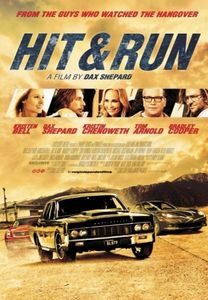
    (On Cable TV, September 2012) Oddball films certainly have their share of charm, and Hit and Run shows some of the goofy fun to be found in low-end Hollywood productions that often show up as cable releases or Video-on-demand premieres.  Co-written-and-directed by actor Dax Shepard (who stars in the film along with real-life-girlfriend Kirsten Bell), Hit and Run boasts of an interesting cast of comedians, an amiable rhythm, some amusing dialogue, a love of cars and a script that ends up being a bit tighter than you’d expect from the first half of the film.  Here, an expert driver with a shady past is forced out of his Witness Relocation Program identity by the professional aspiration of his girlfriend.  Going back to Los Angeles means tangling anew with a criminal crowd he thought he’d left behind, but that’s the fun of the film as various groups and people connect on the way to L.A.  The dialogue is pure laid-back California, the tangents are plentiful (although the ending ties a lot of them back together), Shepard anchors Hit and Run with an easygoing protagonist and the result is enjoyable on its own.

  • The Cold Light of Day (2012)

    The Cold Light of Day (2012)

    (On Cable TV, September 2013) The risk in relying on familiar thriller tropes is that while they can provide structure, they can’t, in themselves, substitute for wit and originality.  It’s not a bad idea to propose as a premise an American tourist in Spain getting caught in a complex web of espionage thrills and double-crosses, but it has to be handled with some competence.  Alas, The Cold Light of Day is a purely generic product down to its meaningless title, and a roster of familiar actors can’t save the film from by-the-number plotting, familiar plot points, murky motivations and tedious pacing.  Henry Cavill gets (and fumbles) a chance to prove himself a contemporary action hero as he finds himself alone and running in Madrid, but he’s easy to forget when sharing scenes with Bruce Willis (as a father with a hidden second and third life) and Sigourney Weaver (as an immediately-suspicious high-level intelligence officer).  Much of the film is straight out of the “man running for his life” thriller sub-genre, and while director Mabrouk El Mechri has the occasional good eye for filming action scenes, they feel overlong and perfunctory in the middle of such a familiar framework.  (The final car chase definitely has its moments, but it’s too long by at least half its duration)  While The Cold Light of Day will act as a pretty good showcase for Madrid’s tourist attractions, it’s not much of a calling card for anyone else involved: the characters are uninvolving, the narrative excitement is flat and nearly everything about the film seems wasted.  For a film produced with decent means and known actors, there isn’t much here to distinguish it from a run-of-the-mill TV movie.

  • The Man with the Iron Fists (2012)

    The Man with the Iron Fists (2012)

    (On Cable TV, September 2013) Writer/director/actor RZA’s The Man with the Iron Fists is a welcome throwback to the historical martial-arts fantasy subgenre, with good performances from people you wouldn’t necessarily expect in that kind of film.  While the back-story of RZA’s historical universe is complex, the plot itself becomes a well-assorted series of fights between characters, often with super-natural powers.  RZA himself is a bit dull in the honorific title role, but the film’s most remarkable performances come from scene-stealing Russell Crowe (as “Jack Knife”, a hedonistic western knife-fighter) and Lucy Liu (as a bordello madam not to be crossed), alongside such notables as Rick Yune, Cung Le and Byron Mann.  It’s all meant in good fun, although the strong gore factor takes away a bit of the enjoyment for viewers who like their fighting action to be a bit cleaner.  While The Man with the Iron Fists isn’t all that special in its own subgenre, it’s an endearing attempt as a pastiche, and the American origin of the film doesn’t really betray its indebtedness to an entire genre of Asian cinema.  It may best be seen by viewers who, like me, used to like a lot of that stuff and are now looking for some more.

  • Oblivion (2013)

    Oblivion (2013)

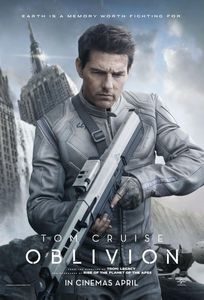
    (Video on Demand, September 2013) For all of the nice things I have to say about Oblivion, there’s something just… off in the way it comes together.  The first few minutes don’t quite establish the required suspension of disbelief required for it to work smoothly: The visuals it presents don’t make a lot of sense and the pandering to modern lowest-denominator audiences seems blatant (let’s see: Yankees cap, Football stadium, dog, motorcycle and a cabin in the woods.  Yup, just one regular guy, no wacky sci-fi to see here…)  For viewers used to prose science-fiction Oblivion seems to pivot entirely on a familiar cognitive breakthrough structure, and the way it self-importantly reveals its secrets is a bit annoying, as if it expected audience’s minds to be blown apart by fairly obvious reveals.  The plot doesn’t quite seem to hold together the longer you look at it, and the visuals it shows (combining a ruined New York with what looks like epochal landscape alteration) are so nonsensical as to make anyone’s head hurt.  But let’s focus on the positive for a moment: It’s a science-fiction film that’s not explicitly based on existing intellectual properties, it features relatively original imagery (the “house in the clouds” is particularly nice) and it has the willingness to combine familiar tropes into a somewhat cohesive whole.  For writer/director Joseph Kosinski, it’s certainly a step up from the pretty-but-vapid Tron: Legacy.  Tom Cruise is overbearingly Tom Cruise-ish in the lead role (see “Yankees cap, football, motorcycle” above), but the supporting performances by Morgan Freeman, Andrea Riseborough and Olga Kurylenko bring a bit of balance in the film.  While there’s little that’s objectionably wrong in Oblivion, it doesn’t click either, and that’s a more crucial problem in SF movies than in other genres due to the required suspension of disbelief.  While it certainly looks nice and feels more original than yet another sequel of a comic-book movie adaptation, it doesn’t seem to have enough heft to it, and given the nature of the film’s revelation it’s hard imagining watching this a second time for fun.

  • Olympus has Fallen (2013)

    Olympus has Fallen (2013)

    (Video on Demand, September 2013) For everyone who thought that overly patriotic high-concept action movies had gone out with the nineties, the good news is that Olympus Has Fallen doesn’t merely exist, but is the first of two “White House taken over by terrorists” films released in 2013.  We’ve come a long way from 9/11 when such big-budget high-concept action movies can be released widely, and that’s a good thing.  Whether the films are any good is another subject entirely, and watching Olympus Has Fallen, it’s clear that while it occasionally hits its mark, it doesn’t quite understand part of what made those 90s action movies so enjoyable.  In a few words: PG-13 action over R-rated violenceOlympus Has Fallen, rated R, seems overly violent, profane and humorless for what is supposed to be popcorn entertainment in the Die Hard mold.  It tries to be broadly amusing with funny quips and overdone action set-pieces, but then it plasters its dialogue with useless profanity and revels in showing gory violence (some of which perpetrated gleefully by the so-called hero).  The result can’t very well be watched with the kind of carefree fun that PG-13 action films usually create: you’re always on guard for the next excursion in violence and gratuitous language.  It doesn’t help that Olympus Has Fallen has little wit, charm or grace: Gerald Butler is merely OK as the lone operator chasing down the terrorists within the White House –anyone else could have done just as well.  Morgan Freeman sleepwalks through another presidential role, and while it’s good to see Angela Bassett get another role, this one won’t leave any lasting impression.  Director Antoine Fuqua is a seasoned veteran who knows how to put together an action scene, but he seems hampered by sub-standard CGI work (some of the C-130 gunship sequences look unfinished) and a script that never exceeds the perfunctory and seems to forget how to tie up (or even acknowledge) loose ends.  Olympus Has Fallen is watchable, but it’s not hard to complain about various elements that could have been improved to produce a better film.  Now let’s see if White House Down does any better… [January 2014: Yes, White House Down is quite a bit better.]

  • Dirty War (2004)

    Dirty War (2004)

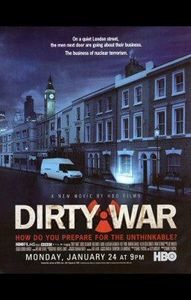
    (On Cable TV, September 2013) Watching this HBO/BBC film docu-drama about the possibility of a terrorist “dirty bomb” detonating in central London occasionally feels like an educational obligation: Dirty War is a procedural thriller trying to stick closely to consensual reality, and the result is a gritty, down-to-earth depiction of things that could happen at the expense of more conventional suspenseful thrills.  While the first half-hour is occasionally tedious, it does create an atmosphere of verisimilitude that becomes engrossing once the truly bad things start happening.  There are only a bare number of heroics here, with a conclusion that seems as grim as potential reality once containment breaks down and everyone has to acknowledge the consequences of the detonation.  Dirty War certainly isn’t feel-good film, and writer/director Daniel Percival’s grainy handheld cinematography sells the illusion of a quasi-documentary better than expected.  The film also has the merit of reflecting, in a non-hysterical but still highly sobering fashion, an entire decade’s worth of bottled anxiety about nuclear terrorism –and the somewhat measured tone helps the film stay current and effective a decade later.  (It helps that it’s somewhat ambivalent about the official government party line: hopeful about the abilities of the people involved, but somewhat skeptical about the ability of the government to manage a crisis)  There are even a few remarkable performances here, most notably Alastair Galbraith as a street-level worker stuck in an impossible situation, and Koel Purie as a voice-of-moderation Islamic policewoman.  Dirty War amounts to a slow-burn film that works quite a bit better than expected from the first few minutes… and certainly sticks in mind longer than the average shoot’em up Hollywood terrorist action movie.

  • The Great Gatsby (2013)

    The Great Gatsby (2013)

    (Video on Demand, September 2013) As a certified Moulin Rouge fan, I had been waiting a while for Baz Luhrmann to return to the same overblown wide-screen film style.  Fortunately, the wait is over: The first half of his adaptation of F. Scott Fitzgerald’s The Great Gatsby is crammed with visual excess, lush 3D cinematography, frantic energy and flashy camera work.  As a way to portray the excesses of the Roaring Twenties (along with a not-so-anachronistic hip-hop soundtrack), it works splendidly and I can see myself gleefully revisiting that part of the film before long.  The film reaches an apex of sorts as it magnificently introduces the titular Gatsby (a perfectly-cast Leonardo DiCaprio) with fireworks and a wink.  Toby Maguire makes for a good everyday-man audience stand-in through this madness and the film eventually calms down during its increasingly somber second half as the true themes of the story play out and reach their tragic conclusion.  Luhrmann is the real star of The Great Gatsby, but the actors he brings on board all have their chance to shine.  I’m not a fan of Casey Mulligan, but she couldn’t have been better that she is here as a flapper; Joel Edgerton also does well as he goes toe-to-toe with DiCaprio.  As an adaptation, the film faithfully keeps the plot, overplays the symbolism, dispenses with a few subtleties, adds a framing device that’s not entirely useless and provides enough of a thematic slant on the material to keep fans of the book arguing in depth about intended meaning.  On a surface level, The Great Gatsby is well worth-watching for its visual sheen (especially its first 30 minutes): this is an indulgent, no-budget-limits style of filmmaking that I enjoy tremendously, and as a way to present a classic curriculum novel, it’s invigorating.