Month: June 2018

  • MASH (1970)

    MASH (1970)

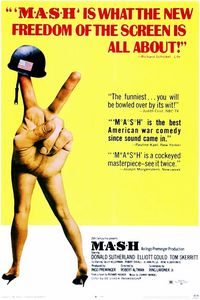
    (On TV, June 2018) Some films are so successful that they sabotage their own legacy, and if MASH doesn’t feel quite as fresh or new or daring as it must have felt in 1970, it’s largely because it was followed by a massively successful TV series and embodied a new cynical way of thinking that would come to dominate (North-) American culture in the following decades. Obviously commenting on the Vietnam War by using the Korean War, MASH shows us disaffected doctors treating the war, and the entire military institution, with obvious contempt. They’ve been drafted, they belong elsewhere and their attitude encapsulates what many Americans had come to think about the military by 1970. Such things are, to put it bluntly, not exactly new these days—and you could easily build a mini-filmography of films in which military heroes behave badly. MASH also suffers from an episodic, largely disconnected plot—there’s a new episode every ten minutes, and it doesn’t build upon those adventures as much as it decides to end at some arbitrary point. Director Robert Altman’s shooting style is also far more similar to newer films than those of 1970—inadvertently scoring another point against itself. It’s not quite as interesting as it was, not as innovative as it was, not as shocking as it was. As a result, it does feel more inert than it should. It’s still worth a watch largely as a historical piece, but also as a showcase for an impressive number of actors—starting with Donald Sutherland, alongside Elliott Gould and a smaller role for Robert Duvall. The metafictional ending works well, but it still leaves things unfinished.
  • The 39 Steps (1935)

    The 39 Steps (1935)

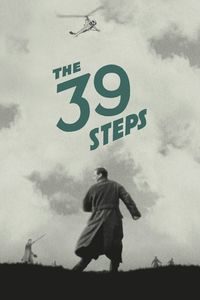
    (On TV, June 2018) On some level, The 39 Steps is a basic, almost unremarkable thriller, the likes of which we often see. But take a step back to look at the date of the film, and realize that Alfred Hitchcock has mastered the form years before WW2. It’s hard to fault The 39 Steps for executing a good recipe well: here we have themes familiar to Hitchcock (an innocent man being stuck in an impossible situation and going on the run to clear his name), using methods and techniques to crank up the suspense in ways that would be reused by countless other directors. There’s a close affinity with the first 1934 version of The Man Who Knew Too Much here, competently handling material that would be overexposed later on. The result is that you can still watch The 39 Steps today and be engrossed in the story despite some weirdness such as the hypnotism material—it feels decently modern, and still enjoyable despite its flaws and limitations. It’s movies like this one that would bring Hitchcock to popular success, critical appreciation and Hollywood’s attention: he’d move to the United States a few years later.

  • The Pilgrim (1923)

    The Pilgrim (1923)

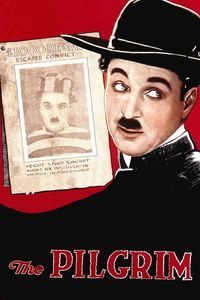
    (On Cable TV, June 2018) I wish I had just a bit more to say about Charlie Chaplin’s The Pilgrim than a basic “silent movie; fun to watch; doesn’t feature Chaplin’s Tramp character” statement, but I don’t. It features an escape convict passing himself off as a minister and ending up in a small East Texas town. Various comic hijinks ensue, with a rather good conclusion. But it is merely a 46-minute film, and much of it is wasted through pantomimes and title cards and longer ways to saying things that are perfectly obvious to modern audiences used to cinematographic grammar. Once you strip all of that away, there isn’t much left. Still, the movie isn’t too difficult to watch thanks to Chaplin’s mastery of the form and the constant gags. It doesn’t even really matter if he’s not playing the Tramp—in fact, given Chaplin’s tendency to inject pathos in the Tramp’s character, not having the Tramp makes for a more sustained comic experience. Otherwise, that’s it—The Pilgrim is recommended to silent movie enthusiasts, but not a transcendent example of the form like other movies of the time.

  • Hostel Part II (2007)

    Hostel Part II (2007)

    (In French, On Cable TV, June 2018) Yuck. I mean, that’s what the filmmakers were after, right? When you make a movie about people being tortured for fun (for the torturer’s fun, not the victims), you’re aiming both for appreciation from gore-hound horror fans (of which I am not) and for condemnation from mainstream audiences, further reinforcing the appreciation from the fans. Hostel II picks up soon after the original Hostel, not forgetting to kill off the first film’s protagonist before getting down to business with three new victims. Despite writer/director Eli Roth’s avowed aim to squick the mundanes, it’s all very familiar and dull for much of the film. It really does itself no favour by horribly killing off Heather Matarazzo’s likable character—thus forever earning antipathy from the audience. If they hadn’t done that, I may have had a better appreciation for the film’s third-act twists and turns: the changing power dynamics between the two would-be torturers, or the way the final girl outwits the system through money and merciless violence. (Those who claim that Hostel II has deeper thematic value may not be wrong, but they’re clinging to intellectual scraps left by a filmmaker far more interested in the sight of exposed viscera.)  All I’m left with is the basic yuck and the certitude that I don’t need to see Hostel II ever again.

  • Nanook of the North (1922)

    Nanook of the North (1922)

    (On Cable TV, June 2018) While Nanook of the North is not a Canadian movie per se (it was directed by an American, financed by Americans, etc.), it was one of the first movies to be shot in Canada, and in the Canadian Arctic no less! Presented as a documentary about the life of an Inuit hunter, we now know that Nanook contained substantial fabrication and is best perceived as a docudrama—the structure was predetermined, many of the events are staged, Nanook and his family were portrayed by unrelated Inuit peoples who did understand southern technology far better than their characters, etc. Still, there is a limit to the amount of fiction you can attribute to the film, and captivating sequences involving a seal being killed actually feature exactly what’s being pictured. At a nearly hundred-year distance, the footage captured by filmmaker Robert J. Flaherty is remarkable, and a glimpse, even fictionalized, in a lost period in Canadian history. The techniques documented here are real, the landscape is real and the people playing roles are real too—and to see everything packaged in a time capsule sent across a hundred years is remarkable. Historically, Nanook of the North is important—it’s recognized as the first feature-length documentary to incorporate elements of storytelling, and that certainly accounts for its enduring popularity. While the film does stink of western ethnocentrism (in portraying Nanook as being amazed and confounded at modern technology, for instance), it does portray its subject with a great deal of respect and perhaps even amazement at his hunting prowess. It remains a fascinating historical document, and an important part of film history.

  • City Slickers (1991)

    City Slickers (1991)

    (Second viewing, On Cable TV, June 2018) I hadn’t seen City Slickers since the mid-nineties, and I had forgotten quite a bit about it—including what makes it so good. Beyond Jack Palance’s tough-cowboy performance (which led to an Oscar win and the infamous one-armed push-up acceptance speech that I saw on live TV) and Billy Crystal’s usual nebbish charm, City Slickers is built around a solid core of personal rediscovery, as well as an accompanying constellation of recurring gags, strong comic personalities playing off each other, and more throwaway gags than I remembered. Crystal is great, but the ensemble around him also works wonders at driving the film forward. Deftly playing with western archetypes and references (most specifically to Red River, which does make a good accompanying feature), it’s also a very nineties comedy film touching upon modern alienation and the value of manhood in a cerebral urban environment—seeing characters abruptly thrust into a different context is always good for a few laughs. The ending is a bit pat in the way it resorts to familiar action-movie theatrics as a shortcut to self-actualization, but that’s the way these things go: City Slickers is meant to entertain, not radically question our assumptions. It succeeds at what it tries to do.

  • The Mountain between Us (2017)

    The Mountain between Us (2017)

    (On Cable TV, June 2018) There is a very familiar blend of thrills in The Mountain between Us that makes the movie almost useless despite some very nice high points here and there. Mixing a disaster survival story with a romance isn’t new, and the way director Hany Abu-Assad uses high-tech means to create visual excitement (most notably in a lengthy one-shot crash sequence) don’t really amount to much when the film can be almost entirely predicted from the first five minutes. While the nature photography is nice, the survival story strains credulity while the romance seems overly familiar from similar films. The execution isn’t that special, and not even capable actors Idris Elba and Kate Winslet can save this one from nearly instant forgetfulness. Far too long for its own good given its thin plot, The Mountain between Us is not predestined to much of a future—it’s the kind of film that becomes a footnote more quickly than you can imagine.

  • Dark Passage (1947)

    Dark Passage (1947)

    (On Cable TV, June 2018) Humphrey Bogart was the man’s man in the 1940s (and even well thereafter), his marriage to Lauren Bacall was the stuff of tabloid legends, and film noir was the decade’s flavour. So it is that Dark Passage goes down smoothly as we’re presented a sordid little melodrama of murder, double-cross, escaped criminal and cosmetic surgery. Unusually enough, much of the film’s first half does not show the protagonist’s face—the film either features first-person camera shots, or obscures the protagonist’s face until he undergoes cosmetic surgery and takes off the bandages—at which point he’s revealed to have none other than Humphrey Bogart’s face. The rest of Dark Passage speeds by, as our unjustly convicted protagonist tracks down his ex-wife’s killer and finds love with Lauren Bacall. San Francisco plays a good role in the story—there might have been something in the Hollywood water system at the time, given how Orson Welles’s noir The Lady from Shanghai also used the city’s backdrops liberally the same year. The plot is far-fetched, but the atmosphere and the stars help make Dark Passage a classic film noir.

  • Session 9 (2001)

    Session 9 (2001)

    (In French, On Cable TV, June 2018) It doesn’t take much more than an abandoned hospital, sombre cinematography and a few crazy characters to have the basics of a moody horror movie. Alas, Session 9 doesn’t go any further than that to actually deliver anything memorable. While David Caruso is fine in the lead role, other actors just pass through the film with indifferent performances. Plot-wise, this isn’t anything we’ve seen before, and while one late-movie twist works fine, the rest seems to recycle familiar material. I’m really not a big fan of the early-2000s digital cinematography, which is as muddy as anything done at the time using those tools could be. Writer/director Brad Anderson has done much better (The Machinist) and much worse (The Vanishing on the Street), so Session 9 is a middle-of-the-pack early effort for him. Unfortunately, there isn’t much more to say about the film. It operates in a specific sub-genre, using defined elements and never going outside that zone. Fans of that kind of stuff will like it, while others may feel impatient at the way it advances, or rather doesn’t.

  • His Girl Friday (1940)

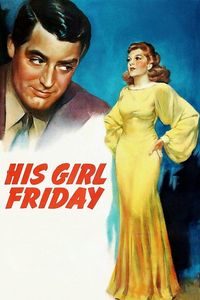
    His Girl Friday (1940)

    (On Cable TV, June 2018) There are many reasons why His Girl Friday shouldn’t work. The characters aren’t particularly nice people. A man about to be executed is at the centre of the film’s premise, which is odd for something often billed as a romantic comedy. A woman in a tragic situation becomes a comic device, and then the film makes it even worse by playing her quasi-suicide for laughs. The ending shows no real character growth. And yet His Girl Friday is fantastic. It’s a riot of laughs, a whirlwind of lightning-fast dialogue, a strong show of characters and it still has, more than seventy years later, both crackling energy and some thematic depth. Cary Grant is wonderful as a tough newspaper editor who browbeats both employees and lovers into doing what he wants—an utterly repellent character transformed into a striking comic figure through sheer acting talent. The first fifteen minutes, in particular, have Grant at his best. Rosalind Russell is equally good as a reporter who can’t quite quit either the business or her ex-husband. A sparkling battle-of-the-sexes comedy of remarriage, doubling as a highly cynical (yet uplifting) look at the news business, His Girl Friday still has plenty to wow audiences even today—the speed of the dialogue alone feels very contemporary and so does the biting cynicism about the news business. The film is optimized for speed, not detail—then-veteran director Howard Hawks (in almost exact mid-career) knew that he didn’t have to do anything to get in the way of his two lead actors, and the results speak for themselves. His Girl Friday is well-known today partly because it accidentally ended up in the public domain and has since then been a staple of late-night cable TV broadcasts, but it’s actually really good on its own. It’s got enough laughs to please modern audiences, especially now that the bad behaviour of its characters doesn’t seem so awful.

  • Broadway Melody of 1936 (1935)

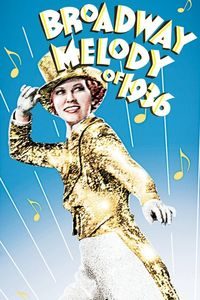
    Broadway Melody of 1936 (1935)

    (On Cable TV, June 2018) While occasionally billed as a sequel to the Oscar-winning The Broadway Melody, this 1936 update is almost entirely unconnected (save for the title song) to the original. On the other hand, those lucky enough to experience both movies as a double-feature evening will be shocked to notice the rapid progress of the Hollywood musical between 1929 and 1935. After a perfunctory opening that suggests a better technical control over sound and dialogue (and clearly sets its mid-thirties Manhattan/Broadway setting), the film hits its early peak with “I’ve Got a Feelin’ You’re Foolin’”, a full musical number complete with furniture popping in and out of the scenery, and even rudimentary (but effective!) split-screen special effects. Clearly, Hollywood had a few years to work out the kinks of musicals, and the result feels far more natural than its predecessor. Adding a plot that largely revolves around journalism is another way to keep things interesting, although by the time the story diverges in an elaborate attempt to promote a non-existing singer, only the repeated punchline of a character slugging another in the face is good to keep things interesting. Director Roy Del Ruth’s Broadway Melody of 1936 is relatively obscure these days, and as such represents your average Hollywood musical of the period. It’s far more interesting as an example of the form than as a particularly interesting film in its own right. Still, I did enjoy it: it may not hold a candle to the Astaire/Rogers musicals of the time, but it’s fun enough to be watched without fuss.

    (On Cable TV, January 2020) Having the occasion to build myself a triple-bill of the last three Broadway Melody movie, I took the occasion to refresh myself regarding the 1936 installment even if all four are narratively unconnected. Much of what I wrote upon my first viewing remains the same — the “I’ve Got a Feelin’ You’re Foolin’” number is good, and the musical is a representation of the state of the art at the time. What I liked less this time around were some of the narrative connective tissue — there’s a running subplot about a snoring expert that’s, well, a snooze (the repeated punching stays funny, though.) What I’m in a better position to appreciate this time around is Eleanor Powell’s work, especially in the final “Broadway Melody” number (“Gotta dance!”) where she gets to strut her long-legged tap-dancing. Broadway Melody of 1936 also serves, along with the other films in the series, to illustrate MGM’s rise as the premier Musical-making studio.

  • The Broadway Melody (1929)

    The Broadway Melody (1929)

    (On Cable TV, June 2018) As far as I can find out, The Broadway Melody has two enduring claims to fame: It was not only a Best Picture Oscar-winner, but the first sound film to do so (after the silent movies Wings and Sunrise the previous year) and is generally recognized as the first Hollywood musical. (It was also the top-grossing film of 1929.) Watching the clunky result today is a reminder of how far we’ve come since—While The Broadway Melody isn’t exactly bad, you can feel it trying to figure out the newfangled sound technology, and the devices it assembles to show musical numbers on-screen are still very much in their infancy. The characters break into song in completely naturalistic fashion, for instance to showcase the tune they (as Broadway writers) are working on. Or the film (in its best sequence) runs through a dress rehearsal for a Ziegfeld-inspired Broadway show. This is all in support of a story about two sisters seeking fame and fortune in Manhattan—the opening and closing moments of the film offer fascinating footage of late-twenties New York City and while the rest of the film is far too stage-bound to give us a good sense of contemporary city life, The Broadway Melody does give a generous glimpse at the life of a Broadway showgirl. If anyone was wondering about the influence of Broadway on American cinema, a triple helping of The Broadway Melody, The Great Ziegfeld, and Yankee Doodle Dandy should settle the matter. Alas, even with sound, The Broadway Melody is a rough draft of what movie musicals would become—it’s very much certainly of historical interest, but the end result is unsatisfying. The staging is awkward (that “fight” at the end…), the dialogue is stiffly articulated, the transition between scenes is handled through title cards rather than using stock footage as interludes … this is a film from Hollywood’s teenage years, and it still shows an art form being developed. (For an idea of how fast things evolved back then, have a look at the much less known sequel Broadway Melody of 1936 which, even made only six years later, show a dramatic improvement in sheer cinematic language.) Still, let’s recognize the work of the actors here: While Anita Page gets the plum role as the conflicted Queenie, Bessie Love is far more interesting as her hard-working sister (and got nominated for an Oscar for it). Eddie Kane is fun as Zanfeld-not-Ziegfeld, while Jed Prouty is intentionally insufferable as a stuttering uncle. It’s also interesting to note that, contrary to some expectations, this isn’t a fluffy musical—the film features plenty of personal setbacks for the characters and the ending barely offers enough hope. Given that it’s a pre-code film, you can expect to see a costume designer coded as gay, same-sex kissing (between sisters, but still) and quite a bit more exposed legs and underwear than I would have expected.

  • Doctor Zhivago (1965)

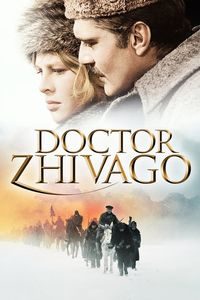
    Doctor Zhivago (1965)

    (On Cable TV, June 2018) I have little patience for anything these days, so getting me to sit down for three-and-a-half-hours to watch a Russian novel turned into an epic movie, even a David Lean movie, is asking too much. It took me four days to get through Doctor Zhivago, and I kept going only because the film is of some historical interest. Even then, the journey was gruelling. It’s not that the film is 193 minutes long—it’s that even for that amount of time, not a lot actually happens. It is a generational romance set against the backdrop of early-twentieth-century Russia, and yet it feels uncomfortably small, with a handful of characters bouncing against each other even in a country as large as Russia. To be fair, Omar Sharif is fantastic as the titular Zhivago, and Julie Christie isn’t bad as the lead female character. This being said, the show is stolen by smaller roles: Rod Steiger is delightfully evil as a well-connected politician, while Tom Courtenay has a great arc as the initially meek Pasha. Still, much of Doctor Zhivago unfolds slowly, with characters having intimate conversations while the country goes up in flames somewhere in the background. For an epic, it feels curiously small-scale and focused on melodramatic plot threads. Reading about the film, its troubled production and the historical context of the original novel is more interesting than the film itself—as I was wondering how a Russian film could be produced by a big Hollywood studio in the middle of the Cold War, the film doesn’t exactly act as pro-Soviet propaganda … and adapting the novel was seen as a big gesture against the USSR given that it had banned the book. Still, the result is an often-exasperating experience as nothing happens for a very long time. The film’s high points (such as the moments immediately preceding its intermission) aren’t, quite enough to make up for the rest, including an even more punishing framing device that adds even more minutes to an already bloated result. But at last it’s done: I have watched Doctor Zhivago and don’t have to watch it ever again in order to say that I did.

  • Adam’s Rib (1949)

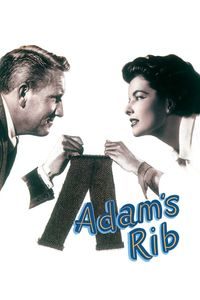
    Adam’s Rib (1949)

    (On DVD, June 2018) Spencer Tracy and Katharine Hepburn are back on-screen as a warring couple in Adam’s Rib: As a prosecutor (Tracy) takes on an attempted murder case set against a love triangle, his wife (Hepburn) takes on the case for the woman accused of trying to kill her husband while he was having what looks like an affair. Courtroom hijinks ensue, followed by further fireworks at home when pillow talk becomes legal talk. Like many screwball comedies of the time, Adam’s Rib does depend on a somewhat caricatured premise—not only that a wife would deliberately take on a case opposite her husband without having some serious conflict-of-interest professional issues, but that a judge would allow circus-like antics in his courtroom. The point of the film, obviously, is to see Tracy and Hepburn play off each other, and provide a satisfying climax right after being brought to the brink of divorce. It has certainly aged, but it’s still generally effective largely thanks to the lead actors. Hepburn is fantastic, and you can see that her role in the film is on the inflection point that brought her from floppy-haired ingénue roles to the matriarchal characters that would dominate the rest of her career. Tracy is less flashy but no less effective—the ending would have flopped with countless other actors, but he manages to sell it. Together, in this sixth film starring both of them, they have fantastic timing—so much so that at time, director George Cukor simply records their banter without moving the camera or cutting to different angles. David Wayne does shine in a small role with a few very funny moments. While some moments of the film don’t play particularly well today, the charm of the production generally overcomes those weaker moments—and the happy ending does redeem an increasingly darker third act. As a romantic comedy, Adam’s Rib is blunter than what we’re used to, but still remarkable in its own way.

  • The Sting (1973)

    The Sting (1973)

    (On Cable TV, June 2018) If The Sting doesn’t play quite as well today as it did back in 1973, it’s largely its own fault—it was so influential that, having birthed an entire sub-genre of con movies, it finds itself imitated to the point of irrelevancy. This is not to say that the film isn’t worth a look—in between Paul Newman and Robert Redford in the main roles (Redford being a touch too old, but who cares), some playful directing by George Roy Hill, and a rather charming recreation of mid-thirties Chicago, The Sting was and remains a top-notch crowd-pleaser. Where it fails is in keeping a sense of surprise. Even without having seen the film before, the ending is utterly predictable … not because it’s badly written (in fact, it was quite surprising to audiences at the time), but because the basic tenets of the entire ending have been endlessly duplicated by other lesser conman movies since then. Of course, the conman is in perfect control of the plot. Of course, the con is so big as to envelop even the structures in which the con operates. Of course, you have to confuse and whisk away the victim without them even suspecting the truth. Of course, even the authorities aren’t. Surprise: zero. But… Pleasure: quite high. Mixing memorable ragtime music, fancy scene transitions and even fancier title cards, The Sting is made for fun. It’s early enough in the post-Hays code to be cheerfully amoral, but not quite dedicated to the darkness that engulfed Hollywood cinema in the early seventies.