Author: Christian Sauvé

  • La Vénus à la fourrure [Venus in Fur] (2013)

    La Vénus à la fourrure [Venus in Fur] (2013)

    (On Cable TV, July 2015) There’s a remarkable purity of intention in La Vénus à la fourrure, a psychological thriller adapted from a stage play that almost entirely takes place on a darkened theater stage, featuring only two characters that spend much of their time reciting snippets of a stage play based on Leopold von Sacher-Masoch’s Venus in Furs.  You really wouldn’t expect any sustained tension out of this premise, and yet the film builds upon fairly dry foundations until it becomes an unsettling display of psychosexual combat, lead actor and lead actress locked in a duel of wills and kinks.  I’m going to ignore the question of whether you really want infamous fugitive director Roman Polanski to be the one to teach you about perversion, but there is some serious directorial skills on display here as the film does the most it can achieve with very limited elements.  Mathieu Amalric is good as a playwright who finds himself captured by his own creation, but Emmanuelle Seigner (Polanski’s wife) is simply astonishing in the lead role –she seems to be playing five or six parts one after the other, simple changes in costume or posture bringing out entirely new sides to her character.  It certainly helps that the script is so densely constructed, referring back and forth between actor, character and character-as-actor, with at least three levels of interpretation constantly feeding off each other.  (A hint for bilingual francophones watching the film: turn on the English subtitles to catch more references.) I wouldn’t call La Vénus à la fourrure an enjoyable film, but it’s certainly a fascinating one that builds and builds until it seems unbearably intense. 

  • Detention of the Dead (2012)

    Detention of the Dead (2012)

    (On Cable TV, July 2015)  “The Breakfast Club for the zombie generation” is a fair way to describe Detention of the Dead, as it features half a dozen mismatched students stuck in detention, suddenly dealing with a zombie epidemic ravaging their school (and, presumably, the world).  A fair warning, though: this is a very low-budget film adapted from a stage play, so don’t expect much more than adequate production values, acting or staging.  Much of the zombie material is strictly standard fare, with a few odd moments that don’t necessarily contribute much to the film other than to boost its running time into feature-film territory.  Of course, this isn’t a film to be taken seriously: the references to previous horror films abound, the tropes are completely familiar and it’s definitely meant to be a comedy first rather than a pure horror film.  While Detention of the Dead should work based on the strength of its characters, dialogue and situations, the best it can do is a bit of amusement.  The actors aren’t all strong enough to carry their roles, the staging isn’t always convincing, some of the references seem forced, the love triangle doesn’t really work, the order in which the characters die is almost entirely predictable and for all of the slight attempts at playing with the tropes of the genres it melts together, Detention of the Dead remains far too beholden to the core concepts of zombie films to bring anything new.  Shaun of the Dead it isn’t.  Still, comparing this film to the best examples of the sub-genre ignores the fact that at a time where terrible zombie movies rise up faster than reviewers can shoot them in the head, writer/director Alex Craig Mann has managed to craft a mildly entertaining film on a threadbare budget.  It could have been far, far worse.

  • Annabelle (2014)

    Annabelle (2014)

    (On Cable TV, July 2015)  What a strikingly dull horror film.  It wasn’t a good idea to spin off The Conjuring’s acclaim, but every profitable horror film inevitably ends up producing inferior sequels and so here we are.  Tracking the back-story of the Annabelle doll introduced in The Conjuring, (but otherwise independent of the previous film to the point of being stronger if you haven’t seen it), Annabelle doesn’t reach too deep in the bag of usual horror movie tricks, what with its blend of babies-in-peril, catholic mythology, jump scares and demons out to suck innocent souls.  It’s all very familiar, utterly by-the-numbers and it doesn’t take much to let our attention wander as the film laboriously works its way through plot point best established in other better movies.  The doll has more personality that the human characters, and while the conclusion has about thirty seconds of intensity, it’s a bit too little too late to redeem the film.  Created on an assembly line and put together without too much craftsmanship (which is a bit surprising, given director John R. Leonetti’s experience as a cinematographer on films such as The Conjuring), Annabelle is another in a long string of proofs that horror franchise can’t usually sustain Hollywood success: they invariably become corrupted at the slightest touch of financial greediness.

  • Ghosts of Girlfriends Past (2009)

    Ghosts of Girlfriends Past (2009)

    (On TV, July 2015)  For all the flack that 2000-2010 Matthew McConaughey has received for his lengthy string of undemanding roles in romantic comedies, it’s easy enough to forget that he was really, really good at it.  Ghosts of Girlfriends Past is as good a showcase for him in that mode as any of the other films in that sub-genre.  Here, A Christmas Carol crashes into rom-com conventions as McConaughey plays an unrepentant womanizer taught the error of his ways via three helpful ghosts on the eve of a wedding.  As with many films trying to mix familiar genre premises with high-concept premises, Ghosts of Girlfriends Past works best as its wildest (the scene where the protagonist meets his past girlfriends “in bulk” is the highlight), and worst when it’s saddled with obligatory emotional beats, or realise it actually has to deliver a romantic payoff beyond the jokes.  So it is that the film is an inventive delight when McConaughey acts as a bad-boy or when the ghosts take him through a tour of his romantic life.  It’s not so enjoyable when it has to go through the motions of the typical foreordained romance, or the dramatic scaffolding required to get to the triumphant ending.  But the film does make an impression: Emma Stone is nothing short of hilarious in a pre-stardom role, while Michael Douglas is slick-smooth as the kind of mentor every mother warns her son about.  Noureen DeWulf, Anne Archer, Lacey Chabert and Robert Forster also make good impressions in smaller roles.  Still, the script is a bit hit-and-miss as its better moments are saddled with more obvious ones.  In other words, Ghosts of Girlfriends Past should have been a bit better with the elements at its disposal, and occasional signs that it’s capable of much better.  But even as it is, it’s an impressive showcase for the kind of persona that Matthew McConaughey enjoyed in his rom-com heyday.

  • Saw III (2006)

    Saw III (2006)

    (Netflix Streaming, June 2015)  How fitting that one of the thematic threads in Saw III be the tension between sadism and redemption.  In the universe of the film, we get an argument between the lead villain (who does allow for extreme redemption) and his apprentice (who would rather kill in gruesome ways), which finds an echo in the tribulations of a putative protagonist offered the chance to take revenge upon the killer of his son and the enablers that let him walk free.  But in a wider context, redemption and forgiveness make for lousy horror franchises: The Saw series is built upon grimy traps, gruesome deaths, gross-outs and twisted revenge.  While I would personally like the series to err more frequently on the side of the compassion it professes to embrace, we know that this wouldn’t sustain a fan base big enough to allow for seven installments.  Part of the proof is in the way Saw III casually kills its recurring characters, forbids the rescue of its imperilled victims (all the way to a hilariously contrived shotgun blast) and embraces humanity’s infuriating penchant for self-harm.  Having seen bits and pieces of the next two films in the series a while ago, I found myself intrigued by the appearance of various plot hooks (and throwaway characters) used by latter installments in the series, and a bit captivated by the decaying atmosphere of the film and its dynamic direction.  I’m not as amused by the gore, the meanness or the nihilism of the series’ attitude, but then again I’m not really part of the horror audience courted by the series.  And while I’m curious about the three other installments in the series that I haven’t yet seen, I have a feeling that waiting a while between films is the best approach.

  • Hard Candy (2005)

    Hard Candy (2005)

    (Netflix Streaming, June 2015)  It’s an unconventional compliment to say that a film is intensely uncomfortable to watch, but then again Hard Candy is the kind of unconventional film that covets this reaction.  A thriller almost taking place in a single location between two characters, Hard Candy pairs off a creepy photographer who may or may not have something to do with the death of a young girl, and a teenage vigilante with psychological terror on her mind.  Castration is involved, so male viewers will spend much of the film with their legs crossed.  A curious (and frustrating) lack of wide shots reinforces the hermetic claustrophobia of the film, which often feels like an intense ping-pong match between skilled players.  Patrick Wilson makes a mark as the creepy photographer (fortunately, he has since had enough roles to avoid typecasting), but it’s Ellen Paige who earns almost all of the attention (despite a few too-showy moments) as a driven teenage avenger.  Hard Candy is very effective and successful at meeting its goals, but viewers may be forgiven for thinking that the film is a bit too long, and finding out that there’s not really any character to feel sympathy for.  Combined with the unsettling cinematography, Hard Candy thus remains a bit distant –which may not be a bad thing given the intensity of its thrills. 

  • Tusk (2014)

    Tusk (2014)

    (On Cable TV, June 2015) The good thing about today’s movie universe is that it has never been easier for just about any determined filmmaker to grab decent-quality filmmaking equipment and shoot their own movies.  This also works for experienced filmmakers, who can indulge their creative urges with smaller projects for specific audiences.  Sadly, this is also making it harder to stop projects that maybe shouldn’t have been completed.  So it is that Kevin Smith can riff off a ridiculous premise in a podcast and, months later, complete a project based on that rant, about a hapless podcaster being tortured into becoming a walrus for a madman’s own purposes.  The wonders of modern filmmaking!  Of course, the problem for end-result Tusk is that even though it tries hard to be a comedy/horror hybrid, it’s neither funny nor scary.  Just gross and pitiful, with a big side-order of boring.  Justin Long is neither good nor bad as the protagonist: while Long-the-actor is naturally likable, his character is obnoxious enough to shut down any nascent sympathy for his fate.  Tusk is self-aware enough to have joke casting (such as having Johnny Depp in a supporting role without crediting him, or featuring Depp’s and Smith’s daughters in small roles), but as with most of the film’s characteristics, the final result is slight enough as to make everything seem pointless.  If Tusk had been a better film, I would have a few nice things to say about the dialogue, the fractured chronology, some directorial choices or Michael Parks’ performance.  But it’s pointless, grotesque and interminable even at 90 minutes.  Even the Canadian content left me less than enthusiastic (the badly-translated French doesn’t help).  I’m not opposed to dumb midnight-movies, but Tusk is not a good example of the form.  And if Kevin Smith’s career is headed in the direction of increasingly-hermetic fan-service goofs, then I’m happy to let him go there and never look again; after all there are plenty of other filmmakers doing far more interesting things with the means at their disposal.

  • Secret Window (2004)

    Secret Window (2004)

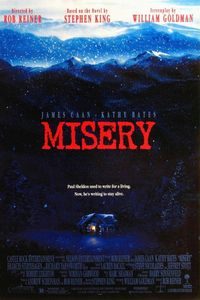
    (On Cable TV, June 2015) I don’t think anyone can claim that Secret Window is a great thriller, but it’s a pretty enjoyable one in its own ludicrous way and I’m sorry it took me more than a decade to see it for myself.  What makes the film almost-instantly recognizable as adapted from a Stephen King story is its focus on elements dear to King’s body of work: the writer-protagonist, the emphasis on the process of writing, the bloody escalation of horror, the gruesome violence, the touch of meta-fiction… Misery may top the list of typical-King movies, but Secret Window comes close.  Johnny Depp is enjoyable as the writer-protagonist: his relatively normal performance here seems even more remarkable now that he has settled in a post-Jack Sparrow rut of eccentric characters.  Writer/director David Koepp knows how to keep things interesting, and the gradually deepening mystery of the film eventually gives way to full psychological and then physical horror as the story reaches its inevitable conclusion.  While the ending may repeat a crucial few lines once too often, the coda is pitch-black enough to make a mark.  It’s not a respectable film, it’s not even a memorable film, but Secret Window is more than good enough to be interesting.

  • Paddington (2014)

    Paddington (2014)

    (In French, Video on Demand, June 2015) Even without being overly familiar with the children-book source material, I can report that Paddington works well as a film: It’s an absolutely charming surprise.  Whimsical, sweet, good-natured and visually inventive, it manages to create a contemporary version of a walking-talking teddy bear without coming across as overly sweet or manipulative.  It’s a tricky balance, but the film pulls it off.  The special effects are good enough that at no time do viewers have any reason to question the existence of Paddington.  Ben Whishaw brings a lot to our ursine protagonist through his voice performance, while Sally Hawkins and Hugh Bonneville are instantly likable as the heads of the family that take in Paddington.  Nicole Kidman also makes an impression in a fairly rare role as an antagonist, although her evil character sometimes feel out-of-place in an otherwise good-natured film.  Writer/director Paul King should get most of the credit for the success of the film, not only for a charming screenplay, but also for visual flights of fancy that establish its unique atmosphere–the flybys through the cutaway Brown family home are a highlight, but several other sequences are executed in a remarkably original fashion.  Funny, heartwarming, instantly-accessible and a pure delight, Paddington should please anyone within sight of the screen it’s playing on.

  • Into the Wild (2007)

    Into the Wild (2007)

    (On DVD, June 2015) Well, I’m torn: What happens when you try to review a decently-made film that practically sanctifies someone who’s done something really, really stupid?  I’m not much for the whole “throw away your shackles, take a hike, enjoy life” narrative: I think we’re made stronger by being part of a civilization with rules, ties and obligations.  I’m not against traveling and having new experiences, but seeing the protagonist of Into the Wild give away his money, sever ties with his family, spout incoherent feel-good nonsense and head away from civilization in such a way as to sacrifice any chance of survival doesn’t make for a hero.  And yet, Into the Wild is captivating.  Sean Penn’s directorial debut is heartfelt, benefits enormously from location shooting, knows how to best use its actors (Emile Hirsch steals the show as the protagonist, but even Vince Vaughn has an uncharacteristic role) and manages to make even its most depressing moments mean something almost profound.  It does suffer from its length, though: clocking in at a far too long two hours and a half, Into the Wild often feels as if it’s waiting for something else and seems even longer given the dumb decisions made by the so-called hero of the story.  At the end, I’m more saddened by the film than uplifted by its attempt to glorify a series of bad decision by someone who may have had significant mental issues.  Have I liked Into the Wild, or not?

  • She’s Out of my League (2010)

    She’s Out of my League (2010)

    (On TV, June 2015) I quite like Jay Baruchel’s neurotic screen persona, but a little bit of it goes a long way, and with rare exceptions (I’m thinking about The Trotsky, itself far from being a conventional film), he’s best used in supporting roles than leading ones.  She’s Out of my League can justify his presence by squarely tackling the issue of romantic partners with mismatched looks, but the sub-par quality of the script does Baruchel no favours despite his better-than-average comic timing.  Torn between conventional (if gender-bent) romantic comedy trappings, raunchy comedy and attempts at observational wit, She’s Out of my League seems stuck in an uncomfortable place where the crass jokes (and there’s one of them that’s far better in the adulterated G-rated trailer than in the frank R-rated film) sabotage whatever else the film may be trying to say.  I’m not entirely comfortable with the film’s conflation of middle-grade beauty and slovenliness (which plays along the common Apatowesque comedy construct of unattractive males attracting beautiful girls for unspecified reasons and not much work) or even, heck, the very notion of various levels of attractiveness.  The film may deconstruct the notion of “levels” late in its running time, but it goes so half-heartedly… after basing near an hour’s worth of material on it.  There’s definitely something in She’s Out of my League what could have been explored, but I’m not sure that what’s in the film qualifies as the best possible exploitation of it.  To its credit, She’s Out of my League could have been much, much worse: it does have its heart at the right place, and avoids a lot of the misogyny that could have sprung from its premise.  But the result still feels off-centre, superficial even when it aims for a bit of profundity.

  • P.S. I Love You (2007)

    P.S. I Love You (2007)

    (On TV, June 2015) Few romantic dramas manage to straddle the unexpected line between creepy and romantic as thoroughly as P.S. I Love You.  It’s the kind of high-concept romantic premise (a dead man leaves a series of messages for his surviving spouse) that seems as horrifying as it could be sweet.  While the film does manage a few nice surprises (such as a non-chronological structure and a conclusion that doesn’t rush to a romantic coupling), it’s still a bit off-putting, rather long and not entirely convincing in the details it uses to fill the blanks in its structure.  Hilary Swank is, somehow, not particularly well-suited to a romantic lead role, and neither is Gerard Butler –despite generally likable performances, they don’t quite seem to click as well as they should.  Lisa Kudrow and Harry Connick Jr. are also in the same boat: they do what they can with the material they’re given, but we know they’re capable of much more.  Ultimately, though, much of P.S. I Love You feels heavily manipulated by the author/screenwriter’s whims, leading to plot points that don’t seem to happen organically.  That’s sort-of-forgivable in romantic comedies, but not so much in attempted tearjerkers. 

  • The Forger (2014)

    The Forger (2014)

    (Video on Demand, June 2015) Anyone would be forgiven for thinking, upon reading The Forger’s plot summary (“Ex-con forger does one last job”) that this would be a heist crime thriller.  But the film itself is a bit more nuanced; it’s got a lot more family drama than criminal action as a convicted forger voluntarily agrees to a dangerous heist in order to spend time with his dying son.  There’s a lot of family bonding, some heart-breaking sequences (such as when the son’s estranged mom, hopelessly addicted to drugs, manages to hold it together and pass herself off for normal during a one-day reunion), considerations on how to forge a painting, and a lot of John Travolta brooding on-screen as the titular protagonist.  In other words, The Forger is its own kind of movie, heavier on drama than thrills, the likes of which doesn’t fit in today’s all-spectacular theatrical ecosystem.  Travolta does pretty good work in a role far less flashy and far more brooding than he’s usually asked to play.  The film itself feels a bit dull and unfocused (the heist itself feels like an afterthought), but that may just be a reflection of how today’s audiences have been conditioned to accept more flash and a consistent tone throughout an entire film.  For a similar experience in selecting a genre picture that turns out to be a drama, also see Mark Wahlberg’s The Gambler

  • Mulan (1998)

    Mulan (1998)

    (In French, On Blu-Ray, June 2015) I may be late in seeing Disney blockbuster Mulan, but in other ways I was ready for it, having seen enough of the other “Disney Princess” movies to show how different Mulan is and isn’t.  The good news, and the reason to celebrate the film, is how much stuff it dares to tackle: Asian themes and setting, issues of identity, family, honor, actualization, cross-dressing, war… We’re quite a distance away from the simplistic motivations of Snow White or Sleeping Beauty, here.  The animation is impressive, the level of detail is astonishing and Mulan, as a heroine, is far more rounded than most of her co-princesses.  It’s a big story well-told.  On the other hand, I found the animal comic relief to be jarring: While Mulan will agonize about family honor during one scene, the animal sidekicks will ham it up one moment later.  The film would have been stronger without them.  Still, Mulan remains a remarkable achievement – it’s not part of the Disney Renaissance for nothing. While probably a little bit too much (too violent, too complex, too specific) for the younger kids, it’s often far more interesting to adults than most Disney animated features. 

  • Austenland (2013)

    Austenland (2013)

    (On Cable TV, June 2015)  Seemingly designed for maximum cuteness, Austeland plays with the tropes of romantic comedies as a lovelorn American heads to England to visit a Jane Austen-themed park, where she’ll spend a week in an idealized historical setting where romance is guaranteed.  Of course, it becomes hard to distinguish between reality and fiction once the romances start piling up.  Austenland benefits considerably from Keri Russell’s charm and Jennifer Coolidge’s over-the-top comic timing, but it’s the intertwining of romantic tropes and how they play out in the multiple realities of the theme park that really drive the plot and the interest of the film.  Austenland certainly isn’t perfect: There’s something off in its low-budget staging (the park is definitely underwhelming once we get there: is there all it is to it?), lack of laughs in favour of knowing chuckles and ultimate adherence to rom-com clichés.  Fortunately, romantic comedy clichés are such that they don’t leave much of a sour taste when they’re reinforced –Austenland isn’t entirely successful, but it’s partially successful in a genre that is very forgiving of imperfection.  It’s a likable film, light and insubstantial but easy to watch and utterly sympathetic.  Twilight haters may want to note abashedly that Stephenie Meyer co-produced the film and so helped make it come in existence.