Movie Review

  • Wonder Woman: Bloodlines (2019)

    Wonder Woman: Bloodlines (2019)

    (On TV, April 2020) While I’ve got quite a bit of respect for the DC Animated Movie Universe (DCAMU), there’s always a risk that it will be redundant to the more popular live-action films, even when it does things better than the box-office behemoths. While Wonder Woman: Bloodlines is not a bad origin story for the character and would have been a significant Wonder Woman film had it been made ten years earlier, it does feel a bit redundant after the 2017 Patty Jenkins live-action film. [December 2021: …and even more redundant after the 2020 sequel steals even more of the subplots.] Laboriously going over Wonder Woman’s origin story once again (if brought to the twenty-first century), it compounds the origin story problem by overstuffing the narrative with six villains, all jockeying for time, attention and importance. While the Steve Rogers romance is fine, quite a bit of the dialogue is slap-dash material that could have used a rewrite or two. It’s also substantially glummer than expected, which may be dramatically respectable but doesn’t do much for the entertainment factor. But most of all is the feeling that Wonder Woman: Bloodlines is too late and too redundant to be interesting to anyone but the most dedicated (or least-informed) Wonder Woman fan.

  • The Death of Superman (2018)

    The Death of Superman (2018)

    (On TV, April 2020) The first “death of Superman,” back in the 1980s comics, was an event. Naturally, it proved to be such a crowd-pleaser that it’s now almost a mandatory episode for any new reinterpretation of the character. 2018’s The Death of Superman is the DC Animated Movie Universe’s take on the material—more closely faithful to the original comic, but still able to update the story to the context of the series so far. It’s not a bad Superman story, and is even slightly more realistic than I expected. The title is both a spoiler and not, as it happens fairly late in the film, and is resolved before the credits roll. As a result, it doesn’t have much emotional weight—we know he will be back. The narrative does give a large place to Clark Kent, which is a good idea considering what we know and expect will happen to his alter ego. But in the end, The Death of Superman ends up being nothing more an honourable entry in the DCAMU, which is often more consistently successful than its live-action equivalent.

  • Of Human Hearts (1938)

    Of Human Hearts (1938)

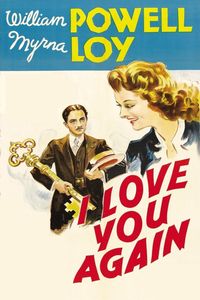
    (On Cable TV, April 2020) How much you like Of Human Hearts will depend, I suppose, on your tolerance for nostalgic melodramatic Americana spanning decades of conflict between father and son from the 1850s to the American Civil War. Also, if you can tolerate a film whose climax is President Lincoln chastising the protagonist for not writing more often to his mother. (It’s not a dream sequence.) The drama feels unremarkable, the production values aren’t particularly impressive, and the characters are contrived. Just about the only bright spot is James Stewart’s role in the second part of the film, but he, too, is saddled with a mediocre script. Clearly optional for most, Of Human Hearts was once a crowd-pleaser, but now it just feels like it’s barely worth a shrug.

  • Blind Date (1987)

    Blind Date (1987)

    (In French, On TV, April 2020) Nearly everyone has a bad date story, but probably not something as hilariously awful as the one in Blind Date. Veteran comedy director Blake Edwards gets to play with Bruce Willis back when he was a good comedian, and a young Kim Basinger who simply looks terrific—and funny too. The film is about a blind date between two likable people—except that she gets out of control whenever she’s drunk, and he gets to pay the price for all sorts of bad decisions, losing almost everything along the way. Now, I wouldn’t want to get too enthusiastic about what’s an uneven comedy—there are clearly highlights and lowlights here. But anyone with an appreciation for broad comic acting, 1980s fashion and absurd physical comedy will get at least a few chuckles out of Blind Date.

  • The Scorpion King 3: Battle for Redemption (2012)

    The Scorpion King 3: Battle for Redemption (2012)

    (In French, On TV, April 2020) Don’t look at me like that—In choosing to watch The Scorpion King 3, I’m here to see how maximum-value director Roel Reiné can do in a fantasy adventure, not out of any specific affection for the Scorpion King series. Dwayne Johnson isn’t in this one, but Dave Bautista, Temuera Morrison, Billy Zane and Ron Perlman all are! Still, this isn’t a particularly good film—being straight-to-video label Universal 1440’s first production, and a third in an increasingly meaningless series, how could it be otherwise? The plot is soporific, the budget is clearly limited and the actors are clearly challenged by even substandard material. This being said… it’s not all bad. Reiné’s near-superhuman powers at stretching his budgets eventually make the film decent enough to watch, even when it’s not being particularly ambitious. The foreign shooting locations in Thailand add some interest, and there’s a good representation by Asian action heroines. For a straight-to-video third instalment in a series, The Scorpion King 3 could have been much worse.

  • I Think We’re Alone Now (2018)

    I Think We’re Alone Now (2018)

    (On Cable TV, April 2020) I’m juuust enough of a misanthrope to have some affinity with I Think We’re Alone Now’s protagonist—a small-town librarian who finds himself the sole survivor of a global apocalyptic plague. The film is a slow-paced meditative affair, especially at first—it takes nearly a quarter of an hour before the first line of dialogue is spoken, as the camera follows the protagonist (played by Peter Dinklage) living in a library and methodically burying the dead people in his town. This cozy state of affairs ends when a young woman arrives in town, bringing along complications that keep developing until a third act that (somewhat disappointingly) goes much wider than the opening of the film would suggest. Helmed with some skill by Reed Morano, this is a small, evocative film that riffs off a popular 1960s Science Fiction trope—the only survivor of a catastrophe and how they cope with it. I found it far more compelling at first with its clear sense of spatial-temporal unity—although I can understand the factors leading to a more expansive third act. On the other hand, I’m not sure that this specific third act is the best philosophical choice on which to end the film—it seems to me that the film loses its way somewhere along the line and crawls its way to a mediocre conclusion. Still, the first half-hour is pretty good, and it’s always good to see Dinklage getting great roles.

  • A Boy and His Dog (1975)

    A Boy and His Dog (1975)

    (Criterion Streaming, April 2020) For prose Science Fiction readers such as myself, A Boy and His Dog is almost legendary—it remains the only major film adapted from one of infamous Harlan Ellison’s SF stories, and a particularly striking example of the kind of dystopian Science Fiction that was so popular in the 1970s before Star Wars came out and dragged the genre back to crowd-pleasing entertainment. Compared to those other downbeat 1970s dystopian films, however, the bleak weirdness of A Boy and His Dog is more interesting than most. It’s not only about a young man (a young Don Johnson) scrounging for survival in what looks like a devastated desertic world, but also about his telepathic dog-and-best-friend. After a lot of throat-clearing describing life in the post-nuclear wasteland, the film finally finds its groove underground—in a vast subterranean city where a warped vision of small-town pastoral America has taken root. Our protagonist is warmly greeted by the population, and it takes a while for him to realize what’s going on. The dog is witty. The ending is merciless. But this is an Ellison story—you know what you’re going to get and writer-director L. Q. Jones doesn’t pull his punches. Arguably more disturbing now than back in the 1970s (essay question: is today’s society more like the underground “Topeka” than upon the film’s release?—discuss), A Boy and His Dog is certainly not comforting entertainment—unarguably provocative and misogynistic, it’s thankfully a reflection of an earlier era and I’m probably not going to watch it a second time.

  • Nora inu [Stray Dog] (1949)

    Nora inu [Stray Dog] (1949)

    (On Cable TV, April 2020) Writer-director Akira Kurosawa turns in another interesting postwar Japanese thriller with Stray Dog—a story that may seem low-stakes at first, but eventually becomes a satisfying exploration of a policeman with a conscience. Taking place during a summer heat wave that you can almost feel through the screen, it follows a policeman after he gets his gun stolen during a tram ride. When the gun is used in a series of petty crimes, the guilt-ridden policeman fights to keep his humanism while chasing the suspect. There are strong dramatic anchors here beyond the police procedural surface. The portrait of postwar Japan is gripping, and you can see this proto-buddy movie as a template for other efforts. The script works its way to a great showdown, through good sequences such as the first foot chase and some material that is borderline comedy. A solid second-tier Kurosawa, perhaps even a bit better than that if you’re a fan of his movies set in then-contemporary times.

  • 2 Days in New York (2012)

    2 Days in New York (2012)

    (On TV, April 2020) By the time I realized that 2 Days in New York was the sequel to another film called 2 Days in Paris, it was too late to stop, and I was increasingly sure that I wasn’t in any hurry to watch another film in this series. A comedy of familial humiliation, it stars Julie Delpy and Chris Rock as a Franco-American couple living in New York whose lives are upended when her French family decides to visit. The visitors are skilled in creating trouble and cannot be trusted alone in society, whether because of excessive lust, property crimes or casual racism. The tensions keep rising within the couple, and Delpy the writer-director-star seems determined to create a film of maximum discomfort. Alas, there’s a hard limit to how much of this we’re willing to tolerate, and 2 Days in New York hits it pretty early on. To Delpy’s credit, the actors are fine, the story ends well and this is the film to watch if ever you want to see her fight with Vincent Gallo about her soul. (Fortunately, Rock does especially well as “the American boyfriend.”) One character is so strikingly unpleasant that even the movie is giddy about having him deported from the United States midway through. Still, this doesn’t do much to improve the result: 2 Days in New York is still a grating, deliberately off-putting experience. I didn’t exactly hate it, but I’m not planning on watching it ever again.

  • Abominable (2019)

    Abominable (2019)

    (On Cable TV, April 2020) There’s been a surprising number of movies about yetis, sasquatches and other hominids lately, and Abominable does struggle a bit to distinguish itself. (If you’ve lost track, as I did, keep in mind that Smallfoot [2018] is the Warner Brothers Animation one, The Missing Link [2019] is the Laika stop-motion one, and Abominable [2019] is the Dreamworks one.) What does help set Abominable apart is that it’s perhaps the least funny of the bunch, and the one that’s clearly, definitely, undoubtedly set in China, from the setting to the use of the “nine-dash line” that got the film banned or cut in several neighbouring countries. (Albeit branded as if from “Dreamworks,” the film was majority-financed by Chinese interests—and that adds to the whole “Hollywood coopted by China” trend of the 2010s.) The story has to do with a young woman discovering a yeti living on the roof of her building, and the adventures they have while trying to get the yeti back home as the yeti’s previous captors pursue them. Yeti aside, Abominable clearly dips into supernatural (or at least magical) plot devices from time to time. While definitely a family film, it’s nonetheless a bit more insistent on the drama thanks to a lost-family motif, some action scenes with dangerous stakes and clear antagonists—closer to an adventure than an outright comedy. I did like the antagonist a lot—although a bespectacled curly-haired redhead is pushing a lot of buttons for me. Beautifully animated and competently directed, Abominable is also ordinary—it does most things right, but doesn’t colour too much outside the box defined by other animated family films, with a special slavishness to (what else?) the Dreamworks structure and model. It’s likable enough (that yeti is very cute), but wholly unsurprising at the same time. If you want a yeti comedy, look at Smallfoot; if you want unpredictability, watch The Missing Link.

  • A Midsummer Night’s Dream (2017)

    A Midsummer Night’s Dream (2017)

    (On Cable TV, April 2020) I’m not always a good audience for Shakespearian adaptation, but this 2017 version of A Midsummer Night’s Dream is surprisingly interesting. It begins by recasting the Bard’s tale in a modern alternate universe fusion of Athens recast as Los Angeles, with its characters involved in the film business. Accordingly, there are tons of cute showbiz/Shakespearian jokes in Act One—despite the arch dialogue, the film is as non-stuffy as it gets with its musical segments, smartphones, swearwords, references to other Shakespeare plays, Star Wars and a definition of an ass’s head that uses the not-animal definition of the word. You may object to the dialogue (and I did), but the irreverent style and stylish visuals certainly help—there are fair comparisons to be made here with Romeo + Juliet. While the film does lose steam once it heads out in the forest, there’s enough going on here to keep everyone invested. Writer-director Casey Wilder Mott must have a wild tale about how this film came together, but the result is hip, smart, funny, sexy and definitely worth a look. (Plus, Mia Doi Todd does look really nice here.) Amusingly enough given my praise, it took me three attempts to get through this film—I was exhausted the first time and shut it off, not feeling it the second time and stopped, but something kept me coming back and it finally clicked on the third go-around. Hopefully, it won’t take you as long to realize how good it is.

  • A Midsummer’s Hawaiian Dream (2016)

    A Midsummer’s Hawaiian Dream (2016)

    (On Cable TV, April 2020) The Bard’s work is appropriate for all seasons and cultures, even a straight-to-TV take set in Hawaii… wait, what? Well, yes, A Midsummer’s Hawaiian Dream takes the Shakespearian comedy, chops off a lot of the subplots, recontextualizes it to modern-day Hawaii and doesn’t really break the bank for a budget. Let’s be fair: the film is set in utterly spectacular Hawaiian scenery and never misses an occasion to shoot outdoors—just stunning stuff, to the point where I was just happy just taking in the background footage. When it comes to TV rom-coms, this film’s scenery is in a class of its own. The rest, however… well, let’s give one to the bard: the plot is fine. What’s not so fine is what they do with the plot, especially when it comes to dialogue (either spoken or tortured into pseudo-Shakespearian) or cutting away nearly all of the supernatural to focus on the romantic. What’s worse is the common failure point of such TV movies: the good-looking actors aren’t the best, and the director (Harry Cason, who also co-wrote) is not really handing them effectively: we are far, far away from Shakespearian acting, as nothing is subtle and everything is broad enough to play to people half-listening. Still, A Midsummer’s Hawaiian Dream may be blunt and rough and cheap but it does have the advantage of being just fun enough to be likable. There are plenty of better versions of the same story elsewhere, but it could be worse than being stuck with this one.

  • The Bees (1978)

    The Bees (1978)

    (In French, On Cable TV, April 2020) My God. I thought that one hilariously incompetent late-1970s disaster movie about bees was enough, but now you’re telling that… there’s a swarm of them? That’s right: In addition to The Swarm, here is The Bees, which is also a film about South African “killer” bees invading the good old U. S. of A. and wreaking havoc. It’s also a film that’s inherently ridiculous and executed in a way that’s even worse than its concept. While some of it is meant to be funny (I mean, how can you not laugh at “That’s adding incest to injury…”?) the rest of it is so hilariously inept that it defies the odds that two similar films would battle it out for the title of queen bee of ridiculousness. If The Swarm was bad, The Bees is worse… but not in the good sense of worse: just increasingly inept. If The Bees looks as if it’s going to avoid the excess of The Swarm, that impression is a reprieve: As the film advances, it becomes increasingly ridiculous. While clearly without the large budgets of The Swarm, this one has a decent-enough budget for shooting and had the good sense to use good stock footage when it’s needed. The special effects are not all bad, but the acting, direction, script and pacing are uniformly terrible. The script, in addition to other issues, is a repetitious chain of very similar scenes: innocent people go about their business, are killed by bees, repeat. Amusingly enough, a President Carter lookalike shows up at some point. And now we know exactly why Reagan was elected: It was the bees’ final, cruellest act.

  • Madman (1981)

    Madman (1981)

    (In French, On Cable TV, April 2020) You have certainly heard this one before: a psycho with a knife killing summer camp counselors. Yeah. No clichés are left behind in writer-director Joe Giannone’s Madman, a slashy slasher from the slashiest period: backwoods legend, isolated camp, couples having sex before being killed and one final girl. Sure, those clichés may not have been clichés at the time (remember, this film was released only one year after Friday the 13th and more or less contemporary to The Burning) but even if that’s true, time has not been kind to Madman. It now feels completely generic at the level you’d see from bargain-basement straight-to-streaming releases, undistinguishable from so many movies of the era from the camp-killing premise to the synth soundtrack, the incessant screaming, the muddy nighttime atmosphere and so on. I suppose that Madman gets a place in the movie hall of fame for being the most utterly average of all slashers from the golden age of slashers, but that’s really not much praise.

  • Maniac Cop (1988)

    Maniac Cop (1988)

    (In French, On Cable TV, April 2020) So there’s this maniac and he’s a cop and this is a slasher horror film set in New York City and I can probably stop the review right here because you know all you really need to know about Maniac Cop. It’s directed by William Lustig (who also directed 1980’s execrable Maniac) but written by Larry Cohen, so there’s something that can’t easily be dismissed in the script and the result is, much to my dismay, an above-average slasher—maybe even a dark supernatural thriller. One of the interesting tricks that Cohen plays is changing protagonists every so often, eventually landing on none other than Bruce Campbell (albeit in a histrionic-free turn) as the protagonist. Richard Roundtree also shows up! There are a few surprisingly good stunts at the end of the film, and the entire thing is very much a New York City movie—and proudly made as a B-movie. While I can’t bring myself to call Maniac Cop a good film, I liked it better than I thought, and feel that with police brutality being under an unprecedented scope, the film should find a specific audience in the ACAB crowd. Maybe we’ll end up with a remake one of these days.