Travel: Boston 2024
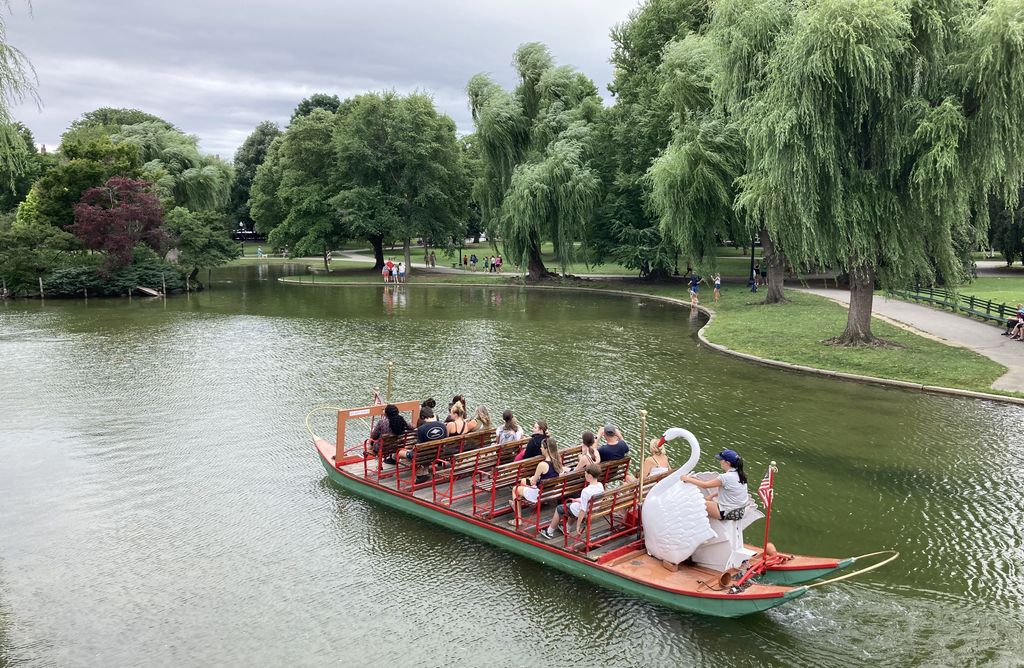
Another summer, another road trip! This year, after sitting out 2023 due to home renovation matters, we set our sights on a familiar yet intriguing destination: Boston and surrounding areas. On this page, you’ll read a fragmentary account of six days spent driving from Ottawa to Boston, visiting the area, and coming back home again.
This was far from being my first visit to Boston. From 2004 to 2011, thanks to Noreascon4 and the Readercon series of literary conferences, I was an enthusiastic yearly visitor to the area—with a homebase in Burlington. I visited again in 2019 (this time based in Quincy/Braintree) with the intention to once again become a yearly visitor, but then COVID struck and then I started visiting nearer cities with my daughter (henceforth: Junior Navigator) and then there was the slight matter of rebuilding half of my house following a chimney fire in 2023. But Boston stands eternal, and was more than happy to wait for us to finally cross the border for a visit.
Junior Navigator and I aren’t the only characters in this travelogue—we visited with my sister, brother-in-law and niece (a few years younger than Junior Navigator, but close enough to share common interests) and you’ll see all of us pop in and out of the narrative. The Readercon literary conference was once again the anchor event of the visit, but I ended up spending a rather short time over there, so if you’re here for the writers’ panel summaries, you’ll have to do with tourist advice.
Day One – Thursday, July 11 – Getting There
Continental events can affect daily lives, and that’s why I spent much of the three days before the trip obsessing about weather reports and forecasts. Hurricane Beryl, after flooding the Caribbean and Texas, was heading northeast along a path reminiscent of the Solar Eclipse of April 8, 2024—and scheduled to cross the Ottawa/Boston axis right before we were scheduled to leave. Warnings of abundant rain (40 mm in an hour, said some reports) were issued for the entire area, and were supplemented by warnings of flash floods.
After fretting, looking at maps and obsessing about rain forecasts, I concluded that most of the rain would fall on Wednesday and during the night leading to Thursday—leaving the dregs of the storm to act as backdrop to the initial Canadian leg of the trip from Ottawa to Vermont. I did make one change—rather than drive down the Quebec-side Autoroute 50 (dangerous even in relatively ordinary circumstances), I opted for the duller-but-safer Ontario-side Highway 417.
My sister and her crew left on Wednesday afternoon, and stopped as scheduled in Berlin, VT to sleep. Meanwhile, the storm went on and was still going on when we left on Thursday morning. I was generally right in my forecast—after one episode of moderate rain on the outskirts of Ottawa, the weather slacked off gradually until the rain stopped shortly before US customs in Highgate, VT and the weather gradually made way to sunny skies by the end of the drive. Eager to get on with it, we stopped only once on the Canadian side of the trip (in Rigaud) but otherwise drove straight through the 417, the 20, the 30, the 35 and then the last ten kilometres of country road until the border (which is scheduled to be replaced by A35 by 2026).
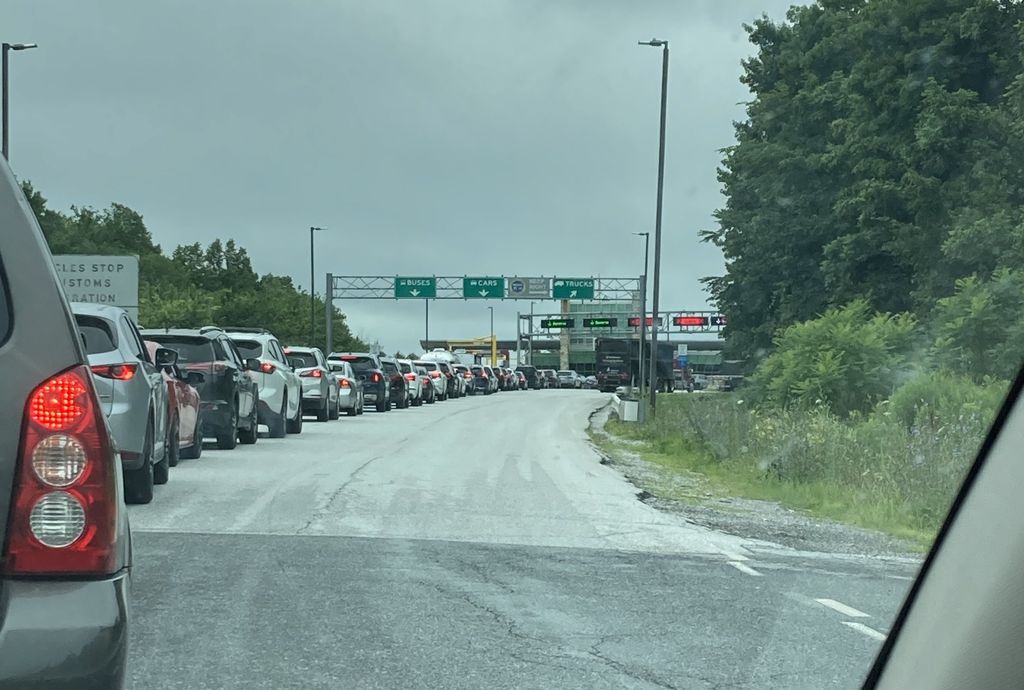
Our waiting time at US Customs took an uncharacteristically long 45 minutes—only two gates were open despite an accumulating number of cars. But once at the border itself, we were waved through after a few perfunctory questions.
Which landed us in Vermont, perhaps the state that most resembles home in matters of climate, landscapes and attitude. Despite my fondness for the state, there’s just one thing about driving through Vermont on the I89—it’s really, really dull. Two hundred uneventful kilometres of a generally well-maintained two-lane highway with forest on both sides. That’s it.
I kid, a bit: The fun in Vermont starts once you take the highway exits and start poking around. This time, due to Junior Navigator, we stopped more often than usual:
- A tradition for any Vermont visit: The usual stop at the Burlington Shaw’s supermarket (exit I-189) for snacks, breakfast food to eat at the hotel, and other groceries only found in the United States. (My obsessions: Gallons of Arizona Sweet Tea, rarely found in Canada, and Lipton Green Tea with Citrus, which used to be sold in Canada but no longer.)
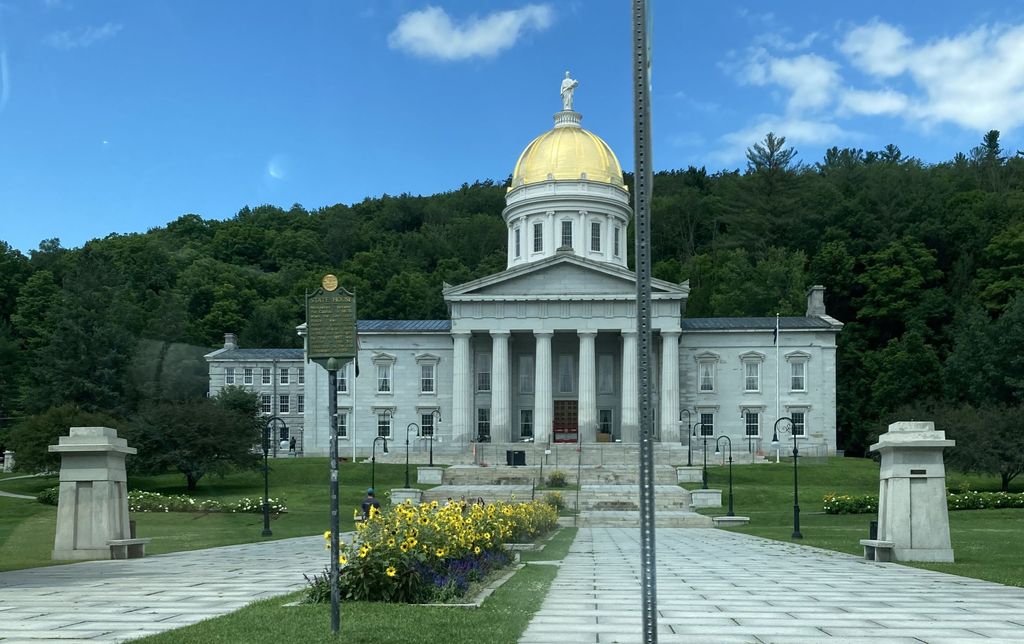
- We drove through, but did not stop, in Montpellier (exit 8). I wanted to show the Vermont State House to Junior Navigator, but since the town was struggling a bit with Beryl-induced flooding and we had a bad impression left by a parking inspector breaking (?) into a parked car, we circled downtown and went back on the highway.
- We visited the Berlin Maplefields rest stop (exit 7)—formerly an independent Maplewoods, but bought by the convenience store chain in late 2023 and reportedly much downgraded from its former reputation. That’s too bad—Maplewoods had popped up a few years ago as someplace I wanted to stop by (the closest northeastern equivalent to a Buc-ee’s), and while the new Maplefields is adequate as a rest stop (and superficially kept the physical layout of the previous place), it doesn’t measure up to Maplewood’s former web site—I was specifically disappointed by the closure of the hot food area.
Otherwise, we rolled through Vermont without too much trouble. (Scroll down to the last day’s report for a few more points of interest encountered on our way back north.)
New Hampshire isn’t quite as dull as Vermont, but this is not necessarily an advantage: It’s more eventful because the terrain is more varied, and the traffic noticeably ramps up the more you approach Massachusetts. Our drive through the state was divided in two: The southern portion of the I-89 is a two-lane highway going through forests and hills, while the southbound I-93 starts as a three-lane highway at the junction and then (despite flatter terrain) gets wilder and more intense traffic as you approach the Commonwealth of Massachusetts. After the seemingly endless roads of Vermont, New Hampshire felt as if it went by quickly. We did stop twice:
- No matter the specifics of any Ottawa-to-Boston drive, the Warner gas station and convenience store on I-89 (exit 9) is always a stop—it’s usually the point where I go “Hmm, gas is getting low, might as well stop at the next exit,” and that exit usually ends up being Warner. This time, we planned our stop at Warner. The gas station berths were all busy upon arrival, so we stopped for snacks at the convenience store and got the gas after.
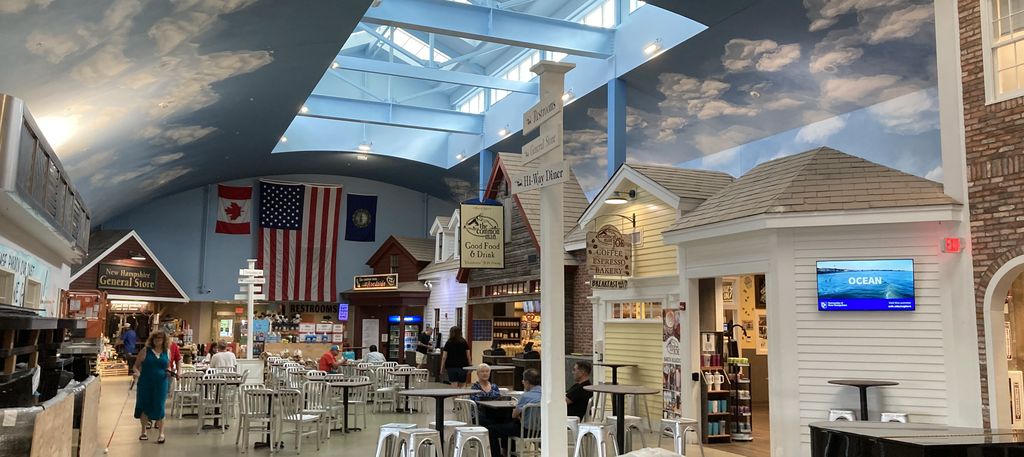
- The next stop was new for us—the southbound Hookset Rest Stop on I-93 was always there during our previous trips, but by that point we were usually barreling down the highway and looking forward to the end of the trip. But having a Junior Navigator (and doing the entire drive by myself rather than trading 2-hour driving shifts with my sister) meant more frequent stops, and that’s how we discovered something already known to many, many others—that Hookset Rest Stop is great! It has everything a traveller may need, and in style as the vast building is decorated with flair and home to many smaller boutiques. The Southbound rest stop was under construction when we visited, but should be back to form by the time you drop by.
Then the trip took us (via three-lane-and-more I-93) to Massachusetts, our ultimate destination. While our final stop was in Quincy, south of Boston itself, the evening rush hour was ramping up by the time we approached the area. So, partly as a benefit to myself as a driver and partly to Junior Navigator’s delight, as I could show her the sights, I stopped by the familiar north-of-Boston Burlington to take a breather, which broke down as such:
- A visit to the Used Book Superstore, “the largest Used Bookstore in New England.” I had kept very fond memories of a previous visit there in 2019, and was not disappointed by my return. My initial browsing had me pick up three books in short order, and Junior Navigator picking up a YA series for herself. Then I thought to myself, “wait a minute… I’m looking to complete my collection of Michael Connelly hardcovers” and it turns out that they had all but one of what was on my shopping list. We ended up putting two stacks of books at the counter… and that’s after restraining (The final tally: Thirteen barely used books for the price of four new ones.)
- A quick look at “downtown Burlington,” nestled between hills and forests.
- Showing off the Boston Marriott Burlington, once (and future!) Readercon site.
- A wistful aside about places and memory: Every time I’ve stepped into the Burlington Mariott for Readercon, one conference room of the hotel was always designated as “the bookshop” of the convention—a place to make amazing discoveries, stock up on rare copies of very specialized books, splurge on cheap used copies, meet authors for autographs and befriend vendors. That the bookshop only existed at the time of the convention is an abstraction—in my mind, that room inside the Burlington Marriott is always filled with cool books and if I can just return there, it will be waiting for me. Maybe next year!
- The Burlington Mall was, until recently, the only American mall I knew reasonably well—by virtue of having stopped there on a yearly basis from 2005 to 2011. By a freakish coincidence, it’s also the mall used as a shooting location for the otherwise unremarkable Paul Blart: Mall Cop. Anyway— a visit to Burlington also means stopping by the mall. We wanted to eat at the Cheesecake Factory, but on a Thursday, past 7 p.m., we were looking at a 30–40 minutes wait… so we passed and ended up at the food court for a quick bite at US-only Charleys Philly Steaks.
- Finally, I did point out the Barnes & Noble-on-the-hill before leaving the Burlington area… vowing to be back next year. (This would end up being the first of two near misses with Barnes & Noble during the trip.)
After our time spent resting in Burlington, the GPS did some thinking and confirmed what I expected: It would be quicker to go from Burlington to Quincy by taking the I-95 around Boston than go through Boston’s I-93 Tunnel. So, we drove uneventfully through the last leg.
Our destination was the Howard Johnson Quincy/Boston—a modest but serviceable 1-star motel/hotel hybrid that was both affordable for an extended stay and relatively close to the Readercon hotel (which was sold out weeks before we made our reservations). Anticipating the rest of this travel report a bit, I’ll report mixed feelings about the Howard Johnson, and not entirely because of the hotel itself. It turns out that our entire week near Boston was marked by muggy weather—hot, exceptionally humid and sunny except when it was pouring rain. The Howard Johnson had a hard time keeping up with the weather—despite air conditioning running all the time, the hotel room never managed to deal with the humidity: our towels never dried, our belongings remained humid and the room was never quite comfortable. Not that it was an isolated issue to that hotel—from restaurants to malls to the Readercon hotel itself, everyone struggled to keep temperatures dry and cool with added fans and AC units jury-rigged to middling effect. I was generally content with the Howard Johnson (for the price), but you’ll have a better experience if your stay doesn’t happen to coincide with a streak of 99% humidity days.
After travelling all day long with just the both of us, it was fun to meet up with my sister and her crew, as well as unload the car and stop for a while. Junior navigator went to sleep promptly and so did I, as “a bit of reading” ended up with me going to sleep within minutes.
Day Two – Friday, July 12 – Boston
Our group’s plans diverged on Day Two—as they would for most of the trip. My award-winning author brother-in-law wasn’t attending Readercon solely for fun—this was a networking/business event for him, and he expected to attend the entire convention. While I had my own membership (and one for Junior Navigator as well), my own approach was far closer to entertainment—if there was something more interesting than Readercon to do, well, I could always go to next year’s convention.
Day Two, then, was all about downtown Boston and associated tourism opportunities. For my sister, Niece and Junior Navigator, that meant booking a whale-watching tour departing from the New England Aquarium. For me, it meant walking through the city and updating my years-old mental map of downtown.
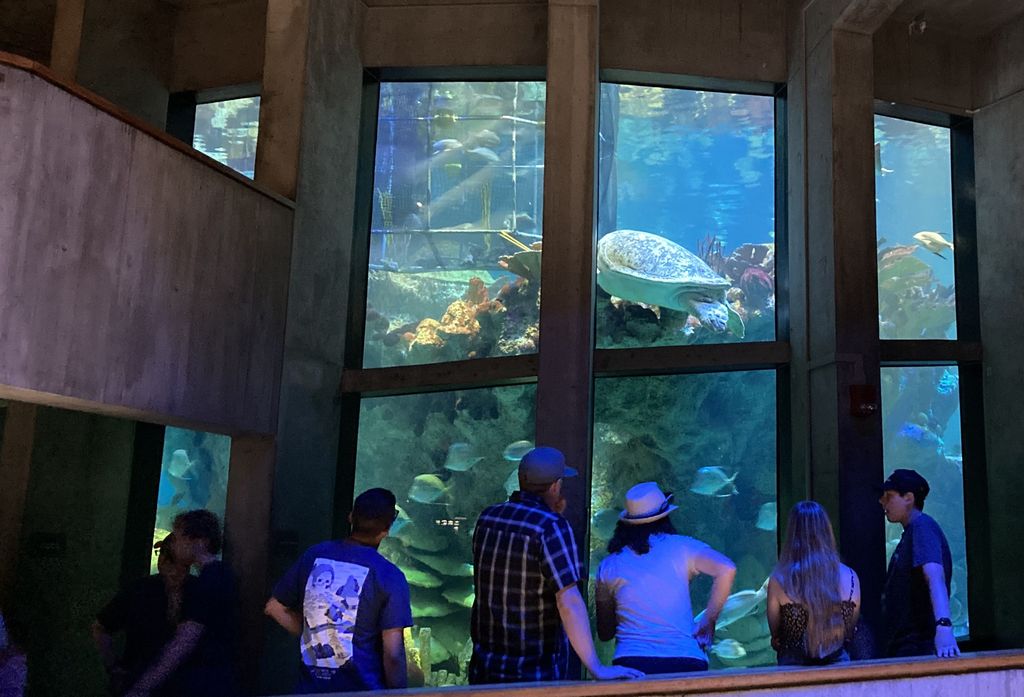
After the intense driving bout that took us from Quincy to the vast (and incredibly expensive) Boston Wharf parking lot, the girls booked their cruise and we quickly visited the New England Aquarium. It’s an eloquent endorsement of the place that, despite having been there many times, I don’t really get bored of it nor resent the eye-watering entrance fees: I’ve written glowingly of the aquarium before, but it’s superbly designed around a multi-story tank, and it’s got plenty of things to see every time. The junior members of our group didn’t have the patience to see everything, but we did once again take in the various exhibits. Junior Navigator found interesting jewelry in the gift shop, and that capped off our quick but satisfying tour of the Aquarium.
The reason for hurrying: the whale-watching cruise was about to leave! After waving the girls goodbye (more about their trip later), I set out on foot through downtown Boston.
My goal, chaotically implemented, was to walk to the Prudential Shopping Centre and back, which would get me to revisit most of the highlights of the area. Of course, there’s no real way to do an ordered visit of old Boston—not with the near-impossible-to-navigate city streets splitting and merging and curving and intersecting at non-straight angles, like the cow paths they once were. (Yes, I know that Boston’s crooked streets have more to do with unplanned historical development before cars than cow paths—but it takes roughly five minutes for anyone in Massachusetts—downtown or suburbs—to declare that cows still have way too much influence over the area’s modern urban planning.)
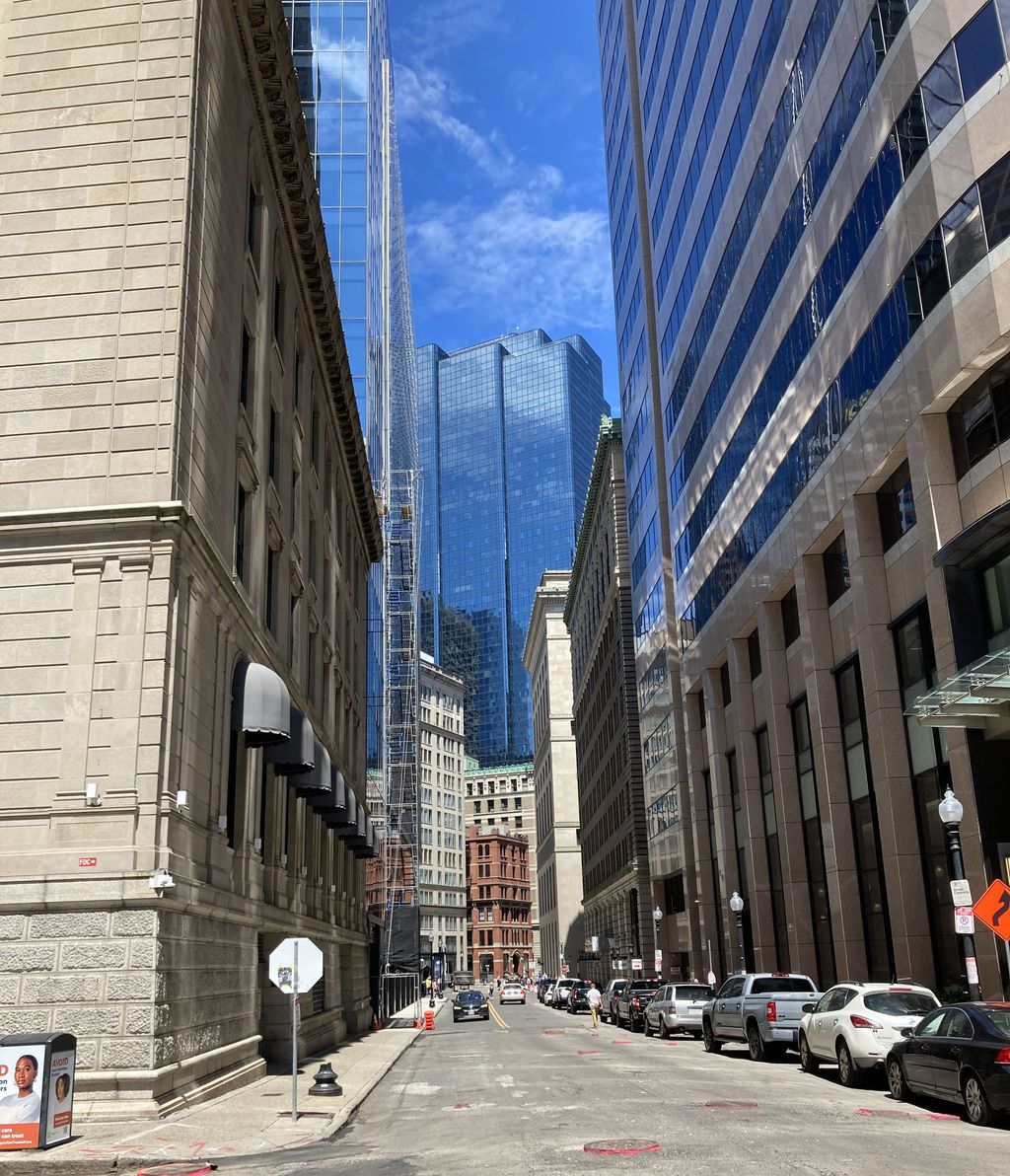
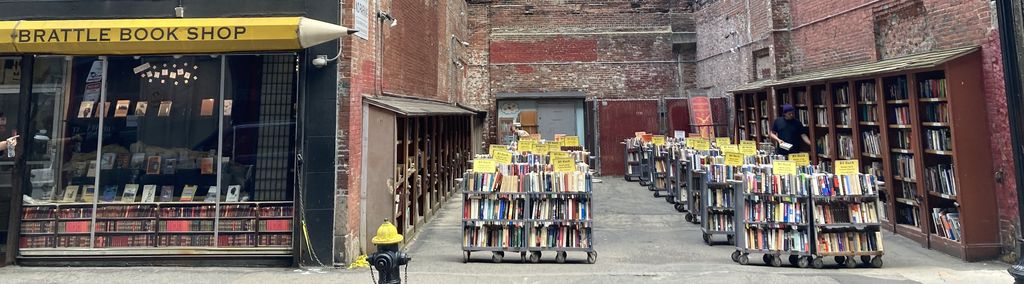
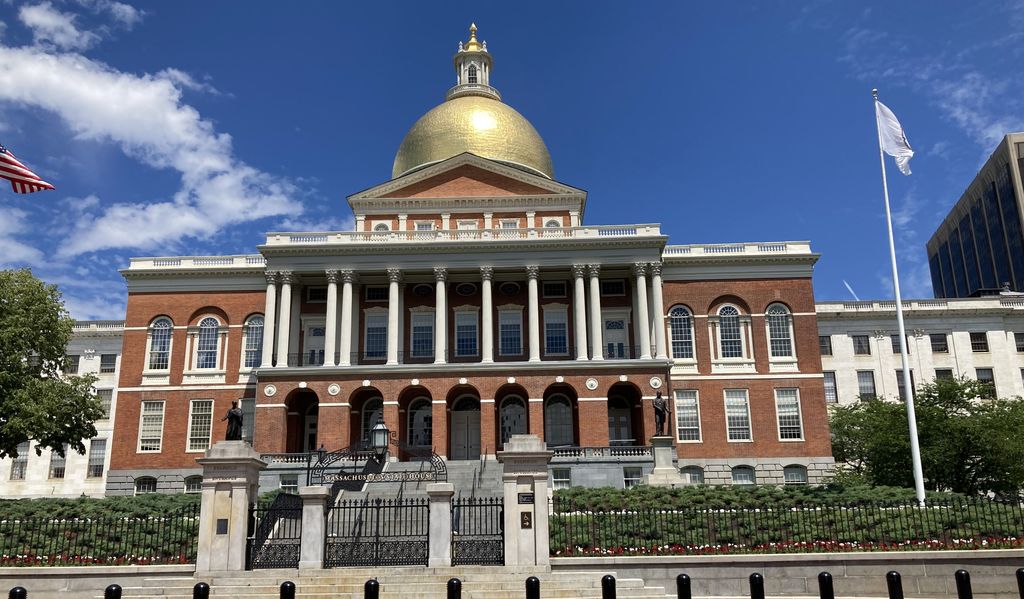
Despite the city street chaos, I still hit most of my objectives—the Financial District, the Massachusetts State House, Boston common, Brattle Book Shop (recently immortalized in a scene from the Oscar-nominated film The Holdovers that I audibly cooed over), Boston Public Garden and then, inevitably, the Boston Public Library.
Fact—I was once a registered Boston Public Library card-holder, back in 2004 when having access to its Wi-Fi required free membership. I’ve let the membership lapse since then, and my phone can do better than Wi-Fi, but it still felt like coming home to walk through the inner courtyard. I did more than that, of course—explored the historical half of the building (including its magnificent reading hall) and took in the changes to the building since I last visited in 2010. The library underwent a significant renovation project between 2013 and 2016—gone was the vast and impressive “cube of books” space in the Johnson building, replaced by a more accessible for-the-people approach, as well as a few interesting touches—most notably the “Newsfeed Café,” which is a studio for local NPR affiliate radio station WGBH. (As an aside—we tuned our car radio to WGBH as soon as we were within range and never changed stations—the cool, calm tones of the station were the closest to Ottawa-area CBC and a haven of measured discourse during a few eventful days of news, about which later.)
I ended up spending a significant amount of time at the Boston Public Library—first on my way to Copley Place to see what was new, then on my way back for a few minutes of reading and taking shelter from the oppressive heat and humidity outside. Not enough has been written about public libraries as places where ordinary people are welcome to rest, read and relax.
In between my two stops at the Public Library, I pushed east to the upscale Copley Place shopping mall, dropping by the Prudential Center Star Market for a cool refreshment. The place had changed a lot since 2004—no longer quite as haughty as I remembered it, but still clearly an upper-tier shopping mall. I made my way to the eastern end of the mall (down the escalators, within sight of the water fountains) and started my way back.
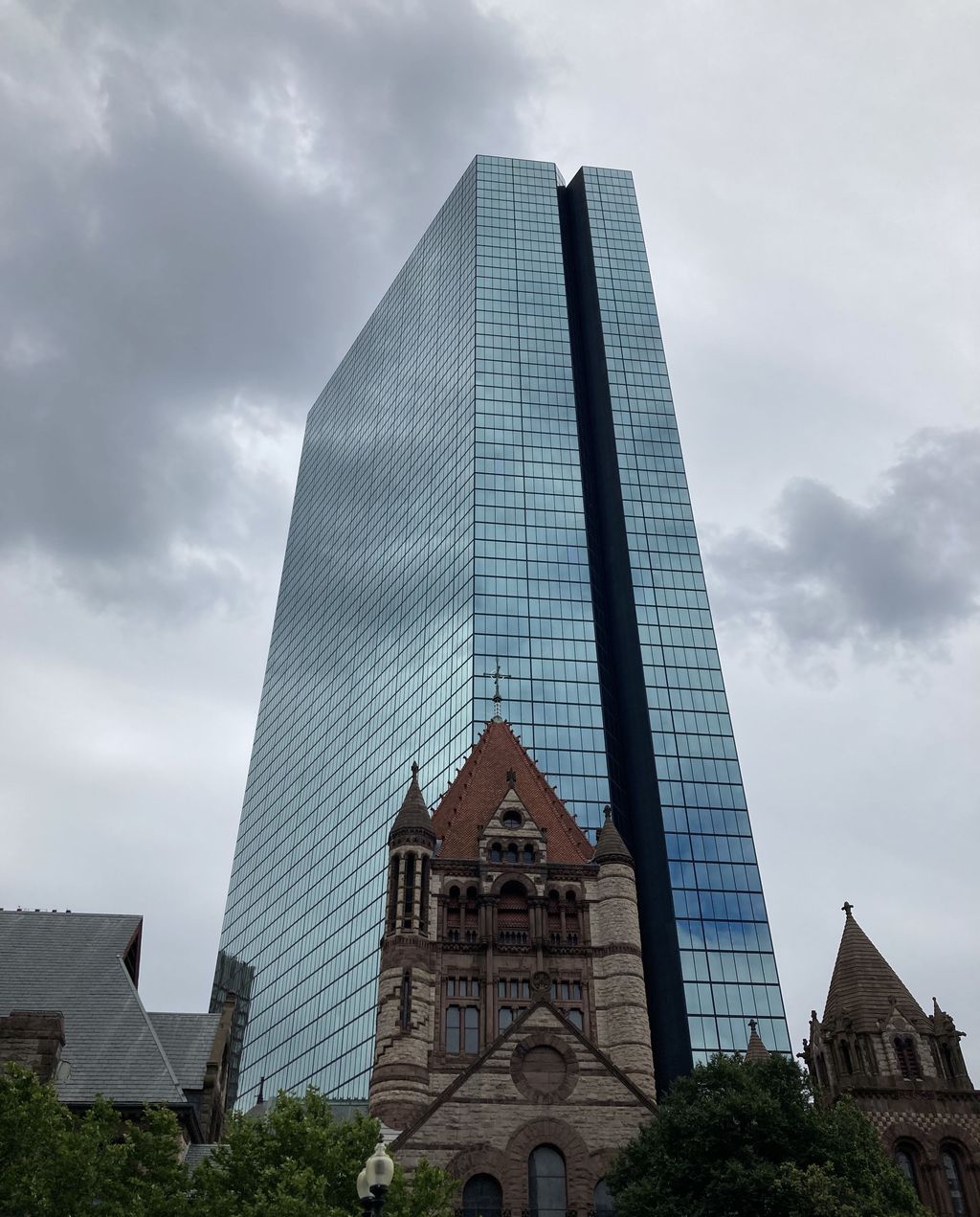
Said way back took me through the Public Library, Public Garden (partially under construction, specifically the children’s fountain making impossible my usual photo of the Washington statue and downtown skyline), Boston Commons and the northern area of downtown going next to Boston City Hall and Faneuil Market. By the time I had made my way back to the Aquarium area to meet with the rest of the crew (with an hour to go), I was beaten down by the weather and more interested in resting than further sightseeing. I ended up reading on a bench under a pergola in Christopher Columbus Waterfront Park, which was oddly satisfying.
On the dock, I heard the highlights of the whale-watching trip from enthusiastic tourists well before I saw my own returning crew—on the kind of trip where there’s a 25% chance of seeing whales, this specific excursion saw whales, dolphins, sharks and a dead whale (“Lollipop”)—the last two being linked. Despite the macabre nature of that specific aspect of the trip, Junior Navigator and her two shipmates were delighted by the four-hour outing.
We followed their return by lunch—even though it was mid-afternoon, everyone was hungry and we settled for the nearby “Wiki Rock” restaurant for lunch. I wasn’t that impressed by the place—overpriced mediocre fare, not entirely offset by tiki-themed sports bar atmosphere, but at least it was air-conditioned.
Part of my expedition earlier during the day had been preparation for another trek throughout downtown, this time with a four-person crew: Not quite so far west, but enough to go see Boston Common and the Public Garden with the two younger members of the expedition. This meant another trip throughout the twisty maze of downtown Boston (although a quick glimpse of Commonwealth Books, neatly illuminated by sunlight, was almost magical), and then around the Commons pond, having a look at the statehouse, and making our way to the Public Garden ducks and bridge.
By the time we returned to the Harbor Parking lot, it was well after supper. One last thing remained on the checklist: the two younger crewmembers wanted to splash around the Rose Kennedy Greenway’s picturesque Rings Fountain after a few hours walking around in the oppressive humid heat. That they did—and well after a rolling thunderstorm moved downtown. Fortunately, it was over soon enough, clearing the way for a quiet return to the hotel.
By the time the girls’ crew unwound in their rooms, I set out to do two things: Drop by Readercon to pick up my brother-in-law and see if I could get my convention badge (alas; registration office closed) and then indulge in a bit of unhurried shopping tourism at the nearest Star Market superstore, where I picked up soft drinks, weird chips and other American snacks that ended up lasting weeks after our return.
Day Three – Saturday, July 13 – Readercon and Shopping
After two days on the move, the middle day of our holidays wasn’t as hectically scheduled: While my brother-in-law and I would take in nearly a full day of Readercon panels, the girl’s crew would hang out at the nearby South Shore Plaza Mall.
(Let me digress, because this has been on my mind since 2019: Nothing better highlights the insanity of cow-designed car-centric urban planning in the Quincy/Braintree area of Massachusetts than the distance between the Marriott Boston Quincy and the South Shore Plaza shopping mall. Look at both on a map, and you’ll shrug—they’re barely more than a kilometre from one another, what would elsewhere be an easy ten-minute walk in a straight line. But there is no straight line here because a major highway interchange cleaves both areas. What should have been a ten-minute walk ends up either being a 55-minute 4.6-kilometer walk or [in our case] a white-knuckled 11 minutes 4.9-kilometer drive that [if you’re not paying attention), takes you on a highway where you have 750 metres to cross four lanes of traffic to exit on the other side. Sure, there are other ways and we eventually found them… but that’s still no way to plan a neighbourhood.)
Before we split apart, I was able to give a quick tour of Readercon to my decidedly unimpressed Junior Navigator—ah well, that’s why we planned two separate groups for the day! While she was happy hanging out with her aunt and cousin at the mall, we guys settled for a day’s worth of literary panels and finds in the conference’s bookstore. (I stocked up on four on-sale books by specialized presses that are unavailable in bookstores and back-ordered at most online stores.)
While I was happy to be back in the thick of a literary conference, I’ll have to admit that Readercon has lost a bit of its lustre since its heydays of 2005–2011—many of the writers and critics I used to meet over there have either died, retired or aged out of the convention circuit, and don’t know many of the newer writers. It was still great good fun to hear people speak about intensely specific topics of interest to readers and writers, but it felt as if Readercon wasn’t quite hitting its earlier highs.
We did regroup in time for an early supper—while spending the entire day at the mall was a bit too much for me, I did want to breeze through the place, and she all wanted to go have supper at the Cheesecake Factory. The wait was significant, but we weren’t going to be deterred this time—and we spent the waiting time getting a Boston-themed sweatshirt for Junior Navigator.
(The girls’ crew had a splendid time at the South Shore Plaza—in between spending time in unfamiliar and familiar stores, taking in what the mall had to offer and not being out in the hot humidity, they got exactly what they had wanted out of the day.)
Fortunately, The Cheesecake Factory was equal to its mind-boggling reputation as a place of excess. I had a lavish (shared) entrée of Fried Macaroni and Cheese (exactly what it sounds like!) and a Chicken Parmesan “Pizza Style” entrée that lasted me until dinner the next day.
After that, it was a return to the hotel for the girls’ crew, a return to Readercon for my brother-in-law, and a checklist item for me to stop at a 7/11 for a Slurpee. Meanwhile, the first mentions of an assassination attempt started trickling in with fragmentary information. It’s not at all fun to be in a foreign country when such disruptions take place! Fortunately, everything was stabilizing again by the time I picked up my brother-in-law at the end of the convention and drove back to the Howard Johnson for an early sleep.
Day Four – Sunday, July 14 – Cape Cod
I was once again on the other side of the group as we split up on Sunday—while my brother-in-law would attend Readercon until the final moments of the convention, I would head out with the girls’ crew to Cape Cod for the day.
Before everything else, you have to understand that Cape Cod is the Bostonian’s seaside playground. The entire peninsula has been, over the decades, transformed into a day-trip destination: It even has its own distinct aesthetics as a New England seafaring community. And, as we were able to fully appreciate on this hot humid Sunday, when Bostonians crave the beach experience, the vast majority of Boston-to-Cape Cod traffic goes by one single bridge: The Sagamore on Highway 6. Traffic jam going there, traffic jam getting back: get there early or late if you can.
We were on the late side—but we did a lot before even getting to the beach, visiting three landmarks on our way:
The first item on my own checklist was the Sandwich Glass Museum (a museum about glass located in the town of Sandwich, not a museum about glass sandwiches), which features not only an eloquent display about the centuries-old history of glassmaking in the area, but hourly glassblowing demonstration. On Sundays, the glass artisan in residence is the very likable Hoyt Hottel, who effortlessly creates artwork while talking audiences through the process. (The addition of a handle to the bottle he was making was cool, but if there’s a single moment that demonstrates his mastery of the art, it’s when he chisels in mid-air the final separation of his artifact from the glassblowing rod—nothing happens after the chiselling until he presses down on a soft surface and then it gently separates with a click.) Try to time your visit so that you can take in two demonstrations—they’re going to be about different objects. Hottel is the real deal—not only is he having fun during the demo, but as I was lurking in the gift shop, I overheard him gush to the salespeople about how he liked doing those events. (My sister and niece attended the museum on a Saturday last year, and had great things to say about Kate Thomas as a glassblowing artist.)
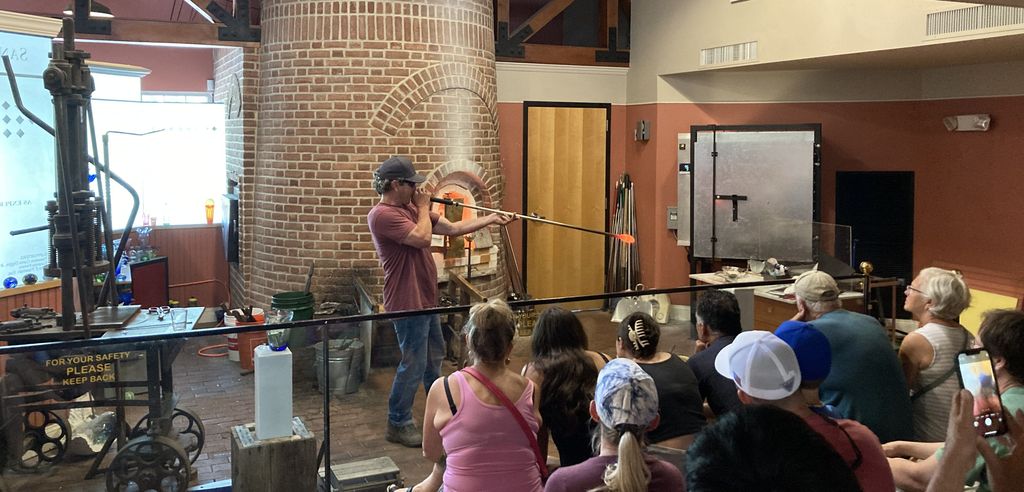
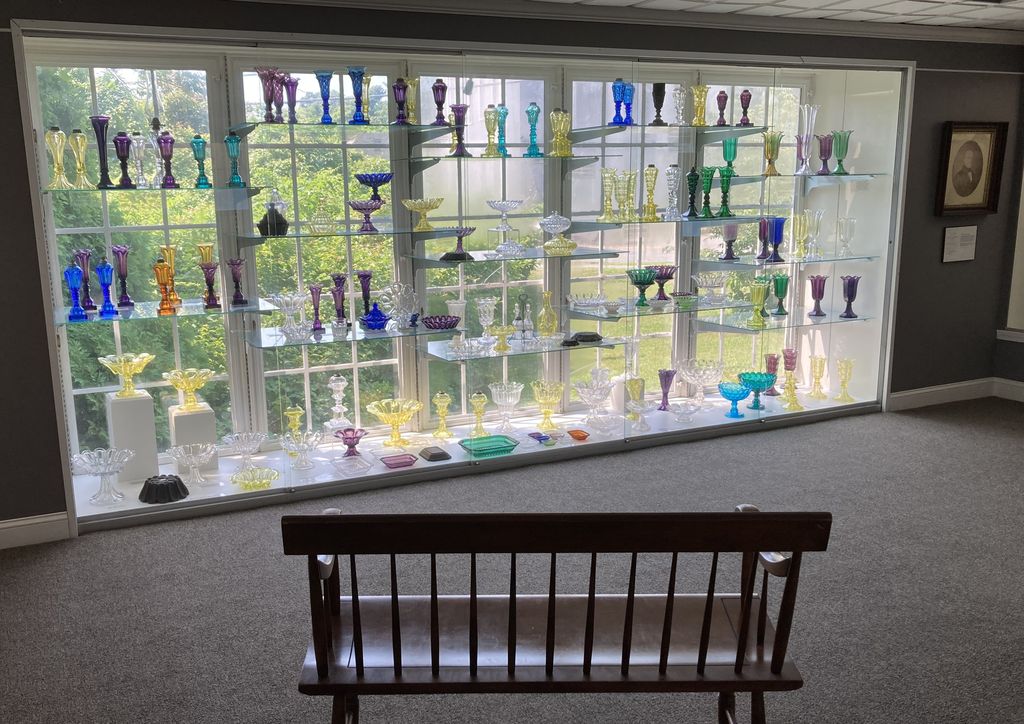
While the glassblowing demonstration is amazing in itself, the rest of the museum is worth a good tour—there are plenty of explanations about why and how the area became known for its industrial glass production in early American history. The museum has a lot of glass artifacts, even one glowing uranium-glass item, and makes good use of natural light to feature its collection if you’re visiting at the right moment in the day: One spectacular room has sunlight backlighting an entire wall of colourful artifacts.
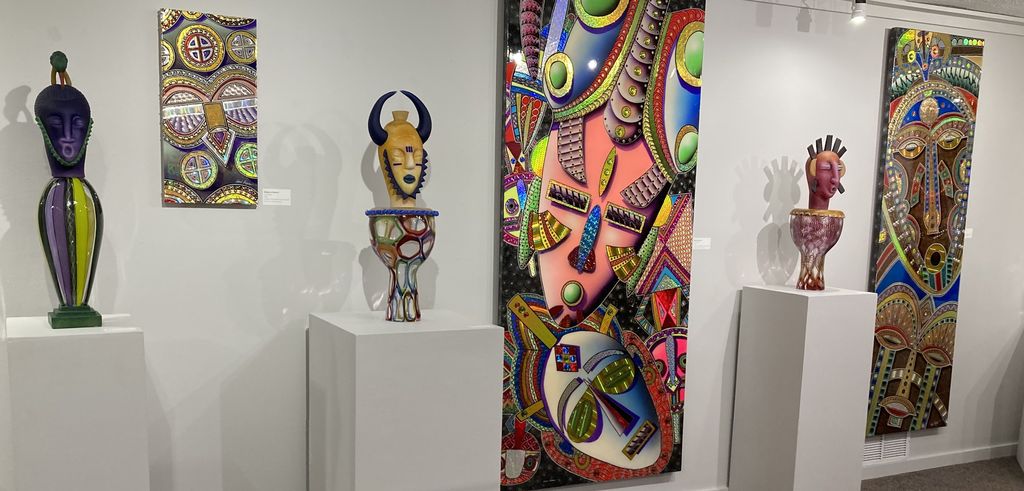
The central section of the museum has a rotating art exhibit—in summer 2024, this was “Heartbeats and Harmony,” bringing together the talents of glass artist Robert Dane and painter Carl Lopes. I was particularly mesmerized by Lopes’s iridescent, intensely colourful, almost three-dimensional paintings (if that’s the right word for them). The exhibit is slated to travel—don’t miss it if it comes near you.
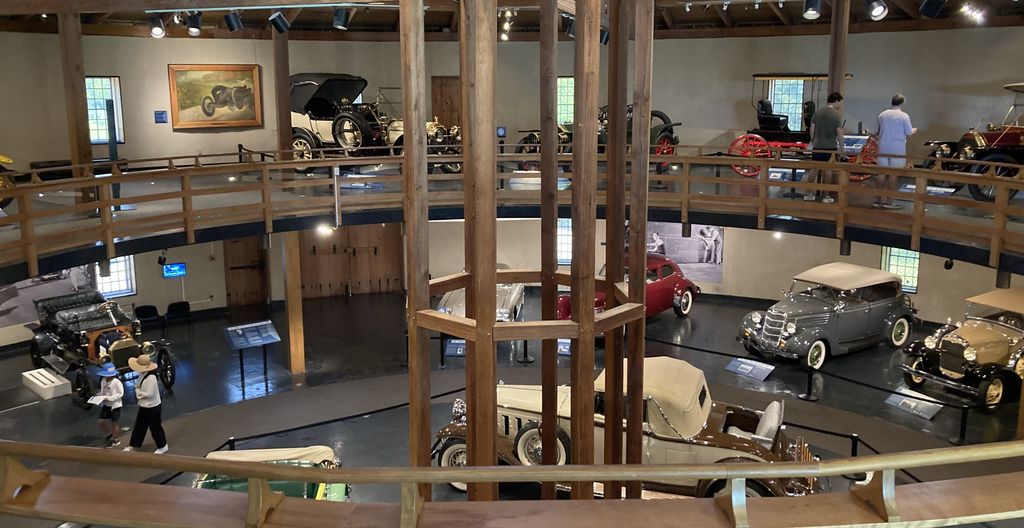
Our next stop in Cape Cod was the nearby Heritage Museums & Gardens, which comes from the estate of a local magnate that has since been repurposed into a hard-to-describe assembly of exhibits and landscapes. Like many museums stemming from rich people’s estates, it reflects the specific interests of its original patrons: He liked cars? Let’s have a car museum! She liked gardening? Let’s put up a Hydrangea Garden! Add a maze, a labyrinth, a kid’s play area, an indoor carousel, a café, a gift shop, an art gallery and sure, why not, you’ve got someplace to visit. What it lacks in focus in gains in diversity of attractions: you may not like a few things, but some of it is bound to be interesting. I found the overgrown, underkept maze disappointing, but the meditative labyrinth was great. I liked the car exhibit, but shrugged at the hydrangeas—although I’m sure that the air conditioning versus hot humidity had something to do with that assessment. Meanwhile, Junior Navigator best liked the café and gift shop.
The third stop on our quick tour of Cape Cod was something that I insisted upon: A visit to the Whydah Pirate Museum, based on its title alone. Yarrr! How much fun would a pirate museum be? I started having second doubts the moment we drove into the parking lot of what looked like an industrial warehouse with two resin figures of pirates as the only outdoors decoration. Woo boy, what had I volunteered us for?
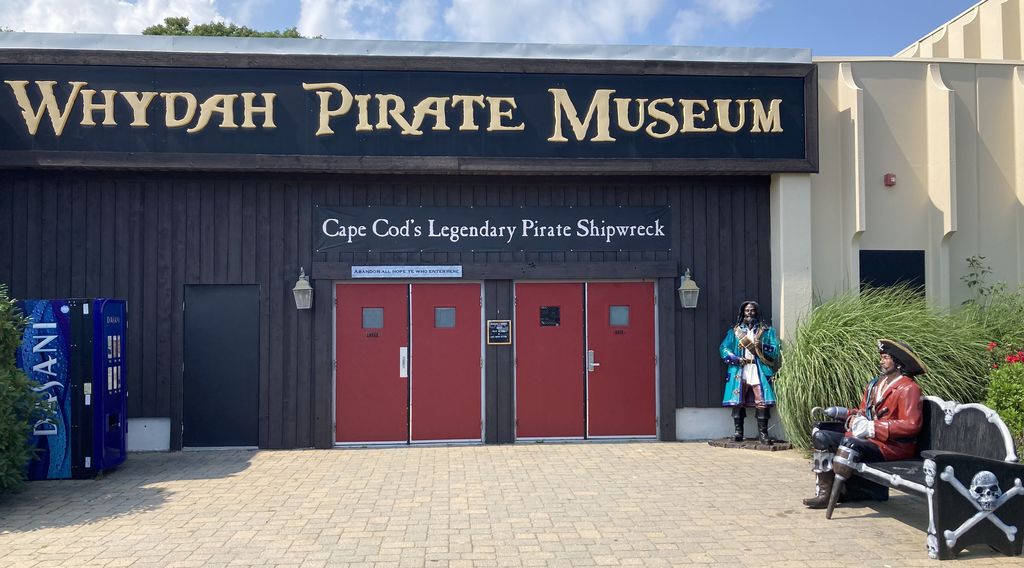
But my doubts quickly disappeared once inside the museum, and the result quickly exceeded my expectations. The Whydah Pirate Museum, far from being the exploitative Pirates-of-the Caribbean rip-off I had feared, is actually a serious endeavour. It tells visitors about three or four intertwined stories: the initial travels of the Whydah Gally, built as a slave ship and then forcefully converted to a pirate ship when it was captured on the return leg of its maiden voyage; her subsequent existence as a pirate ship, which gives the museum the most substance for its exhibits; its shipwreck, on the shores of Cape Cod (where it was plundered by locals), its passing into local legend and then, centuries later, the discovery of its wreck by explorer Barry Clifford in 1984 after years of looking.
The Whydah Pirate Museum, if I understand correctly from the (autographed) book I bought at the gift shop, is a permanent location for a touring exhibit organized by Clifford and the National Geographic Society from 2007 to 2014. As such, it’s of very high quality: The material is succinct and evocative, the artifacts are carefully chosen and the entire thing is very instructive about the reality of piracy in the Atlantic Ocean. The exhibit insists on the egalitarian nature of pirate crews, their racial diversity and how pirates managed the nitty-gritty of a short and violent existence. The central exhibit is what’s called “the only real pirate treasure ever recovered”—a chest filled with silver pieces of eight that only exist because the Whydah ran aground toward the end of its pirate season. (Otherwise, well, pirates spent their accumulated treasure.) But there are other highlights—a scaled-down recreation of a few areas in the Whydah, and perhaps more mesmerizingly, a few pieces recovered the Whydah that offer a glimpse into the complexities of artifact retrieval after centuries underwater. While your mileage may vary, I found it a lot of fun, interesting, informative and mercifully air-conditioned.
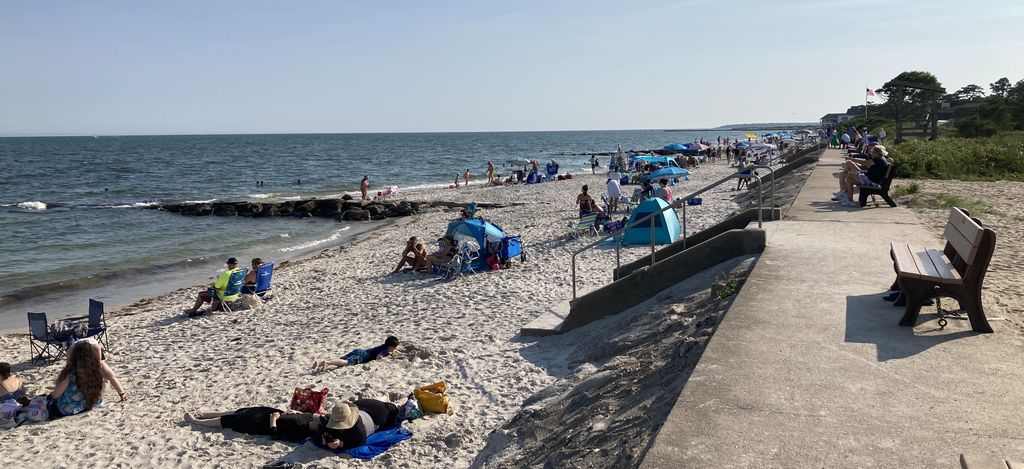
By that time, we were past four and the younger members of our expedition were clamouring for the one single thing they’d wanted to see all day long: the ocean! With temperatures easing, we made our way to South Yarmouth’s Parkers River Beach, a public beach that (either because we were late in the day or they were understaffed) did not charge for parking and use of the beach facilities. Our two younger crewmembers spent nearly two hours having fun in the ocean—the beach was busy but not crowded, and I got to do quite a bit of reading while they were out playing.
By the time we packed it up, it was rush hour at nearby restaurants—while my sister and I wanted to have some seafood, every suitable place between South Yarmouth and Dennisport was packed with lines exiting the restaurant. On what was almost a whim, we switched gears and stopped at the Dennisport House of Pizza, which turned out to be a solid pick—good artisanal individual-sized pizza in an unpretentious atmosphere. We lounged for a while, then headed back to Quincy. (With a quick stop at a 7/11 for more Slurpees.)
Alas—remember that wisecrack about Cape Cod being a day-trip destination for Bostonians, and everything having to go through the Saganaw Bridge? Well, it took us more than an hour and a half to drive eighty kilometres through three separate traffic jams (one of them caused by construction because why not) and that’s starting after eight o’clock. Again, if you got to Cape Cod on Sunday, get there really early or really late.
Day Five – Monday, July 15 – Salem
We were on the move on this penultimate day of our Boston Holidays. Checking out of the constantly-damp Howard Johnson, with the hot humidity not letting up, we packed everything in our respective cars and headed north through the late morning-time traffic. Driving under Boston wasn’t the nightmare I was expecting, and before long we had landed in Salem’s massive downtown parking garage for a day in what just may be America’s most adorably weird city.
There is a pretty clear line to be drawn going from Salem’s historical sins to its contemporary status as the city that celebrates Halloween all year long (but extra-hard every October). From a place renowned for hanging suspected witches and warlocks (not burning them, we’re constantly reminded), Salem has now become both a crass cash-in and an opportunity to reflect on the excesses of the past. But mostly cash-in.
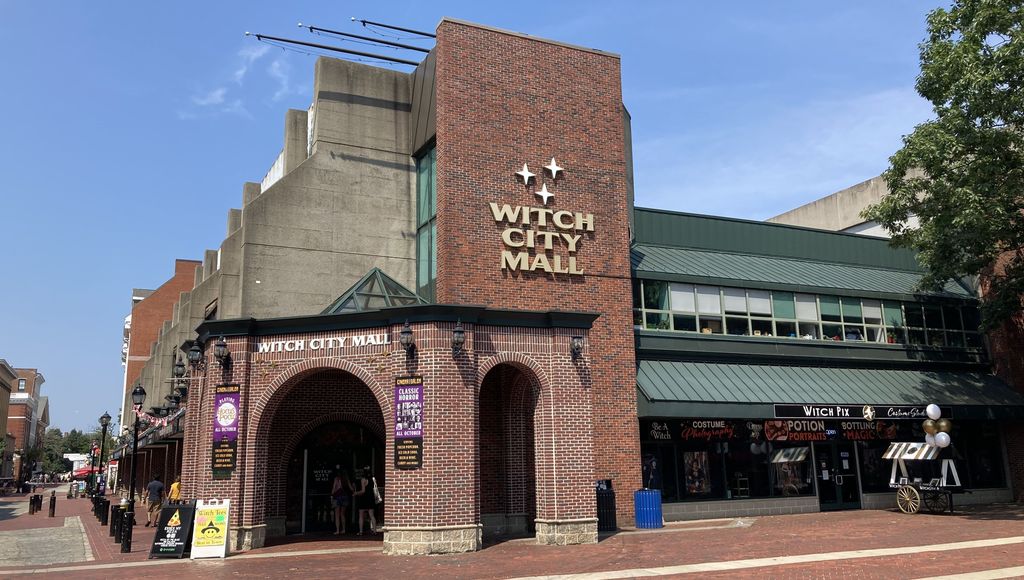
Around the central Essex St. mall in downtown Salem, it feels as if the city is under control of the most devoted high school goth girl, and she keeps arguing with her mid-tier MBA boyfriend as to how the city should be run. “Things get crazy around here in October,” said a tour guide at some point, and they are not kidding: The local tourist guide clearly states that there are five seasons to Salem’s tourist calendar: Winter, Spring, Summer, Fall and… October. Hotels are booked a year in advance, helpfully warns the guide. Prices double, grouse the local forums with some satisfaction. But in July, well, it’s a succession of historical museums/tours/recreations of the witch trials, occult shops, and refreshingly blatant tourist traps.
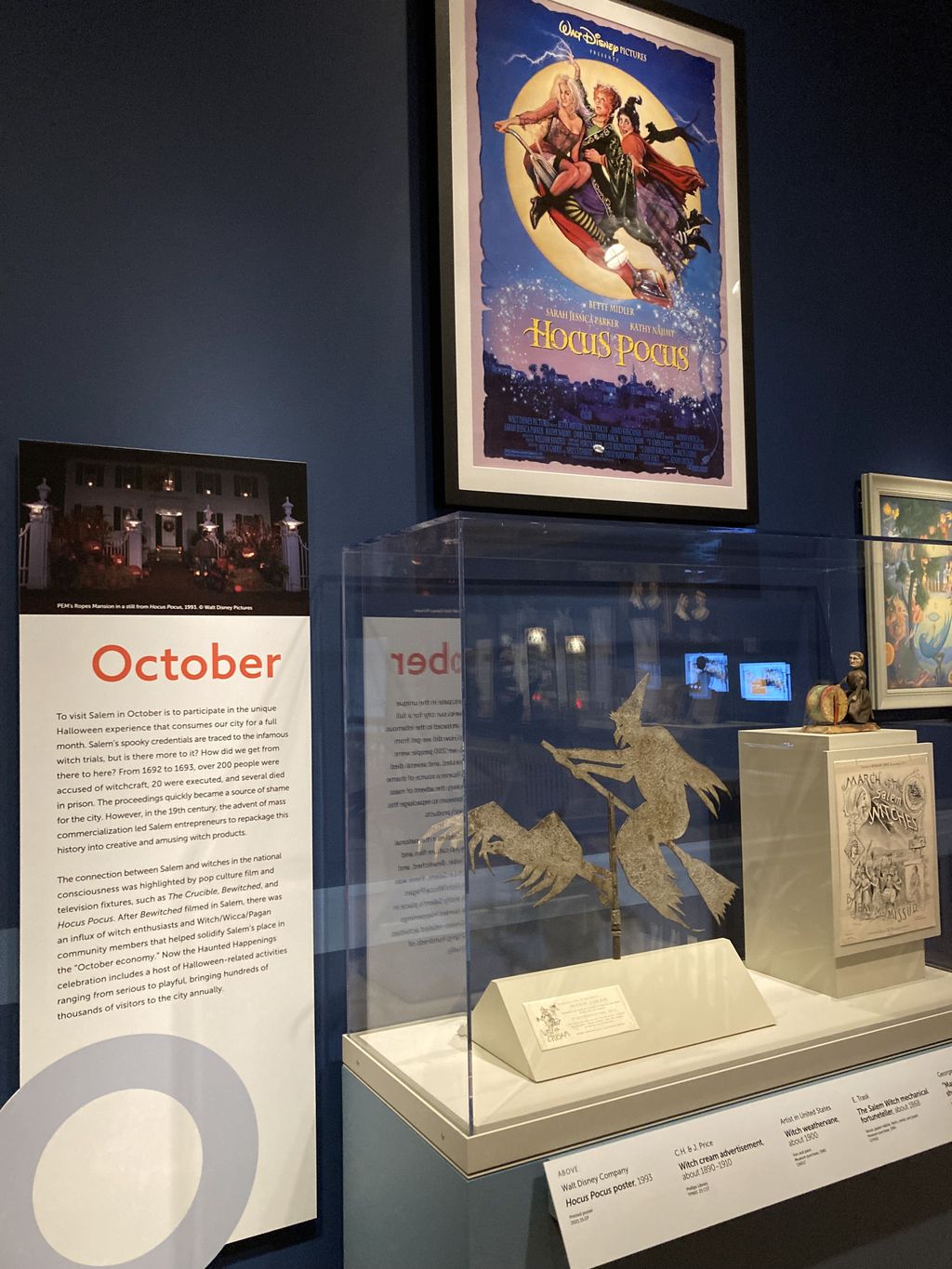
Starting from the exceptionally helpful Salem Visitor’s Centre, we made our way to the can’t miss Salem Witch Museum, which gives you a quick overview of the historical witch trials with overwrought old-school narration and dusty dioramas (it’s old enough to make you wonder if Vincent Price narrated, but no! It’s written and narrated by now-deceased renaissance man Charles M. Fair). It’s a fun show in part because of its mustiness, but what makes the Salem Witch Museum a can’t miss stop is the second part of the tour, which uses a considerably more modern approach to clearly underline the parallels between America’s Original Witch-hunt and the various moral panics that are still occurring with depressing regularity. (And yes, there is a reference to Qanon as modern hysteria if you look closely at the recent timeline placards.) This is what sets the Salem Witch Museum apart from similar exhibits in the city—and, I’ll argue, what redeems Salem’s wild commercialization of tragic events: what use is history if you don’t learn from it?
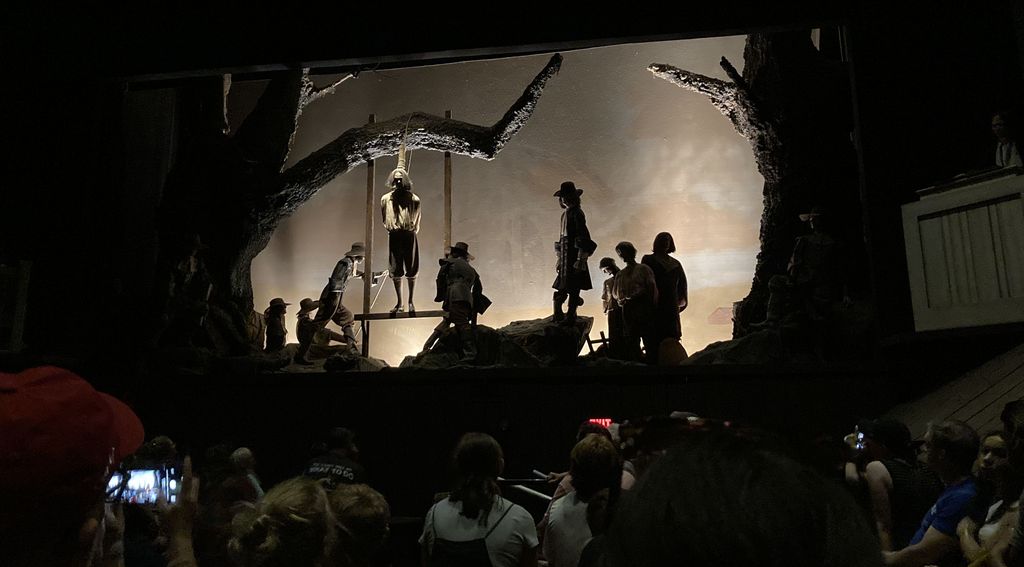
We also visited two other similar-but-not identical “museums” dedicated to the history of the Salem Witch Trials, each of them presenting its own specific focus on the historical events:
- The Witch Dungeon Museum, a bit farther away on Lynde Street, offers a five-minute theatrical restaging of high points of the trials (from court transcripts), which I found indifferent, but then follows it up with a visit to the building’s basement, which has been converted into a recreation of the dungeons in use at the time for the accused. That part is a bit more interesting, and it is more informative (with diorama) about the plight of Giles “More Weight” Corey, crushed to death after being accused of being a warlock.
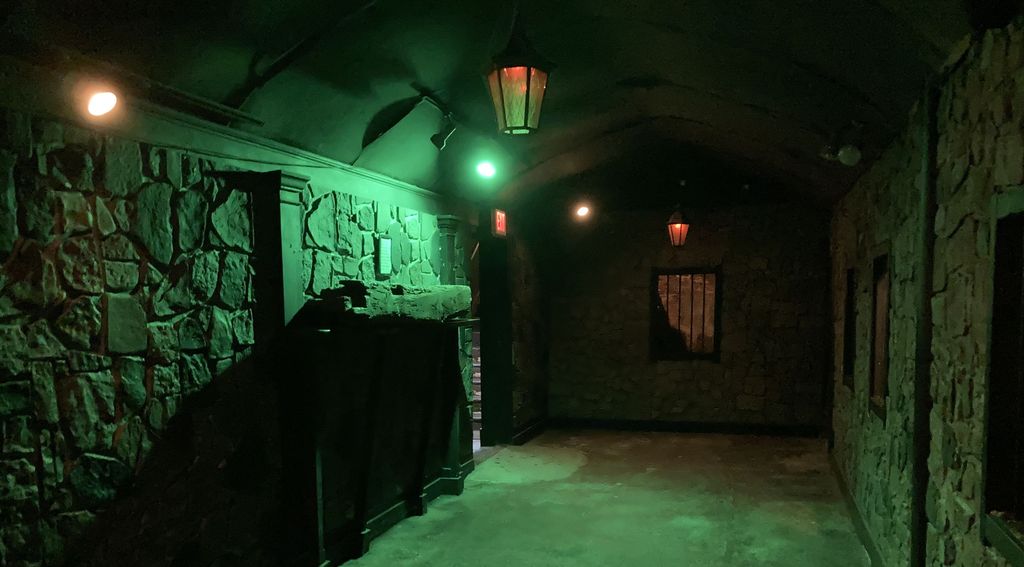
- We also visited the Witch History Museum on the Essex Street Mall, which also has a one-woman’s theatrical bit on the ground floor, followed by dioramas in the basement. If you only see two Witch Trials dioramas, make this your second: It offers more historical context about the factors leading to the events (i.e.: The Puritan influence) and what happened after the trials. Of rather amusing interest is how the trials indirectly contributed to the founding of Yale University.
Every single one of these three museums has a generous gift shop, where you can stock up on various occult-related merchandise as a souvenir. Many specific items repeat. Of course, you don’t have to go into museums if the shopping bug grabs you, because there are plenty of pure souvenir shops elsewhere. We visited and liked three of them:
- Freaky Elegant [apparently closed as of summer 2025], which is, in some ways, a baseline Salem shop that doesn’t aspire to historical loftiness or any specialization: it has apparel, souvenirs, plush animals, knives (“not for sale to minors”), and other Salem/horror-themed items for sale. Kind of cute, which goes for a lot of Salem stores.
- Part of Salem’s fun is the kayfabe that nearly every witch-themed establishment tries to adhere to. But no other place that we saw plays the game better than Black Cat Curiosity Shoppe, which presents a curated selection of intriguing wares in an atmosphere so thick you want to curl up in it. It’s the kind of shop that would almost be used as a shooting location for a spooky occult movie in which your heart’s desire is available for sale… at a terrible price. No, seriously—check it out. It understands the spooky fun of Salem better than anywhere else.
- Witch Tees, located inside the run-down but rather charming Witch City Mall, offers an eye-popping selection of Salem and witch-related T-shirts and sweatshirts. Junior Navigator found another (better!) Boston-themed sweatshirt, and there’s sufficient variety of designs, from the crude to the rather clever, to make anyone happy.
Understand that this is a paltry sampling of many, many, many other establishments around downtown Salem offering you the safe thrills of occult-flavoured wares in a safely capitalistic context.
Surprisingly enough, I liked Salem a lot more than I thought I would. While I could dispense with the tarot reading and haunted-house stuff, I positively delighted in the Halloween-all-year-long brand. For every store and museum we visited, there are two more we could have gone to. Also, aside from the Essex St. CVS pharmacy, the central core is refreshingly devoid of any national brand store. In other words, I expect to be back.
On more prosaic matters, there are other things to do in Salem as well! The Salem Visitor’s Centre (well worth a stop, and not only because it has some public washrooms) gives an idea of the rich naval heritage that is also part of Salem’s history—farther away from the core, there are other museums (including another pirate-themed museum) that give other glimpses at local history without focusing on witches.
Ironically, my brother-in-law and I stumbled upon Salem’s best museum while looking for something else.
It was late in the afternoon, and our group couldn’t agree on what to see next: The Girls’ Crew wanted to get spooked at a nearby wax museum, while the Boys’ Club wanted to check out the bat exhibit at the Essex-Peabody Museum. We split off for the next hour—while the Girls’ Crew was going to get disappointed by the wax figures (they later reported), we headed for the museum.
I say “stumbled,” but the Essex-Peabody Museum is hard to miss in downtown Salem: it occupies a whole city block off the Essex Street mall (having absorbed and joined several heritage buildings in addition to its very recent central atrium) and it advertises itself copiously. One of those advertisements was for a bat exhibit, and I too quickly assumed that the museum was just another regional general-interest museum.
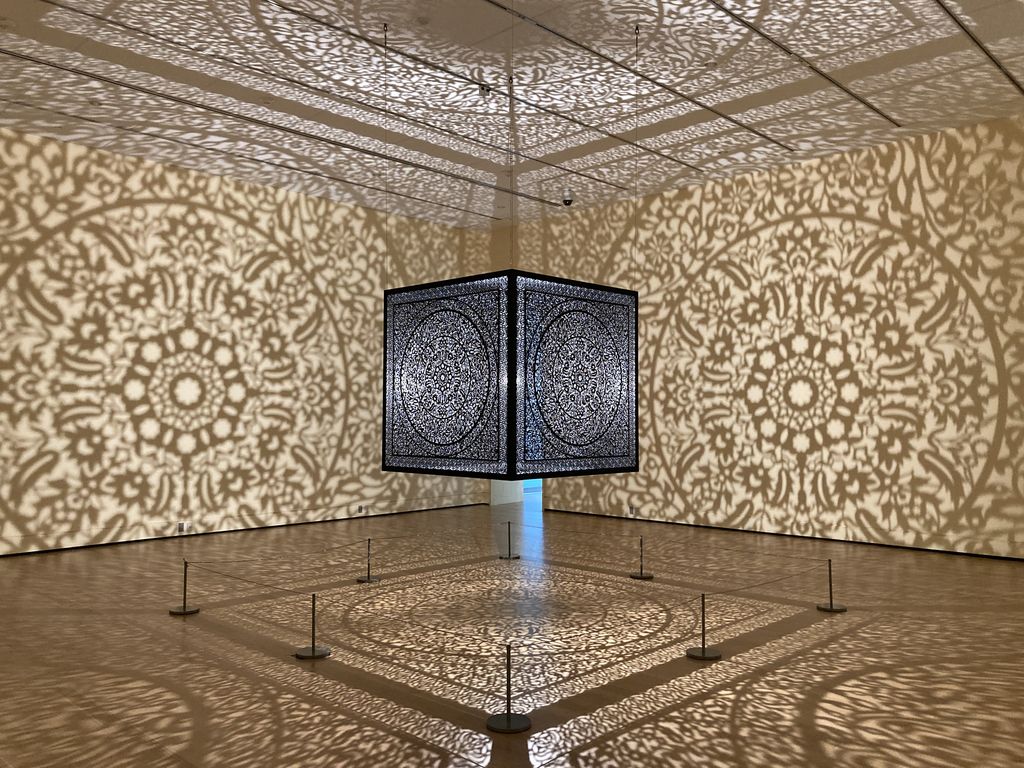
Well. I should have done my research because the Essex-Peabody Museum turns out to be a top-tier art museum, equal to what you would expect to find in much-bigger metropolitan areas. (Oh, sure, it’s partially financed by well-heeled Boston patrons but shush.) In between the repurposed heritage buildings, it offers several very good art galleries on themes you would not expect to see in a small northeastern city. Due to various quirks of history (notably Salem having historically been a central port for the American northeast), it has accumulated a deep collection of eastern art, and it bolstered that with several intriguing collections. In summer 2024, for instance, you could see a rather entertaining exhibit of Herman Melville’s Moby Dick editions, ranging from the classic to a modern rendition of the novel in emojis. An entire room is dedicated to Anila Quayyum Agha’s impressive All the Flowers Are for Me art installation.
Another has historical artifacts from the Salem Witch rials. Another has local history and culture wrapped in a 26-exhibit “A to Z” format (O is for October, as per above). There are galleries dedicated to American, First Nations, (East Asian) Indian and Japanese exhibits. One of our most impressive finds was a series of terrific glass sculptures thrown in the middle of an eclectic room.
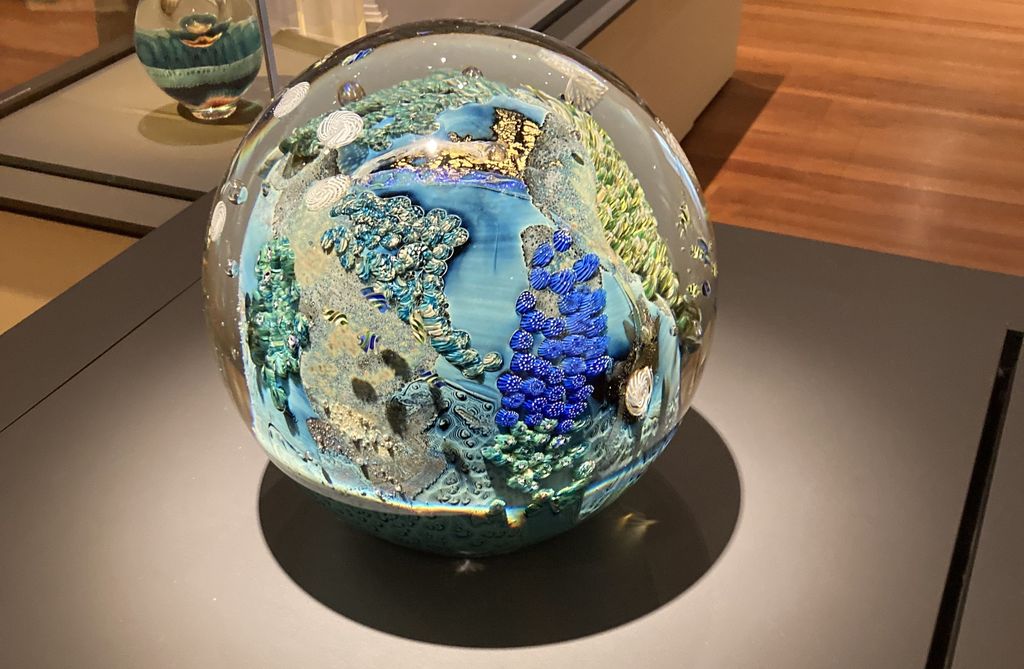
And yes, there was an exhibit about bats—both artistic, and with eight plump bats that looked more like chauve-rats than chauve-souris. I’d like to be more descriptive about the museum, but since we entered barely one hour before closing, we sped-walked throughout the entire museum in record time, barely taking the time to register what we were seeing along the way. I’m not necessarily recommending this as a way to visit the museum, but it did compress a lot of content in a very short time.
Finally, there’s food. We didn’t aim high in Salem, and got what we were looking for:
- We had lunch at the quaint Fountain Place restaurant, the kind of small-town mom-and-pop breakfast place that touches at the essence of Americana. It’s not big nor fancy, but it delivers what you expect.
- For supper, we were out of energy and daring, so happily settled for the Essex NY Pizza and Deli in the Museum Place Mall, which was unpretentious and hit the right spot. There’s more than just pizza there—I had calzone while junior navigator had a Ceasar salad, and we were both happy with our pick. It’s the ideal place to unwind after a jam-packed day hanging out with the witches.
And that was it for Salem—although I have a feeling I’ll be back before long.
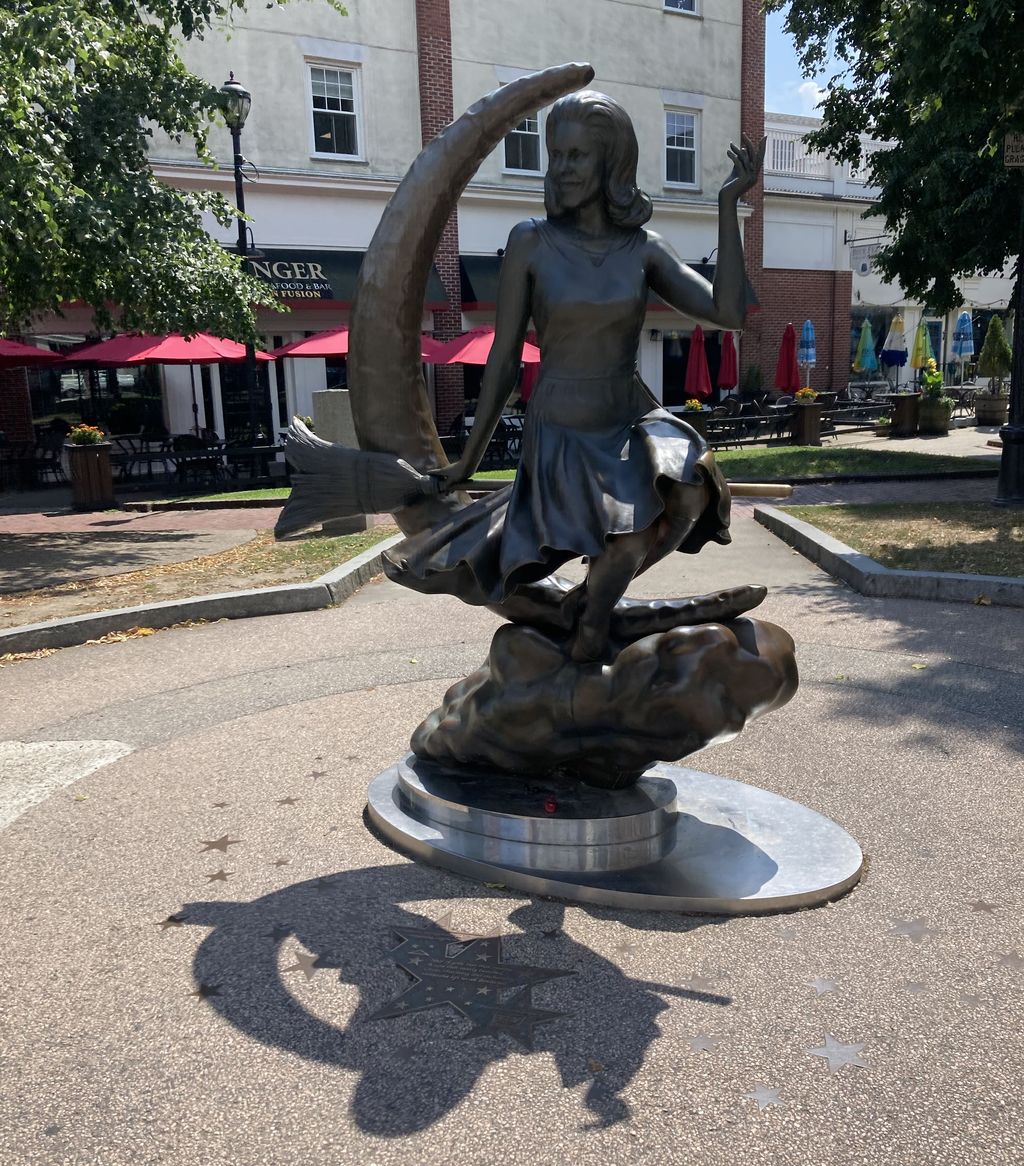
There were two more things to do before calling it a day, though.
The first was checking into our second and last hotel of the trip—the expensive, but markedly more pleasant Springhill Suites Boston Peabody. Junior navigator was happy to find that the room was much better than the one we had a Howard Johnson, and was overjoyed to find that the hotel had an indoor pool.
While my sister volunteered to accompany the younger crewmembers to the pool, I had one last checklist item to complete—a visit to an American Costco, which was coincidentally just up the road from the hotel.
My fondness for Costco has, over the past few years, slipped over in a quasi cult-like devotion to the stores. I jest, but as of summer 2024, Costco is the best deal in town at a time of galloping grocery inflation (I have shifted about three-quarter of my grocery spend there over the past year) and it maintains a loyalty-inducing reputation for both product quality and decent working conditions. Maybe things will change, but my family has been Costco customers since the Price Club landed in Ottawa in the early 1990s, and chances are good that Junior Navigator will be a third-generation card holder. All of this to say that, despite my familiarity with Ottawa-area Costcos, I had to have a peek inside an American warehouse.
As the saying goes, it’s the same, except different. All of a sudden, I understood some of the strange comments about American Costcos that didn’t fit Canadian ones. The most notable of those is the more chaotic nature of American Costcos. Go in a Canadian one, and the only question is whether it’s a right-handed or left-handed Costco: the rest is pretty much at the same predictable place. Americans have to contend with the messiness of treasure hunts, though, and so the “neighbourhoods” inside the store are far less well-defined or logically placed. Furniture in the front? Toys in the side aisles? What madness is this?
I didn’t end up buying much. Although I was solely tempted by wares both new and familiar, I settled for one gigantic Squishmallow for Junior Navigator. My Canadian Costco card did work in the US, as expected, but not my credit card—I ended up paying cash after both cashier and supervisor puzzled over why my payment wasn’t going through even though it should have.
And that, as we settled for the night (Junior Navigator, refreshed from the pool, sinking into the animal-bed-sized Squishmallow), was that for our last full day of Boston-area tourism.
Day Six – Tuesday, July 16 – The Return Home
There’s not usually a lot to say about coming back home, but we did try to stop at a few new places on our way back.
Not in Massachusetts, though—the first priority was to put some mileage early in the morning (well, late rush hour) so we left the hotel and drove through a GPS-suggested shortcut and eventually found ourselves back on the I-93, which we followed into New Hampshire. (Our visit to Heavenly Donuts will have to wait for next time.)
In New Hampshire, we stopped again at a Hookset Welcome Center, this time on the North-bound Rest Stop. This one didn’t have the pleasant element of surprise that the South-bound one held for us, but it wasn’t under construction either. I picked up a few bottles of American soda.
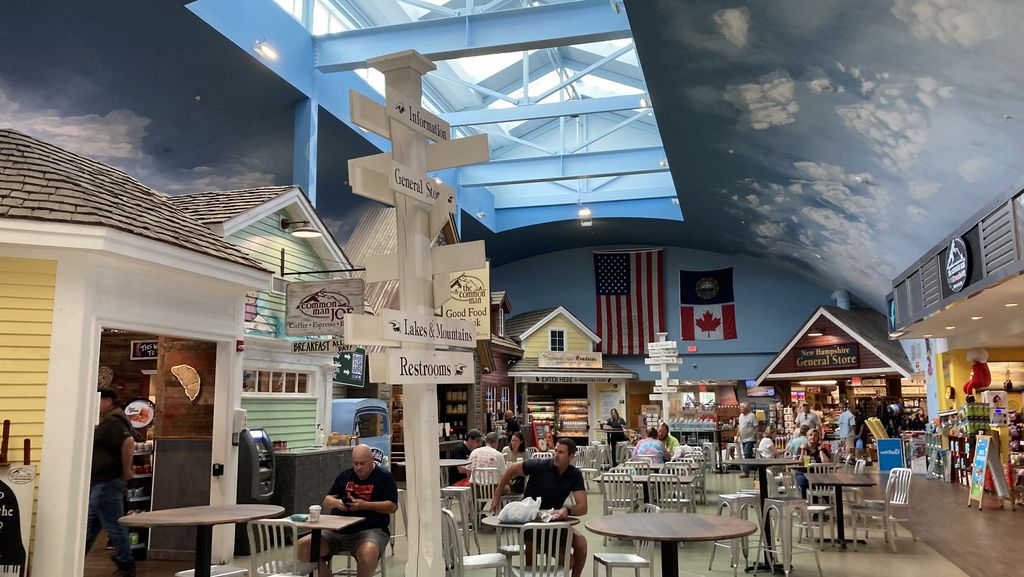
From there, we took the exit for the I-89 and kept going until Warner (exit 9), where we stopped for a quick tour of Market General, and then refuelled.
We did one last stop in New Hampshire, in Lebanon, where a quick exit from the highway landed us at Target for a last-minute bit of cross-border shopping—a discount hardcover novel I’d been eyeing throughout the trip, some lunchtime snacks for Junior Navigator, and a box of 3-ply Kleenex (formerly our brand, no longer sold in Canada since 2023).
Vermont was slightly busier and more interesting.
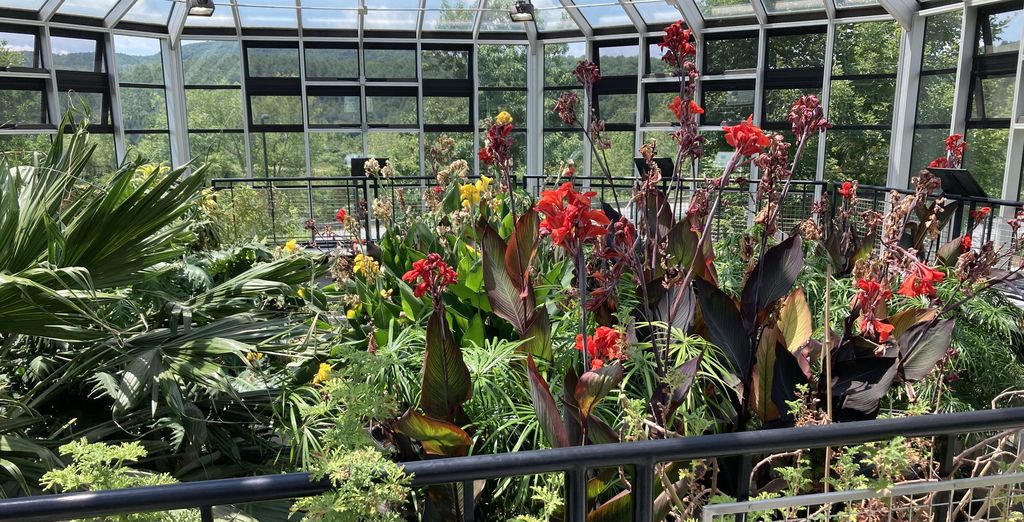
- Our first stop was at the rather pleasant Sharon Welcome Center, which boasts of a Vietnam War military memorial, a rather neat architectural design, and an opportunity to go take a look at their environmental reclamation facilities. This “Sharon Living Machine” is not just a way to naturally clean the welcome centre’s wastewater; it’s also a slice of tropical weather in the middle of often-cold Vermont. (One supposes it’s more of a sight during winter trips.)
- This being said, the real highlight of the Vermont trip (especially for the Junior Navigators) was a stop at the Ben and Jerrys factory in Waterbury (Exit 10): That’s right—the ice cream mecca. Ben and Jerry’s clearly leaned into customer interest for on-site visits, because the place is designed to accommodate hundreds of people at once: multiple parking lots are placed ever higher on the hill, leading to factory tours, an ice-cream parlour, tie-dye shirt making, and whatever is required to support tour buses dropping by for refreshments. The place was packed on a sunny Tuesday afternoon—so much so that factory tours had a two-hour waiting list (we declined) and there was a long line to buy ice cream—which we still did. While eating, we were joined by my sister, brother and law and the other Junior Navigator—their trip had been different and stopped in different places, but we had agreed to meet again for ice cream. If you go, don’t forget to climb up the hill to visit the “Flavor Graveyard,” which pays homage to former flavours with poetry and gravestones in a relaxing shady area.
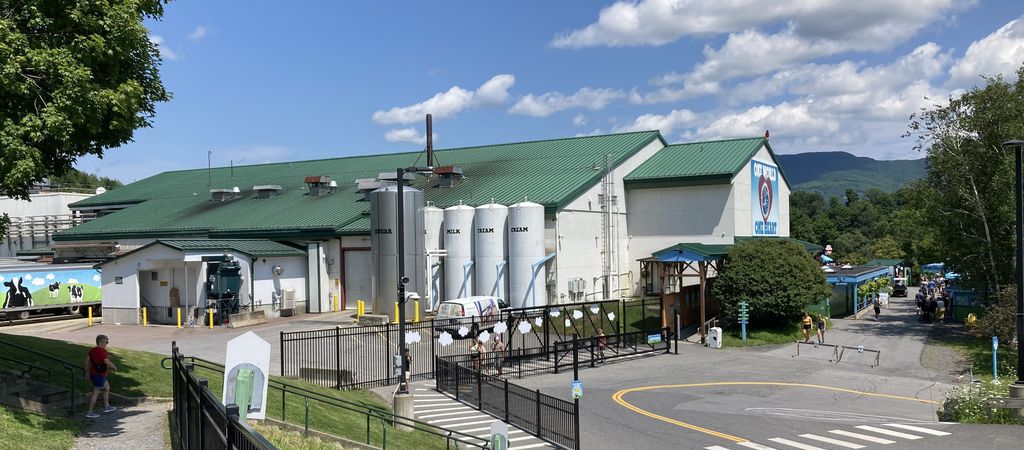
- We had planned one last stop in Burlington for snacks, but rather than revisit the South Burlington Shaws, we took a chance on a new shopping area at Exit 14A—while we only stopped at the Hannaford for a few American treats before the border, the area promised much more, including the second Barnes and Noble superstore that I declined to visit during the trip. Late-afternoon traffic was intense, though—it took us fifteen minutes just to get back on the highway.
Our order crossing back to Canada was a breeze—barely a wait, and then a few perfunctory questions.
After that, it was the familiar and somewhat dull road back to Ottawa. Although not that dull, because the trip ended as it had begun, with a spot of fairly intense rain while we were on the A30 south of Montreal—a few white-knuckled heavy rain moments with the late-afternoon rush hour. The rest of the way, from the mandatory stop at Rigaud’s Subway to Ottawa, was comparatively featureless, albeit with some interesting cloud formations in between the now-sunny weather.
And that was it for the trip: we were safely back home.
Last Thoughts
I hadn’t been to the United States in five years, and it did me a world of good to go back. It’s a bit easy, especially over the past few years, to get this ugly funhouse portrait of America through its excesses, divisions, overheated rhetoric and dumbest social media trends.
The real America isn’t quite like that, and it was a welcome reminder that the United States is not its worst politicians or screeching pundits. It’s the nice people holding doors open, or apologizing for passing me by in a grocery store even when there’s no need to do so. It’s the somewhat befuddled teen who had no idea how to sell me one of the few items carried in the store she was working in. It’s the people studying in the Boston Public Library and everyone having a nice day out at the beach. It’s the brainy writers arguing for social justice at convention panels and the hotel clerk doing brother-and-sister a favour by placing our rooms next to each other. Nice people, good people, and everyday people.
I was also happy to revisit familiar areas and discover new ones. I could spend another day just in downtown Boston, and I’d happily go again to Salem to see the other half of everything the city downtown has to offer.
Junior Navigator also enjoyed the trip, although the high points weren’t quite the same. For the record, the top of the tops for the younger generation was the beach, the mall and the whales. Travel shapes youth, as we say in French (“Les voyages forment la jeunesse”) and it’s the very least I can do to get Junior Navigator used to international travel years before I did.
It certainly helps that Boston is, well, right there within a day’s drive. Ready to be visited again, next year or the one after that. Maybe next time we’ll push our luck farther into Cape Cod, all the way to Provincetown. Or maybe we’ll go to Providence instead. Maybe we’ll take the back roads from Burlington to Mount Washington instead of the most direct route. Who knows? Let’s just drive and find out.