A Star is Born series

  • What Price Hollywood? (1932)

    What Price Hollywood? (1932)

    (On Cable TV, August 2019) This is it: the granddaddy of the A Star is Born series, and reportedly one of the first successful movies that Hollywood made about Hollywood, warts and all. The story follows a young girl determined to make it big in Hollywood, as she gains fame and must deal with the consequences. If you’ve seen the later remakes, this will initially feel familiar, although the film does play with its plot elements in a different way than the later movies. This being said, we’re still working from the same playbook here: rising female star, declining male star, the corrosive impact of media attention that makes people into fictions, alcoholism, handlers, and so on. It still works nearly ninety years later—it’s a tale old and yet always true, melodramatic but still understandable despite old-school gender roles and dated technology. This was, after all, made barely five years into the sound movie era, and the film does make the most out of the “fan magazines” that existed at the time. The Pre-Code status of the film can be most clearly seen with a dressing scene with nylons that wouldn’t have passed muster even five years later. George Cukor directs with occasional flair, effectively demonstrating the skills that would see him direct movies for the next forty years. Perhaps the best recommendation one can make about What Price Hollywood? is that it’s an early take on A Star is Born, except sufficiently different to keep it interesting, and with a very distinctive early-thirties view on the early thirties Hollywood—which, to be clear, was barely twenty years old at that point.

  • A Star is Born (2018)

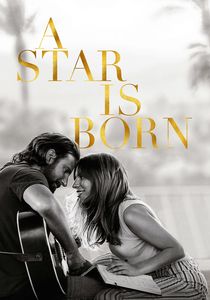
    A Star is Born (2018)

    (On Cable TV, June 2019) There are a couple of levels on which the 2018 version of A Star is Born can be appreciated. Perhaps the least interesting one is to take it at face value without any knowledge of its lineage or production history: As a story in which an aging rock star discovers a promising young talent and nurtures her to stardom while his own career fades. The music is exceptional, the chemistry between the two leads is off-the-chart, the plot moves efficiently between the set-pieces and it wraps up on an elegiac note that consciously brands the film as high drama. It’s enjoyable and perhaps even a bit rare in an environment that doesn’t give much of a chance to mid-budget romantic dramas. But, of course, 2018’s A Star is Born is not merely just any romantic drama—it’s the fourth (or fifth) version of a traditional Hollywood story played and replayed every twenty years since the mid 1930s, unexplainably skipping over the 1990s. Compared to previous versions (and I’ve seen all of them, including the two versions from the 1930s), this 2018 version is closest to the 1976 one, taking inspiration in rock and pop music rather than Hollywood—expanding the 1954 version’s idea to take on musical aspects to broaden the story’s appeal proves correct once more, and the male lead’s characterization owes a lot to Kris Kristofferson’s performance. The female lead is something a bit new—more organic to the story than Streisand was in her own pet project, but more likable than Garland in 1954. I think it’s probably my favourite version of the story, currently running slightly above the 1934 and the 1976 version. (Not being a Garland fan, I’m lukewarm about the 1954 one.) Much of this liking has to do with the strengths of both leads—previous versions have often short-thrifted the male lead in favour of the female upstart, but this version is more even-handed, and heightens the ending tragedy by making it feel inevitable. And that, in turn brings us to the third level of appreciation for 2018’s A Star is Born—one informed by a torrent of contextual material about the making of the film and its lineage. You can quite admire writer-producer-director-star Bradley Cooper’s decision to pause a highly successful acting career for two years in order to put together the project, learning musical chops along the way to deliver an incredibly convincing performance as an aging rocker on the decline. Or you can talk about Stefani “Lady Gaga” Germanotta’s quasi-revelatory performance as a skilled dramatic actress in addition to her undeniable vocal musical talents. (I say quasi-revelatory because even casual Gaga fans have long known that there was quite a bit of depth beyond the pop-star image.) You can also talk about the real-life chemistry of the two leads, the way Sam Shepard’s growl was integrated in the plot, or the integration of new technology in an old story—in short, there are levels of meta-textuality here that would be worth discussing even if the film itself wasn’t any good. Fortunately, this take on A Star is Born is actually quite decent, and defies expectations by one-upping several of its predecessors.

  • A Star is Born (1976)

    A Star is Born (1976)

    (On Cable TV, December 2018) I’m probably more bullish on the 1976 version of A Star is Born than most people, or even more than I should be. Oh, I can see the issues with the film—it doesn’t take a look at this tell-all article by the film’s own director Frank Pierson to realize the issues with the movie, whose unleashed self-worship of Barbra Streisand leads to an unbalanced whole. The good thing about Streisand (and then-husband producer Jon Peters)’s unbounded egocentrism is that the main female role is incredibly strong—and with Streisand being Streisand, it means that the vocal performance is as top-notch as the acting. (Alas, in a repeat of the 1954 version, her musical numbers drag on far longer than they should, overpowering the drama and cutting off the film’s energy at regular intervals.) Compared to her, you can see Kris Kristofferson’s role being kept in check by the producer’s need to showcase Barbra at every step. And yet, amazingly enough, he carries much of the film: his performance as an over-the-hill rocker is heartfelt, plunging us in the world of rock music and giving us a perfectly serviceable alternative to the Hollywood focus of previous versions. Being a film nerd, I do miss the movie-centric nature of the previous two movies—but the life of a rock star is exhilarating enough in its excesses that I don’t mind all that much. When you watch all versions of A Star is Born in rapid succession, the period feel of each instalment can become its own attraction, and so the trip back to 1970s music star mansion, big outdoor concerts and radio station appearances is quite a bit of fun. It all amounts to a flawed production, but one that remains fascinating in its own right.

  • A Star is Born (1954)

    A Star is Born (1954)

    (On Cable TV, December 2018) I know that many people consider the 1954 version of A Star is Born to be the definitive take on the story, Judy Garland elevating the material in a way that’s not harmed by the rough edges of the 1937 version or Streisand’s invasive influence on the 1976 remake. But… I beg to differ, largely on the strength of the argument that I don’t like Judy Garland all that much. Still, it’s worth acknowledging that this 1954 version, as directed by George Cukor, is a much slicker version of the previous take on the film—the budget is clearly there, and the film can be lavish in the way it shows the nature of stardom in the mid-1950s. Alas, this indulgence also makes the film longer and duller with every full-length musical number stopping the film dead in its track. The 1983 re-edit of the film, which attempts to incorporate cut sequences with a mixture of audio and still pictures, is not as good as it sounds—I probably would have liked the unaltered 1954 version a bit better. This being said, I quite liked James Mason in the male lead role, as he captures the mixture of arrogance and vulnerability that the part requires. Meanwhile, superstar Garland sings well, but looks twenty years older than she should. While the film leans heavily in its musical genre, it does keep enough of Hollywood to bridge the gap between the all-movies 1937 version and the all-music 1976/2018 versions—and the look at 1950s Hollywood is simply fascinating.

  • A Star is Born (1937)

    A Star is Born (1937)

    (On Cable TV, December 2018) I’m consciously watching all twentieth-century versions of A Star is Born back-to-back-to-back, and the first stop has to be the original 1937 film that codified it all. (Yes, I’m aware of What Price Hollywood? No, I don’t have it on hand.) The first shock is in the first frame—This A Star is Born is in colour, at a time when only a handful of Hollywood weren’t in black-and-white. Then comes the clichés: The young girl with a dream, going to Hollywood to strike it big. Even knowing a lot about 1930s films, it’s not clear to me what’s a cliché and what’s a then-witty attempt at openly poking fun as the Hollywood dream machine: Certainly, seeing a bus, a train and a plane arrive to “The City of Los Angeles” one after another suggests that the screenwriters were clearly aware, even in those early decades, about the satirical potential of their story. Still, it is a rough prototype of later version, sometimes delivering good scenes and at other times prototyping a basic idea to be developed in later remakes. I really liked the “switchboard” scene, which to my knowledge is unique to this version of the story (as is the strictly non-musical focus of the star’s skills). This first version of A Star is Born is a fascinating film in its own way, if only for the time-travel aspect of it. Alas, my viewing experience was marred by a muddy low-resolution picture from a TV channel largely indifferent to good presentation. This may have been a problem.(Second viewing, On Cable TV, June 2019) I decided to give this version of A Star is Born another shot when I was able to watch it in as good a high-definition version as possible on TCM rather than from a standard-definition channel of dubious fidelity to the original. The good news are that the picture and sound are quite a bit better without being spectacular—this is one of the earliest mass-market colour movies, and it’s not surprising if the image is rough (even TCM has a version scanned from a print that played in theatres—scratches, pops, discoloured spots, cigarette burns and all) and the colours are washed out. Still, this is far better than my first viewing and it helped a lot in staying immersed in the experience. Going back to the 1930s quasi-original (I’ve got What Price Hollywood? lined up next) after watching the 1950s, 1950s and 2010s version is interesting in that you can see some of the roots of the later versions. A lot more of the 2010s version is in the 1930s film than you’d think, for instance—including the “I just wanted to see you again” sequence in a slightly different format. This 1937 version has a lot more humour than you’d think considering the dramatic ending of all versions of the story—some of the dialogue is particularly snarky, which I’m tempted to attribute to Dorothy Parker as one of the credited screenwriters. Janet Gaynor and Fredric March are fine as the leads, but my attention this time around was more interested in Lionel Stander’s darkly hilarious turn as an exasperated publicist symbolizing early Hollywood’s hunger for celebrity spin. (A version of his character would pop up again in the 2018 version.) Speaking of which—the more I learn about classic Hollywood, the most interesting this sometimes-satire becomes. Still, it’s the scene-by-scene execution that remains the film’s biggest draw: it’s far more fun to watch than you’d imagine for a film more than eighty years old, and the fact that it’s in colour keeps it more accessible than many of its contemporaries.