Vice (2018)
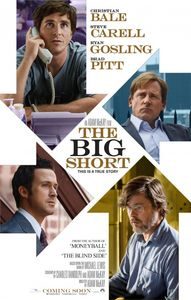
(On DVD, December 2019) As a non-American US political junkie, Vice is my kind of movie: An exuberant, engaged, clever and uncompromising look at a contemporary political figure that makes no apologies for its critical viewpoint. Taking on the unusual life of Richard “Dick” Cheney from early struggles to the vice-presidency of the United States, Vice is a lot more than a standard biopic: Through various impressionist devices, it gets to discuss the decades-long machinations of the Republican Party in consolidating power for power’s sake, the perils of Unitary Executive Theory, the way Cheney masterminded his way through opportunities to get what he wanted, and his unrepentant assessment of his own life. Far from being a dry recitation of fact, it’s narrated by Cheney’s replacement heart and features several filmmaking stunts such as a hilarious end-credit fakeout, quasi-subliminal visual fishing metaphors, a satirical restaurant sequence offering political options “on the menu” during post-9/11 madness, a visible narrator, faux-Shakespearian dialogue, and focus-group commentary on the film itself. It’s been fascinating to see writer-director Adam McKay transform himself from a silly comedy director to an engaged, even ferocious filmmaker, and after the exceptional The Big Short, Vice feels as if he’s applying everything he’s ever learned to take on the biggest topic of all: political power. It certainly helps that the film is an actor’s showcase at nearly every turn: Christian Bale turns in a mesmerizing impression of Cheney, while Amy Adams is almost unrecognizable as his wife. Steve Carell makes for a surprisingly likable Donald Rumsfeld (wow, I just wrote that!), with several other actor/figure pairs along the line of Tyler Perry as Colin Powell. The impact is interesting: for one thing, the film is a treasure box of delights as Bush-era political junkies will be able to recognize real-world figures before they’re introduced by name. For another, it can be surprisingly humanizing: Despite their heartless agendas, both Cheney and Rumsfeld occasionally come across as sympathetic (I either didn’t know or forgot that Cheney had humble origins, while Rumsfeld comes across as self-aware and funny). I’m not so happy with the easy portrait of Bush as an amiable dunce with daddy issues—even in a film that prizes caricatures, it feels like a cheap shot and an underestimation of his abilities. (I suspect it’ll take a while before we get an accurate Bush portrayal.) There are several nuggets for those who have followed political history closely—including an expected poke at the whole bizarre incident when Cheney shot a guy and got the guy to apologize for it. As a non-American viewer, the reaction to Vice was amusing to see—while the film got a much-deserved Best Picture nomination, it also got scathing reviews from the right-wing press and even some centrist outlets as well—almost as if people should be scared of a movie that dares make a political point, almost as if everyone had to tiptoe around Cheney’s political clout. I’ll be blunter: Bring out more movies like Vice. Americans need them.