Agnès Varda

  • Cléo de 5 à 7 [Cléo from 5 to 7] (1962)

    Cléo de 5 à 7 [Cléo from 5 to 7] (1962)

    (On TV, May 2021) Once you’ve seen thousands of movies, it’s perfectly natural (perhaps inevitable) to develop a fondness for formal experimentation. When you’ve seen uncountable examples of the same plot template, repetitive genre entries and overused formulas, it can be a breath of fresh air to see a film that gleefully tries to do something different with cinema. Nouvelle Vague writer-director Agnès Varda was never one for more-of-the-usual, and so Cléo de 5 à 7 is about what it says in the title, following a young woman from 5 to 6:30 (in apparently real time) as she awaits news of a medical exam. While clearly structured and planned, the film does give the impression of flitting from one episode to another like a butterfly, capturing 90 wandering minutes as the protagonist muses about mortality and the meaning of life. There’s other material too — the French war in Algeria weighs heavily over the film, and it’s impossible to see the film as anything other than a feminist text as it examines the place of women in early-1960s French society. Cléo de 5 à 7 is not made to be exciting, but it’s not dull either and while I’m in no hurry to watch it again, it remains an interesting demonstration of how to do cinema slightly differently.

  • Les demoiselles ont eu 25 ans [The Young Girls Turn 25] (1993)

    Les demoiselles ont eu 25 ans [The Young Girls Turn 25] (1993)

    (On Cable TV, April 2021) While other people praise Les parapluies de Cherbourg, my favourite Jacques Demy musical is, without a doubt, Les demoiselles de Rochefort, one of the rare pastiches of American musicals that actually work as a great movie on its own. I’m far from being the only one to think highly of the film, as Les demoiselles ont eu 25 ans goes back to Rochefort in order to celebrate the film’s twenty-fifth anniversary. Amazingly enough, this documentary was directed by none other than French cinema legend Agnès Varda, Demy’s widow who was present during the celebrations to receive the homages in lieu of her husband (who died in 1990). While short at 63 minutes, the film blends footage of the original film and the celebrations with interviews from various players in the film, including Catherine Deneuve. We also get a look, through archival footage and recollections, at the making of the film. It’s clear from the footage that by 1993, Rochefort had immensely benefited from the film’s enduring reputation — various local officials speak fondly of the impact the film had on tourism. While the result is more utilitarian than inspiring, it’s not a bad way to revisit the impact of Les demoiselles de Rochefort and to refresh your brain with the terrific earworm of its best-known song. Clearly made for fans of the film, it delivers everything we can ask of a twenty-fifth anniversary celebration.

  • The Truth About Charlie (2002)

    The Truth About Charlie (2002)

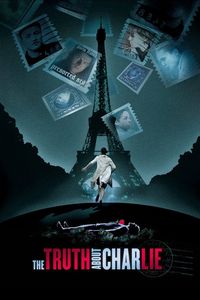
    (In French, On Cable TV, February 2021) I never bothered watching The Truth About Charlie at any point in the past eighteen years, discouraged by its lousy reviews and having missed it during its period of maximum hype. But having seen Charade (the 1963 film of which this is a remake) was enough to get me curious—and being reminded that Thandie Newton starred in the film didn’t hurt either—Mark Wahlberg is no Cary Grant, but I’d probably think a few seconds before choosing between Newton and Audrey Hepburn. Surprisingly enough, the remade script doesn’t mess all that much with the premise of the original: we still have a newlywed coming back to Paris to discover her husband gone and their apartment empty. We still have a mysterious stranger claiming to help despite being allied with three dangerous people. We still have the stamp thing and an American embassy official. It’s more in the directing style that The Truth About Charlie distinguishes itself from Charade — and really not in a good way. Director Jonathan Demme throws in a flurry of circa-2002 stylistic quirks, plus many more of his own (such as the staring-at-the-camera dialogue shots) and the result isn’t dynamic as much as it’s intensely irritating. While the basics of the narrative are still there, they’re made less comprehensible by the showy direction and the elided connective material. It gets worse once you realize that little of the film’s stylistic excesses really serve the thriller — a lot of them are actively distracting from the narrative, and some of them (such as Charles Aznavour showing up to sing) remain completely unexplainable — I happen to think that featuring New Wave director Agnès Varda in a small strange role is Very Significant in figuring out that there’s nothing to figure out. Tim Robbins is fine in the Walter Matthau role, Wahlberg is miscast and Newton is always a delight, but the film around them struggles to keep a coherent tone or even clearly presents its narrative. I suppose that remaking an intensely watchable suspense film as an arthouse experiment is more interesting than simply aping it verbatim, but it completely misses the point of why people loved the film so much in the first place: I’m not sure anyone ever watched the original Charade (which, to be fair, does have its moments of first-act weirdness) and thought, “You know, what this movie needs is more incomprehensible stuff.”