Alec Guinness

  • The Swan (1956)

    The Swan (1956)

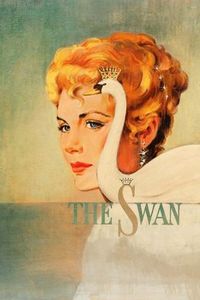
    (On Cable TV, August 2021) At this point, I’m nearly convinced that tales of European royalty romance are only fit to bore me mildly. I simply don’t have the interest in whatever they’re playing off. It’s even worse in The Swan, which sets up a familiar tale of romance between a princess and a commoner… only to deliberately avoid the expected happy ending. Rather than make a point, it merely seems to be flaying about in confusion, just ending on a note of disappointment. Of course, The Swan is still being watched today for factors not entirely of the film’s own making. Here, Grace Kelly plays a princess in her next-to-last Hollywood movie before becoming… a princess. (The film was released on the day of her royal wedding, no less.)  Still, that doesn’t make Kelly’s performance any more animated — it’s easy to start rooting for Alec Guinness when he acts like an overgrown boy in a royal role, even as the film tries to have us sympathize with Louis Jourdan at the other extremity of the love triangle. I watched The Swan but I can’t say I have any definite feelings one way or the other. My expectations aren’t necessarily subverted by the anticlimactic ending — I just feel as if it’s missing something. Kelly looks like a princess but acts like a block of ice, whereas Guinness is an unexpected highlight. It’s clearly the film director Charles Vidor wanted to make, but I just keep on questioning whether it was a good idea at all.
  • The Comedians (1967)

    The Comedians (1967)

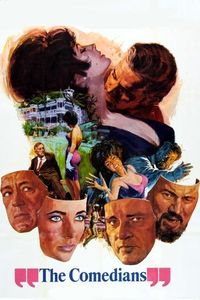
    (On Cable TV, August 2021) To answer an obvious question: No, The Comedians is not a comedy. It’s really at the other end of the scale, since it’s a brutally convincing portrayal of Haiti under the murderous Duvalier regime, with its unrestrained tonton macoutes enabling a reign of terror over the island. Like many French Canadians, I have an above-average awareness and affection for Haiti, and wasn’t expecting a 1960s American film to be so effective into portraying a regime of terror that endured well into the 1980s, overlapping with my childhood memories of then-current events. Much of the darkness of the film clearly comes from Graham Greene’s original novel, writing squarely in his usual “white man goes to a poorer country; terrible things happen” mode. This time, the white man is portrayed by Richard Burton, with then-wife Elizabeth Taylor playing his married mistress. The plot is a downbeat mixture of British operatives, American businessmen, Haitian oppressors, diplomatic personnel and homegrown resistance. It really, truly, definitely does not end well. Still, there’s quite a bit to like here: Burton plays world-weariness like few others and he shares a few good sequences with Taylor. Alec Guinness brings some dark comedy to the cast, with Peter Ustinov also contributing some flair to a supporting role. Some black American actors of the time, such as James Earl Jones and Cicely Tyson, also get supporting parts due to the setting of the film. Downbeat tone aside, The Comedians suffers most in its pacing — at a punishing 160 minutes, it’s too scattered, too leisurely and too inconsistent as well to be truly effective. Probably too faithfully to its source (Green adapted his own novel without concision), its lack of concision does its topic matter no favours. I still found it interesting, largely for Burton and the portrayal of Haiti (even if filmed in now-Benin), but I can think of several ways in which the result could have been better.

  • Bunny Lake Is Missing (1965)

    Bunny Lake Is Missing (1965)

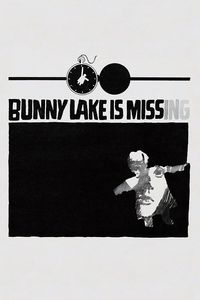
    (On Cable TV, January 2021) You could count on director Otto Preminger for upsetting sensibilities in film after film, and while Bunny Lake is Missing doesn’t have some of the more overt provocation found in his other films, it’s still an unnerving watch. Adapting The Lady Vanishes to feature a four-year-old, it has us questioning the sanity of a young woman claiming that her four-year-old daughter has been abducted despite there being no proof of the child’s existence. Lying or deluded? Have no fear: an inspector (played by Alec Guinness) is on the case, even though he proves an accessory to the protagonist finding out the truth on her own. Shot in detailed black-and-white cinematography and set in London, the film does give a passably unpleasant impression of unhelpful bystanders and dingy locations, everyone aligned against the protagonist. (Although shades of the Swingin’ Sixties occasionally make an appearance, such as unusual rock music from The Zombies as played on background television.) Carol Lynley is fine as the protagonist, but Keir Dullea and Noël Coward and Guinness arguably make more of an impression in easier roles. While the film does feel repetitive at the time, there’s some good tension in the proceedings, and a finale that veers into outright bizarre childhood games. Still, Preminger being Preminger, Bunny Lake is Missing is distinctive enough.

  • Oliver Twist (1948)

    Oliver Twist (1948)

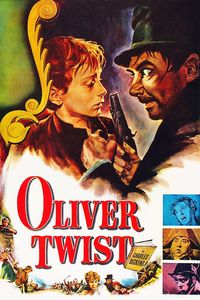
    (On Cable TV, August 2020) There’s something to the faithfulness of David Lean’s adaptation of Oliver Twist that simply makes it feel generic to me. I’m using “generic” in a somewhat unusual sense here – I have seen so many Classic Hollywood adaptations of classic English Literature novels by now that I almost know what to expect before the film even starts playing, and that was Oliver Twist from beginning to end. There are the historical sets, the black-and-white cinematography, the well-mannered theatrical acting from the actors and the loose adaptations in order to make it more of a movie than a book. The only thing that stands out from this Oliver Twist is Alec Guinness’s hideous anti-Semitic makeup as Fagin, a design decision from Lean that has been criticized even since the pre-production of the film and is likely to be criticized forever. Otherwise (and I’ll admit that it’s a big “otherwise”), the film itself feels like an EngLit class brought to motion. Great if you’re illustrating the classics, not so great if, like me, you’ve overdosed on them.

  • The Lavender Hill Mob (1951)

    The Lavender Hill Mob (1951)

    (Criterion Streaming, November 2019) Post-war British film studio Ealing produced some solid hits, and the best of them usually managed a delicate balance between crime and comedy, executed in a debonair manner that made it all feel even more amusing. A near-exemplary illustration of this is The Lavender Hill Mob, a suitably funny take on a heist film in which a shipment of gold bullion is stolen, transformed, smuggled, pursued, and chased again. Alec Guinness stars with a bunch of other capable actors with none other than Audrey Hepburn making her (very short) movie debut in the framing device. It’s handled with what could be called a British flair for ridiculousness, complications and deadpan humour. Despite a bit of a mid-movie lull, The Lavender Hill Mob is 78 minutes of great fun—worth watching if you’re mining the Ealing comedies vein of cinema.

  • Oliver Twist (1948)

    Oliver Twist (1948)

    (On Cable TV, March 2019) I have now seen three adaptations of Charles Dickens’ classic Oliver Twist in a single year, and that is about two more than strictly necessary. That being said, this 1948 take from director David Lean is about as close to a canonical one as it gets. It’s exceptionally well directed, lavishly produced with very good black-and-white cinematography with deep use of shadows to give an extra-gloomy atmosphere. As usual for the story, this is a tale of misery piled upon misery, with the very detailed set giving a still-credible portrayal of life in gloomy low-class London. Characters die a lot, sometimes not very gracefully. The one aspect in the work I’m really not fond of, however, is the hideously racist Jewish stereotyping that Alec Guinness gives to his interpretation of Fagin—a monumentally wrong note in an otherwise strong literary adaptation. Do not, under any circumstance, prefer the atrocious Oliver! musical adaptation to this version. Sometimes, literary classics deserve the classic filmmaking adaptation treatment.

  • The Ladykillers (1955)

    The Ladykillers (1955)

    (On TV, July 2018) If you’re looking for an exemplary British black comedy, you could certainly do much worse than The Ladykillers, a deliciously dark story in which five professional criminals team up for a heist that covers every eventuality … except for their little old lady landlord. Their combined resourcefulness is no match for the bumbling ineptitude of their boarding house host, especially when they make her an unwitting part of their plan. While the heist initially goes well, things get more complicated when she discovers the plot and wants no part in it. The criminals then make one fatal mistake: they decide to kill her. But nothing will go as planned. You can guess who remains standing at the end. Katie Johnson stars as the little old lady to be killed, but the star here is Alec Guinness as a mastermind clearly outwitted, while Peter Sellers has an early role as one of the criminals. My memories of the 2004 Coen Brothers remake are far too dim to be useful, but the original British film is decent enough in its own right—perhaps predictable, but no less satisfying for it. It does help that the film was shot in colour even in mid-fifties UK, giving us a funhouse glimpse in the rather gray life of fifties London, stuck between WW2 and the Swingin’ sixties. This is now remembered as one of the best productions to come out of the original post-war Ealing Studios, as well as one of its last before the Studio was sold to the BBC in 1955. It remains a decently amusing film. 

  • Kind Hearts and Coronets (1949)

    Kind Hearts and Coronets (1949)

    (On TV, July 2018) I really should have liked Kind Hearts and Coronets a lot more than I did. For some reason, though, the film simply didn’t click. It should have—as an early example of dry British black humour, the idea of having a frustrated man killing everyone in the line of succession to a title he covets is rather amusing. The narration has an ironic kick to it as the protagonist details his plans and state of mind, while the dual romantic interests introduces a nice complication. Some of the adulterous dialogue feels decently racy even today (“You’re playing with Fire” “At least it warms me”)—in fact, reviewing quotes from the film, I’m impressed all over again by the quality of the script. Which leads me to think that the conditions in which I viewed the film (with terrible audio and bad captioning from a standard-definition channel that doesn’t really care about offering an optimal viewing experience) may have played some role in affecting my enjoyment of the film. It certainly has qualities to spare. Dennis Price is sympathetic enough as the serial murdering protagonist, while it’s hard to choose between Valerie Hobson and Joan Greenwood as his love interests. Meanwhile, Alec Guinness seems to be having tons of fun playing no less than nine roles in the same film, sometimes in the same scene. Yes, I think that I will revisit Kind Hearts and Coronets in the future, but only if I can be assured of a high-definition viewing with synchronized captioning—the film demands such attention.

  • The Bridge on the River Kwai (1957)

    The Bridge on the River Kwai (1957)

    (On VHS, August 2000) There’s a lot to love about this film: The lush backdrops of the south-Asian jungle, the expensive sets, the great actors, the superb premise of wartime defiance by typically British soldiers forced to work for the Japanese. The script is very good for most of the film’s duration, presenting issues of ethics and conduct yet not browbeating anyone with them. All throughout the film, there’s a palpable sympathy with the bridge-building team, which makes things worse when the film decides that war is hell and that there can be no such thing as a fun wartime adventure. That’s when people start dying and the last-minute attempt to instill a Profound Message falls flat. Too bad, because the rest of the film is classic material.

    (Second Viewing, On Cable TV, April 2021) Considering that it’s been twenty years since I first saw The Bridge on the River Kwai and can now put it in context (of Hollywood’s thirst for spectacle at a decade when TV was entering households, in the context of epic director David Lean’s career, in the context of Alec Guinness and William Holden and the shifting context of war movies over the decades), I was curious to see what I would make out of a second view. While I wasn’t completely bowled over by the result, it’s still quite a remarkable film – perhaps the most entertaining of Lean’s epics (I meant: you can admire Lawrence of Arabia, but it’s not quite as much fun as this one), certainly one of Guinness’ landmark roles as a depiction of a British stereotype, a great turn from Holden and a shining illustration of what 1950s filmmaking could do when it was allowed to spend some time and money shooting on location. The portrayal of a British officer under pressure to do something good (like building a bridge) under bad circumstances (such as being a prisoner of war) in service of something distasteful (such as facilitating military transports) is suitably complex. The similarities to Apocalypse Now go much farther than opposing, “Madness!” to “The horror!” – if The Bridge on the River Kwai has aged so well, it’s in large part because it has a grim attitude toward war that would resonate just as well with later generations. As an older viewer, I now understand far better the grim conclusion and how it works in the context of the film as more than a downbeat tragedy or a spectacular sequence. I still think that the film is too long, that it meanders, that it’s unbalanced between its two leads. But it still works well enough, and it’s still worth a look.