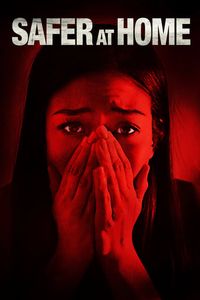
Safer at Home (2021)
(On Cable TV, October 2021) Despite what follows, I approached Safer at Home with the best intentions—I did! As of mid-2021, we’re hardly done tackling the COVID-19 pandemic in film format, and immediate takes such as this one can be helpful in capturing the madness of the moment. I’m also quite willing to entertain experiments with the film form, even if this means, for now, a spate of films inspired by videoconference calls. As Safer at Home begins, we’re clearly not meant to stay in the moment: A year or two from now, as an incredibly deadly “COVID-22-C” variant takes out millions of people per day, our characters are in their third year of lockdown, forced to celebrate their annual Vegas get-together virtually. Naturally, these bright lightbulbs conclude that the best way to do this is to simultaneously take a new experimental drug from Japan. If you’re thinking that this won’t end well, you have no idea—and you’re about to find out that “won’t end well” also applies to the film itself and not just the events happening within it. As mentioned, our characters aren’t the smartest teleworkers around—a trivial admission of a past sexual experience gets a couple arguing and by the time our other characters are retreating to the bedroom, bemoaning the drug trip or being distracted, one character is lying lifelessly on the floor and another one is protesting that he didn’t do anything. Rather than doing the sensible thing (or even any sensible thing), one dull-witted character goes running off in the streets, breaking curfew and attracting police attention but never ever turning off his cell phone screen even when it’s bathing him in light as he tries to hide. The rest of Safer at Home just keeps getting dumber and dumber, ending with a hysterical climax of police brutality that almost feels deserved as a consequence for being such morons throughout the entire film. What began as a semi-comic take on the pressures of confinement just turns stupider every five minutes, until we’ve completely lost sympathy for everyone involved and especially the guy who dies at the end. (Well, I did like Alisa Allapach’s performance, but she’s got the plum cuter-and-smarter role in a weak ensemble cast.) Even the “twist” at the end can be seen long in advance. A lot of material is left untouched here, whether it’s the collective grief of a nation having lost 10% of its population, or the much-vaunted “drug trip” that doesn’t do much, or the impact of an oppressive police force. I still think Safer at Home had potential, but the dim-witted way writer-director Will Wernick goes about steadily wasting its potential is not the way to go.