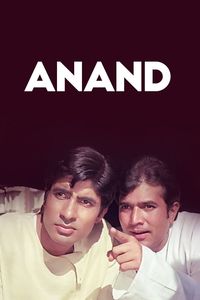
Anand (1971)
(Amazon Streaming, January 2021) I approached Anand without enthusiasm—While the film ranks high on a number of must-see-movie lists, my reaction to semi-realistic Indian cinema is not always all that good. The beginning of the film is portentous enough to discourage anyone: This is going to be about a man dying and the doctor chronicling the events. But as it turns out, Anand is the kind of film that builds and builds, keeping its best moments for the end and assembling bits and pieces of the narrative to make up for a powerful conclusion. Rajesh Khanna anchors the film as its title character, while Amitabh Bachchan got his superstar-making role as the doctor treating him. The last few minutes are a bit of a masterclass from writer-director Hrishikesh Mukherjee in how to use humour to talk about a deathly serious topic—the set-up doesn’t make complete sense, but the payoff is worth it. There’s some interest in how the film uses a few lines of English (mostly when characters tell each other to shut up), as there is in portraying 1970 Bombay in the opening moments of the film. While I’m not yet a fan of Anand, the result is a great deal better than what I was anticipating, and I can understand the fuss about the film.
![Sholay [Embers] (1975)](https://www.christian-sauve.com/wp-content/uploads//sholay-1975.jpg)