Ann Sheridan

  • Honeymoon for Three (1941)

    (On Cable TV, December 2021) I’ll watch just about any movie that features a novelist as a protagonist, even when Hollywood’s understanding of a novelist’s psyche has more to do with fantasy than reality. We’re certainly in comfortable myth in Honeymoon for Three, as George Brent plays a celebrity novelist who has such known issues with womanizing that his friends and colleagues try to protect him when a crazed fan focuses her attention on him during a book tour. As romantic comedies go, it’s watchable without being particularly memorable — although Ann Sheridan looks exceptionally good here with a semi-severe braided hairstyle. The rest of the film (a remake of the 1933 feature Goodbye Again) has ups and downs — some of the dialogue is interesting, while the rest is merely serviceable, and it doesn’t take any cinema literacy to know how it’s going to end. Still, Honeymoon for Three breezes by at a scant 75 minutes despite a comic style that stays perhaps more restrained than it should have been. Anyone with a good understanding of the gruelling nature of book tours will probably appreciate even more the film’s almost fantasy-like portrayal of them.
  • They Drive by Night (1940)

    They Drive by Night (1940)

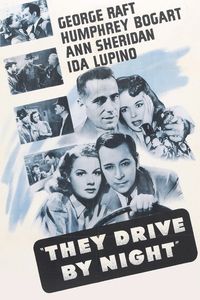
    (On Cable TV, January 2021) If you’re lured to They Dive by Night by Humphrey Bogart’s name, be warned that this is a film from his ascending stardom era—not the Bogart of pop-culture legend, but the rough-hewn character actor he was before his trench-coat fame. The story definitely has him as a supporting player to a lead duo played by George Raft and Ida Lupino as, respectively, a truck driver trying to make ends meet, and the scheming seductive wife of a trucking company owner. This being on the edge of a film noir, she kills her husband and promotes Raft’s character in a bid to get closer to him, but he’s already smitten with a far more wholesome girl. Bogart plays Raft’s brother/trucking partner, while Ann Sheridan plays the good girl. The thriller elements are solid enough (although the ending clearly belongs to a more reasonable, less spectacular age), but the look at circa-1940 trucking can be fascinating—my favourite sequence in the film details how the brothers take a load of produce across the state and negotiate themselves a nice windfall. Bogart remains interesting in one of his last supporting roles, while the normally compelling Lupino is even more captivating as a lust-crazy murderess. While a minor film by most standards, They Drive by Night remains a solid early noir with a few compelling performances.

  • I Was a Male War Bride (1949)

    I Was a Male War Bride (1949)

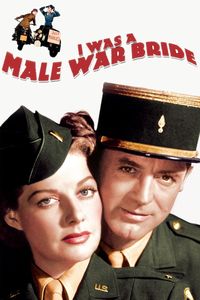
    (On TV, July 2020) How can anyone resist Howard Hawks reteaming with Cary Grant, with Ann Sheridan as a co-star? While I Was a Male War Bride can be accused of stretching a mildly amusing real-life anecdote over nearly two hours, even its uneven nature doesn’t quite take away from the pleasure of seeing Hawks handle comedy, of having Cary Grant goof off in a solid role, or Sheridan as the foil to Grant’s good-natured willingness to make fun of himself. Much of the film’s first half seems disconnected to the title, as a French officer (Grant) and an American lieutenant (Sheridan) fall in love through a copious amount of romantic belligerence in postwar Europe. The title comes into focus midway through, as the film shifts gears, marries its protagonists and then becomes mired in the bureaucratic nightmare of having our square-jawed hero fall into the provisions made for repatriating spouses (usually women) of American soldiers. Kafka turns comic, as Grant repeatedly tries to navigate regulations made for a woman, going all the way to a gender-bending moment of crossdressing. Grant is a good sport throughout, playing with the assumed gender norms on which rest the fundamentals of this comedy. As usual for Hawks’s movies, his female characters are sharply drawn to be the equal of his male characters (even more obviously so in this case) and his dialogue is as fast as the actors can deliver it. While I Was a War Male Bride does not feature very highly on Hawks or Grant’s filmography, it’s a solid comedy and well worth a look for fans of the director or stars.

  • The Man Who Came to Dinner (1942)

    The Man Who Came to Dinner (1942)

    (On Cable TV, June 2020) Imagine the most erudite, self-absorbed, pompous, know-it-all dinner guest imaginable. Now imagine him breaking a leg and having to stay for a few weeks. You don’t need much more than that to get the comedy play-turned-film The Man Who Came to Dinner going. Of course, it helps if you have good actors to play the parts: Monty Woolley as the titular pain-in-the-neck, Bette Davis as his assistant in an unusual comic/romantic lead, Jimmy Durante in a small but loud role, Ann Sheridan as a bombshell actress lured to break up a romance and Mary Wickes as a nurse who gets a full character arc and the film’s funniest speech as she storms out. Nominally a romantic comedy with numerous subplots but closer to a ludicrous screwball revelling in its absurdity, The Man Who Came to Dinner is a solid hit even decades later. The overlapping subplots mean that there’s quite a lot going on at once, helped along with some fast-paced dialogue. While technically a Christmastime film, it’s funny enough to be watched all year long.