Anne Bancroft

  • Nightfall (1956)

    Nightfall (1956)

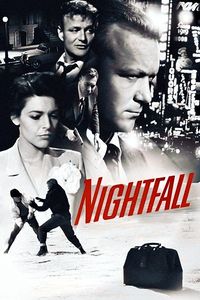
    (On Cable TV, June 2021) Film noir is often considered a purely urban genre, firmly set in the dimly lit streets, small offices and nightclub backrooms of urban metropolises. That’s why it’s a surprise to see the late-genre entry Nightfall head for the wilds of Moose, Wyoming for much of duration. It starts and ends there, with a bag of money being in the middle of the action even as it travels to the city and involves a fashion model (Anne Bancroft!)  Then-veteran director Jacques Tourneur helms the result with some assurance, flipping back and forth between the past and present of the story, as he also goes from the white winter landscapes to the dark streets of the city. This late-period noir often teeters at the edge of other subgenres, but the darkness of the main character and the crime-centric plotting clearly bring it back home. Nightfall is an involving watch — it’s easy to root for the hero, to be captivated by the mystery of the money and remain seated until the cat-and-mouse between the protagonist and the hitmen hunting for cash is resolved. It’s not a bad pick if you’re in the mood for a solid yet slightly unusual noir.

  • The Pumpkin Eater (1964)

    The Pumpkin Eater (1964)

    (On Cable TV, April 2021) Terrible people generally make for more interesting movies than good dull people, but it’s a fine line in dosing the awfulness of characters and keeping audience sympathy. It’s especially challenging in films that don’t have much else going for them — neorealist black comedies like The Pumpkin Eater featuring a woman with a high-but-unspecified number of kids from three marriages wedded (for the third time) to a man juggling multiple affairs. The pacing is slow, the structure bounces back and forth in time, the epiphanies are small and the characters are more irritating than anything else. Fortunately, there are occasional moments to draw us back in. Cinephiles will have fun seeing James Mason in glasses and a moustache playing an utterly despicable character. Or seeing a young Maggie Smith play the homewrecker (even if the home was self-destructing anyway). Or the fight that triggers the third act. And then there’s Anne Bancroft, who got some critical attention at the film’s release for playing a terrible person, a woman with substantial mental health issues who has kids as a form of self-therapy and otherwise wanders aimlessly through the film. Oh, I’m aware that The Pumpkin Eater can be read on a few levels as a story of a woman forced into a role she did not want — but that hardly excuses the dull, bloodless way the film deals with its material and the almost innate revulsion these characters cause. They are terrible people—maybe not entirely through fault of their own, but they are terrible people. The film will probably be more interesting to those who like to witness self-contained character drama, abstracting notions of “likable” characters. For everyone else, though, The Pumpkin Eater may be a mixed bag.

  • The Prisoner of Second Avenue (1975)

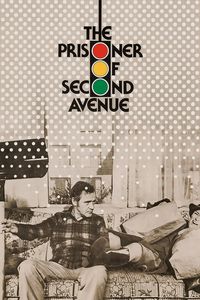
    The Prisoner of Second Avenue (1975)

    (On TV, March 2021) An exasperated Jack Lemmon was, for decades, one of cinemas most reliable comic engine and The Prisoner of Second Avenue is ample proof of that… even if it’s substantially darker than many other comedies in his filmography. A tale of mid-1970s alienation told with sarcasm, it’s about a man who starts the film as a comfortable middle-aged man, then experiences one indignity after another until he snaps and spends much of the film flouting social conventions even as further indignities accumulate. Adapted from a Neil Simon play, it does feature some wonderful dialogue and clever character work — plus there’s a telling reflection of the way Manhattan must have felt in the mid-1970s, with garbage strikes, petty crime, friction between neighbours and constant noise weighing down on its citizens. (I encourage a themed double-feature with the original The Out-of-Towners for more of Lemmon’s exasperation in the streets of New York City.)  Anne Bancroft provides a lot of support as the put-upon wife developing her own crankiness along the way, and Sylvester Stallone pops up in a small funny role. A few factors, however, do take The Prisoner of Second Avenue out of the top tier of Lemmon comedies. For one thing, it’s not quite always played for laughs — the comedy can be dark at times. For another, tales of middle-class urban alienation have been a staple since well before the mid-1970s, and this one is not always distinctive enough to leave a mark. Still, it’s a solid film and one that does get Lemmon the chance to run through some of his most comfortable material.

  • The Miracle Worker (1962)

    The Miracle Worker (1962)

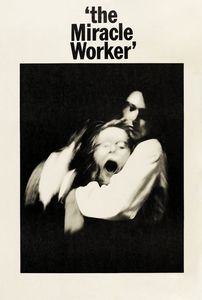
    (On Cable TV, January 2021) I wasn’t expecting all that much from The Miracle Worker: to the extent that it’s remembered by movie history, it’s for being about deaf/blind Hellen Keller and how she was gradually taught to communicate by a very patient teacher. It’s an acting showcase, especially given how both Patty Duke (as Keller) and Anne Bancroft (as her teacher) both won Academy Awards for their performance. My expectations for the film, however, stemmed entirely from the formula typically used for other lesser disability-overcomes-adversity films: a mixture of good-natured determination, kind teachers, soft-focused sentimentalism and sweeping orchestra scores at strategic moments. I couldn’t have been more wrong. From the first few moments in which Heller’s mom goes into histrionics, The Miracle Worker takes a very different track. Its approach culminates into an unusually intense and memorable scene: A literal nine-minute physical brawl between the teacher and the student in which good table manners are more inflicted than taught. I am not kidding hen I say that this scene, with the two actresses slapping, punching, kicking and falling around a dinner table, has more to do with a Jackie Chan martial arts sequence than anything else in 1960s Hollywood cinema. Physically intense and seemingly interminable to the point of full-out comedy, the sequence is easily the film’s highlight, but it underscores an approach to the material that is consciously not beholden to the sentimentality that often animates such stories. The film also wisely holds off from being too triumphant in its conclusion, stopping at the point where things are looking up but not following through with bigger rewards. In other words: quite a surprise, and Oscars completionists will get far more out of The Miracle Worker than what they could expect from a film with two acting awards.

  • Agnes of God (1985)

    Agnes of God (1985)

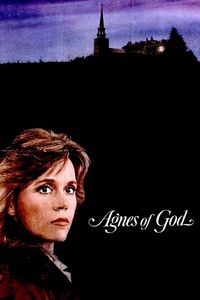
    (On Cable TV, March 2019) There are films that you hear about, forget and rediscover later. The title “Agnes of God” did remind me of something, but didn’t know what exactly. I still recorded it without knowing why. It’s while watching it that I realized that I had completely forgotten the film’s strong Montréal connections: helmed by Canadian-born directing chameleon Norman Jewison, the film is not only set in Montréal with recognizable French-Canadian accents everywhere in the background, but it’s clearly, visibly shot in Montréal with its mid-1980s city logos and cars and slushy winters. Meg Tilly is quite good here in the title role, especially considering that we never see anything but her face and hands. Elsewhere in the cast, both Anne Bancroft (as a mother superior) and Jane Fonda (as a hard-driven psychiatrist) get great roles. All the Anglophone actors can be easily spotted by the fact that their French is phonetically pronounced mush. Narratively, the ambiguous ending is a forgone conclusion the moment the film sets up its characters—we know it’s going to end up with a could-it-be-rational-or-could-it-be-not, in order to make everyone happy (it’s the default conclusion of any religious-or-reality movie). Still, the journey is interesting, and it’s worth noting that the three lead performances in the film are all from women—the men are supporting characters at best. Despite a muddy yet predictable conclusion and a somewhat esoteric and difficult subject matter, Agnes of God is frequently interesting—for the acting, for the setting, sometimes for the drama itself. I’m not sure I’m going to forget it again.

  • The Graduate (1967)

    The Graduate (1967)

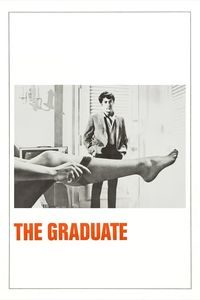
    (On TV, April 2018) The problem with being a generation’s defining statement is that it may not be as compelling to other generations. Contemporary accounts of The Graduate clearly show that it struck a nerve with the baby-boomer generation then coming of age alongside the film’s protagonist. But watching it today doesn’t carry the same message. While Dustin Hoffman ably embodies that generation’s desire to rebel against their parents, his particular struggles seem to belong to the late sixties. Strangely enough, it wouldn’t take much to retell The Graduate today—the big social plot threads are still more or less relevant and technology hasn’t changed much along the way. It doesn’t feel as dated as some of its contemporaries, yet the film simply doesn’t feel all that striking. You can easily imagine a low-budget dramedy telling more or less the same story, but there’s no way that such a film would become the monster hit that it was back then, at a time when “New Hollywood” cinema was waking up from its post-Hays Code stupor. Does it still work today? Well, yes, in its own offbeat way. The film’s first half is surprisingly funny for a film with a reputation as a romantic drama, although the second half really brings the laughs to a stop. It’s remarkably amusing to see firsthand what pop culture has been parodying or sampling for fifty years—you can find echoes of The Graduate in everything from Wayne’s World 2 to George Michael’s “Too Funky.”  Hoffman shows his unusual gifts as an actor, while Anne Bancroft is unforgettable as Mrs. Robinson. Simon & Garfunkel provide the score, which is one of the things that most clearly date the film. Still, it’s worth a middling look today—but maybe not for itself as much as for the impact it had.