Anne Baxter

  • The Blue Gardenia (1953)

    The Blue Gardenia (1953)

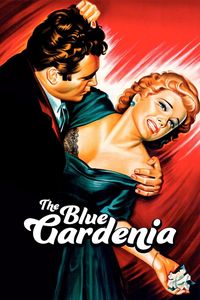
    (On Cable TV, June 2021) One of the reasons for the continued popularity of film noir decades after its heyday is how it enabled female characters to be empowered. The femme fatale was deadly, but she was an active participant in her fate — and such strong female characters weren’t always found in other genres. The Blue Gardenia may not be the ideal film to illustrate this thesis, but it does something that few other films did at the time — play with the idea of violent retribution for sexual assault while on a date. The conclusion zig-zags a bit as to the identity of the killer, but the core idea does remain the same. In many ways, the execution of The Blue Gardenia is strictly professional — director Fritz Lang knew what he was doing, and this film marked the first of three journalism-focused movies. The film’s hurried production schedule didn’t allow for much refinement, but the spirit of noir remains intact and enjoyable here through the touches of romance, investigation and drama. Raymond Burr shows up as the unrepentant womanizer who earns a fatal fire poker to the head, while Anne Baxter plays the conflicted lead who may or may not have been at the other end of that fire poker. Still, the details may be what makes The Blue Gardenia so much fun — a clear-eyed depiction of dating for young single urban women at the beginning of the 1950s that fills in what other movies wouldn’t touch. By wallowing in darkness, noir could be more reflective of the times in which it was set, and you can see the impact of this frankness in the way The Blue Gardenia is still relevant and enjoyable well into the twenty-first century.

  • The Ten Commandments (1956)

    The Ten Commandments (1956)

    (On TV, April 2018) I’m not sure about you, but when I was a boy attending French Catholic Grade School, Easter was a season during which we were all herded in the auditorium and shown one of two movies as put on the flickering projector: Either “the story of Jesus” (which I think was 1965’s The Greatest Story Ever Told) or The Ten Commandments. So, watching this again thirty years later … is almost an ordeal, although not necessarily for artistic or atheistic reasons. No, in order to understand why The Ten Commandments is a bit of a bother these days, just look at the four hours running time. I understand that epics need to be long in order to be epic … but four hours is a long time. It also doesn’t help that it’s such a familiar story—If you want a zippier take, then 1998’s animated The Prince of Egypt zooms by at 100 minutes (with songs!), while much better special effects and actors can be found in 2014’s 150-minute Exodus: Gods and Kings. This being said, I certainly wouldn’t want to suggest that the 1956 version isn’t worth a look. I mean: Yul Brynner as Ramses and Charlton Heston as Moses? Christian Bale and Joel Edgerton wish they could be Brynner and Heston. Plus let’s not underestimate the appeal of Anne Baxter and Yvonne De Carlo. But most of all, what’s in The Ten Commandments and not in Exodus is the sense of the sacred—I may lean toward atheism, but I think that a sense of awe and wonder is a requirement for the story of Moses. Awe is what The Ten Commandments delivers in spades, augmented by the arch melodrama so typical of Cecil B. DeMille’s epic films. Sure, it may sound silly and look even worse compared to today’s realistic aesthetics, but it does work on a level we can’t quite understand. The parting of the Red Sea sequence remains a yardstick even despite the unbearably dated special effects because it’s done with so much conviction that modern CGI spectacles can’t even compare. The script could use quite a bit of trimming, but keep in mind that in 1956, audiences couldn’t be happier to get four hours of spectacle for the price of their movie tickets. The word “epic” is often overused, but it’s strikingly appropriate for the large-scale sequences with a literal cast of thousands, offering all-real images that remain impressive even today. Watching the film as broadcast on ABC for decades, I also enjoyed the sense of participating, once again, in a ritual of sorts. It may be long, but The Ten Commandments is worth the trouble.

  • All about Eve (1950)

    All about Eve (1950)

    (On Cable TV, March 2018) There’s a deliciously impish quality to All about Eve that becomes apparent only a few moments in the movie, and remains the film’s best quality throughout. It’s a cynical look at showbusiness, triangulated between actors, writers and critics. Writer/director Joseph L. Mankiewicz can use rich material in his exploration of the dirty side of theatrical showbusiness, and his actors, in-between Bette Davis, Anne Baxter and George Sanders, are all up to the challenges of his vision. (Plus, a small role for Marilyn Monroe.)  All about Eve has a lot to say about fame, acting, age and even a touch of closeted homosexuality. It does so with considerable wit—the film is good throughout, but it improves sharply whenever George Sanders shows up as a waspy critic acting as an impish narrator. The film still plays exceptionally well today: showbusiness hasn’t changed much, and much of the film doesn’t deal in easily dated artifacts … although some of the social conventions have thankfully moved on. A bit like contemporary Sunset Blvd, All about Eve is a film built on wit and a great script, so it’s no surprise that it would stay so engaging sixty-five years later.