Anthony Hopkins

  • Meet Joe Black (1998)

    Meet Joe Black (1998)

    (On DVD, July 2015)  It’s rare to squarely point at length as a film’s main point of failure; usually, if the film is good then a few lulls won’t damage it; conversely, if a film is bad it will feel long even at 85 minutes.  But Meet Joe Black is something else: A film with pretty good moments, marred by interminable subplots and, thanks to director Marti Brest, a shooting style that never makes a point in five seconds if thirty will do.  A very young-looking Brad Pitt starts as Death incarnate, taking a holiday among humans to understand how we act like we do.  Opposite him, Anthony Hopkins plays a Hollywood rarity: a wealthy man with some innate decency, a genuinely good guy who nonetheless escape caricature.  Finally, Claire Forlani has never looked better than she does here as the daughter of the wealthy man, seduced by Death’s innocence.  (Which leads to a pretty funny scene in which our businessman comes to realize that Death, nominally there to get him, has ended up sleeping with his daughter.)  The film does have an understated poignancy, as death and his target negotiate the terms of our businessman’s death over a few days, timing it to ensure a small triumph.  And while the film does have a few unintentionally hilarious moments (That shot of Pitt’s character being hit by two cars plays beautifully as a looped gif), it’s generally earnest in its musings.  But, as stated previously, the film is fatally wounded by its pacing.  There simply isn’t enough plot to justify the three-hours (!) running length –in fact, the pacing issues are glaringly obvious on an individual scene level as there is no snappiness to the editing and sequences always run longer than you’d expect.  Lop off an hour (from the script, not in the editing room) and you’d have a far more potent film.  As it is, though, Meet Joe Black will repeatedly put anyone to sleep.

  • Kidnapping Mr. Heineken (2015)

    Kidnapping Mr. Heineken (2015)

    (Video on Demand, June 2015)  There is something almost interesting in the themes that Kidnapping Mr. Heineken develops in its last third, once past the conception and execution of a rich man’s kidnapping: the idea that crime destroys friendships and that it’s hard to know where things will stop once you’ve decided to break the law.  Perhaps unfortunately, though, those themes come as afterthoughts and are explored superficially.  What’s left is a dreary European crime thriller, featuring interesting actors (most notably Anthony Hopkins and Sam Worthington) but restrained by the facts of the true story of beer magnate Freddy Heineken’s kidnapping in 1983 by a small group of unexperienced friends trying to get fast money through a ransom request.  Things don’t go as planned, especially once they do get the ransom and the group splits apart on ideological differences.  Worthington is the solid (maybe bland) anchor of the piece, with Hopkins providing a better performance than the film around him.  Otherwise, Kidnapping Mr. Heineken does blur into a generally lifeless crime story, aside from a bit of a twist toward the end.  It’s not bad, but it’s more ordinary than it should have been. 

  • Red 2 (2013)

    Red 2 (2013)

    (Video on Demand, December 2013) The original Red dared to combine aging action stars with quirky comedy and strong action sequences to deliver a film that wasn’t entirely successful, but remained distinctive enough to distinguish itself in a crowded field.  This sequel is slightly improved by a better understanding of how to combine humor with action, and it can dispense with the tedious work of introducing its main characters.  Bruce Willis plays his familiar world-weary tough-guy role, quipping when he’s not exasperated at being thrown once again out of retirement.  Among the returning cast, Helen Mirren is as much fun as ever as a top assassin, while John Malkovich is a bit less crazy (but more sympathetic) this time around, even as Mary Louise Parker furthers her transition from adrenaline junkie to rookie operative.  There’s a fascinating “throwback to the cold war era” atmosphere as the action goes well beyond the borders of the United States and to Europe, with Anthony Hopkins bringing new laughs as a crazed weapons designer and Catherine Zeta Jones earning a few chuckles of her own as a once-fatale assassin.  While the CGI works gets a bit tiresome by the end of the final chase sequence, most of the other action scenes are good enough.  Red 2 doesn’t work on a particularly high level, but it’s adequate and in some ways moves past the whole “retired action heroes” shtick into a post-Cold War plot that seems to grow organically out of the characters’ age.  It works just fine as an unassuming action film, and even a little better as a sequel.

  • Hitchcock (2012)

    Hitchcock (2012)

    (Video on Demand, March 2013)  More than thirty years after Alfred Hitchcock’s death, the influence of the director over the thriller genre still reigns supreme, so it makes sense that a biography would seek to present the man to a contemporary audience.  Taking the making of Psycho as its narrative hook, Hitchcock stars a heavily made-up Anthony Hopkins as the celebrated director, stuffing a romantic comedy and a study of Hitchcock’s entire career and quirks into a handily convenient narrative.  If you’re wondering about the fidelity of the film to real events or even its literary inspiration (Stephen Rebello’s Alfred Hitchcock and the Making of Psycho), you may as well avoid digging too deep: Hitchcock is a heavily-fictionalized take loosely inspired by real events, but the film’s romantic theme is nowhere to be found in the book (where Hitchcock’s wife, Alma Reville, barely gets a role and Danny Huston’s Whitfield Cook is not even mentioned), and nearly every scene contains material that only makes sense if you’re aware of Hitchchock’s legacy.  It does feel a bit artificial and pat, exactly as if the screenwriters were cramming everything worth saying about the director into a comic film covering a small part of his life, and including a modern take on spousal collaborations just to provide a romantic arc to the film.  But such are the conveniences of dramatized biographies, after all: the point isn’t in faithfully presenting reality as much as it is to provide an entertaining capsule summary of a complex person.  In this regard, Hitchcock fares better: The script feels as if every detail is in its place, the humor is used effectively (“That’s why they call me ‘The Master of Suspense’”) and its structure is clearly meant to leave viewers elated at the success of Psycho, Hitchcock and his renewed sense of matrimonial partnership.  There are a few clever sequences here and there, whether it’s Hitchcock listening to his audience’s reaction, or the way the mechanics of filmmaking are brought to life.  Not everything works –the interludes in which Hitchcock converses with his fantasy of a murderer are distracting and suggest a fantastical quality to the film that it did not need.  Still, as filmmaking homages go, this is straight-up Hollywood: The actors are all doing good work (Other than Hopkins-as-Hitchcock, Hellen Mirren is remarkable as Alma Reville), the cinematography is clean and everything wraps up neatly.  Who cares, then, if Hitchcock takes frequent liberties with historical events?

  • The Wolfman (2010)

    The Wolfman (2010)

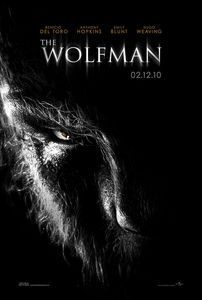
    (On Cable TV, February 2012) Critics weren’t kind to this remake of the 1941 horror-classic and, up to a certain point, it’s easy to see why: There isn’t much of a story here, nor too many chills.  The tone can be inconsistent, and some moments feel more ridiculous than anything else.  Additionally, the winks and nods to horror fans sometimes lead the story into small dead-ends (eg; the silver cane).  Still, The Wolfman has a lot going for it in the visual department, from an effective gothic atmosphere to Joe Johnston’s often-clever direction.  The makeup and special effects are used wisely and the cinematography can be adequately lugubrious at times.  While not up to Tim Burton’s standards (You should see The Wolfman in a double-bill with Sleepy Hollow), there is a lot to like in the film’s visual presentation, which is a notch over the usual horror film.  Unfortunately, the assets are often undermined by gratuitous gore taking down the film’s moment-to-moment impact from high-art to low-schlock, and there is a sense that the straightforward narrative isn’t up to the setting it inhabits.  (Much like Anthony Hopkins seems to be slumming in a one-dimensional role.) Oh well; at least Benicio del Toro and Hugo Weaving can be compelling to watch, and if viewers get bored, there’s usually a nice image every few moments to keep things interesting.

  • Mission: Impossible II (2000)

    Mission: Impossible II (2000)

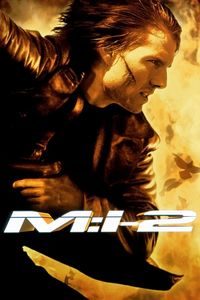
    (In theaters, May 2000) Frustrating because it is, at the same time, so bad and so good. The script is one of the sorriest excuse for an “action” film I’ve seen in a blockbuster for a long, long time. Say what you want about Armageddon, at least it had pacing on its side. Not so with Mission: Impossible 2: If the first fifteen minutes are pretty enjoyable, the following hour drags on like molasses, with a complete lack of any action. That dreadful hour is further drawn-out by nauseatingly trite dialogue, obvious “surprises” and bland scripting. But, forty-five minutes before the end, Ethan Hunt finally gets to act like the James-Bond clone he has so obviously become, and only then does Mission: Impossible 2 become a thrill ride. That’s when characters stop speaking and start shooting, all sumptuously directed by John Woo. Slow-Motion bullet ballet, a wonderful motorcycle chase worth the price of admission in itself and a superb hand-combat sequence complete the film. A shame you have to slog through so much… emptiness in order to get to it. Tom Cruise is irreproachable -as is Anthony Hopkins’ cameo- but the rest of the actors get short thrift and Thandie Newton’s character is atrociously written. So much good stuff, so much bad stuff… and Hollywood suddenly asks itself why we think its summer blockbusters suck.

  • The Mask Of Zorro (1998)

    The Mask Of Zorro (1998)

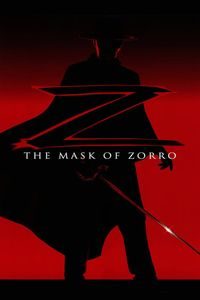
    (In theaters, July 1998) At first glance, there’s nothing very exciting about the concept of Zorro: A masked guy (yawn), swordfighting (yawn) evil Spaniards (yawn) in 19th century California (yawn). And yet, The Mask Of Zorro fills a need you didn’t think you had: To see one good swashbuckling movie about a stylish caped crusader. Antonio Banderas brings authentic looks, charisma and comic timing to the title character. Sultry Catherine Zeta-Jones burns the screen. The stunts are great, the swordfighting isn’t butchered by quick edits, the script is okay and the sheer style of Zorro isn’t overshadowed by the unobtrusive direction. One of this summer’s most satisfying blockbusters. Great fun for everyone.

    (Second viewing, On DVD, September 1999) Fortunately, this marriage of old-fashioned swashbuckling adventure with modern pacing still holds up amazingly well to a second viewing. This is obviously a by-the-number action script, but the whole atmosphere lifts the film up above your run-of-the-mill film. A trio of extremely capable actor (Antonio Banderas, Anthony Hopkins and the breakaway presence of the luscious Catherine Zeta-Jones) and some quasi-classical scenes complete the work. The DVD doesn’t add much besides an unremarkable making-of featurette.