Anthony Mann

  • The Man from Laramie (1955)

    The Man from Laramie (1955)

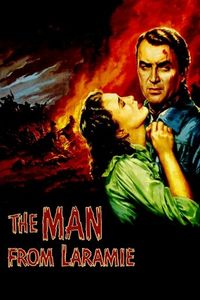
    (On Cable TV, July 2021) While it’s interesting to see Jimmy Stewart take on darker roles in 1950s western, there’s a feeling that once you’ve seen two or three of them, you’ve seen almost all of them. Oh, I wouldn’t necessarily call The Man from Laramie generic or uninteresting — it’s got plenty of plotting going on in-between its protagonist, warring ranchers, weapon deals and superb landscapes. But Stewart isn’t nearly as interesting here as in similar 1950s westerns — he’s closer to his all-American likable persona, and you don’t sense his character having the kind of big flaws that drove much of the other movies. What’s left is a serviceable western — well-directed by Anthony Mann in early CinemaScope, but generic in theme and tone. It’s not a bad movie, but you may have trouble recalling what The Man from Laramie is about shortly after seeing it, doubly so when compared to the other Mann/Stewart films or the era.

  • The Naked Spur (1953)

    The Naked Spur (1953)

    (On Cable TV, October 2020) I’m somewhat familiar with James Stewart’s filmography of the 1930s and 1940s, but not so much about the movies he did during the 1950s, a time when he consciously sought to remake his image away from the young romantic premiers or everymen characters that made his success in previous decades. By the 1950s, he sought to reinvent himself in darker, more rugged roles, often in western settings. The Naked Spur does seem like a rather good introduction to that era, as he plays a bounty hunter who heads into the wilderness to track down a man with whom he has a very personal grudge. A mere handful of characters populate The Naked Spur, giving a quasi-theatrical focus on the story even as the film is set against expansive western landscapes. The story itself gets darker as it evolves, with the characters eventually working against each other in order to secure the reward or their vengeance. Stewart himself plays a harsher character this time around, obsessed with revenge and definitely not amiable as usual. Janet Leigh is there as a possibly unreliable love interest, with director Anthony Mann completing one of his many collaborations with Stewart. The result is a cut above most westerns—a close-knit, rather short character drama set against the grandeur of the Rockies.

  • The Far Country (1954)

    The Far Country (1954)

    (On TV, October 2020) Never mind the western, here is the northern: The Far Country is distinctive in how it is set in Alaska (but shot in Alberta), featuring an adventurer bringing order to the north. There are numerous points of comparison between this and Thunder Bay in semi-awkwardly featuring James Stewart as an outdoorsy adventurer, and that was before I discovered that both movies shared the same director Anthony Mann, who made many other 1950s films (especially westerns) with Steward. The ingredients are similar, what with an adventure story made distinctive by its procedural description of a slightly unusual setting. The Far Country is not that distinctive nor that good, but it’s watchable enough in how it transposes familiar Western themes to an underused environment. There’s a little bit of Canadian and French-Canadian content in here (largely due to the location and to Corinne Calvet’s performance). Still, the film is not all that memorable, and there are better choices out there for Stewart fans looking at his 1950s filmography.

  • Winchester ’73 (1950)

    Winchester ’73 (1950)

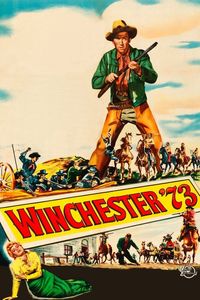
    (On TV, January 2020) There’s something interesting in that the film credited with jump-starting James Stewart’s run of 1950s Westerns is one that thematically delves into one of the central symbols of the western: the gun. Titled for the gun, revolving around the gun, propelled by the gun, almost entirely focused on the gun, Winchester ’73 both plays on the attraction of the gun and comments on how crazy it is that such an object could lead to murderous passion. This tension serves the film well, especially since it also applies to the redefinition of James Stewart into a rougher, more disillusioned persona—perhaps reflecting the lasting echoes of a war that left no one innocent, perhaps simply acknowledging one of the phase transitions that actors with long careers must face. This ended up being the first of eight collaborations between director Anthony Mann and James Stewart, many of them westerns that started asking questions about the mythology of the west. The film may star Stewart, but the plot favours the gun—the protagonist wins it in a shooting contest early on, then spends the rest of the film trying to get it back from a thief and everyone else who wants the gun for themselves. It’s rich thematic material even if the film doesn’t quite have the sophistication (or the guts) to fully explore what it means. Still, what Winchester ’73 does for its time is quite remarkable. There’s a near-mystical quality given to the titular gun and to all guns in general, even the Native American characters lusting after them as much as the white characters. All of this is accomplished with a big budget and good production values, meaning that the film remains interesting even if you’re not interested in digging into its meaning. Stewart is also remarkable, taking on a darker role with relish. Opinions are split as to whether this or later movies are the best of the Mann/Stewart era, but even as a first effort Winchester ’73 is worth a look.
  • Strategic Air Command (1955)

    Strategic Air Command (1955)

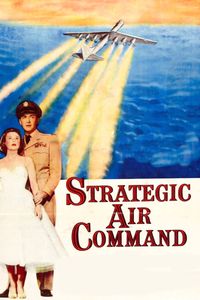
    (On TV, November 2019) While it features a serviceable story about a baseball player who finds meaning in aerial service, you can argue that the real job of Strategic Air Command was in acting as of Cold War Propaganda about one of the newest and most crucial wings of the American military in the decade following World War II—its fleet of bombers making up a substantial portion of the nuclear deterrent force. James Stewart stars, as no one else would: Stewart famously served in the US Air Force during and after WW2, eventually attaining the rank of brigadier general in the Air Force Reserves by the end of the 1950s—becoming not only the highest-ranking actor in Hollywood history, but also a pilot on the B-52 bomber. He was, as the film’s production history attests, a driving force in its production—clearly influencing its tone as a propaganda piece and starring as the affable, amiable protagonist who sees a service tour becomes a career. For military aviation buffs, Strategic Air Command is a great document about the transition of the US bomber wings from propeller to jet-powered planes: the colour cinematography captures many period details, and the script is meant to be reasonably exact about the procedures and units it follows. It’s not a difficult film to watch: several amusing or suspenseful incidents help populate the story in between footage of planes in action. There’s an ineluctable sexism at play in the story (what with the dependent wife supporting her husband in his new career and ever-changing assignments) which is to be taken as a further illustration of the values in play at the time. Still, it’s hard to resist Stewart and the opportunity to see vintage footage of shiny old planes. Director Anthony Mann was clearly slumming here—the film has none of the interest of the westerns he also did with Stewart. But you can file this one as a favour for his friend Stewart—at least he keeps the film interesting to watch throughout, even if the material can be thin at times. There is a straight and bold connecting line between Strategic Air Command and Top Gun.