Armando Iannucci

  • The Personal History of David Copperfield (2019)

    The Personal History of David Copperfield (2019)

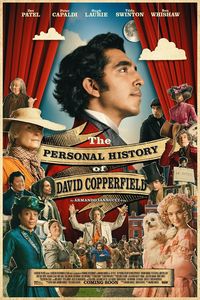
    (On Cable TV, May 2021) Writer-director Armando Iannucci seldom does the expected, and so his take on Charles Dickens’ David Copperfield is very much its own thing. Race-shifting the lead role to be played by the always entertaining Dev Patel, Iannucci goes for a very expressive, stylish presentation of the material distilled to a feel-good essence. There’s a framing device of sorts in having the narrator of the story address a theatrical audience and flashing back to the tale being told; there are interludes that break with conventional representation; and a silent fast-forward sequence. But such stylistic flourishes seem appropriate in a film when colours and actors such as Peter Capaldi, Tilda Swinton, Hugh Laurie, Benedict Wong and others seem intent on upstaging each other. (To the benefit of the film, of course.)  It’s all fun to watch, utterly divorced from the intention of delivering a strictly historical take on the story. Despite not being all that familiar with the source material, I appreciated the big happy ending (the biggest surprise of the film being Iannucci being happy with happiness) and the playfulness through which it approached a literary classic. Yes, we could use a few more movies like The Personal History of David Copperfield. But not exactly like it.
  • The Death of Stalin (2017)

    The Death of Stalin (2017)

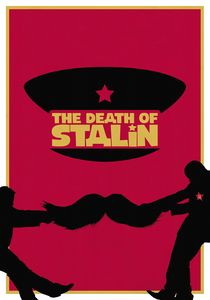
    (On Cable TV, July 2019) Calling The Death of Stalin a comedy only works if you include the darkest, most uncomfortable sort of comedy, describing life under a tyrannical regime in absurdist life-or-death fashion. Nominally a historical work (albeit one taking many, many liberties), the film follows the last moments of Joseph Stalin and the weeks following his death, commenting on the inherent instability of an authoritarian regime suddenly stripped of its leader. Following absurd orders and pretending everything is normal is the least of the characters’ worries when even a hint of disloyalty can get you shot. The political shenanigans to succeed Stalin grows complex even before the funeral is underway, and if the actors all have a talent in common, it’s to play this deadly eeriness with a deadpan expression. The terrific cast includes names such as Steve Buscemi, Jason Isaacs, Michael Palin and Jeffrey Tambor among many others—considering writer-director Armando Iannucci’s pedigree, the dialogue-heavy, almost theatrical script is an actor’s dream to play. The film would act as a powerful warning to anyone tempted by the lure of authoritarianism that such regimes are actively dangerous to everyone including the person at the top—but one suspects that anyone tempted by dictatorial regimes today are nowhere near Iannucci’s target audience. Alas, the effectiveness of the premise is not completely met by its execution: Considering that The Death of Stalin had been on my radar for more than a year before seeing it, I found myself underwhelmed by the actual film—while interesting, it’s not as gripping or amusing as I’d hoped. It didn’t help that I had a self-censor tripping up whatever amusing moments I found myself enjoying: This is a film that places a lot more emphasis on the dark of dark comedy.