Arthur Freed

  • Best Foot Forward (1943)

    (On Cable TV, November 2021) Conventional wisdom has it that Lucille Ball was moderately famous throughout the 1940s, but truly became an icon with I Love Lucy in the 1950s. Best Foot Forward, considering Ball’s starring role as herself and its superb colour cinematography, may lead you to believe that it is a 1950s musical comedy looking back at the war years, but not so: Released in 1943, it was meant to highlight Ball’s status as one of MGM’s newest contract stars, with the red hair kept from the striking example set in her previous (and first MGM) film Du Barry Was a Lady. The plot revolves around her as she travels from Hollywood to a small northeastern military academy as a promotional stunt, answering the call of a starstruck cadet. Once there, the musical aspect of the film comes to the fore, as various musical numbers and interludes lead to small-scale romantic subplots for the other members of the cast. The result is fine without being particularly good (this being one of producer Arthur Freed’s earliest efforts, you can see the roots of his method that would lead to his first big success the following year with Meet Me in Saint-Louis and then to the streak of terrific musicals culminating in Singin’ in the Rain and The Band Wagon), but few numbers stand out:  Harry James and his Orchestra do good supporting work, with a highlight being a spirited version of “The Flight of the Bumblebee” (immediately followed by the film’s standout number “The Three B’s”). While Ball is also good-but-not-great in the lead role, the film’s scene-stealer is Nancy Walker as a short and spirited “plain” young girl who gets some great lines and a very funny duet dance number in “Alive and Kickin’.”  The result is very much in the solid average of the WW2 military musicals and is perhaps best remembered as a stepping stone in the careers of Ball, Freed and future musical star June Allyson. Even if it’s in the lower tier of Freed musicals, Best Foot Forward is not a bad watch — and it feels like a later film.
  • Summer Holiday (1948)

    Summer Holiday (1948)

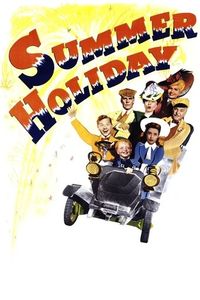
    (On Cable TV, July 2021) By the late 1940s, producer Arthur Freed has cemented his reputation as MGM’s foremost musicals producer — the leader of prestige projects for the studio, often working in colour at a time where it was uncommon. You can see some of the cockiness that comes with that status in segments of Summer Holiday, which doesn’t always neatly segregate between spoken and sung moments in the action, and clearly has the means with which to execute its ambitions. Sadly, those ambitions are pedestrian — the film covers a summer in the life of a high-school graduate, but seems intent on presenting an archetypical and rather boring vision of the American heartland. Anything interesting has to be filed off along the way — for instance, our protagonist (MGM golden boy Mickey Rooney) begins the film with an endearing cynical outlook on life that extends to questioning American values and promoting Marxism. See, that’s an interesting character. Obviously, though, this kind of thing can’t stand: before the end of Summer Holiday, he’s reformed into a capitalistic American patriot intent on marrying “the right kind of girl” (don’t worry, he already knows her) after a boozy flirtation with the wild side portrayed as a nightmare. But so was the dint of the land at the time — MGM couldn’t possibly get its teenage hero spouting off anti-establishment rhetoric and make it to the end of the film. This sour note is not exactly counterbalanced by anything else in the film — the surprisingly dull colour cinematography doesn’t help, the blurring of musical numbers with straight dialogue holds back the film from traditional musical numbers and there isn’t much worth remembering from the result. I’ve been watching much of Freed’s filmography lately, and Summer Holiday is certainly lower-tier material — it hasn’t aged all that well and feels too ordinary to be interesting.

  • Good News (1947)

    (On Cable TV, July 2021) In many ways, Good News is a wholly unremarkable musical — it doesn’t have the top stars of the genre (I mean — yes, June Allyson and Peter Lawford aren’t unknowns but they don’t compare to some of the other people working in musicals at the time) and it doesn’t have memorable tunes other than “The Best Things in Life Are Free.”  It has adequate but not exceptional choreography and doesn’t quite distinguish itself with a campus narrative that draws in football with academics. On the other hand, it’s an infectiously cheerful romantic comedy— it’s practically impossible to stay grumpy once the film gets started and the silliness starts to fly between its football jock male lead and its French-tutoring female lead. Producer Arthur Freed’s touch is evident in the film’s accessibility and moment-to-moment fun. It’s peppy, colourful (thanks to some well-done Technicolor) and remains fun until the predictable end. As a French speaker, there’s some added interest in seeing Good News leads struggle with the language, either as they sing through “The French Lesson” or in hearing their spoken French oscillate between flawless and garbled in the span of a few syllables. (Ironically, Lawford’s French is pretty good, whereas Allyson’s isn’t.)  All of this doesn’t make Good News anywhere near the list of essential musicals. But it’s probably one that I’ll watch again with some pleasure later on — it’s perfectly serviceable in its own way, and a joy to watch even if it’s not a top example of the form.

  • The Clock (1945)

    The Clock (1945)

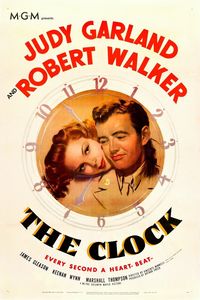
    (On Cable TV, January 2021) Having a sailor on leave meet and woo a young woman was a surprisingly familiar premise of 1940s movie musicals, and one of The Clock’s most surprising characteristics is seeing this common trope being used as a basis for a romantic drama rather than sing-and-dance. The surprise gets bigger considering Arthur Freed as producer, Vincente Minelli at the helm and Judy Garland as the female lead—this was Garland’s first serious role as a young woman rather than a girl, and she doesn’t sing once. The film is decidedly low-key, with the stakes being almost entirely focused on the boy-meets-girl plot. Mid-1940s New York is convincingly portrayed, especially given that the entire film was shot in Los Angeles. Clearly meant to be less spectacular and more romantic than the previous Freed/Minnelli/Garland production Meet me in St. Louis, The Clock will strike some as a well-executed intimate drama and others as a bit of a disappointment compared to its most immediate contemporaries. But Garland is quite good here—attractive and playing in a dramatic register that is arguably more interesting than the roles for which she was pigeonholed through her career. The Clock is also notable for at least glancing at the issues raised by a whirlwind romance—it states that our couple of lovebirds will be fine once he comes back from the war, but at least it entertains the notion that this may be rough sailing for a while. While it doesn’t have the re-watchability of its closest equivalents, The Clock is perhaps best seen as a change of pace for everyone involved in it.

  • Silk Stockings (1957)

    Silk Stockings (1957)

    (On Cable TV, March 2019) Sadly, I’m counting down the last few Freed-unit MGM musicals on my list—I can see why they were hailed as the best in the business, and there aren’t that many left for me to watch. I would expect a downward quality trend in getting to the less famous movies, but Silk Stockings is a strong entry in the musical corpus. It’s a decent musical adaptation of 1939’s Ninotchka, with Cyd Charisse stepping into the Garbo role in a movie at the measure of her legs—her solo number “Satin and Silk” is both funny and sexy, within a role that takes advantage of both her dancing abilities as well as her ice-queen acting range. The film has Fred Astaire as a movie executive trying to put together a project in Paris, which requires convincing Russian artists to work for the capitalistic west. Charisse plays a humourless Soviet operative gradually seduced by the leading man and Paris’s considerable attractions. The West-versus-East element of the original 1939 film plays far better in the middle of the Cold War, and this mid-1950s film also captures other obsessions of the era—most notably the decade’s obsession in distinguishing movies from TV through colour cinematography, widescreen framing and “Stereophonic Sound.” (It’s, by far, my favourite number of the film despite a dodgy cadence.)  Another highlight is “Red Blues,” as the gentle poking at Soviet rigidity finally makes its way over the Iron Curtain. There’s plenty to like in the acting, as long as you accept Astaire once again being in Paris with a much younger partner (as in the same year’s Funny Face)—if it helps stomach the 22-year age difference between them, keep in mind that few actresses, no matter their age, could keep up with Astaire’s dancing. This being said, Astaire is up to his usual very high standards (he keeps the best for last with an iconic final “The Ritz Roll and Rock”), but Charisse has the tougher role as the rigid accented Nina, slowly transforming over the course of the film. Their duet is quite good as well, perhaps echoing their comfort together after working on The Band Wagon four years earlier. Peter Lorre also has a funny small role. While Hollywood history is rife with disastrous musical remakes of earlier works, this certainly isn’t the case with Silk Stockings. Much like the quasi-contemporary High Society, it takes a good film and delivers something equally good in a slightly different way. It’s one of the essential musicals of the 1950s.

  • The Band Wagon (1953)

    The Band Wagon (1953)

    (On Cable TV, February 2019) As a seasoned cinephile with thousands of reviews filed on this very web site, I’m far too jaded to start saying things such as “an instant personal favourite!” … but The Band Wagon is something different. Sometimes billed as “everyone’s second-favourite movie musical after Singin’ in the Rain,” it lives up to the hype: filled with striking numbers, bolstered by a cast headlined by Fred Astaire and Cyd Charisse, directed by Vincente Minnelli and produced by Arthur Freed, this is as good and as fun as musicals ever got. Astaire anchors the film in a role that smirks at his own personal situation at the time—coming out of retirement to play an entertainer looking for a comeback picture. Opposite him is Charisse, and romantic dance duets don’t get any better than their “Dancing in the Dark” with two of the greatest-of-all-time dancers playing together. But that’s a rare serious/romantic moment in an otherwise comedy-filled picture. “That’s Entertainment” is a pure earworm classic with plenty of sight gags, while “Triplets” is a darkly funny number that will surprise a few and “Shine on Your Shoes” gets Astaire dancing up a solo storm. Still, my favourite number has to be “Girl Hunt Ballet” which mixes two of my favourite movie genres—musicals and film noir—into an incredible, consciously over-the-top result. The theatrical setting of the story (in which a Broadway troupe rallies together to rescue a failing show) allows for plenty of show-business in-jokes and commentary, in keeping with the best musicals of the time. I’m not so happy at the 23-year age difference between Astaire and Charisse, but which fifty-something actor/dancer could hope to keep up with a talent as singular as Astaire? It’s a small blemish on an otherwise incredibly compelling picture—I’ve already watched The Band Wagon twice before writing this review, and—indeed—I’m placing it right under Singin’ in the Rain as one of my favourite musicals.