Awkwafina

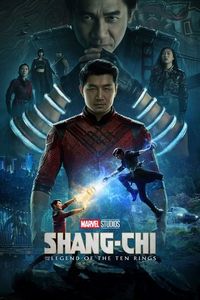
  • Shang-Chi and the Legend of the Ten Rings (2021)

    Shang-Chi and the Legend of the Ten Rings (2021)

    (Disney Streaming, December 2021) We’re at an interesting juncture in the Marvel Cinematic Universe, having concluded the first decade of the series with a climactic event. The focus right now seems to be on building a next generation of characters, burnishing the series’ progressive credentials and trying a few new things in the wake of a conclusion of sorts. As such, maybe a bit of sputtering is inevitable: Black Widow was a reheated plate of déjà vu, while Shang-Chi and the Legend of the Ten Rings is only notable if you’ve never seen anything in the Chinese fantastic martial arts tradition. (Which, admittedly, is probably the case for most western audiences.)  As someone who has watched a lot of eastern fantasy martial arts movies starting back in the early 2000s, I felt more antsy than anything else during much of Shang-Chi’s second half. The first one is clearly better: as an underachieving young man discovers his otherworldly pedigree, the film begins grounded in the here-and-now, with Awkwafina providing a sarcastic audience stand-in as things get weirder and weirder. Simu Liu is fine as the lead, although time will tell if he’s able to parlay this specific success into something more lasting. The top moment of the film has to be a fight aboard a 60-foot articulated bus — having ridden on near-identical buses for a long time, that sequence exceeded my wildest fantasies borne out of transit boredom. But as Shang-Chi’s action moves away from San Francisco to the Chinese supernatural underworld and then another realm entirely, everything felt increasingly familiar, and even Michelle Yeoh can’t make the entire thing stick together — as it went on, Awkwafina’s character felt duller and duller, absent her amazement on behalf of the audience. The final battle felt like a chore more than anything else. Links with the MCU so far are thin — other than Benedict Wong showing up briefly, a few references to the Snap and the usual credit teasers, Shang-Chi is a standalone film meant to launch a new character. In some ways, this lack of satisfaction is inevitable: the series is once again in build-up mode, but the expectations are much higher this time around. Next up is Eternals, although from the vantage point of being a patient viewer, I can already see the very bad reviews for the theatrical release…
  • The Farewell (2019)

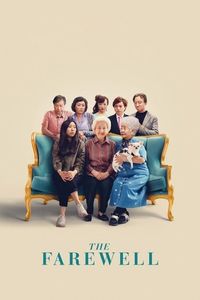
    The Farewell (2019)

    (In French, On TV, October 2021) As I’m mentioned elsewhere, the best thing about the 2010s trend toward more inclusive filmmaking is getting those stories we wouldn’t have had otherwise. Stories like The Farewell, in which a young aimless Chinese-American goes to China for a wedding over her family’s objections. The issue is that the entire family is invited, but they don’t trust her not to keep a family secret: that the matriarch of the family is dying of cancer, and the entire family has chosen to keep the news from her. Featuring a completely de-glammed Awkwafina in a demanding role, the film initially does run on a core engine of suspense: will the protagonist be able to keep a secret from her dear grandma or not? But then, before we know it, we’re deep enough in family dynamics, exploring Changchun, learning why Grandma is so special and getting a lesson in Chinese collectivism. Despite a good dramatic turn for Awkwafina, it’s Zhao Shu-zhen who steals to film as a Chinese matriarch. The universality of The Farewell is impressive—despite the foreign nature of the film’s surroundings, it’s easy to empathize with the complex family ties at play here. It’s not a particularly fast-paced film: some shots drag on, much of the material is repeated and there isn’t much of a plot to speak of. But that’s fine—The Farewell is a different kind of film, and one that’s best taken in rather than actively watched.

  • Raya and the Last Dragon (2021)

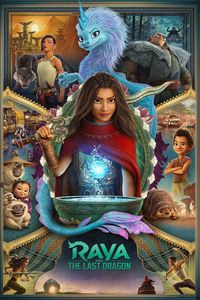
    Raya and the Last Dragon (2021)

    (Disney Streaming, June 2021) It’s hard to avoid noticing that, in between Big Hero 6, Moana, Mulan and now Raya and the Last Dragon, Disney has put some emphasis on the Asian market over the past few years. What’s more, the past, oh, ten years have seen a shift in how Disney approaches its celebrated princesses: past films have been celebrated for being more diverse (The Princess and the Frog onward), with its princesses less likely to be linked to male romantic interests (Frozen onward). Now that the formula-breaking movies are done, the more interesting material is coming out: what do you do for an encore, and what happens once the breathless marketing coup is done? Raya and the Last Dragon finds Disney a bit less self-conscious and a bit less under the microscope. This time around, we’re in southeast Asia, with a blend of influences suggesting an atmosphere without necessarily pointing to something specific. Our heroine, Raya, is definitely a princess (being the daughter of the local leader), but she precipitates an apocalypse by her action as a girl, and then the story moves forward to a grittier(ish) setting with her as a teenager. Some of the familiar Disney Animation elements are back — a cute animal sidekick combining elements of pillbugs and hedgehogs (much cuter in the film than it sounds), an action-filled quest, exceptional visuals, and characters reflecting their voice actresses, such as a dragon character that couldn’t have been voiced by anyone but Awkwafina. Other elements are newer: the narrative widely opens the door to a same-sex romance in a sequel and there’s quite a bit of grimness in the implied backstory of the time-skip. Alas, Raya does fall apart slightly in the execution. The film doesn’t feel as polished and tight as other Disney movies, almost as if the zigs and zags of the production hadn’t been completely patched by the time the film was finished (as strongest evidence, I offer the five tribes: two of them lavishly used but three others merely present as an afterthought). The climax isn’t quite as strong as I’d hoped, and I have a feeling that some aspects of the film (Awkwafina, mostly) will date faster than its immediate cohort. Still, I’m not unhappy with the result: As a film courting the Asian market, it’s significantly more interesting and less self-contradictory than Mulan. It’s a beauty to watch, and I like how it takes a few chances even if they don’t always pay off. Ultimately, Disney Animation Studio films are not really meant to be watched as they are to be re-watched, sometimes trans-generationally. Their lineage carries a heavy burden, but there’s a good chance that Raya will endure nicely.

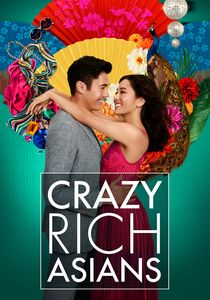
  • Crazy Rich Asians (2018)

    Crazy Rich Asians (2018)

    (On Cable TV, April 2019) Upon its release in theatres, Crazy Rich Asian was widely hailed by its publicists as a turning point in Hollywood history; the first studio-led big-budget film featuring an almost entirely Asian cast, heralding a new landmark for mainstream cinema inclusivity. I remember not quite getting the fuss, having seen a whole lot of Kong-Kong pictures, being able to cite precedents all the way to the admittedly problematic Flower Drum Song, and having tracked China’s growing influence over Hollywood throughout the 2010s. But of course, it’s different. No amount of bringing up The Joy Luck Club or Better Luck Tomorrow actually lessens Crazy Rich Asians’ achievement as a box-office and cultural success. But here’s a lot to unpack here, from the nagging feeling that this is another nail in America’s global dominance to the cross-cultural appeal of well-worn romantic comedy tropes, most notably the crazy wish fulfillment of marrying into a rich family. It’s great to see Michelle Yeoh back in a leading role as the family’s matriarch—she’s perfect for the role. The film is remarkably warm and funny, gradually easing American audiences into the titular craziness through a variety of western-educated viewpoint characters. Constance Hu headlines and does well, but Awkwafina steals every scene she has as a crazy Westernized friend who proves to be the protagonist’s sole reliable ally. You can argue that Crazy Rich Asians uses well-worn plot elements and merely dresses them up in new surroundings, but that’s the entire point of the exercise. Much of the film’s sheer sense of fun and accessibility can be attributed to John M. Chu’s excellent job directing, as he snappily brings together the experience he gathered while directing previous musical comedies and big-budget action blockbusters into something immediately compelling. He is certainly an efficient filmmaker—for a film about crazy rich Asians, the film does manage to put a lot of money on-screen, one of the set pieces being one of the most memorable wedding scenes in recent memory. No matter my qualms about the film’s publicity and meaning, I enjoyed it thoroughly. In fact, Crazy Rich Asians is so much fun that I was sorry to see it end so soon. Sequels? I’ll be there.