Bai Ling

  • Man About Town (2006)

    Man About Town (2006)

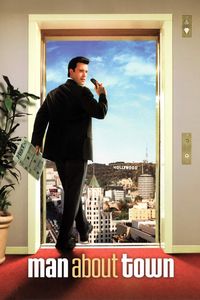
    (On TV, March 2021) I thought I had seen most movies in Ben Affleck’s middle period, but somehow Man About Town had escaped me. I can understand why: Released straight-to-DVD at a time when I was watching most new releases theatrically, it’s also a curiously hermetic industry-insider film with no way for outsider audiences to sympathize with the results. The problems start early on, as the film sets itself up as the middle-age crisis of a Hollywood talent agent (the not-yet-middle-aged Affleck) striking him just as he’s following a journalling class at the local self-improvement establishment. Suddenly, his wife is having an affair, a journalist is threatening to expose long-buried professional secrets and he feels that (horrors!) money, success and expensive cars aren’t the most important things. Revealingly enough, screenwriters are the film’s villains. If this all sounds like a Hollywood agent’s idea of a perfect film project, you may start to understand the way Man About Town feels like a dispatch from an alien planet. This seems to be a film made for Hollywood agents, and while they number in the thousands, the film doesn’t do enough to reach audiences outside that circle. As a work of movie industry inner-gazing, it’s far more irritating than most other entries in the genre: the protagonist is not particularly likable from the onset and he doesn’t grow any more sympathetic through the film, most of which complications fall under the category of rich-person problems. What’s a bigger shame is that the cast assembled here is actually not too bad. John Cleese is typically good as a teacher who acts as a catalyst for the action, while Bai Ling plays crazy like no other actress. Other familiar names pepper the cast, further reinforcing the insider outlook of the film. Man About Town is often a baffling film, but I suppose that when Hollywood makes movies about itself for itself, it can baffle everyone else.

  • Maximum Impact (2017)

    Maximum Impact (2017)

    (On Cable TV, February 2021) Coming from a parallel universe where humour is very different and plotting is pure melodramatic silliness, Maximum Impact is… no, wait: It comes from Russia, which explains everything. With apologies to any Russian readers, this is a film that revels in low-budget contrivances to produce something that barely satisfies the requirements for a feature film aimed at the basic direct-to-streaming market segment. Featuring a blend of Russian actors/bodybuilders and American actors often best known for their low-budget film appearances, Maximum Impact can’t quite figure out its own plot — it starts with a secret summit between American and Russian diplomats, then shifts gear to focus on the kidnapping of the American representative, even when the antagonist (a former TV martial arts star turned international terrorist?!) can’t quite decide what kind of mayhem he wants to create. To be fair, the film is meant to be funny —although the meaning of comedy here is intensely subjective and can’t always be distinguished from an awkward lack of competence. The American cast is just interesting enough to nudge viewers toward a casual watch — Tom Arnold, Danny Trejo, Kelly Hu, Eric Roberts (hilariously cast as an upper-echelon diplomat) and Bai Ling are a motley crew of B-movie goodness, and director Andrzej Bartkowiak is not an unknown quantity, even despite the eight years since his previous film. Unfortunately, even forgiving viewers will have a hard time liking the result in its funhouse conception of an action thriller. Sure, it’s fun to see Bai Ling act as a nymphomaniac intelligence official — but the film simply can’t create the kind of reality in which this is not awkward. Kelly Hu is likable, but she’s paired with the impassible Alexander Nevsky, creating a difficult mix. I strongly suspect that clashing cultural sensibilities may be to blame for much of the film’s execution problems, although a bad script is probably at the root of it all. I mean — Tom Arnold can be funny, but being saddled with a one-joke character (“I have to go to the bathroom! Again!”) is not the way to use him effectively. Despite the many problems of the film, what saves Maximum Impact from the worst is a rough idea of its own goofiness: even with the cross-cultural issues, the actors clearly aren’t playing seriously. Alas, the director can’t quite get a handle on its own material, so everything is stuck in a halfway state of restrained humour, low-budget action and awkward acting. Too bad: Maximum Impact is not worth a recommendation, but it’s not the worst movie I’ve seen today.

  • The Crow (1994)

    The Crow (1994)

    (In French, On Cable TV, April 2019) Considering that I started seriously watching movies in the mid-1990s, I long thought that I would be unable to see movies of that decade as “dated” beyond the usual technological markers—those are, after all, the films I watched as they were released, as a young ticket-buying adult. In many ways, I still have trouble thinking of the 1990s as a historical period the way I do for earlier decades. But then I come across movies like The Crow, which were intended as such stylish statements of their times that they become the go-to example of what everyone mean when they talk about 1990s movies. Young directors like Alex Proyas, who made his mark through music videos, were not exactly responsible or sophisticated in their use of digital special effects and quick-cut editing—that all leaves a mark. This is even worse in The Crow’s enthusiastic embrace of gothic tropes, both visual and thematic—it’s so goth that its climax takes place atop a cathedral. For Proyas, The Crow is a clear front-runner to Dark City’s nighttime urban landscapes: everything here is dark, grimy, littered—nobody in this alternate reality ever cleans up, and in fact it’s not clear if there’s ever a daytime. The very moody soundtrack, to make matters even more cliché, is exactly the kind of thing that was goth-defining at the time. It’s obvious why The Crow became a cult classic—it feels like the unbridled product of a goth imagination turned up to eleven, even killing off its star Brandon Lee in the process. Oh, it’s easy to become a bit sarcastic about the film, but it does feel heartfelt some of the time. The superhero avenging angel is offset at least once by a scene of welcome humanity and realism with a policeman. Lee’s performance is not bad—and you can see parallels here with Heath Ledger’s Joker. Plus, there’s Bai Ling as an evil character. Even the extremely dated atmosphere has become fantastical and stylish rather than simply old. I can’t say that I liked The Crow all that much, but it does find a place in the list of distinctive 1990s movies—you’re missing out on an emblematic film if you don’t see it.