Barbra Streisand

  • The Owl and the Pussycat (1970)

    The Owl and the Pussycat (1970)

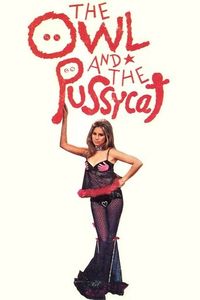
    (On Cable TV, August 2021) As a romantic comedy premise, it’s hard to get more down to the basics than The Owl and the Pussycat, with two mismatched people forced together and then into romance despite their differences. Of course, the details are what makes or breaks the result. Fortunately, there’s quite a bit to chew on here, starting with the grimy atmosphere of circa-1970 New York City at a time when it was clearly deteriorating. The rain, dirt and seedy atmosphere act as background as a bookish writer (George Segal, playing the snobbish intellectual with a certain flair) causes a part-time prostitute to lose her apartment and ends up with her taking over his life in retribution. Of course, the real appeal here is the female character — played with a lot of vitality by Barbra Streisand (who has seldom looked better even in a multi-decade career), who really takes the film over from her male co-star. It’s all in good fun even as the film does through the now-standard motions of a romantic comedy. Some potential is left unrealized, but the dialogue (as befit a theatrical adaptation) is fast and vivid all the way to an expected ending. The familiar tropes aren’t necessarily a problem when they’re handled as gracefully as they are here, with the period detail adding even more interest to a film that works almost solely on dialogue and a modest amount of physical comedy. Streisand looks amazing, Segal realizes his comic potential and New York City looks suitably dangerous — all assets adding much to something that already works quite well on the page. You can even see here the paths that led Streisand both to her comic dervish role in What’s Up Doc?, and her turn as an older escort in Nuts.
  • The Main Event (1979)

    The Main Event (1979)

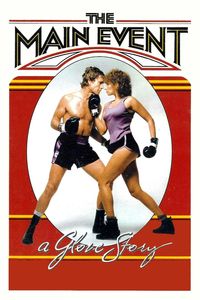
    (In French, On TV, July 2020) French-Canadian Cable TV channel Cinepop is having itself a Barbra Streisand marathon these days, and I’m there for it considering that, inexplicably enough, Streisand has become one of my latest pin-up girls. Other than a Streisand marathon, I’m not sure how else The Main Event would show up on TV these days day—as a bog-standard romantic comedy featuring a woman in sudden dire financial straits getting attached to a boxer (Ryan O’Neal, pleasant enough), it’s definitely a minor oeuvre in her filmography, and a rather forgettable film by itself. It doesn’t mean that it’s not worth a look, though—Streisand occasionally looks great in tightly curled red hair and is hilariously referred to as “the nose” for her character’s occupation as an aroma expert. (The nose is even a motif that makes a return by the film’s conclusion.) It’s a comedy that knows where it’s going and doesn’t make any attempt to disguise that fact, making it feel curiously timeless even today. Streisand doesn’t sing here. Otherwise, The Main Event isn’t bad… but there’s a reason why it almost never gets brought up these days.

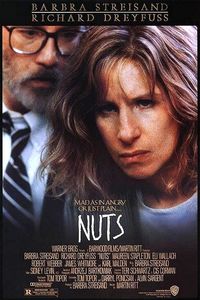
  • Nuts (1987)

    Nuts (1987)

    (In French, On TV, July 2020) Either I saw Nuts before (likely!) or the plot points are now commonplace, because I had a strong impression of déjà vu while watching this courtroom thriller. Featuring Barbra Streisand as a quick-to-anger high-class prostitute who is accused of murder, much of the film consists in determining whether she is apt to go on trial. Perhaps its biggest assets are the two headliners: Streisand is watchable no matter the circumstances, and Richard Dreyfus was seemingly everywhere at the time that Nuts was shot and his performance shows why. (On the other hand, having Leslie Neilsen in one of his last dramatic roles as an abusive john definitely doesn’t play as well to later generations used to his comic roles.) There are a few good moments here and there (although the big “click” in the lawyer’s head definitely felt predictable and formulaic), but Nuts doesn’t have a clear focus on what it’s trying to do. For one thing, it plays with the question of craziness or not, but in flashbacks it seems all too ready to reassure the audience that there is no question there. Troublingly, the morality of the film revolves around Streisand’s protagonist, because it insists that she’s a good person even though the way she behaves would not be tolerated in any family, workplace or friendship. I wonder how much the passing of years has exposed the weaknesses of the film, since much of the stuff here seems fairly familiar: contemporary reviews called Nuts daring, whereas it feels more like a movie of the week now.

  • Funny Lady (1975)

    Funny Lady (1975)

    (On Cable TV, May 2020) All right, dear readers, you win: Funny Lady is the film that gets me to admit that Barbra Streisand is one of my pin-up girls — because she made the film worth a look even when it’s an ill-conceived mess from the start. As a rule, it’s not a good idea to make a romance sequel, and true to form, this follow-up to Funny Girl has the protagonist ping-pong between two suitors (played by Omar Sharif and James Caan), including the one rejected in the first film. It’s a narrative dead-end, and indeed much of the film’s plot is a chore to get through. (Although one notes that it reflects the real-life story of Fanny Brice and her tumultuous love life.) But Funny Lady being a big-budget musical taking a look at a past era of American theatre, I found the film on much firmer footing in showing the backstage of a musical (including a hilariously disastrous production) or indulging in its own musical numbers. Streisand is the focus of attention, naturally—sexy, spectacular and smart, either singing or acting, she’s clearly better than the production itself. This being said, Funny Lady is worth a look if you’ve seen Funny Girl: there are a few moments (let’s fly and sing!) that make it worthwhile even if the film itself isn’t so good.

  • What’s Up, Doc? (1972)

    What’s Up, Doc? (1972)

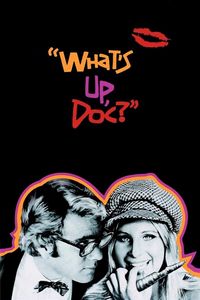
    (On Cable TV, March 2020) There’s an adorable playfulness at work in writer-director Peter Bogdanovich’s What’s Up Doc? that makes it difficult to resist—and doubly difficult if you’re even casually aware of screwball comedies. Barbra Streisand and Ryan O’Neal star: he in a straight-laced role while she plays the anarchic Bugs Bunny figure turning his life into chaos. There are several broad acts to the film, from the first-act hotel farce to a fight sequence, a large-scale chase through San Francisco, an absurdly funny courtroom scene and then the romantic conclusion. It makes What’s Up, Doc? slightly episodic, but the energy and comedy are kept at a high pace throughout. (Then it eviscerates O’Neal’s own turn in Love Story in its final moments, which is always a plus.) While the film explicitly patterns itself on 1930s filmmaking, today’s audiences will see another kind of nostalgia in the film’s generous display of 1970s fashion. It all amounts to something very enjoyable to watch—perhaps not quite completely hilarious from beginning to end, but still a film that’s easy to like. I’m not sure Bogdanovich was ever looser, funnier or more crowd-pleasing than in putting together What’s Up, Doc?

  • Yentl (1983)

    Yentl (1983)

    (Criterion Streaming, January 2020) So, Barbra Streisand dressing up as a boy is… curiously sexy? I didn’t have that on my list of expectations in tackling Yentl. [August 2020: Oh, and now there’s Seth Rogen making the same joke in An American Pickle…] It’s a surprising film in many ways—as the story of a Jewish girl who crossdresses in order to gain an education reserved for men in 1904 Poland, you would be right to expect a fairly maudlin tale with little entertainment to it. But the result, co-written and directed by Streisand herself, is a lot more than the pat drama you could expect—it’s got humour, intensity, musical numbers (although not that memorable), a pivotal revelation scene, a young Mandy Patinkin and what feels like an education in Jewish culture. Plus, Streisand is looking far too attractive with short hair, although I’ll note that since Streisand remained a significant screen beauty from the mid-1960s to well into the 1990s, it’s not that unexpected of a turn here. No, the real surprise is that Yentl is surprisingly watchable—far lighter on its feel than you’d expect for a labour of love fifteen years in the making, and yet dense with thematic material. I don’t exactly love it, but I found it far more interesting than I expected.

  • The Way We Were (1973)

    The Way We Were (1973)

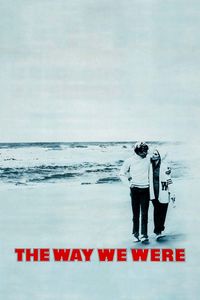
    (On Cable TV, March 2019) The New Hollywood of the early 1970s was so depressing that even its romances were doomed to death or divorce. A prominent case in point: The Way We Were, a multi-decade chronicle of the love story between two characters (played by Barbra Streisand and Robert Redford) throughout their hook-ups, breakups, and intervening ups and down. While there’s nothing conceptually wrong with that premise, the execution is severely underwhelming. Under director Sidney Lumet, the film feels like a mosaic of scenes set years apart, not really building on anything nor proposing a coherent dramatic arc other than “they won’t end up together.” There are some vexing narrative decisions that undermine anyone’s attempt to suspend disbelief or in sympathizing with the characters. For instance, much is made of the female lead’s political activism… but the plot doesn’t present an interesting antithesis despite a rich historical potential. Streisand and Redford do look good, but their characterization isn’t particularly deep other than becoming incarnated arguments. Where the film does a bit better by virtue of being a big-budget production is in looking back at a few decades of American history, showing in retrospect what could not be shown on-screen during the Production Code years—including the impact of the blacklist on Hollywood. It’s not particularly dismissive of The Way We Were, but that’s more out of resignation for the nature of the films at the time. I’m not volunteering to see it again any time soon, though.

  • The Prince of Tides (1991)

    The Prince of Tides (1991)

    (On Cable TV, February 2019) There are plenty of reasons why I shouldn’t like Barbra Streisand—her diva behaviour is legendary, leading to enough tabloid stories to make her legendary in her lifetime and cemented for the younger generation with “The Streisand Effect”. Even from a strict filmgoer’s perspective, she’s often the strangest part of any movie in which she’s the uncontested star—far too young in Hello, Dolly!, unconvincingly male in Yentl, showboating in The Way We Were, self-indulgent in A Star is Born, etc. But even knowing all of this, there is a magnetic star quality to her screen presence that compensates for a lot. Call it sex appeal, or sheer talent or most probably a mixture of both. In The Prince of Tides, she stars and directs and, perhaps miraculously, keeps her most outlandish tendencies to herself. She looks amazing in glasses and white nylons, directs with a nice narrative flow and lets Nick Nolte take the spotlight that his character deserves. Nolte is terrific as a damaged man with deep-seated trauma, far too quick to parry probing questions with jokes but intensely damaged nonetheless. Streisand has a comparatively easier role as his therapist. In the grand tradition of romantic drama, a major professional breach of ethics soon follows. The character-based drama is handled effectively, although the film is too long at nearly two hours and a quarter—and by “helping” the characters get over their trauma, it sands off nearly everything that was interesting about them out of the story. By the end of the film, Nolte’s character is psychologically healthier but also completely uninteresting. Still, The Prince of Tides did exceed my expectations: It’s quick to create narrative interest, and even a weaker third act can’t quite erase the goodwill created by the early scenes in which patient and psychiatrist are engaged in a ferocious game of wits. I liked it well enough, and have another movie to use as an example when asked about my uncharacteristic liking of Streisand.

  • A Star is Born (1976)

    A Star is Born (1976)

    (On Cable TV, December 2018) I’m probably more bullish on the 1976 version of A Star is Born than most people, or even more than I should be. Oh, I can see the issues with the film—it doesn’t take a look at this tell-all article by the film’s own director Frank Pierson to realize the issues with the movie, whose unleashed self-worship of Barbra Streisand leads to an unbalanced whole. The good thing about Streisand (and then-husband producer Jon Peters)’s unbounded egocentrism is that the main female role is incredibly strong—and with Streisand being Streisand, it means that the vocal performance is as top-notch as the acting. (Alas, in a repeat of the 1954 version, her musical numbers drag on far longer than they should, overpowering the drama and cutting off the film’s energy at regular intervals.) Compared to her, you can see Kris Kristofferson’s role being kept in check by the producer’s need to showcase Barbra at every step. And yet, amazingly enough, he carries much of the film: his performance as an over-the-hill rocker is heartfelt, plunging us in the world of rock music and giving us a perfectly serviceable alternative to the Hollywood focus of previous versions. Being a film nerd, I do miss the movie-centric nature of the previous two movies—but the life of a rock star is exhilarating enough in its excesses that I don’t mind all that much. When you watch all versions of A Star is Born in rapid succession, the period feel of each instalment can become its own attraction, and so the trip back to 1970s music star mansion, big outdoor concerts and radio station appearances is quite a bit of fun. It all amounts to a flawed production, but one that remains fascinating in its own right.

  • Funny Girl (1968)

    Funny Girl (1968)

    (On Cable TV, March 2018) The best reason to see Funny Girl was and remains Barbra Streisand—for all of her diva reputation, here she is at the beginning of her career with the chance to play a few decades’ worth of a character through early success and later heartbreak. In taking on a star-making debut role loosely based on Fanny Brice’s life, Streisand gets to be funny and attractive, then increasingly embittered by a bad marriage even as her fame grows. Most of all, Streisand gets to sing in a musical that becomes a showcase for a broad range of talents, from light-hearted to dramatic. It’s quite a performance, and it should charm even though who have grown dubious of post-fame Streisand. The great Omar Sharif shows up in a key role as her no-good husband—the story here is rather standard, but Streisand’s performance elevates it. Funny Girl is also notable in that while it was made in the twilight years of the big Hollywood musical (and during the big upheaval that brought New Hollywood to the forefront), it doesn’t suffer all that much from the encroaching bitterness that killed off the genre in the 1970s—while the second half of the film is significantly less amusing than the first, the transition is accomplished gradually, and much of the first half is actually quite funny. William Wyler’s direction is fine—with some standout sequences such as the last scene of Act One. Still, this is Streisand’s show and she remains the single best reason to watch Funny Girl even today.

  • Hello, Dolly! (1969)

    Hello, Dolly! (1969)

    (On DVD, February 2018) I’m hit and miss on most musicals, but so far I’m three-for-three on Gene Kelly directed musicals (plus an honorary mention for On the Town) including the sometimes maligned Hello, Dolly! I’m not saying that it’s a perfect film or even on the level of Singin’ in the Rain: The romantic plot between the film’s two leads is unconvincing, some numbers are dull, Barbra Streisand is arguably too young for the role, the first half-hour is barely better than dull and the film doesn’t quite climax as it should (the biggest number happens long before the end). But when Hello, Dolly! gets going, it truly shines: Walter Matthau plays grouchy older men like nobody else before Tommy Lee Jones; Barbra Streisand is surprisingly attractive as a take-charge matchmaker suddenly looking for herself; the B-plot romantic pairing is quite likable; the period recreation is convincing and the film’s best numbers (the parade, the restaurant sequence) are as good as classic musicals ever get. As with other Kelly movies, it’s a musical that understands its own eccentric nature as a musical, embracing the surrealism of its plotting and the most ludicrous aspects of its execution. It’s awe-inspiring in the way ultra-large-budget movies can be: the parade sequence is eye-popping and the hijinks at the restaurant are a delight. Seeing Louis Armstrong pop up to croon his own take on Hello, Dolly! in his inimitable voice is a real treat. It doesn’t amount to a classic for the ages like other musicals, but Hello, Dolly! Is still a heck of a lot of fun even today, and it’s quite a bit better than what the contemporary critical consensus has determined.