Beau Bridges

  • Greased Lightning (1977)

    (On Cable TV, October 2022) There are a lot reasons why Greased Lightning should be a much better film than it is. It features Richard Pryor in a dramatic role, Pam Grier and Beau Bridges in supporting turn, a re-creation of historical rural stock racing, the inspiring true story of a black stock car racer fighting against discrimination, and direction from a black filmmaker (Michael Schultz) at a time when such projects were rare. In theory, the film should be good—or at least entertaining. In execution, however, it sputters and falters frequently. What should be straightforward entertainment with a big chunk of anti-discrimination drama becomes disjointed and unsatisfying, with a big time jump that takes almost all of the fun out of the film. Pryor is rather good here—if you weren’t aware of his career in comedy, I’m not sure you could guess from the rest of the film. Alas, Grier doesn’t get much more to do except play the girlfriend, and while the recreations of 1950s small-town stock racing can be fun, the film fumbles the ball in depicting how that led to 1960s NASCAR success. (Small-town Southern racism is also hard to take at time.) A few good moments of racing entertainment are brought down by a film that hasn’t overcome the basic pacing issues of sticking to a true story and stops at the minimum required to be worth a look. Greased Lightning could and should have been much better—but it’s not, and that probably explains why the film remains a curio decades later.
  • Child’s Play (1972)

    Child’s Play (1972)

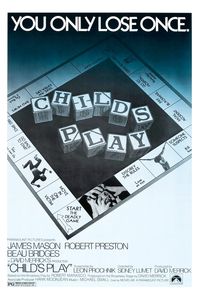
    (In French, On Cable TV, May 2021) A decade and a half before Chucky’s introduction, there was a Child’s Play movie that had nothing to do with killer dolls, and everything to do with… hmmm, that’s actually a good question: What is Child’s Play about? It’s clearly about a boarding school for boys in which two senior teachers (James Mason as the hated one, Robert Preston as the loved one) have it out for each other. It’s also certainly about mysterious escalating events in which the hated teacher is tormented and maybe the loved one has something to do with it. But while it initially appears to maybe involve the supernatural, the ending apparently tells us that it’s not — but director Sydney Lumet maintains the ambiguity as if even he hadn’t made up his mind. Almost no one escapes from Child’s Play with their dignities intact: this is often derided as Lumet’s worst film (which isn’t that much of a dishonour considering the rest of his filmography), but he does manage to imbue something of an atmosphere by exploiting the dark gloominess of a boarding school and amplifying it with kids who clearly aren’t all right. Mason is clearly the least-disappointing one here, imbuing his character with his usual, polished blend of dignity and menace. Preston merely does OK with the role he’s given and the rest of the players are rather inconsequential. (Beau Bridges is just… there in comparison to the two veteran actors.)  In a historical context, Child’s Play feels like an attempt to ride the paranormal possession train launched by Rosemary’s Baby and The Omen, except without the genre familiarity to do anything with that intention. Which isn’t outlandish, considering that the film is adapted from a Broadway play and Broadway playwrights have seldom been acknowledged as being particularly comfortable with paranormal horror.

  • The Wizard (1989)

    The Wizard (1989)

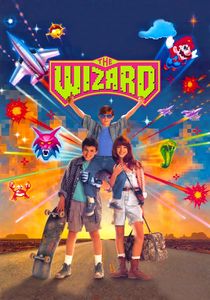
    (On TV, October 2020) As it happens, I was just about the right age to be fascinated by The Wizard when it came out… except that even then, I was a PC player rather than a console one. I distinctly recall the Nintendo-driven marketing push for The Wizard—the Power Glove, the reveal of Super Mario 3, the early glimpse at what would become the eSport scene… but somehow, perhaps fortunately, didn’t see the film until now. Which may have been for the best, considering the period feel that now distinctly lends some unplanned charm to The Wizard. The plot itself is a bizarre amalgamation between a video-game tournament entirely sponsored by Nintendo, and a teen road movie with some very dark undertones featuring runaway kids making their way across the continent for closure. Borrowing a page from the Tommy rock opera, our teen protagonists anoint themselves the guardians of a savant videogame player and decide to exploit his gaming skills by taking him to a tournament with a substantial cash prize. Following them are the worried sets of relatives (the genealogy of the characters is complex) and an unscrupulous bounty hunter. There’s more plot than expected here, although much of it does feel subservient to the demands of the film’s marketing-driven premise. A lot of it has aged, but the jury will stay out for a while as to whether it’s now dated or charmingly quaint. There are some sequences fit to make anyone cringe (I’m specifically thinking of the introduction of the !!POWER GLOVE!!), but there is some rather nostalgic value in seeing the characters react to now-classic gaming paraphernalia. It does add quite a bit to a story that, absent the videogame angle, would have been almost instantly forgettable. The film may have otherwise been only known as a minor early entry for Christian Slater and Beau Bridges. As it is now, it’s a bit of a time capsule for Nintendo’s glory days with the original NES—something that plays well to today’s 1980s nostalgia wave.

  • The Fabulous Baker Boys (1989)

    The Fabulous Baker Boys (1989)

    (On Cable TV, March 2019) I’m not going to suggest that Michelle Pfeiffer peaked at the end of the 1980s, not with the length and substance of her career since then. But The Fabulous Baker Boys does look like an early apex of sorts, cementing her rise to fame during the 1980s and solidifying her stature as a serious actress that could also turn up the sex appeal when needed. Considering that she’s the terrific centrepiece of the film, it’s good that she can take the pressure. As a lounge singer that acts as the push and pull between two musician brothers, she gets to play drama and sultriness—her “Making Whoopie” number while lying on a piano is deservedly remembered as the highlight of the film. Still, The Fabulous Baker Boys is also remarkable for a few other things. Detailing the personal and professional challenges of two brothers working the music lounges of the Seattle area, it goes for a retro feeling that makes it still timeless thirty years later. Writer-director Steve Kloves succeeds in creating a tone as sexy and jazzy and melancholic as the soundtrack suggests. Pfeiffer is accompanied by great performances from real-life brothers Jeff and Beau Bridges, with Jennifer Tilly showing up in a small two-scene role. As bittersweet as the film can be, the conclusion remains curiously satisfying: the characters don’t get what they initially want, but they’re probably better off from where they were at the start. The Fabulous Baker Boys all wraps up to a modest, but successful film—see it for Pfeiffer first, but stay for a well-controlled, well-executed small-scale drama.