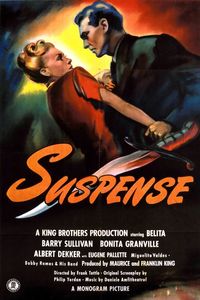
Suspense (1946)
(On Cable TV, June 2021) In a sense, Suspense is a familiar oddball movie — a fusion of film noir with a star vehicle for its Olympic ice-skating lead. Yes, you read that right — Belita was, at the time of the film’s production, a 1936 Olympian who turned to movies, carrying with her the dancing skill, ability and precision of her former profession in roles that often managed to work in an ice-skating angle. So it is that Suspense is firmly in the tradition of Hollywood star vehicles, building a generic plot around the specific abilities of its lead. Here, she plays (what else?) an ice-skating sensation who becomes embroiled in the usual murder mystery. It’s unique all right, but is it good? Widely hailed upon release as an ambitious (and expensive) release from a smaller studio, Suspense is worth a look for the gimmick, but the film itself doesn’t have much to stand on its own — as bland as its title, it travels over familiar terrain, with little to distinguish itself than the ice-skating angle. Contemporary fans of the art form will find some historical worth to the way it’s portrayed: ice-skating has changed a lot since then. It’s distinctive, but in a fashion that feels remarkably similar from decades of Hollywood vehicles all trying an angle tied to their headliners. Hollywood, throughout the decades, has remained unerringly consistent even in the way it showcases novelty.
