Besty Drake

  • Every Girl Should Be Married (1948)

    Every Girl Should Be Married (1948)

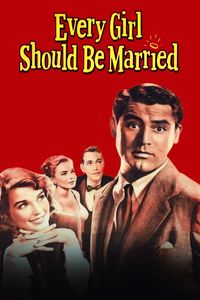
    (On Cable TV, December 2020) With a title like Every Girl Should Be Married, it’s fair to say that the film won’t ever win any progressive awards. If you happen to watch the now-hilarious trailer, your expectations may run even lower. But the movie itself is a bit more mixed – starting with the heroine’s deeply held belief that women should be free to make the first move (hurrah) but continuing with the same heroine going for some good old-fashioned stalking instead (boo). Of course, the target of her affection is played by Cary Grant, who effortlessly deflects all of her attempts until it’s time for him to yield and for the film to end. Let’s admit right away that Every Girl Should Be Married is a middle-tier Grant film, perhaps even a lower-tier one. Grant is charming enough to make it worthwhile, but there’s a limit to how much he can elevate the material. Playing opposite him is Besty Drake, who would become Grant’s third wife not even a year after the release of the film. (Not that it will make you feel better, but they started dating before the shoot.) It’s certainly not unwatchable – you can make an argument that the female protagonist has a lot more agency than most of the female romantic comedy protagonists of the time. But Grant has made enough good-to-great romantic comedies that even an intermittently interesting one can feel like a step backward.
  • Houseboat (1958)

    Houseboat (1958)

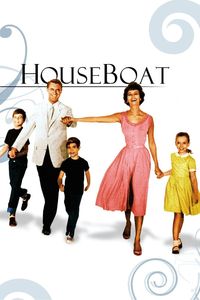
    (On TV, November 2020) Cary Grant and Sofia Loren. That’s it—that’s the reason to see Houseboat, and I don’t have to add anything more. But for the form: Houseboat is a romantic comedy featuring a newly-widowed government officer (Grant), who ends up with three unfamiliar kids in his small Washington apartment. Looking for relief, he ends up hiring what he thinks is an Italian nanny in need of a job (Loren), without quite understanding that she’s the daughter of a famous musical figure wanting to escape a difficult situation. The remaining key to Houseboat’s plot comes when they decide to get out of Washington for the summer and go live on a houseboat that ends up being far less luxurious than expected. Silver-haired Grant is in fully charming form here as the slightly befuddled dad and romantic interest to two women. The romance is messier than expected—despite the inevitability of the final pairing, I can’t help that the film made the wrong choice along the way. Still, it’s a rather fun film, with the expected doofus-daddy antics, the romantic charm and the often-interesting period depiction of late-1950s Washington, DC. Behind-the-scenes, Houseboat is famous for having been written by and for Grant’s second wife Besty Drake, with a role quickly recast and rewritten for Loren after she started an affair with Grant on the set of another film… an affair that ended before shooting wrapped on Houseboat—the perils of Hollywood dating! It doesn’t make the film any better or worse, although you can detect some remnants of other plans in the sometimes-zig-zagging script. I still liked Houseboat, but it isn’t a first-tier Grant.