Betty Grable

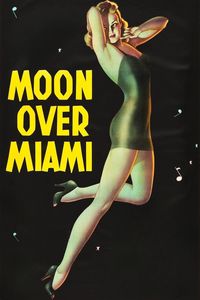
  • Moon Over Miami (1941)

    Moon Over Miami (1941)

    (On Cable TV, June 2021) While Moon over Miami doesn’t do many things wrong (although I could do without its “Solitary Seminole” number) — and, in fact, does most things right, I’m not convinced it goes much beyond that to achieve its fullest potential. The building blocks of the narrative are solid enough, with two sisters blowing through their meager inheritance with a last-chance trip to Miami in order to seduce and marry millionaires. (Not much of a twenty-first century model… or is it?)  The film’s single biggest asset becomes its setting, taking a look at a very different Miami but also letting its distinctive atmosphere influence both the looks of the film (which was partially shot on location) and the nature of some of the musical numbers to incorporate some Latin material. Don Ameche and Betty Grable make for good romantic leads, and the film gets a boost from being shot in colour when there’s so much material here that would have been duller in then-standard black-and-white. Another unexpected bonus: Seeing noted choreographer Hermes Pan on-screen as a dance partner. Director Walter Lang keeps the pieces moving pleasantly enough, although his track record on other musicals reflects a heavy-handed approach that doesn’t go for comic material. And that’s perhaps where Moon Over Miami meets its limits: despite some good and promising material, it doesn’t deliver on its fullest potential. It’s amusing but not comic, its musical numbers are lively but not memorable and the result should be more interesting but merely settles for a pleasant time. I strongly suspect that a similar film made ten years later, as musicals were perfecting their approach, would have been far more striking.
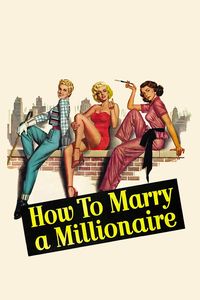
  • How to Marry a Millionaire (1953)

    How to Marry a Millionaire (1953)

    (On DVD, March 2021) There are many, many reasons why How to Marry a Millionaire is a reprehensible film by today’s sensibilities (and perhaps even to the sensibilities of its time), but just as many reasons as to why it doesn’t really matter. The powerhouse cast is a good chunk of it: with Lauren Bacall, Marilyn Monroe and Betty Grable playing three women with devious schemes to snag themselves a rich husband (at a time when millionaire meant real money — roughly 10 times as much), the film is a snapshot of early-1950s sex symbols. Bacall is magnificent as the brainiest of the bunch, renting an apartment from a tax-evading millionaire and selling off the furnishings to meet her operational costs. Betty Grable may no longer have the cachet that she did at the time, but she’s also a lot of fun as the energetic Loco. Meanwhile, well — I’ve never been that big of a Monroe fan, but she’s in her best element here in a comedic role, and seeing her spend much of the film wearing cat eye glasses (leading to a very funny scene of mutual myopic flirting) is enough to make me marginally more interested. The other actor worth noting is William Powell, turning in one of his last suave performances as (what else?) a debonair multimillionaire targeted by one of the women. The gold-digging aspect would be far less amusing had it featured in a worse film. Here, however, the script is good enough and the characters are likable enough to overcome any ethical concerns we may have. Romance, in the end, triumphs —and Powell plays the character with enough disposable income to make all inconveniences go away as an amusing trifle. Shot in what would become the classic 1950s widescreen Technicolor sheen, How to Marry a Millionaire is bolstered by great vignettes of New York City, excellent individual scenes, winning performances, and a lighthearted tone that still works very well today. It remains a delight.

  • A Yank in the R.A.F. (1941)

    A Yank in the R.A.F. (1941)

    (On TV, September 2020) A very nice surprise opens A Yank in the R.A.F.: A recreation of a famous bit of US/Canadian history in which American-built planes were flown, driven and then pushed to the Canadian Border, at which point the Canadians pulled the planes onto British Allied territory and were able to legally fly the planes to the UK while breaking no neutrality law. Alas, the rest of the film is far less interesting: Featuring Tyrone Power as a far-too-cocky American pilot, the film takes us through the first two years of WW2 with Power’s character fighting the war as a sideshow to his insistent pursuit of another American working in London (played his frequent screen partner Betty Grable).  A Yank in the R.A.F. tries to do too many things at once while not quite changing gears fast enough to suit the project. Produced at breakneck speed as the Americans were still contemplating whether to get involved in the war, the project tried to take the Power/Grable dynamic and force it into a war movie, ending up making compromises on both sides. Grable’s character is also far too much of a cad to be likable—and the film’s insistence on his rule-breaking heroism rings false from the get-go, as he casually flies from the Manitoba/North Dakota border to Trenton, Ontario—a two-thousand-kilometre trip! Granted, this is probably the only film in history where confusing Trenton, ON with Trenton, PA becomes a minor plot point, but still—it sets the stage for even dumber stuff later on, perhaps reflecting the lack of polish of a production so closely following the events of the war. If nothing else, this pre-propaganda film was clearly meant to prepare the audience for the United States intervening in the war, and by proxy gets us thinking about the now-unbelievable and often-elided isolationist attitude of the United States during early WW2. Unfortunately, A Yank in the R.A.F. is not quite the vehicle fit to fully do justice to the topic—Much of what it does well has been done better in other movies.