Billy Wilder

  • Kiss Me, Stupid (1964)

    (On Cable TV, August 2021) One of the sure-fire ways to build an effective comedy is to get the characters to behave in ways that would be entirely contrary to expectations or common sense. So it is that by the time writer-director Billy Wilder gets cracking on the premise of Kiss Me, Stupid, he has a man doing everything he can to ensure that his wife has sex with a famous singer. Of course, she’s not really his wife and there’s a significant reward for him if he gets in the singer’s good graces, but that’s not the point — the point is seeing Ray Walston (as the man) setting up Dean Martin (obviously the singer) with Kim Novak (the “wife”) in flagrant contravention of all moral good sense. Getting there is half the fun, and getting out of it is the rest. Although the film lacks a clear climax and generally feels like lower-tier Wilder (it’s not one of his most popular features), there are plenty of good moments, starting with Martin spoofing himself by seamlessly going from his show to an exaggerated womanizing parody of his stage persona. (Some of the early plans for the film sound wilder — but Peter Sellers had a heart attack and Marilyn Monroe died, landing us with Walston and Kim Novak.) The result does feel more overtly ribald as other Wilder films of the time and not quite as witty, but as a 1960s sex comedy, Kiss Me, Stupid is not a bad pick at all.
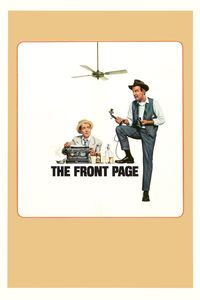
  • The Front Page (1974)

    The Front Page (1974)

    (On Cable TV, June 2021) On the one hand, I’m happy they remade the classic 1920s newspaper comedy The Front Page in the 1970s, and that they got talents such as Billy Wilder, Walter Matthau and Jack Lemmon to take part in it — it’s a slick update to a good movie, and it’s far more accessible to modern audiences. It’s an easier way to experience the story by virtue of being in colour, with a clean soundtrack and mature camerawork, more familiar actors, etc. The skill though which Wilder and often-unrecognized co-writer I.A.L. Diamond retools the story is a case study in subtlety and appropriateness — executed up to the 1970s standards (with a few additions), it generally feels like the original, while sanding away a number of the rougher edges that weren’t as acceptable fifty years later. It’s decently amusing, especially as an affectionate look at the rough-and-tumble world of city journalism in the 1920s. On the other hand, I have deliberately avoided comparing 1970s The Front page to 1930s His Girl Friday, because there really isn’t any comparison: Wilder/Matthau/Lemmon are fantastic but not trying for the same thing as Hawks/Grant/Russell were going for, and the 1934 film is probably (still!) faster-paced than the later film. The gender flip that brought so much romantic tension to the story is not there, as it reverts to the original premise, and you can see the repercussions of that decision nearly everywhere in the result. In other words, The Front Page remake is good, while His Girl Friday remains terrific. You could ask if merely remaking a film was the best use of Wilder/Matthau/Lemmon’s talents, especially at that late stage of Wilder’s career, but second-guessing veteran directors looking to scratch an itch (Wilder having been a newspaperman early in his career) isn’t always useful. The result does have a few misfires — Carole Burnett isn’t up to her usual standards here in a role that remains atonally troublesome even with the Wilder/Diamond sanding of its rough edges. Still, I’d probably screen this version of the story as appetizer to anyone not used to classic films but interested in watching His Girl Friday — it’s a good basic presentation of the story, and it can ease viewers into progressively older material. I’m still glad that it exists and it may have been the best film that Wilder could have done at the time. Still, I can’t help but wonder what other films Wilder could have done instead.

  • The Fortune Cookie (1966)

    The Fortune Cookie (1966)

    (On Cable TV, February 2021) One of the reasons why Billy Wilder’s films have endured better than many of his contemporaries is the clever wit with which they’re built. Uncommonly smart at working within the confines of the Hays Code, Wilder’s movies still speak to us through their cynicism, imperfect characters and atypical narratives. The same goes for The Fortune Cookie. To be fair, I don’t think that the idea of a man being manipulated by their wily lawyer into faking an injury for insurance purposes is as fresh today as it must have been in 1966 — it’s the kind of thing that has become a cliché. But the way Wilder goes about it remains entertaining and compelling. It does help that he can benefit from some solid actors in the lead roles: The Fortune Cookie is perhaps best known for being the first of many on-screen pairings of Jack Lemmon and Walter Matthau. Here, Lemmon plays the injured party encouraged to remain bedridden, while Matthau plays the slimy lawyer going after an insurance settlement. (Matthau suffered a heart attack during the film’s production, returning to set weeks later and thirty pounds lighter — he won an Oscar for his troubles.)  The result is a comedy that’s not particularly heavy on the laughs, but still maintains a lighthearted touch throughout. It even ends with a certain moral fortitude while allowing all characters to keep their heads high. Unexplainably shot in black-and-white at the close of that format’s relevance in Hollywood, The Fortune Cookie remains a solid film, clearly showing the Wilder touch as a filmmaker who continues to impress cinephiles.

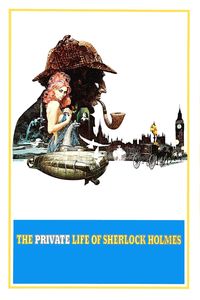
  • The Private Life of Sherlock Holmes (1970)

    The Private Life of Sherlock Holmes (1970)

    (On Cable TV, February 2021) Watching older films can often be an exercise in picking apart what was new then, even if it’s not new now. The character of Sherlock Holmes, at this point in the early twenty-first century, has been endlessly remixed, examined, criticized, parodied or dismissed: There are nearly as many movies adapting Sherlock Holmes as there are faithful adaptations, no matter which kind of Holmes you prefer. In this light, The Private Life of Sherlock Holmes appears to be one more entry in a crowded group. But it does have the distinction of having been the first in many ways — most notably, the first to have poked at the sexuality of the character even if the answer isn’t all that satisfying. (The film makes much about Holmes being gay or repressed, which seems less interesting than portrayals of Holmes being Adlersexual — that is, uninterested in any women other than the striking Irene Adler.)  It also takes a somewhat lighthearted tone to the character (heck, even in portraying Queen Victoria), something that must have resulted in a few dropped monocles back then, but appears painfully limited now that we’ve had feature-length man-child parodies of the character. There’s also a curiously unbalanced feeling to the script, which can be explained if you read about its tortured production history and how a much longer episodic film was chopped up in what appears on-screen. As with nearly all of writer-director Billy Wilder’s movies, even the most mediocre ones, it’s not uninteresting to watch: it’s got good scenes, good dialogue, a pleasantly loopy third act and another clever take on the character. But for all of its strengths and its impact at the time of its release, The Private Life of Sherlock Holmes does pale in comparison with the later takes on the character, often going much further than this one in exploring Holmes’ quirks.

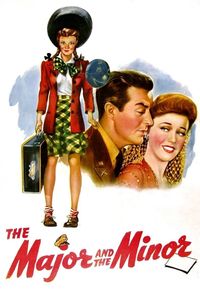
  • The Major and the Minor (1942)

    The Major and the Minor (1942)

    (On Cable TV, August 2020) I’m on a long road to see most of writer-director Billy Wilder’s movies, so it was inevitable that I’d eventually make my way to his English-language debut feature sooner rather than later. After all, The Major and the Minor is a perfectly entertaining romantic comedy, featuring none other than Ginger Rogers and Ray Milland. The fun gets started when the twentysomething protagonist, out of cash for a ticket home, dresses up as a little girl and doesn’t convince the ticket takers. Chased through the train, she finds refuge in the cabin of an officer and, from there, follows him to the military academy where romance blooms. While this was the first American film directed by Wilder, it was far from his first script, and his comfort in writing good, zesty yet comfortable material shines through: Despite a premise that doesn’t really hold up (there’s a limit to how much two tresses can make Rogers pass as a twelve-year-old), the dialogue is great and even the familiar engine of romantic comedies feels rejuvenated. The Major and the Minor is quite funny, and it does wait its own sweet time to deliver the romance promised throughout the picture—the mark of a great filmmaker.

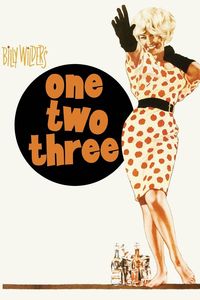
  • One, Two, Three (1961)

    One, Two, Three (1961)

    (YouTube Streaming, July 2020) The legendary Billy Wilder wrote and directed so many great films that it’s easy to forget about even his second-tier efforts, and so it took me a curiously long time to get to watch One, Two, Three. A comedy set in Berlin that heavily plays with the Cold War obsessions of the time, it also lets James Cagney have one of his last roles be a comic showpiece as a Coca-Cola executive dealing with Soviet contacts and the flighty daughter of an influential superior. As usual for Wilder movie, the screenwriting is front and centre, with Cagney spitting dialogue at a blistering pace as a fast-thinking professional used to get his way even under adverse circumstances. The comedy gets crazier and crazier, picking elements from Wilder’s own Ninotchka and bringing them forward to a newly-fractured Berlin stuck between communists and capitalists. One, Two, Three is very much a fascinating time capsule of its era, because it seems able to laugh contemporarily about things that you think would have been best dealt with retrospectively as a period piece. The film does get funnier as it goes on, and Cagney keeps his maniac pacing from beginning to end. There’s quite a bit of mordant cynical humour from Wilder’s pen, but it all leads to a nice wrap-up. For Wilder, One, Two, Three will always be overshadowed by a filmography that includes classics such as Double Indemnity and Some Like it Hot, but it’s a very enjoyable film nonetheless.

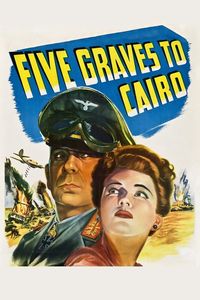
  • Five Graves to Cairo (1943)

    Five Graves to Cairo (1943)

    (On TV, May 2020) While not perfect, Five Graves to Cairo is a very capable WW2 adventure tale put together during WW2 itself. A Billy Wilder film featuring Erich von Stroheim as Rommel, it blends real-world events with pulpish mysteries and thrills to produce something perfectly watchable even today. There are secrets to discover and a tension-filled plotline, even if it does meander at times and the ending takes just a bit too long to resolve. Amusingly, this film has a war-wide scope… and a setting limited to a hotel. It would make a splendid double feature with Sahara. In Wilder’s hand, the timeless Five Graves to Cairo is more than wartime propaganda.

  • Bluebeard’s Eighth Wife (1938)

    Bluebeard’s Eighth Wife (1938)

    (On Cable TV, March 2020) Now here’s a dream creative pairing: Director Ernst Lubitsch working with a story co-written by Billy Wilder. That should be enough, but when Bluebeard’s Eighth Wife raises the ante by throwing in Claudette Colbert and Gary Cooper in the lead roles, well, it’s impossible to resist. Fortunately, the film does manage to meet expectations: it’s a fine screwball film with the expected wisecracks, romantic complications and remarriage humour—much of the plot, slowly revealed, has to do with a rich man trying to tame his newest (eighth) wife, as he suspects her of having married him for the money she’ll get after their divorce. (The twist, gradually revealed, is that she’s trying to break him out of his bad habits—and the film is much funnier knowing this.) The French Riviera atmosphere is lush and evocative, with Cooper turning in a more sophisticated performance than the aw-shuck material he became famous for—and Colbert being equal to her funny, sexy self. (Plus, a fourth-billed David Niven.) The script is what we would expect from a Billy Wilder collaboration with Charles Brackett—great dialogue, very clever characters (especially Colbert’s scheming young woman) and a script that’s not entirely predictable, especially during the middle act. Although not much of a commercial success at the time of its release, Bluebeard’s Eighth Wife has since then reached an enviable and much-deserved place in the pantheon of 1930s comedies.

  • Hold back the Dawn (1941)

    Hold back the Dawn (1941)

    (On Cable TV, February 2020) I’m a good sport for anything written by Billy Wilder, but even I remain underwhelmed by Hold Back the Dawn. Wilder’s biography tells us that it was largely inspired by his own life—as an immigrant from Europe, Wilder had to spend some time waiting at the Mexican/American border for his right to enter the country. Of course, Wilder’s stay was uneventful—the story here is quite different. Charles Boyer stars as a European gigolo trying to gain entry to the US and resorting to what he does best—seduction. Taking aim at a visiting American schoolteacher, he inevitably develops feelings for his mark, and much of the film follows the consequences of trying to square everything away. We know from the framing device that he will make his way to Hollywood, but there’s more than him to care about. Olivia de Havilland plays the romantic interest, adding a further bit of star-power to the result—although Paulette Goddard is more interesting as a vengeful flame. Hold back the Dawn is unapologetically a grand Hollywood romantic drama. It seldom holds back in terms of melodrama, and toys with audience expectations in its very dramatic third act. While it does end well (at least for most characters), there are plenty of dramatic complications along the way, and chances for the actors to deliver sob-inducing speeches. I liked it well enough as an example of that kind of film, although I can’t say that I have any particular affection for it over similar examples.

  • Ball of Fire (1941)

    Ball of Fire (1941)

    (On Cable TV, January 2020) I’ll watch anything directed by Howard Hawks, but even I got a bigger surprise than expected with Ball of Fire, a romantic comedy with a few unexpected treats. Gary Cooper stars in his own solid way as an encyclopedist who steps out of his reclusive existence to study contemporary slang… and ends up paired with a lounge singer who needs to lay low after her mobster boyfriend comes under scrutiny. Barbara Stanwyck is at the top of her game as the female lead invading the sanctity of the encyclopedia writers’ refuge, teaching them much and falling for one of them in return. The plot, in typical screwball fashion, makes little logical sense but impeccable comic sense. Before long, we’re in a clash in which bookish old men take on gangsters holding them hostage through science—and win. Along the way, we get a performance out of the legendary drummer Gene Krupa playing the original Drum Boogie (a welcome surprise, given that I was familiar with Swing Republic’s electro house remix), first with his big band and then minimally with two matchsticks (with the expected final flourish). The rapid-fire dialogue is a Hawks trademark (working from a script written by a young Billy Wilder), and having Stanwyck as a typical Hawksian heroine only bonifies the result. I’m not as happy with the film’s clear anti-intellectual skepticism, but much of it simply powers the plot—by the end brawl between Cooper and a mobster, there’s no doubt as to who will triumph. It all makes for a very likable film working from a Snow White and the Seven Dwarves template, with two lead actors at their most sympathetic, and a writer-director combo who clearly knew what they were going for.

  • The Seven Year Itch (1955)

    The Seven Year Itch (1955)

    (On Cable TV, December 2019) The interesting thing about The Seven Year Itch is that I could reliably predict how much I’d like it based on other movies. Like writer-director Billy Wilder’s other comedies, it navigates a tricky path between tones, pushes the envelope a bit and shows his clear gift for humour. Like other movies featuring Marilyn Monroe at her best, it shows her as a comic actress first and a sex-symbol second. Like other brightly lit comedies of the mid-1950s, it offers us a colourful, nearly fabulist look at a society long gone. Beginning with a sardonic interlude describing the timeless ritual of men packing their family for summer trips while they get to enjoy themselves at work and at home during the summer, The Seven Year Itch quickly gets down to business as it relates the flirtation between a married man alone for a few weeks and his new sexy upstairs neighbour. It all takes place in 1950s Manhattan, as fun as a playground can be for this kind of thing. While quite tame by today’s standards, we shouldn’t underestimate the delicate way Wilder daringly tackled tough issues in the far more prurient 1950s, acknowledging a few base instincts that weren’t proper to acknowledge back then. Monroe can be very, very funny at times, although those who are attracted to the film for the infamous “dress pulled up by subway venting” shot will be very surprised to find that it’s nowhere in the film—that sequence is carefully framed to pull down from her head to the subway grate without offering a single overall shot of the pose, and the photo that people remember is a recreation of the scene made sometime later as a publicity shot. Protagonist Tom Ewell pales in comparison to Monroe, but he still acquits himself well, even when saddled with a narrative monologue that straddles an awkward line between voiceover and mumbling to oneself. The conclusion of the film is a forgone conclusion given the Production Code that limited all Hollywood movies at the time—as much as the film pushes at the edge of the permissible envelope, it will never rip it and maybe that’s why we feel so safe watching it. I much prefer the other Wilder/Monroe movie Some Like it Hot, but I did have quite a bit of fun playing a tourist in mid-1950s summertime Manhattan in The Seven Year Itch.

  • Irma la Douce (1963)

    Irma la Douce (1963)

    (On Cable TV, May 2019) Some Billy Wilder fans will probably be upset to see that I rank the writer-director’s Irma la Douce as second-tier Wilder—but in a long storied career like his, even a second-tier film can be quite respectable. The point being that I’ve seen all of his first-tier films by now, so what’s left is the rest. And while you can call Irma la Douce a good film, there’s no way you can call it a great one: its staggering length, at 147 minutes, runs against its lighthearted romantic comedy genre and gives far too many opportunities for the film to wander. Jack Lemmon and Shirley MacLaine return from Wilder’s The Apartment as, respectively, a former policeman and a prostitute in the disreputable Parisian neighbourhood of Les Halles, where he hatches a devious plan to get her out of the prostitution racket. The lies and impersonations required for his scheme soon escalate, and power much of the film’s last half. All of this is shot in bright colourful tones, with green clothing being strongly associated with Irma. Lemmon is dependably funny, but considering that I don’t like MacLaine all that much, it’s a significant disappointment to learn that the project was originally meant to be for Marilyn Monroe. Adapted from a French stage musical (which explains some of the length without excusing it), Irma la Douce is a reasonably entertaining film, but it does overstay its welcome in ways that Wilder’s top movies don’t.

  • Ace in the Hole (1951)

    Ace in the Hole (1951)

    (On Cable TV, March 2019) I’ve said it before, but it’s worth repeating: the more I dig into classic Hollywood filmmaking, the more I realize that satire, social criticism and acerbic commentary have always been part of the package. This especially holds true for the 1950s, traditionally seen as a conformist decade but which also featured some of the bitterest take on media ever put on film. Coming in right before the rise of television and so perhaps at the apex of newspapers as a dominant form of media, Ace in the Hole gets downright nasty in describing how an unscrupulous newspaperman milks a personal tragedy for all it’s worth. As a man is stuck in a mine shaft and awaits a delicate rescue, our repellent protagonist (Kirk Douglas in a top-tier performance) decides to start manipulating events to his benefit. Within a remarkably short time, the mine entrance is surrounded by a circus of print journalists, broadcasters, opportunists and hucksters. Viewers beware—For all of the mordant wit of writer-director Billy Wilder’s film, Ace in the Hole is not meant to end well: it’s a deeply cynical work without many sympathetic characters to latch on. We’re meant to be awed but not charmed by Douglas’s wily, amoral protagonist, even as his great dialogue is undermined by despicable actions. Visually, there are some very evocative wide shots of cars, people and the media circus created around the scene of the news. As usual for Wilder, the film deftly manages to navigate a tricky labyrinth of tones even as it settles for more cynicism than usual even for him. It’s got a strong scene-to-scene watchability, and some clever-yet-transparent direction. The darkness of the ending may account for both its initial lack of popularity, and for its enduring nature. Show Ace in the Hole with A Face in the Crowd and Will Success Spoil Rock Hunter? for a surprisingly grown-up triple feature of 1950s media criticism.

  • The Spirit of St. Louis (1957)

    The Spirit of St. Louis (1957)

    (On Cable TV, February 2019) Considering Hollywood’s enduring love affair for American heroes (even if we have to scrub a bit of their non-heroics along the way), it was inevitable that sooner or later, Charles Lindbergh would be brought to the forefront with The Spirit of St. Louis. And while James Stewart was far too old at 49 to play Lindbergh (who was 25 at the time of the film’s event), you have to take into account Stewart’s obvious enthusiasm and technical qualifications to play the role of an experienced flyer—as a draftee and then a reserve officer, he flew bombers from WW2 to the Vietnam War. The script focuses tightly on Lindbergh’s trip and not so much on the less heroic aspects of his later life, but as co-written by Billy Wilder The Spirit of St. Louis becomes a fascinating aeronautical procedural as Lindbergh works to develop the plane that will carry him from one side of the Atlantic to the other, and then wait patiently for a good weather opportunity even as others are also racing to make the trip. Director Howard Hawks is in his element here as he describes the relationship between Lindbergh and his plane during the gruelling transatlantic flight. Even the film’s length and overused voiceovers help us feel the isolation and experimental nature of the solo trip. The predictable shout-outs to divine power become annoying, but the film’s clever structure keeps things more interesting than a strictly chronological approach would have done. Perhaps the most fascinating aspect of the film is how it manages to create suspense out of a story that everyone knows, with a foreordained conclusion. The Spirit of St. Louis is certainly not a perfect film, but it does create something very entertaining out of three legendary creators (Wilder, Hawks, Stewart) and a landmark historical event.

  • Love in the Afternoon (1957)

    Love in the Afternoon (1957)

    (On Cable TV, February 2019) From a twenty-first-century perspective, looking at the totality of an actor’s filmography at once certainly has a different impact that chronologically living through it one movie at a time. As much as I like Audrey Hepburn, for instance (and I do!), it’s hard not to notice that in between 1954 and 1967, she made no less than seven movies at least partially set in Paris, and at least four of them with significantly older men. While Sabrina was partially set in Paris but obviously not filmed there, Funny Face and Love in the Afternoon (both 1957, shot a month apart) get the subgenre properly started. In the latter film, Gary Cooper plays an aging playboy who sets his sights on an inexperienced young daughter of a detective. The remarkable difference between the two characters (in age, in social status, in understanding the world) is enough to make any viewer uneasy, and it’s a measure of writer/director Billy Wilder’s skill and both stars’ charm that the film (barely) holds together. Hepburn is up to her usual self here, although if you want another Paris movie in which she calls her father an ebullient “Papa!”, you’ll be better served by How to Steal a Million Dollars. Cooper is a bit less bland than usual here, with a character that does service to his stature in the industry at the time. Maurice Chevalier rounds up the marquee names with an on-target role as a wise, compassionate and knowing private investigator to the stars. There’s no avoiding that the material here is tricky, and that Wilder steers his movie through material that would instantly doom other directors. (Although much of the same can be said about Funny Face and Charade.) There are, fortunately, quite a few laughs along the way, my favourite being the gypsy band following Cooper’s character around, mixing diegetic and non-diegetic musical cues. But while the film does have its strengths (seeing Hepburn, Cooper, Chevalier and Wilder working together being the best of them), its place in a well-defined sub-sub-genre of “Hepburn with older men in Paris” also invites unfavourable comparisons. Funny Face has Astaire dancing and Hepburn keeping up, while Charade plays far more smoothly with the romance with the far more charismatic Cary Grant. If Love in the Afternoon makes you queasy despite its old-school Hollywood charm, you’re not alone.