Bing Crosby

  • The Country Girl (1954)

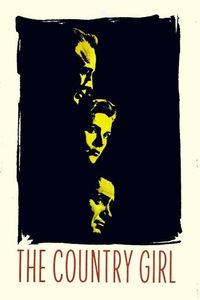
    The Country Girl (1954)

    (On TV, September 2021) There are several reasons why The Country Girl is a film still worth watching today. You can point to its quality as an Oscar-nominated film, you can laud its character-based plot following an alcoholic singer given one last chance at redemption, you can point at a cast that includes Bing Crosby, William Holden and Grace Kelly in de-glammed mode, or you can highlight the technical quality of the production. There’s quite a punch to seeing Crosby letting go of his likable persona to play a man troubled by a past tragedy, constantly at risk of crawling back into the bottle and bringing down an entire Broadway production with him. Holden is solid as a producer trying to keep his friend from imploding… until he starts having an affair with his wife. And then there’s Kelly in one of her least glamorous roles as the long-suffering wife of an alcoholic, tempted by another man for a while. Decent dialogue and plotting keep the film interesting despite some broad story threads and the familiar environment of a Broadway show: there’s some good narrative rhythm to the result. As an Oscar nominee, The Country Girl hasn’t aged too badly.
  • King of Jazz (1930)

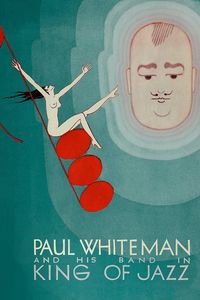
    King of Jazz (1930)

    (On Cable TV, April 2021) Don’t bother looking for a story in King of Jazz — as with many musicals of the early sound era, it’s a straight-up adaptation of a Broadway revue show, with segments loosely connected together so that audiences across America could go to the movies and have as good a time as their fellow Manhattanites. It was, in retrospect, a classic case of imitating success: at a time where the cinematographic grammar hadn’t yet adapted to the possibilities of meshing sound with images, this was the surest, least-risky, most profitable way to go. As a result, you have to assess King of Jazz on the merits of its number sketches and novelties. Chief among them is that the film was shot and preserved in two-tone colour, which adds a surprising amount of interest when compared to other movies of the early 1930s. But there are a few other pieces of interest as well: It’s a film that features the first-ever Technicolor animated segment (a curiously morbid/racist sketch), as well as Bing Crosby’s first screen appearance. The titular “King of Jazz” is Paul Whiteman, an interesting figure in the history of the genre who’s remarkably well-captured here. There are more special effects than you’d expect from a 1930 musical film, and the intentional variety of the musical numbers (remember: bringing Broadway to entire families in small-city America) means that the film doesn’t play to a single musical aesthetic — but despite the title, don’t expect much of what we now expect from “jazz” considering the way it has evolved over the decades. I found much of King of Jazz interesting for the raw window it opens on circa-1930 popular entertainment, without the added filter of a plot to get in the way. It has quite a documentary value and a few pleasant surprises even ninety years later.

  • Angels in the Outfield (1951)

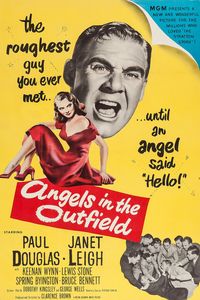
    Angels in the Outfield (1951)

    (On Cable TV, March 2021) Anyone seriously thinking about how baseball is often presented as America’s religion has to watch Angels in the Outfield at least once, if only to experience the delightfully earnest lunacy of a film that explicitly links the two. The story of an abusive baseball team manager who comes to hear angels speak, the film eventually shifts gears when an 8-year-old girl begins seeing the angels on the field helping out the team. Heavenly intervention eventually leads to (what else?) winning the pennant, raising all sorts of thorny issues about divine morality and vulgar sports fandom. The contrast between the sublime and the ridiculous would have been witty, but there’s little ironic detachment exhibited here — Angels in the Outfield clearly and obviously equates godly intervention with the right team winning, and while this was probably heartwarming to the film’s target audience (it was reportedly Eisenhower’s favourite film), it feels like a mash-up of absurdities to anyone who’s not already living within the insanity of America’s twin obsessions. Thematic weirdness aside, the film does have a few moments of charm — the overweight, middle-aged protagonist is played by Paul Douglas in an earnest performance, with the film playing audio tricks around his dialogue so that no swearing could be heard during the actual swearing. Janet Leigh plays a journalist who brings the little girl’s visions to the masses, and Bing Crosby shows up briefly as a co-owner of the Pittsburgh Pirates (which was true at the time). The tone of Angels in the Outfield is very much in line with the reverential treatment that other later baseball movies have adopted as default (Field of Dreams, The Natural), lending a supernatural aspect to the game. As said — it probably works for some… and will feel utterly baffling to anyone outside America’s borders.

  • The Adventures of Ichabod and Mr. Toad (1949)

    The Adventures of Ichabod and Mr. Toad (1949)

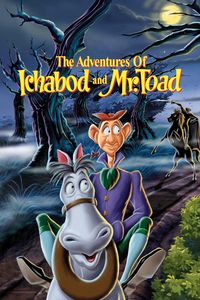
    (Disney Streaming, March 2021) Like most of Disney Animation Studio’s 1940s output, The Adventures of Ichabod and Mr. Toad is a feature-film-length collection of shorter segments — the 35 minutes The Wind in the Willows featuring Mr. Toad (from the novel by Kenneth Grahame) and The Legend of Sleepy Hollow from the short story by Washington Irving. While I’d be willing to bet that what most people remember from this film is that terrifying shot of the pumpkinhead being thrown at the camera (a shot so good that it became the featured trailer stinger for Tim Burton’s 1999 live-action adaptation), the entire film is far funnier than you’d expect. The first segment, featuring Mr. Toad, is a compelling character study of a remarkable eccentric, while the second makes far more mileage out of Ichabod being a comic character than you’d expect from its sombre set-piece. The animation is quite impressive throughout—featuring a steady amount of physical comedy, and often technically superior to some of Disney’s later features of the 1960s–1980s. It’s pleasant to hear Basil Rathbone narrate the first segment and Bing Crosby narrates the second, with some crooning on the side. There’s some weirdness throughout, though: in-keeping with its production date, the gender roles are dated, and there’s a curious moment in which an overweight girl is meant to be shown as unattractive, which doesn’t match what we’re seeing. Still, The Adventures of Ichabod and Mr. Toad is quite effective, and for Disney historians it’s yet another reminder of the dire straits in which the studio found itself during the 1940s. Fun for the entire family, it stands above most of the Disney anthology films of the era as well.

  • Here Come the Waves (1944)

    Here Come the Waves (1944)

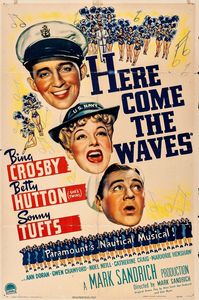
    (Second Viewing, On Cable TV, November 2020) The advantage of a film having, say, Bing Crosby as a headliner is that it can coast on his charm for a long time. Fortunately, Here Come the Waves does have a bit more than that in its assets, including a spirited double performance from Betty Hutton as twin sisters crushing hard on a crooner (Bing, obviously). As with many wartime movies, it’s meant to showcase a very specific section of the military service—in this case, the Navy Women Accepted for Volunteer Emergency Service (WAVES)—along with a big helping of musical numbers. The standout song here is probably “Ac-Cent-Tchu-Ate the Positive,” which, alas, is performed in blackface. That blemish aside, Here Come the Waves is an innocuous, almost unremarkable WW2 musical. There isn’t anything memorable about the result even despite the easy charm of Crosby or the way Hutton acquits herself well in two roles with a fair amount of interaction. It doesn’t do much to impress, but it’s watchable enough, with a few good jokes and musical numbers. Anyone compiling a list of which branches of the US military forces were covered by which WW2 film (it’s a long list) should make a note of Here Come the Waves even if it’s not exactly a very realistic portrayal.

  • A Connecticut Yankee in King Arthur’s Court (1948)

    A Connecticut Yankee in King Arthur’s Court (1948)

    (On Cable TV, September 2020) My memories of having read the original Mark Twain novel A Connecticut Yankee in King Arthur’s Court are dim by now, but I remember enough to be able to say that this film adaptation diverges in significant ways from its inspiration. That’s part of the fun in seeing much-adapted classic works of literature, really—you can pinpoint an era’s obsession with the spin they give to the original material. In this case, it’s fair (and accurate) to say that late-1940s Hollywood was seriously obsessed by Bing Crosby, given that his starring turn in A Connecticut Yankee in King Arthur’s Court effectively makes him a bigger auteur of the film than Twain himself. Hey, it’s not as if Twain had his protagonist croon to the cute ladies of the court and lead big musical numbers, right? But yes: This 1948 take on the material transforms it into a Technicolor musical, complete with singing and dancing. While many of Twain’s imaginative plot devices have become stock for clichés, most of the film is watchable enough—especially if you like Crosby. There’s definitely a curiosity value in seeing how thoroughly the material was changed to reflect its leading man, but all of this fuss doesn’t necessarily make this a good movie. In fact, once it’s all sung and done, A Connecticut Yankee in King Arthur’s Court is more notable as a star vehicle than for being an adaptation of a classic literary work… or much of a film by itself.

  • Here Comes the Waves (1944)

    Here Comes the Waves (1944)

    (On TV, February 2020) I’m not sure you could build a more representative film of 1944 than Here Comes the Waves if you tried. Let’s see—World War II propaganda film exploring a small branch of the US armed forces and delivering a morale boost? Check. Workmanlike plot being used as scaffolding to the musical numbers the film is really concerned about? Check. Featuring no less than the uber-crooner of the era Bing Crosby? Definitely check. Launched a song that became a minor standard of American culture to this day? Also check, with “Ac-Cent-Tchu-Ate the Positive.” I’m not saying there weren’t better movies in 1944 (there were!), but that as a blend of propaganda boost and musical comedies, Here Comes the Waves is a slick, professional example of what Hollywood was up to at the time. It also works a bit harder at it than some of its contemporaries—sure, having Bing Crosby play a singer isn’t exactly asking much, but having Bettie Hutton play the roles of twin sisters is a bit of showmanship—and she does rather well at it. It’s all kind of cute whenever no one is singing (although the sexism is… there), and it’s usually better when it gets into the musical number. Why isn’t it better known, then? Well, there’s the vexing blackface bit right in the middle of the movie. Also, the fact that the third act loses steam—but mostly the blackface. (And what musical number comes with the blackface? You guessed it—“Ac-Cent-Tchu-Ate the Positive.”) In that too, I suppose, Here Comes the Waves is also an exemplar of 1944 Hollywood.

  • Holiday Inn (1942)

    Holiday Inn (1942)

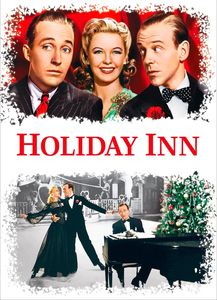
    (On Cable TV, January 2020) Most of Fred Astaire’s musicals are good, and almost all of his good ones are easy recommendation. Holiday Inn, while ranking high on musical and dancing value alone (I mean— it does have Bing Crosby as a co-star, and it introduced the holiday standard “White Christmas”) now comes with warnings—the film is structured around seasonal songs, and one musical number comes with blackface. Like—a lot of blackface, Bing Crosby in blackface, a grotesque blackface getup for the female lead and real black people singing a verse but segregated from the film’s stars. Oh, and all of that to celebrate Lincoln’s birthday. Like—whyyy? You can’t even rationalize it as a homage (like Astaire in Swing Time) or as thematically apropos: Practically nothing about the song would have changed had been done without blackface. Anyway— that’s why Holiday Inn shown on non-specialist channels often cut out this sequence. I disagree with the edit (films should reflect their production era, warts and all) but I can’t quite find fault with those who want to show the film as a holiday classic without getting deep in the discussion of what’s appropriate for all audiences. The catch is that once you excise that blackface sequence, the rest of Holiday Inn becomes far less controversial. Parts of it are even fun: Crosby and Astaire make for a good on-screen match, with Astaire playing the fiancée-stealing cad, getting drunk and dancing while Crosby’s singing. The premise (a hotel only opens for holidays, with big musical numbers taking on a seasonal flavour) barely makes sense but we’re not really here for verisimilitude. The blackface may be the lowlight, but the highlights include firecrackers to enhance Astaire’s tap-dancing, a first draft of “Easter Sunday” (later re-used in one of Astaire’s better movies) and a funny Washington’s Day skit mixing all kinds of music. For Astaire fans, Holiday Inn ends up toward the middle of his filmography—good production values, decent music from Irving Berlin, a few interesting set-pieces, but dragged down by a scene that you almost want to fast-forward through and can’t really recommend to anyone.

  • The Bells of St. Mary’s (1944)

    The Bells of St. Mary’s (1944)

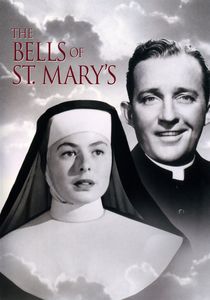
    (On TV, July 2019) Hollywood has been obsessed with sequels for a long time, and following up Going My Way’s success with The Bells of St. Mary is as good an example as any that 1940s cinema wasn’t immune to the impulse. Reprising Bing Crosby’s Oscar-winning turn as a likable priest sent to fix a troubled Manhattan religious institution (he jokes, he sings, he tolerates mild amounts of teenage hooliganism), this sequel pairs him with none other than Ingrid Bergman as a nun who also has a lot on her plate in teaching her students. (If you needed any proof that Bergman was a top-tier beauty, consider that she remains captivating here through her face and hands alone, never taking off her nun’s outfit.)  Much of the plot has to do with the school being threatened by a businessman building a factory next door and coveting the school’s ground for a parking lot. Other subplots revolve around the school’s students. But there is no nice way to say it: The Bells of St. Mary’s is an inferior sequel to the original Going My Way. Crosby is an immensely likable presence, Bergman is great, the film makes sure to go for a heartwarming ending and the religious content is toned down to the point of being nearly irrelevant, but the film remains considerably duller than its predecessor. The drama has become superficial melodrama, with fewer captivating moments and if the result never quite overstays its welcome, it still feels longer than optimal. It doesn’t help that the subplots are assembled mechanically, with cheap resolutions that seem to ignore basic human impulses. (That subplot about a wayward father reuniting with troubled daughter and fallen-on-hard-times mother … yeah, no.)  The Bells of St. Mary’s does have a special place in history as 1944’s highest-grossing film, but it’s also a cautionary tale of how even massive box-office successes can fall in obscurity if they’re merely based on copying better material.

  • Robin and the 7 Hoods (1964)

    Robin and the 7 Hoods (1964)

    (In French, On Cable TV, November 2018) Now Robin and the 7 Hoods is an interesting curio: A gangster musical, featuring Bing Crosby and the Rat Pack. Adding even more interest to the proceedings, the story is a retelling of Robin Hood in Prohibition-era Chicago. With a premise and cast like this, you can almost be forgiven for thinking that whatever is on-screen is a let-down from whatever idealized movie you could imagine. Depending on your taste, the film is either too talky, too long, not witty enough to fully capitalize on its potential, or to make good use of its long list of performers. Barbara Rush isn’t as good a Marian as she could have been, while we can quibble about the number of songs given to this or that actor/singer. All of this is true—Robin and the 7 Hoods is never mentioned as a major musical, and there’s a feeling that the material could be done quite a bit better. And yet … there are some really good moment in here. The highlight has to be the “Bang! Bang!” number featuring Sammy Davis, Jr. as a gun-crazy gangster shooting up the place. Another great sequence has a speakeasy transforming itself into a religious mission complete with gospel singers. Edward G. Robinson shows up briefly as an elderly gangster, while Frank Sinatra, Dean Martin (a bit wasted) and Bing Crosby (showing up too late) get to croon a few numbers. The colourful portrait of 1920s Chicago is a straight-up cliché, justifiably so in a silly musical comedy. I do wish Robin and the 7 Hoods would have been just a bit better, but I still had quite a good time watching it all. Just the thrill of discovery does account for much of it.

  • High Society (1956)

    High Society (1956)

    (On Cable TV, July 2018) Considering the high esteem with which I hold The Philadelphia Story (Hepburn! Grant! Stewart!), you may think that I wouldn’t be so happy about its musical remake High Society. But that’s not the case! I like musicals, and High Society is a great musical, justifying its existence by doing things that the original film couldn’t do. The fun starts early as the film features Louis Armstrong and His Band introducing the setting in song before turning to the audience and winking, “End of song, beginning of story.”  I like my musicals self-aware, and the tone thus having been settled, we’re off to the races as Grace Kelly, Bing Crosby and Frank Sinatra end up forming the triangle at the centre of the story. Kelly plays her princess-like role well enough—not up to Katharine Hepburn’s level, but the irony level is off the chart considering that this would be her last film before becoming a member of the real Monaco royalty. Crosby and Sinatra are effortlessly charming as usual—“Who Wants to Be a Millionaire?” is sensational, and “Now You Has Jazz” has Armstrong taking centre stage for a welcome encore. The film is at its weakest when running through the motions of repeating its inspiration, and at its strongest when it goes off in song and dance numbers. I really enjoyed it—especially as a musical.

  • White Christmas (1954)

    White Christmas (1954)

    (On Cable TV, April 2018) While I liked watching White Christmas, parts of the film don’t resonate given a different social context. I live in Canada. I’ve never been part of the military. There wasn’t a World War less than a decade ago. So when much of the film’s plot hinges on WW2 veterans making extraordinary sacrifices to save an inn managed by their former commanding officer, there’s a basic difference in worldview that takes a while to understand. Fortunately, much of the rest of the film works much better. Bing Crosby is a likable performer, Danny Kaye makes for a capable foil, and then there’s Rosemary Clooney and Vera-Ellen to round off the main cast. The romantic repartee isn’t too bad, with the songs and dance number filling in the rest of the movie. It’s all quite amiable, especially once the film’s second half moves into the “let’s put on a show!” mode that allows full-scale musical numbers to be “rehearsed.”  Fortunately, White Christmas does still work quite well as a Christmas movie, no matter where and when we come from.

  • Going my Way (1944)

    Going my Way (1944)

    (On Cable TV, March 2018) On paper, there’s nothing to suggest that Going My Way is going to be an entertaining experience. It is, after all, about a young priest moving to a New York City parish. His small-town ways are not greeted warmly, and it’s an uphill battle for him to be taken seriously. Duller films have been made of more interesting premises. But watching the film makes it better. For one thing, the lead character is played by Bing Crosby, who isn’t just effortlessly charming, but allows the film to gradually shift in semi-musical mode as his character can sing in support of his parish. As antagonists are tamed, songs are sung, the church’s mortgage paid off and things get back in order (at least until one capriciously arbitrary late-movie downturn), Going my Way actually works decently well. Movies rarely spend so much time in the minutiae of church-running, but the film isn’t particularly religious—the parish is usually portrayed as a business with obligations and logistics. Going my Way won the best Picture Oscar for its year, and while I can argue that (then) Gaslight or (now) Double Indemnity would have been better choices, it’s not an incomprehensible one: It’s a warm and uplifting picture, with great performances by Crosby and Barry Fitzgerald. It’s religious-friendly without being secular-unfriendly and as such could (and still can) reach a wide audience.