Bob Clark

  • Murder by Decree (1979)

    Murder by Decree (1979)

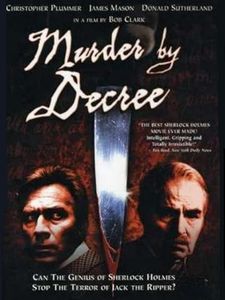
    (On Cable TV, November 2020) The idea of pairing Sherlock Holmes against Jack the Ripper has a long history—it’s a natural matchup from a chronological perspective, and an irresistible one from a dramatic viewpoint. Murder by Decree is far from being the first work of fiction to explore the pairing (even in limiting ourselves to movies, A Study in Terror did it a decade earlier), but you don’t have to be the first to be influential—It was decently successful at the box office and so I wonder how many of the later works of fiction combining the two have been influenced by this one. The plot is very much focused on the royal conspiracy angle, almost de rigueur as a way to make the stakes as high as they could possibly go in London. Depending on how you feel about whether Jack the Ripper story should adhere to the historical record, this will either be interesting or far-fetched. Still, the point of Murder by Decree isn’t as much the story as the concept, plus the rather engrossing atmosphere. Fully playing with the idea of 1800s London being a fog-shrouded city and spending a good chunk of money on period detail, director Bob Clark makes Murder by Decree notable for its iconography. There’s also a nice amount of acting talent involved: Christopher Plummer and none other than James Mason (who looks much older but sounds the same) star as, respectively, Holmes and Watson, with Donald Sutherland and Genevieve Bujold in supporting roles. It all wraps up in a package slightly too long (especially in the ending stretch, drunk on its own conspiracy fantasies) but remains enjoyable despite the gory subject matter.
  • Porky’s II: The Next Day (1983)

    Porky’s II: The Next Day (1983)

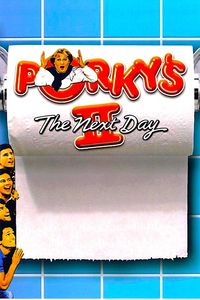
    (In French, On Cable TV, January 2020) Considering that the original Porky’s is one of the best-known sex comedies of the early 1980s (a somewhat amusing Canadian contribution to movie history, and the second of director Bob Clark’s three main claims to fame in-between launching the slasher genre with Black Christmas and directing the very different A Christmas Story), it makes sense that sequel Porky’s II would begin the very next day, with the gang of friends still teasing “Peewee” about his sex life. Much of the first half of the film is in more or less the same vein of sex humiliation comedy, with plenty of nudity and compromising positions. But as the movie advances, the early scenes featuring the characters playing in Shakespeare’s plays (!) lead to the development of a more ambitious plot taking aim at the local preachers and politicians, all revealed to be hypocritical racists with a side order of lusting after underage girls. The amount of nudity also goes down as the film advances, to the point of a third act that is gross and vulgar (with series MVP Kaki Hunter delivering an extended takedown of a sleazy politician in a very public place) but plays nudity for laughs rather than titillation. The mixture between taking aim at racists and hypocrites doesn’t entirely blend very well with the sex farce of the series, but it does make Porky’s II: The Next Day more interesting for any 1980s completists watching the series.

  • Black Christmas (1974)

    Black Christmas (1974)

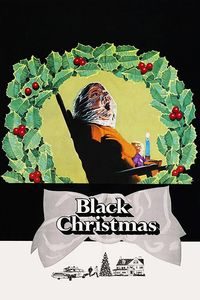
    (In French, On Cable TV, July 2018) Perhaps the most noteworthy detail about Black Christmas is the date at which it was produced—1974, four years before Halloween (to which it has a clear kinship) would popularize exactly the kind of film that Black Christmas is both in subject matter, attitude and technique. Some of the filmmaking is limited by its low budget, but most of it reflects almost shot-for-shot the kind of films that slasher horror filmmakers would churn out for years after John Carpenter’s success. A made-in-Canada success story, Black Christmas does feel in advance of its time, although it certainly does not escape from its own subgenre. This being said, there are performances here by Margot Kidder, Keir Dullea and a young Andrea Martin, plus an energetic directing style from Bob Clark. Unusually (and unsatisfyingly) enough, the film does not reveal the identity of the killer nor punish him, reinforcing its futility. Alas, the flip side of anticipating the slasher subgenre is that it can and does feel like more of the same … which doesn’t help if you don’t like the kind of movie that it launched. 

  • A Christmas Story (1983)

    A Christmas Story (1983)

    (On TV, December 2016) I’m pretty sure I saw this film at some point as a kid, but since seeing the film was like rediscovering when a bunch of clichés came from, I’ll pretend that this is a first viewing. It’s certainly ad odd piece of Americana, more darkly skewed than I’d been led to believe or remember. There’s an odd affection and cynicism blend in the way the film is narrated and shot: part of it seems timeless or, at the very least, far more contemporary than the 1940s in which the film is supposedly set. The unreliable narration is a big part of the film—much of what seems overwrought or frankly bizarre (such as the lamp, such as the improbably gigantic Santa Mall mountain) can be explained as the feverish recollections of events experienced as a kid. The number of clichés and stock situations first seen here is astonishing—I knew on some level that A Christmas Story is considered a classic Christmas movie, but I’d lost track of the number of sequences (“you’ll shoot an eye out”, tongue stuck to a pole, etc.) that are featured in the film. It also keeps its best laugh for the end, making for a nice finish. Writer/director Bob Clark managed to keep much of Jean Shepherd’s original voice in making the film, literally and appropriately choosing him as the narrator of the film. While a bit too fashioned to count as a classic for me, it’s a decently measured look at the madness of Christmas, finding a way to deliver a heartfelt and fuzzy message while acknowledging the more cynical aspect of the period. I’ll watch it again in the next few years.