Bob Fosse

  • The Pajama Game (1957)

    The Pajama Game (1957)

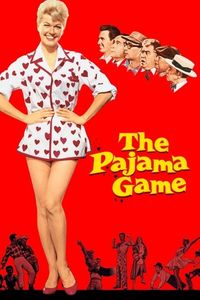
    (On Cable TV, November 2021) The more you dig into the history of the Hollywood musical, the more you find some… unusual material. I’m consciously not using the word “weird” here because The Pajama Game is about as conventional as musicals go: With Broadway roots, Stanley Donen directing and Doris Day in the lead, it’s about as innocuous as these things are. But here’s the unusual thing: The Pajama Game is a romantic comedy musical in which a union takes on management for a pay raise and wins. By 2020s standards, following the regrettable erosion of union power and public perception thereof, this would almost certainly brand the film as socialist propaganda in some of the nuttier American circles — what do you mean, unions as the good guys? It’s become such a fleeting sentiment that pro-union films have become about as rare, remarkable and subversive as it’s possible to get in recent American discourse. (I’m allowing for some distance here because one of the better consequences of the early-2020s COVID crisis recovery has been far more power taken back by employees. But I digress.)  I don’t particularly enjoy that The Pajama Game has so much political baggage now (and I’m writing this from a unionized Canadian’s perspective), but there we go — the 1950s reaching us about progressivism. As for the film itself, there’s not as much to say in strict moviemaking terms: it’s competently handled, with tunes that are snappy without being memorable, and dancing that’s competent without being awe-inspiring. (This being said, it was Bob Fosse’s first major film as choreographer.)  Day is wholesomely bland but still good in the lead role, while the film does have fun making light of a topic matter that led to much darker films. (If you want to make a double feature with this and quasi-contemporary On the Waterfront, hey, go ahead.)  The Pajama Game ranks in the solid middle of 1950s musicals, but I don’t expect it to come up all that often in discussions, except for mentioning the pro-union sentiment.


  • Give a Girl a Break (1953)

    Give a Girl a Break (1953)

    (On Cable TV, November 2020) There were a lot of Broadway musicals in the 1950s, and Give a Girl a Break was certainly one of them. It’s neither better nor worse than the norm—simply very much a typical musical of its period, with decent songs, fine dancing, a buoyant atmosphere and a perfunctory romance to anchor everything. As far as star power, you have Debbie Reynolds playing one of the three hopefuls competing for a top spot on an upcoming Broadway show after the lead actress walks out. She is being championed by a show gofer played by none other than Bob Fosse, but there are two other actresses and two other champions to contend with, and much of Give a Girl a Break consists in dancing and singing while they’re waiting for the final decision of which one of the three actresses will be picked for the role. Much of the film’s first half is formulaic, playing off Broadway backstage musical tropes without too much originality. Only “Nothing is impossible” breaks up the monotony a little bit. Things get more stylized and more interesting in the second half, the standout sequence being a balloon dance played backward. It’s a bit of a commentary on the film that the “contest” between the three would-be stars is a bit of a dud: the resolution is messy and everyone gets something nice for their trouble. But this isn’t about a character winning over the others: it’s about song and dance and the classic warm fuzzy feeling of a Broadway musical where nothing too serious is likely to happen. I happen to like the foundational elements of Broadway musicals and so quite liked Give a Girl a Break despite not finding all that much distinctive about the film.

  • All that Jazz (1979)

    All that Jazz (1979)

    (On Cable TV, September 2020) OK, all right, I was wrong. I was wrong to think of Bob Fosse as the single worst thing to happen to musicals in the 1970s. I was wrong to think, after Sweet Charity and Cabaret, that he singlehandedly killed the fun bouncy old-school Hollywood musical. Well, actually, the jury may be out on that last one—but my point is that All that Jazz isn’t just a depressing musical about death; it’s also a masterpiece. It sums up Fosse’s own life, roars with energy from one number to the next, boasts some terrific editing and actually has something fairly profound to say through the form of a musical. Semi-autobiographical, it’s a film about a chain-smoking, womanizing, cardiac writer-director who falls apart as he oversees editing on his last film and puts together a big ambitious Broadway show. The parallels with Fosse’s life during Lenny/Chicago are obvious, but All that Jazz also portends how Fosse would die of a heart attack not even a decade later. It’s not worth dancing around the spoilers here, especially given how the death of the main character is the point around which the entire film revolves—nothing makes sense thematically without it. For a movie about death, All that Jazz is surprisingly lively: the musical numbers are often upbeat, the rapid-fire editing gives life to the result and Roy Schneider is nothing short of astonishing as Fosse’s alter ego. It features some of Fosse’s best screen cinematography: “All That Jazz” is terrific, “Airotica” hilariously transgressive and “Bye Bye Life” caps it all off with an audience-slapping final shot. Let’s not discount the look at Broadway as well: the opening audition sequence is merciless, and the discussion about how to make money off a dying director is ultra-dark comedy. All that Jazz isn’t perfect (the third act drags, in classic Broadway fashion), but in retrospect it puts Fosse’s entire life and work in focus. It’s also a rare example of a downbeat modernistic 1970s musical that actually works for me—I truly expected to hate the film when I started watching it, and was a true fan by the end of it.

  • Lenny (1974)

    Lenny (1974)

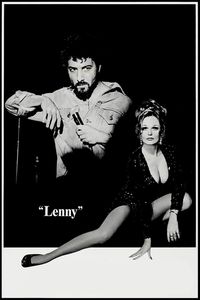
    (In French, On TV, September 2020) Presenting shock comedian Lenny Bruce as a folk hero, a free-speech martyr, a drug addict, an impulsive contrarian and a troubled soul, Bob Fosse’s Lenny is a showcase for a young Dustin Hoffman, an artistic statement and, sometimes, a mess. Deliberately shot in black-and-white, it’s a biography executed as a three-ring circus: Biographical recreation of high moments in Bruce’s life, mock-documentary shots of his stand-up routines, and contemporary recollections of people who knew him. Some aspects work better than others: the testimonials don’t add much, the stand-up moments intentionally vary in effectiveness, while the biographical sketches can be scattered. Nonetheless, we get a good idea of Bruce’s self-destructiveness, his comic genius and his troubled conception of relationships. Hoffman stars, which is both good and bad—on the one hand, he’s able to deliver the grander-than-life performance expected of Bruce. On the other, he never disappears into the role: except for sequences with a bearded Hoffman, we never lose track that it’s clearly Dustin Hoffman rather than Bruce. But as good as he is, Valerie Perrine (as his wife) is even better. Best of all is Fosse, who juggles all sorts of elements and only drops a few of them along the way. Like him or not, Lenny Bruce did bring out the hypocrisy of an era, and Lenny clearly highlights it.

  • Sweet Charity (1969)

    Sweet Charity (1969)

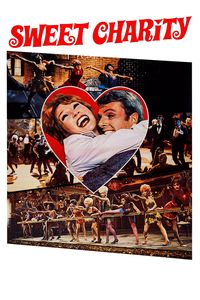
    (On Cable TV, August 2020) I hope no one ever asks me to write a book about Hollywood musicals, because one of the middle chapters will be called, “How Bob Fosse destroyed the musical and yes, it’s all his fault.” I exaggerate slightly for comic effect, but not by much: Fosse was the leading director of musicals during the 1970s’s New Hollywood (probably the worst decade for musicals) and nearly everything I’ve seen from him I have disliked. [September 2020: I take that back! Lenny and Star 80 are decent, while All that Jazz is a really good musical.] His approach made musicals grow up, but in retrospect that was a terrible idea. Sweet Charity is a case in point, bringing together many things that I dislike. Fosse adapted his own Broadway show based on Nights of Cabiria (a film I dislike) having cast Shirley Maclaine (an actress I dislike) and wallowing in a dark cabaret style (an approach I dislike) to end with a bittersweet ending (another choice I dislike, so we’re not doing well here). I’ll grant that Maclaine is a lookalike for Giulietta Masina (further dislike), but otherwise, eh, why even bother. While the film manages a few comic moments and hums the familiar tune of “Hey, Big Spender,” it’s remarkably unfunny as a comedy, tinged with freeze-frame melancholy as it follows a girl with few stable prospects in a big city designed to eat such people alive. (One welcome exception: the wonderfully weird and high-energy number featuring Sammy Davis Jr.) Even the ending, which initially seems destined for a bright and colourful happy finale, ends up pulling the rug under the protagonist’s feet. (I can’t help thinking that for classical musical fans, this is a cruel case of “this is why you can’t have nice things” and no, I don’t care if it follows the original stage musical.) The dark and moody cinematography of the film is very New Hollywood, a now-dated style which isn’t a good match for the exuberant joie de vivre of the classic (and timeless) Hollywood musical. I don’t exactly dislike the film (especially on a curve, as there are Fosse movies that I actually hate, starting with Cabaret) but in many ways Sweet Charity is just close enough to the glory days of the Hollywood musical (I mean—it was released the same year as the far more enjoyable Hello, Dolly!) to feel like a grotesque perversion of the form. It flopped in 1969, and I don’t think it’s any more likable today.

  • Star 80 (1983)

    Star 80 (1983)

    (In French, On Cable TV, June 2019) The early 1980s were an interesting time in Hollywood’s history—a period where there was a battle going on for the soul of Hollywood, lines drawn between the New Hollywood of grimy dark stories, and the purveyors of Pop Entertainment that sought to bring cinema back to its crowd-pleasing origins. We all know how things played out, but even as late as 1983 you could still see movies steeped into 1970s aesthetics and themes. A movie like Star 80, for instance, which details the abusive relationship between a Playboy playmate and her homicidal ex-boyfriend. It’s all based on a true and sad story. (Hugh Hefner and Peter Bogdanovich both show up as characters, with portrayals consistent of what we know of them.)  Given that this is a movie about a centrefold model, expect a fair and persistent amount of nudity—but keep in mind that Star 80 delights in contrasting the eroticism of the lead character with her bloody end, so it’s not exactly wall-to-wall fan service. At times, the film does give the impression of indulging in trash exploitation—the regular cuts from the biographical narrative to the maniacal murderer muttering about his revenge do get a bit ridiculous after a while. Mariel Hemingway is nice and doomed in the female lead role, while Eric Roberts is uncommonly slimy as the prototypical abusive, over-controlling boyfriend from hell. The role is written without any subtlety, and he holds nothing back—giving an intensely unlikable performance that actually quite good from an actor’s perspective but unbearable to the audience. Much of the same can be said about Bob Fosse’s direction: an atypical choice for him, with blunt-edged effectiveness. Pseudo-interviews are interspaced here and there to present the illusion of a documentary and further tie the film to 1970s cinema-vérité style: points given for a collage approach that was relatively new at the time, but still not quite satisfying. The overall effect is, frankly, a bit dull—it doesn’t take a long time to figure out where the thing is going, and the film just keeps going there relentlessly, with little character nuance beyond the angelic victim and the irremediable killer boyfriend. When you look at the way the 1980s turned their back on New Hollywood, you can point in Star 80’s direction as an example of why.

  • Cabaret (1972)

    Cabaret (1972)

    (On Cable TV, May 2018) I started watching Cabaret knowing only three big things about it—it stars Liza Minnelli, is popular within the gay community and has been widely hailed as a musical for people who don’t like musicals. Given that I don’t care for Minnelli, I am straight and I do like musicals, I shouldn’t have been surprised by my decidedly unimpressed reaction to the movie. Another one of those “wow, there are a lot more Nazis here than I expected” movies, director Bob Fosse’s Cabaret seems willfully dedicated to the task of deconstructing musicals. It takes places in early 1930s Germany, portraying it as a time when fascism is ascending and debauchery is reaching decadent extremes. Most of the songs are set within a nightclub (with one memorable exception), with much of its romantic plot about a three-way romance between an English writer, an American showgirl and a German aristocrat. So far so good … except that the deconstruction goes all the way. The love story crashes and burns (abortion is involved), while the rest of the film chronicles the way the world is headed toward genocide and war. Cabaret wants you to feel disgusted at its musical numbers: One of them (“The world belongs to me”) is a nightmarish descent from a Bavarian beer party to goose-stepping jingoism, while another (“If you could only see”) is a comedy routine with a vile punchline that is fit to cause nausea. It doesn’t help that despite being soaked in sexualized markers (fishnets, fishnets everywhere!), Cabaret is almost entirely unarousing—Minnelli does nothing for me, and the film goes out of its way to extinguish any sexiness. While it’s easy to respect the final result—including the gut punches of the worst musical number and the unhappy-ever-after ending, I can’t possibly imagine myself willingly seeing Cabaret again any time soon, which is not something I usually say about other musicals.