Bob Hoskins

  • The Long Good Friday (1980)

    The Long Good Friday (1980)

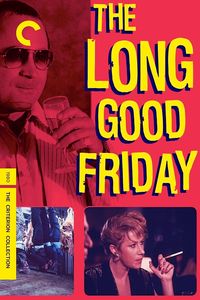
    (Criterion Streaming, March 2021) As with many gangster films, The Long Good Friday doesn’t do anything new, but it does it with some style and period flourish. Definitely a product of the late 1970s, it’s a gangster narrative set in London, featuring intrusions by the IRA and prescient ideas about the place of London as the financial capital of Europe. The standout performances here are from Bob Hoskins as a gangster trying to transform himself into a respectable businessman, as well as a young and attractive Helen Mirren as his girlfriend. Barrel-shaped Hoskins is well-suited to the role in all of his charm and inherent menace. Mirren doesn’t have as much to do in a more conventional role, but it’s a welcome reminder of the stone-cold fox she was in her early years. The gritty atmosphere of the film fits well with the New Hollywood aesthetics of the 1970s, even though The Long Good Friday isn’t above a few spectacular sequences when it feels like them — most notably a sequence near the end where a shootout leads to several car crashes in a lunatic comedy of errors. It does feel like a British Scorsese film at times, which is probably the best compliment we can give it nowadays. The period atmosphere is all-enveloping and the narrative moves steadily forward. In other words — The Long Good Friday may be unsurprising, but it’s a really good viewing experience made even better by Hoskin’s command over the film.

  • Mermaids (1990)

    Mermaids (1990)

    (In French, On Cable TV, August 2019) As a historical coming-of-age dramedy, Mermaids defies easy assessment. Yes, it’s cute (and reportedly cuter than its original darker vision was) and occasionally off-putting (what with a consummated relationship between a 15-year-old girl and a 26-year-old man) and often contrived in ways that are only possible in movies—yet reaching for a complex depiction of women of two generations figuring out what they want to do in their lives. The casting is probably the most spectacular aspect of the film, what with Cher as the family matriarch (the word being a bit too strong here, considering her loose and friendly parenting style) over a rebellious teenager played by Winona Ryder and a younger daughter played by Christina Ricci in her screen debut. Bob Hoskins also stars as someone who could be part of the solution to their issues. But the focus here is on the mother/daughter relationship, and the chosen tone is somewhere between comedy with serious moments. It’s a good film, but not a great one—and viewers will be free to further gauge the result based on their own biases and idiosyncrasies. I’m not sure anyone will put Mermaids on their list of essential films from 1990, but it does leave a favourable impression, wraps things up satisfyingly and gets a few good performances from known performers. You don’t have to pin it down exactly to appreciate it.

  • Who Framed Roger Rabbit? (1988)

    Who Framed Roger Rabbit? (1988)

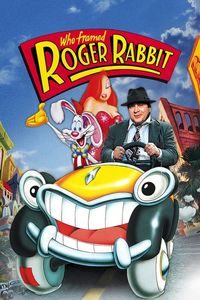
    (Second viewing, On DVD, March 2018) I remembered enough of Who Framed Roger Rabbit? to know that it was a good movie, but I had forgotten what made it a great one. It clicks on several levels, whether you’re looking for simple slapstick comedy, an imaginative fantasy, an ode to cartoons or a homage to noir movies. Perhaps the most noteworthy aspect of the film is its legacy. I’m old enough to remember how groundbreaking the movie was in meshing cartoon characters with live-action actors, which seems old hat in a contemporary cinematic landscape where reality is infinitely malleable and blockbuster movies are routinely computer-generated from beginning to end. Who Framed Roger Rabbit? gave rise to an industry matching imaginary characters with real actors, but it remains so successful as to warrant a look even today. The character of Roger Rabbit is funny enough (his insistence on the Rule of Funny is good for some of the film’s biggest laughs), but add in a classic grizzled detective played in a career-best performance by Bob Hoskins, and the sultriest of femme fatales with Jessica Rabbit (She’s not bad, she’s just drawn that way) and you’ve got something that approaches iconic archetypes. Director Robert Zemeckis has always been interested in pushing the cinematic state of the art, but Who Framed Roger Rabbit? has stood the test of time better than just another gimmicky film. (Heck, The Polar Express has aged more badly than its 1988 predecessor).  I can name a handful of scenes from the movie that all warrant viewing, from the Duck Piano Duel to the Toontown visit to the “Patty Cakes” sequence to the crazed taxi pursuit to the first scene with Judge Doom. (Parents take note: That scene is the reason why the film is suggested for adult audiences. I had to deal with a crying 6-year old when she got interested in the film’s cute cartoons and ended up watching the infamous shoe bath sequence. To my defence, I did not intend to have her watch that sequence—she happened to walk in the room at a bad time.)  As a fan of noir film, Who Framed Roger Rabbit? does happen to nail down several of the genre’s idioms and particular pleasures … perhaps better than many neo-noir earnest attempts. All told, I’m really glad I had an excuse to revisit the film: It’s still a lot of fun and hasn’t aged nearly as much as I was expecting.

  • Unleashed (2005)

    Unleashed (2005)

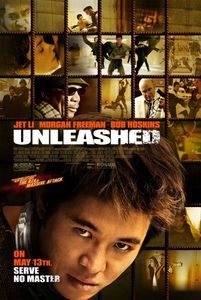
    (Crackle Streaming, April 2017) Some things are difficult to appreciate until they’re gone, and as a cinephile I do rather miss the steady stream of Asian-influenced martial arts action movies of the early 2000s. Following the success of Crouching Tiger, Hidden Dragon (exploiting a trend a decade in the making through the home video market), American theatres received a steady stream of Asian action movies for a few years, and it was easy to believe that it would go on forever. Except that it didn’t, and today you’d be hard-pressed to find any of those movies at the multiplex. Interestingly, this may make then-overlooked movies more interesting to watch today. I’d given a miss to Unleashed at the time, but seeing it today probably makes it look a bit better than I would have felt back then. Not that the movie is particularly bad in itself: Jet Li stars as a gifted fighter raised like an attack dog by a London criminal, and Unleashed predictably follows what happens once he’s adopted by a kindly blind man and his daughter. You can write the rest of the story yourself and wouldn’t be far off from the result (Luc Besson actually scripted the movie and it’s a slightly above average script for him). But the point of the film (despite a performance by Morgan Freeman as the blind man) isn’t the story or the action as much as it’s the action sequences directed by Louis Leterrier and performed by Jet Li. The camera moves well, captures the action nicely and does allow for the grittiness of the premise to be counter-balanced by the comfort found by the hero with his new family. Bob Hoskins also turns up in a memorable loan shark role. While Unleashed isn’t a classic for the ages, it holds up generally well. Twelver years later, it also has the advantage of looking more original than it did back then.

  • Doomsday (2008)

    Doomsday (2008)

    (On DVD, December 2009) I suppose we shouldn’t begrudge the boys a bit of fun when then set out to make a Scottish post-apocalyptic horror/action film featuring a gun-toting babe.  Still, Doomsday most often feels like a tedious rehash of about half a dozen far better films, made with mechanical skills and little inspiration.  The plot points are so painfully contrived that they create resentment and very little viewer buy-in.  (A plague contained by locking off Scotland?  Uh-huh.)  By the time we reach the cannibalistic barbarians inspired by Prodigy videos and then a pseudo-medieval tyrant, it’s obvious that if Doomsday has anything left to show us, it will be in bits and pieces of direction, not in the overall script or end result.  Director Neil Marshall (Dog Soldiers, The Descent) is lost in the woods during most of the film, but from time to time there’s a striking shot or action set-piece that reminds us of his past successes and makes us wish this was a far better film.  Rhona Mitra (presumably standing-in for Kate Beckinsale) is the only one besides Bob Hoskins who emerges from this film with even a smidgen of respect left.  The action tends to be on the splattery side, something that the “unrated” DVD version tends to maximize to very little improvement over the theatrical version.  After a ludicrous car chase that is still better than most of the film, the ending fizzles off –much like the rest of Doomsday.  It is what it is, one supposes –but there’s a reason why it disappeared from North American theatres in mere days. The DVD extra features make it clearer that the picture was aiming for a deliberate hommage to SF exploitation pictures and is reasonably entertaining in describing how to do wide-scale action on a budget… but don’t redeem the end result.