Brian de Palma

  • De Palma (2015)

    (Tubi Streaming, August 2021) The standard mode for documentary movies about directors is hagiography (considering the effort, time and clearances required for a documentary, no one is going to go ahead with a critical look at someone who may still be influential) but De Palma is at least honest about it. It’s really a two-hour-long speech from writer-director Brian de Palma, interview footage interspaced with relevant footage of his films as he chronologically goes through his filmography, from film student days to his post-Hollywood European phase. There’s a bit of autobiographical material to kick things off and some concluding thoughts on his career, but considering that the now-80-year-old de Palma has only made one film since the documentary and isn’t likely to make many more, this is about as close as we’ll get to a definitive self-assessment. Despite narrating all the material, De Palma can be surprisingly dispassionate in the way he assesses his films — one of his running themes is how many compromises one must make by working within the Hollywood system. (As he observes astutely, what critics don’t get is that most directors don’t get to plan their careers: they’re working on this or that at the whim of others with money.)  The film does come with a few warnings. One for violence, obviously — you can’t talk de Palma without showing his films, and his films are largely in the thriller genre. But there’s also a contextual warning: This film makes very little effort to contextualize de Palma or his films. If you’re expecting plot summaries and a cool academic take on the films, this isn’t for you: this is de Palma reflecting on his own work, and what’s unfortunate is that with a thirty-item slate in a 107-minute film, we don’t always have time for more than glancing anecdotes… especially for his lesser-known or off-brand efforts. Still, what’s in there is interesting: his filmography has highs and lows, touching upon a good variety of stars, producers or critical reactions. It’s an easy film to watch if you’re moderately aware of his biggest hits. I’m missing a handful of his films since Carrie, plus his pre-Sisters titles, but this is the kind of film that makes me want to seek them all out. It does help that I consider de Palma to be an interesting director. His level of violence is excessive, his themes can be repetitive and his wilder ideas don’t always cohere, but his visual style is often amazing, and on his best titles he’s clearly going for broke, always pushing how hard or how far he can go. That’s much, much more than many of his contemporaries can say and at the end of his career (as we seem to be now), there’s a wistful sense that even a thirty-title filmography isn’t quite enough — we could have had more had a few things turned out differently. Again, I’m not sure we can say that about many other directors of his time. There’s a particular flavour and appeal to a typical de Palma film, and this documentary does much to try to explain what it is. One notes that the self-effacing director behind the film is none other than independent darling director colleague Noah Baumbach, and there’s some fun in trying to make links between De Palma and While We’re Young.
  • Body Double (1984)

    Body Double (1984)

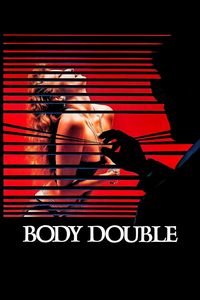
    (In French, On TV, November 2020) Classic Brian de Palma movies could be crazier than anything else at the multiplex, yet Body Double still easily leaps over that high bar for crazy. Obviously designed as an homage to Hitchcock fare such as Rear Window and Vertigo, it’s a film that gets started when an out-of-work actor peeks at another house and is powerless to stop a drill-driven murder. That part is wildly over-the-top, but still understandable: the real fun begins afterward, as our protagonist takes a trip through a fantasyland version of Los Angeles’ porn underworld, gets mixed up with another actress and tries to convince everyone that something weird is going on. Don’t be surprised to realize, maybe two-thirds of the way through, that you don’t know what’s happening any more—Body Double is obviously derived from high concepts rather than developed organically, and there are maybe ten minutes during which you have to wait for further answers to be dropped into your lap before any of this makes sense. But as usual for classic de Palma, the fun here isn’t for the overall plot than the individual set-pieces and shots that illustrate it: The frantic race to prevent a murder, for instance, or the nightmarish climax. It all makes up for wild viewing very much in-line with his best movies. There is a good use of Los Angeles locations (most notably the Chemosphere house), and those with fresh memories of the film’s Hitchcockian inspirations will find even more fun to be seen. Clearly, de Palma’s most outlandish films aren’t for everyone—but if you’re willing to tolerate some weird quirks, there’s still little like Body Double.

  • The Fury (1978)

    The Fury (1978)

    (In French, On Cable TV, July 2020) As someone whose skepticism came of age at a time when parapsychology still had a semi-scientific veneer of plausibility, it actually gives me great pleasure to be able to watch films such as The Fury and wonder at the dated psi-power nonsense contained therein. It’s not necessarily a condemnation of the material itself—it takes a director with a flair for the crazy, such as Brian de Palma, to give full force to the kind of wackiness that the material requires, and at its best The Fury is a rollercoaster ride of special effects, crazy ideas, unrestrained plotting and over-the-top performances. The plot has to do with a CIA agent (Kirk Douglas!) using a young girl with psychic powers to find his missing son from the clutches as an evil ex-colleague (John Cassavetes), but don’t worry about the plot when the film is one set-piece after another, ending up with exceptionally violent imagery by the end of the film. It’s all handled in typically over-the-top fashion by late-1970s Brian de Palma. It would be a splendid double feature with Firestarter or Scanners for reasons too obvious to explain. Frankly, The Fury is crazy in good ways, and even more enjoyable now that parapsychology has been relegated to a proven heap of nonsense.

  • Sisters (1972)

    Sisters (1972)

    (On Cable TV, January 2020) The amazing thing about digging deep enough in writer-director Brian de Palma’s filmography to watch Sisters is how much it announces elements of his later career. This is pure uncut de Palms with split screens (justified!), a narratively unusual first act not featuring the protagonist, a shocking first-act twist, mysterious identities, hypnotism and other deviations from pure objective reality. You can map a lot of Sisters’ plot elements to later de Palma movies, starting with its niche as a psychological thriller in which anything not explicitly supernatural can happen no matter how unlikely it can be. (Once you throw hypnotism in a psychological thriller, it’s a clear marker that you shouldn’t expect the rest of the film to make sense.) I was amused to find Margot Kidder playing a French-Canadian character, although Jennifer Salt ends up being the main character once the first act is sorted out. The visual complexity of the film (notably in its use of split screens to see the same thing from opposite perspectives, or the copious amount of audiovisual exposition, or the changing film stocks and techniques) is more contemporary than many films of its era. Sisters doesn’t end particularly well, which limits its appeal and certainly brands it as being from the early-1970s, but it’s fascinating in its own way as an early de Palma work.

  • Dressed to Kill (1980)

    Dressed to Kill (1980)

    (Google Play Streaming, December 2019) It’s perfectly understandable for anyone to approach Brian de Palma’s movies with a guilty-pleasure mindset—even the better ones. Throughout his career, de Palma has repeatedly aimed for excess, and shocking the rubes was part of the point. Dressed to Kill is no exception, what with its familiar blend of de Palma themes (violence, eroticism, doubles, voyeurism, gender-bending and aberrant psychology) that would make the film recognizable as his work even under a pseudonym. The opening of the film still has the power to shock, as it begins by following one character and, after a moment of explosive violence, switches perspectives to follow another. Michael Caine turns in one of his strangest roles here as a psychologist involved in murder, with Angie Dickinson and Nancy Allen co-starring. The plot barely makes sense—this is one of those “psychological thrillers” with tropes that aren’t impossible, but have never happened. But as with other de Palma movies, the point here are the bloody images, the suspense sequences, the atmosphere of dread where anything can happen and the troubling twists along the way. Dressed to Kill is certainly not a respectable film—borrowing liberally from slashers, giallo and noir, it’s clearly a genre film that revels in including as many provocative elements as it can. But it works, and still lead to several “I can’t believe this film is going there…” comments.

  • Casualties of War (1989)

    Casualties of War (1989)

    (In French, On Cable TV, August 2019) You can certainly argue that Casualties of War seldom gets as much love as other similar movies. You can even offer a few perfectly reasonable explanations for it: Coming as it did right after Platoon (1986) and Full Metal Jacket (1987), perhaps it couldn’t measure up to those films. Perhaps having Michael J. Fox and Sean Penn in the lead roles made it more about the actors (especially Fox, then and now better known for comedic roles) than the substance. Perhaps Brian de Palma was seen as working too far outside his element. Perhaps the subject matter of war crimes as committed by American troops was harder to take than even an unflinching description of combat hell. No matter the reason, Casualties of War isn’t as likely to be mentioned as a great Vietnam movie. (Although it is receiving a growing critical reassessment.) Now, I’m not going to be a Tarantinoesque contrarian and claim that it’s a hidden gem, but it’s probably worth a look. De Palma keeps thing humming along, Penn makes for a fierce antagonist, Fox doesn’t do too badly as a baby-faced innocent confronted with war atrocities, and the subject matter is indeed more daring than many other takes on Vietnam. It may not be the most entertaining, most evocative, most credible Vietnam film, but it comes in at a sufficiently different angle to be worth a look as a complement, not necessarily as an inferior imitation.

  • Passion (2012)

    Passion (2012)

    (In French, On TV, April 2019) I only watched Passion because I’ve been hitting the vintage Brian de Palma catalogue a lot lately, and had been wondering what he’s been up to in recent years. This happens to be almost exactly the best state of mind to tackle this film, as it eventually makes its way to classic de Palma grand-guignol with murder, lust, affairs, twins, nightmares (meaning no less than two catapult awakenings) and bad people doing bad things to each other. It’s quite a bit of fun if that’s what you’re looking for. The beginning can be deceptive, though: the introduction of two marketing agency executives feels a bit too clean, too modern, too fun to be de Palma, but just wait—it doesn’t take long for the ugliness to come out, and the silliness as well. Perhaps the standout sequence has to do with a ballet, split screen, three characters and a final murder. This may not be great de Palma, but it’s definitely de Palma and that will be enough to please its audience. Rachel MacAdams is fine here as a grown-up Mean Girl, whereas Noomi Rapace is good enough as her antagonist (or protagonist—it’s that kind of movie). The ending doesn’t make sense, but it’s a good cap on an increasingly demented ride. While billed as an erotic thriller, don’t expect too much of Passion on that front: it’s got explicit situations, but no significant nudity nor extended erotic sequences. While there’s a sense that de Palma is churning familiar material, who can fault him for one last go to the same sources of inspiration?

  • Raising Cain (1992)

    Raising Cain (1992)

    (In French, On Cable TV, March 2019) If, for the sake of argument, we consider that Brian de Palma’s best body of work roughly dates from 1976 (Carrie) to 1996 (Mission: Impossible), then Raising Cain is perhaps the last pure-crazy de Palma thriller, the last to bear his imprint absent commercial imperatives or budget limitations. It’s completely ludicrous like few of his other films, meaning that it flirts with meaninglessness but remains perversely entertaining. The first few minutes set the deliberately confusing tone, what with split personalities and dream sequences creating a constant sense of reality anxiety. John Lithgow is suitably unhinged in the lead role, playing multiple parts that are not always in his own mind. Much of Raising Cain stretches believability, with some sequences only making sense when shot in their close frame—a wider composition would make the entire thing look silly. People being dead but not really, fake-outs and dreams-within-dreams sequences ensure that the film, for all of its twists and turns, isn’t really meant to be taken seriously, and that includes the end—it’s a good thing that the film doesn’t even make it to 90 minutes, because it does feel like a big ball of nonsense by the end. In some ways, Raising Cain is perhaps the last and most depalamaesque of de Palma’s trillers… bless his twisted shrivelled heart.

  • Blow Out (1981)

    Blow Out (1981)

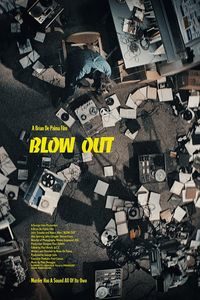
    (On Cable TV, March 2018) I hadn’t seen Blow Out in at least thirty years, so it’s funny to see what sticks and what doesn’t—my childhood memories of seeing the film (in French, on broadcast TV “prestige” Saturday evening showing) included the ending shot and the “animated film” sequence but little else. I think I learned of the Chappaquiddick political scandal after watching the film, which is really weird in retrospect. Watching the film as a seasoned thriller fan, I was a bit more impressed by director Brian de Palma’s ability to create suspense and memorable sequences through directorial audacity. John Travolta is surprisingly good (and young!) as a sound-effect technician who ends up embroiled in a political assassination conspiracy—with no less than an even younger-looking John Lithgow as an effectively creepy antagonist. Blow Out moves quickly and doesn’t have too many dull moments. While some character motivations are suspect (as in; the protagonist seeing the heroine again for no other reason that she’s attractive) and the coincidences in the plot defy credibility, but de Palma knows what he’s doing (just watch that opening shot) and the look at exploitation filmmaking at the eve of the eighties is simply fascinating—the period feel of the era’s technology, complete with tapes and physical cutting, is now one of the film’s biggest strengths. The ending is a downer, but it’s almost entirely justifiable through the film’s atmosphere and thematic resonance. Blow Out remains a remarkable early-eighties suspense movie that clearly owes much to the conspiracy thrillers of the seventies.

  • Carlito’s Way (1993)

    Carlito’s Way (1993)

    (On DVD, February 2017) While I gather than Carlito’s Way was only a middling financial and critical success back in 1993, it’s one of those films that grow even better with time. I have a few theories as to why the decades have been kind to the movie. For one thing, I think it’s the kind of top-class crime thriller that were omnipresent for a while, and then not so much. So what if it’s similar to Scarface and The Untouchables? Those movies were awesome! In 2017, Carlito’s Way is a quasi-refreshing throwback to muscular crime cinema back when it was synonymous with A-class budgets rather than straight-to-video releases. It features Al Pacino in terrific younger form (sporting a glorious beard), which is best appreciated now rather than at a time when he was almost over-exposed. It benefits immensely from director Brian de Palma’ kinetic camera work, swooping and gliding into scenes, cackling as it prepares straight-up suspense sequences and delivers all of the cheap thrills that we can expect from a crime thriller. Carlito’s Way may not measure up to Scorcese, but it has strong thrills to deliver in an endearing exploitative way. David Koepp’s script cleverly packs a lot in a decent time, taking a look at a killer trying to get out of the business but predictably failing to do so. Sean Penn is almost unrecognizable (yet iconic, as per GTA: Vice City) as a completely crooked lawyer, while Penelope Ann Miller, John Leguizamo and Luis Guzman turn in good supporting performances. (Pre-stardom Viggo Mortensen even shows up in a non-glamorous role as a disabled ex-gangster) It all adds up to a slick, enjoyable crime drama the likes of which we don’t see enough these days. Carlito’s Way has grown in stature over the past quarter-decade and a fresh look at it today only confirms that it’s a strong film.

  • Carrie (1976)

    Carrie (1976)

    (On TV, October 2016) The original Carrie has become a pop-culture reference, but watching the film nowadays is a reminder of both how good Brian de Palma could in his prime, but also how far more fast-paced movies are nowadays. Especially teen thrillers. (The remake, which I saw immediately after this original, clocks in at half an hour shorter despite keeping most plot pieces intact.) I’ve read the Stephen King novel too long ago to faithfully evaluate whether the film is faithful to the novel (I think so), but the main draw here is the way de Palma injects some movie magic in even the simplistic framework of a teen horror movie. Witness the long shots, the split screen, the editing…. It all comes together during the infamous prom sequence. Sissy Spacek is very good as the titular Carrie, sympathetic despite ending the film as a homicidal maniac. John Travolta shows up in an early role. Otherwise, it’s a fair period piece, often far too long for its own good, and overly dramatic in portraying its central mother/daughter conflict—culminating in an overlong climax. Carrie still works thanks to great direction, and the seventies atmosphere is good for a few nostalgic throwbacks.

  • The Bonfire Of The Vanities (1990)

    The Bonfire Of The Vanities (1990)

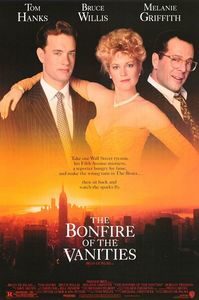
    (On DVD, October 2008) This movie was critically lambasted upon release, but if it’s not quite a success, it’s not the disaster that some reviewers have reported. As an adaptation of Tom Wolfe’s novel, it manages to hit most of the high points of the novel, and if Wolfe’s prose can’t be fully adapted to the screen, it finds an appropriate counterpart in Brian de Palma’s swooping direction and ambitious cinematography. The long continuous opening shot is a small marvel of the form, while other sporadic flourishes keep things hopping along. Things aren’t as slick regarding the script, which does an intriguing job re-casting Wolfe’s story into a satiric comedy mold, but falters in the film’s second half with a number of limp scenes that don’t advance the story as efficiently as they should. It’s too bad that the manic quality of the original is only half-finished here. The result isn’t terrible, but it certainly could have been better. The first-generation DVD, regrettably, doesn’t include any supplementary material about the film, which is a shame given that an entire book has been written about the film’s troubled production.

    (Second viewing, On Cable TV, August 2021) After enjoying TCM’s podcast adaptation/update of Julie Solomon’s The Devil’s Candy, which offers four hours of material on the making of The Bonfire of the Vanities, the mandatory next step was to watch the film itself. (Actually, I watched it between the sixth and seventh episode – the best possible timing considering that the seventh episode opens on the first public showing of the film.)  Once again, a rewatch had me protesting that the result wasn’t that bad, even enjoyable. Oh, it’s clear that as a film, The Bonfire of Vanities falls considerably short of its potential. The dark cynical humour is mishandled and neutered by a final speech that shouldn’t be in the film. It’s miscast from top to bottom – Tom Hanks is not bad in the last third of the film when he’s free to play up his comic persona, but he’s really not the right choice for playing a high-powered adulterous stockbroker. Melanie Griffith has never been much of a draw for me, so her casting as an irresistible femme fatale is wasted. Morgan Freeman’s not bad, even when saddled with the film’s most awkward dialogue. Surprisingly, I found Bruce Willis to be the most watchable, but only when he fully plays into the quasi-noir role of the crumpled journalist working hard for his bylines. (This is not, however, the character in the book.)  Visually, the film is far better than its script – The first ten minutes overpromise a film that’s not to be found later on, as a magnificent overhead shot of New York City leads to an astonishing steady-cam shot and then to the memorable image of Tom Hanks dragging his dog off to a sodden walk (and a misguided phone call that triggers everything that follows). Narratively, you have enough to keep viewers invested, but there is often a clash between the original intentions of author Tom Wolfe and the neutered execution that Brian de Palma ends up delivering. Part of it is clearly due to an attempt at mainstream filmmaking – I don’t think that major studios were ready back in 1990 to bet the bank on a highly cynical work, at least not as much as today. You can see the compromises all the way through, even as the atmosphere of a New York City divided along racial and class lines is still quite pertinent as long as you ignore the Bronx caricatures. It’s frequently (but intermittently) funny, at least enough to keep the film from being dull. I strongly suspect that The Bonfire of Vanities’ reputation partially comes from overinflated expectations considering the success of the original book, partially because entertainment pundits were (and are) always looking for a fall-from grace story from Hollywood, and partially because the gap between that the film aimed for and what it achieved is so visible. As someone who routinely watches near-unwatchable cinematic tripe made with only a fraction of The Bonfire of Vanities’ assembled talents, the circa-1990 hyperbolic pans of the film are embarrassing for those taking the potshots: The Bonfire of the Vanities is misguided, disappointing, even a case study in how even the best intentions can go wrong in such a complicated production as a Hollywood film, but there’s more than enough here to make viewers happy – even its problems can be entertaining once you get into them.

  • Mission: Impossible (1996)

    Mission: Impossible (1996)

    (Second viewing, On TV, November 1998) Pure and complete nonsense, but intentionally so. Going from set-piece to set-piece, this thriller never pauses long enough to allow viewers to realize that what they’ve just seen is not complex, but senseless. Still, it might be foolishness, but director Brian De Palma has too much experience to let it be anything but good-looking foolishness. Tom Cruise makes a convincing action hero, and the superb action sequences are simply remarkable. (Even knowing where special effects were used didn’t diminish the enjoyment one bit) Disclosure: A previous viewing had prepared me to accept the lousy script and enjoy the good bits.

  • Snake Eyes (1998)

    Snake Eyes (1998)

    (In theaters, August 1998) This film starts off with an impressive seemingly-uncut, very complex 12-minute scene. Nicolas Cage also starts off grand, but loses a lot of energy as the movie advances. Not coincidentally, the movie also settles down after a while, causing considerable disappointment. A whodunit becomes procedural thriller, then degenerates in late-night movie fare. Beautifully shot by Brian de Palma, but finally quite average. The most-charitably-described-as- deus-ex-machina ending is adequate in the theatre, but doesn’t survive the trip back home. A shame, considering the talent involved.