Bruce Lee

  • I am Bruce Lee (2012)

    I am Bruce Lee (2012)

    (On Cable TV, May 2021) Bruce Lee was an extraordinary figure — not merely a gifted martial artist (a mean feat in itself), but an intelligent and charismatic one, able to place his skills on a solid intellectual foundation, and then rally everyone to a very personal point of view. I am Bruce Lee, his entry in Derik Murray’s long-running “I Am…” biographical series is very much in-line with the other films in the series: Interviews with friends and family building up a portrait that may acknowledge a few flaws but will never be anything less than completely enamoured of its subject. This isn’t much of an issue here, as it’s remarkably easy to praise and like Lee on absolute terms. You probably know what to expect, though: testimonials from celebrities who never met Lee, more touching interviews with family members and friends with recollections of the man, a biographical overview of his life touching upon the main achievements of his filmography, and—best of all—interview excerpts with the man himself, allowing his innate likability to overpower the rest of the film. As with other “I Am…” films, this is not to be trusted as an insightful piece of work: it’s meant as a paean (made easier by his untimely and much-regretted death) and a highlights reel, but you’ll have to go digging elsewhere (usually in books) for more even-handed, interesting material. Still, there is a place for that kind of biographical documentary: as a reminder of Lee’s grander-than-life stature, I am Bruce Lee is worth a look. It immediately compelled me to have a look at the one major Lee film that I still hadn’t seen (Fists of Fury), so there’s that for impact.

  • Jing wu men [Fist of Fury] (1972)

    Jing wu men [Fist of Fury] (1972)

    (Tubi Streaming, April 2020) It’s sobering to realize that most of Bruce Lee’s feature-length filmography (aside from a few very early efforts) is a mere six films, from a supporting turn in Marlowe to Game of Death—and even that last one is a posthumous salvage job. In this list, Fist of Fury is arguably his breakout feature. Given that the plot takes us to Japanese-occupied Shanghai in 1908, much of the film’s running time is about historical context, setting up the fight sequences between a Chinese dojo and a Japanese one. There is some perceptible nationalistic material considering how the Japanese invaders are depicted not only as enemies, but perfidious, cheating ones. Considering this, it’s fine if any North American viewer finds much of the film duller than expected—it’s immersion in an unfamiliar era, and we’re here to see Lee fight, not talk. It doesn’t help that the film is a prime example of early-1970s Golden Harvest Hong Kong martial arts film—it’s technically rough, grainy and sometimes amateurish. Still, writer-director Lo Wei wisely steps back to see Lee do his thing during the fight sequences, and they make the film come alive. Watching the film, it’s obvious why Lee commanded such charismatic respect—he dominates fight sequences, putting personality where other films would have just run with the combat. Various techniques work at maximizing the coolness factor of Lee’s fights, whether it’s slow motion, overprinting, multiple bosses to defeat, tense moments in which nothing happens in-between the fights, and so on. There’s a bit of romance to round out the whole—and more nudity than I expected. Clearly, this is Lee’s showcase, even if I found Enter the Dragon significantly more memorable. The English dub is not particularly good, but it was the only option available. Jackie Chan briefly appears as an extra in one of his earliest roles. The freeze-frame ending ends up being elegiac, considering what would soon happen to Lee.

    (Second Viewing, Amazon Streaming, May 2021) It only took a look at the biographical documentary I Am Bruce Lee to get me rewatching Fist of Fury. It’s not disrespectful to note that this isn’t quite the best Lee showcase: this was an early film to feature him as lead, and writer-director Lo Wei didn’t necessarily how to best showcase his talents. Lee is clearly the hero with some impressive moves, but the camera doesn’t quite capture him as well as later films. It’s also worth noting that the overall plot of the film, going back to early-twentieth-century China to depict their struggles against foreigners, would become nearly a cliché in the following decades, as it formed the backbone of numerous martial arts epics. Fist of Fury is also noticeably grimmer than other Lee films—or other martial arts films, actually—with a freeze-frame ending right before things turn bad. Still, Lee remains remarkable here as a young Chinese martial art student who comes to fight against Japanese intruders. His wiry physicality remains impressive and while the film is rough in presenting its action sequences, there’s no mistaking his raw talent. The film remains a reference for Lee fans for a reason — not the best, but still an impressive showcase. The only problem is the same as when I contemplate the rest of his filmography — I can’t help but wonder what else Lee could have done had he lived longer. Fist of Fury is an impressive first draft, but it’s far from being the ultimate depiction of what he was capable of.

  • Dragon: The Bruce Lee Story (1993)

    Dragon: The Bruce Lee Story (1993)

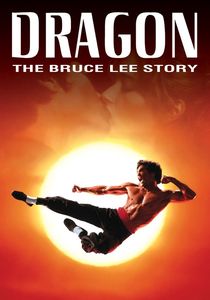
    (On Cable TV, November 2019) The Story of Bruce Lee is so interesting, so dramatic that it would have made little sense for a biopic to follow a strictly factual style. (Leave those to the books, I say!) So it is that director Rob Cohen’s Dragon: The Bruce Lee Story wisely chooses a far more fantastic framework in which to tell us about Bruce Lee, complete with martial-arts fights almost as good as the ones in his films. Going from Hong Kong to the United States and back again, Dragon follows Lee as a young man on the way up (as portrayed quite convincingly by Jason Scott Lee), but elides much of his stardom years in favour of dramatizing the events surrounding his death. As befit the subject, it’s not merely a chronicle of Lee’s life as an occasion to talk—in the early 1990s—about stereotypes, prejudice and the idea of manliness as portrayed by Asian actors. (Which has me wondering if Dragon had any impact on the brief but real influx of Asian talent, themes and techniques in the later half of the 1990s.)  This being a heroic biographical portrait of Bruce Lee, do not expect much distance or critique of the man—this is meant as a celebration rather than a serious biopic. Still, it’s fun—the first fight scene alone is almost comical and the later sequences keep the entertainment factor high. Still, I can’t help but wonder if we may be ripe for another project looking at Lee’s life from a more realistic perspective—and ideally one from filmmakers closer to Lee’s background.

  • Enter the Dragon (1973)

    Enter the Dragon (1973)

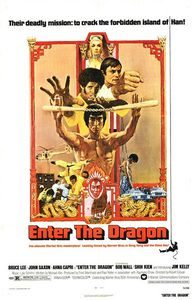
    (On cable TV, July 2011) Given Enter the Dragon’s importance within the martial arts film genre, it’s a bit surprising that I hadn’t seen the film until now.  Well, that’s now done, and checking this film off my to-watch-some-day list wasn’t much of a chore.  Bruce Lee’s performance is compelling, but the film has, in aging, become a brief period look at early-seventies Hong Kong, followed by a deliciously unconscious take on the James-Bondian “Megalomaniac Island” plot device.  (Better yet is the period-inspired Black-Power character played by Jim Kelly, who definitely doesn’t get enough screen time.)  Even though scripting isn’t high on the priorities of martial arts films, Enter the Dragon has a few interesting refinements: The introduction of the main character is handled through flashbacks, the final fight has thematic visual ambitions, and there are a few well-done moments in-between.  It’s surprisingly coherent, but best of all it leads to a few well-shot fighting sequences that don’t chop the action in excessive cutting.  It’s pleasant to watch, and doesn’t necessarily ask viewers to forgive its flaws.  Lee is fantastic, both charismatic as an actor, and intense as a martial artist (there’s a sequence with nunchucks that will leave most viewers going “wow!”); too bad this ended up being his last film.  This is still well-worth a look; keep your eyes open for a few surprises.  If you think you spot a young Jackie Chan somewhere in the movie, well… you just may be right.