Burt Lancaster

  • Sorry, Wrong Number (1948)

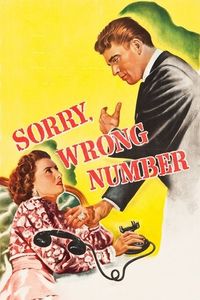
    Sorry, Wrong Number (1948)

    (On Cable TV, October 2021) It took me too long to warm up to Barbara Stanwyck as an actress (as opposed to a collection of great performances) but now that I have, nearly every film in which she’s involved is worth at least a first look and sometimes a second. In Sorry, Wrong Number, she has the advantage of being paired up with Burt Lancaster in one of his first roles, playing against this leading-man good looks. Both are well-known actors born only six years apart, but they are not often associated with the same period in film history (her: 1930-40s; him: 1950s-60s), so it’s interesting to see that pairing on-screen, toward the end of Stanwyck’s glory days and the very beginning of Lancaster’s rise. Sorry, Wrong Number’s other two assets are a devilishly effective premise (an invalid woman hearing her own murder plotted on a phone) and an utterly merciless ending that still manages to shock decades later. In-between those highlights, however, the film can occasionally drag—In an effort to expand the original theatrical story into feature-film length, this adaptation includes flashbacks explaining everything about the characters and where they’re coming from. Some of it is effective, some feels like padding even at a total length of 89 minutes. Stanwyck is effective as always (she was nominated for an Oscar for the performance), while Lancaster feels almost subdued in a shifty role. There’s a good reason why Sorry, Wrong Number remains a film noir landmark—the fatality of its last third weighs heavily in a movie that does not reach for a preposterous happy ending. Not bad—but you may want to watch something cheerier afterwards.
  • Jim Thorpe—All-American (1951)

    (On Cable TV, September 2021) As much as I wanted to completely embrace Jim Thorpe—All-American’s message of admiration for a Native athlete who overcomes the odds in order to become an exceptional athlete in track-and-field, baseball and football, the fact remains that Thorpe is here played by the very Irish-ethnic Burt Lancaster. While I do like Lancaster a lot and can see how he could pass (faintly) as a Native with darker hair and skin, any contemporary appreciation of Jim Thorpe—All-American has to contend with inappropriate casting, made even worse by the constant depictions of racism against Thorpe. If you can manage to get past that, the film itself isn’t too bad — there’s a near-constant promotion of sports as American religion, but Thorpe’s life is filled with dramatic peaks and valleys. It’s a great introduction to an exceptional well-rounded athlete (the film doesn’t even dwell on the other sports he played well) that has been largely forgotten since then, even if the film irons out many of the less appealing aspects of his life. Still, getting past the inappropriate casting — even knowing how few opportunities there were for Native American actors at the time and Lancaster’s commercial appeal — is a big, big hurdle. Ultimately, Jim Thorpe—All-American ends up creating a lot of questions that run against the message it’s trying to preach, making it vexing at best.

  • The Unforgiven (1960)

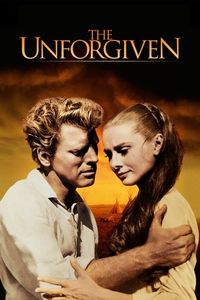
    The Unforgiven (1960)

    (On TV, September 2021) In the pantheon of revisionist western movies, you could be forgiven for initially mistaking 1960’s The Unforgiven with 1992’s Unforgiven. But while both movies are independent from a storytelling perspective, they do share an intention to question some of the unexamined tropes of the genre. Clint Eastwood’s 1990s masterpiece was a deep meditation on violence that cleverly rifled through decades of doubts about impassible virtuous gunslingers, but if The Unforgiven isn’t anywhere nearly as successful, it does tackle the legacy of racism against Native Americans on film. But the way it gets there, though… can be problematic. Burt Lancaster ably stars as a rancher who learns that his sister (played by Audrey Hepburn) is, in fact, an adopted Native girl. That doesn’t go very well among the white settlers, and it doesn’t take a long time for them to become at odds both with their neighbours and with the Native Americans coming back to claim the girl as their own. It all climaxes in a scene that, for once, feels decently original — that of a dirt house being set on fire as Native Americans ride on the rooftop. The meditations on racism are atypical and rather welcome, considering the state of Native Americans in 1950s Hollywood, but the film itself is far from being as accomplished as one could have expected. Reading about its production history does help explain why, with enough behind-the-scenes drama (deaths, injuries, near-death experiences, and a disengaged director) to make a movie of its own. Suffice to say that the herky-jerky scene-to-scene rhythm of the film may not have been in the initial plans. Of course, there are other issues — as much as I love Audrey Hepburn and the lovely long hair she has here, she’s perhaps not the best pick for a Native American. Her performance bulldozes through objections of ethnically inappropriate casting, but it’s one more thing in a long series of issues with The Unforgiven. Lilian Gish and Audie Murphy are quite a bit better in supporting roles, each of them having a few standout sequences. Meanwhile, Lancaster provides yet another example of how he was willing to use his stardom to enable projects that poked at the kind of leading man he was supposed to play. In the end, The Unforgiven remains a provocative, big-budget revisionist western before it was cool to make revisionist westerns and in that, at least, it has appreciated from the underwhelming critical and commercial reception it got upon release.

  • The Professionals (1966)

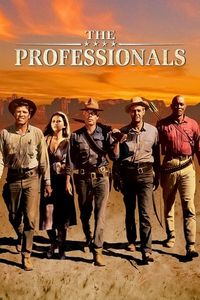
    The Professionals (1966)

    (On TV, September 2021) I’ve seen too many undistinguished westerns lately to expect much from yet another one, but The Professionals gradually won me over. The casting certainly gets things rolling in the right direction: with Lee Marvin and Burt Lancaster sharing the lead as mercenaries going into Revolutionary War Mexico, you’re in good hands — but then throw in Claudia Cardinale and Jack Palance and it just gets better. The film also cranks up the action by featuring an explosive-heavy plot with a demolition expect (Lancaster, looking suitably ragged-down) as a rich American asks them to go south to rescue his wife (Carnivale, lovely) from a Mexican warlord (Palance). Many explosions pepper what happens next, plus a slightly-twisty plot that could have been taken from a film noir. This already sets the film apart from so many other westerns, but the execution more than supports the premise. There are really interesting parallels to be made between The Professionals and the spaghetti westerns that were emerging as renewal engines for the western genre — A Fistful of Dollars had come out in 1964, but the clearest parallels in terms of explosive Mexican Revolution action are with the later A Fistful of Dynamite (1971). Still, compared to many American westerns of the 1960s, The Professionals has more energy, more distinctiveness and more fun to it. No wonder I liked it a lot more than the usual western of the time.

  • Il gattopardo [The Leopard] (1963)

    Il gattopardo [The Leopard] (1963)

    (YouTube Streaming, August 2021) There’s a fun blend of international elements in The Leopard, being an Italian film from writer-director Luchino Visconti, with Claudia Cardinale, American Burt Lancaster and French Alain Delon in the starring roles. The plot takes us deep in Italian history, as a late-19th century Italian prince contemplates the way the world is changing (a nearby war doesn’t help) and wanders forlornly around a palace. That’s roughly all there is to the point of the film — the rest is window dressing, albeit technically successful window-dressing, as the film really shows its historical recreation budget. It’s sort-of-fun to see Lancaster with impressive facial hair, going up against both Delon and Cardinale — three actors not normally associated with each other. The much-ballyhooed ballroom sequence is the film’s finest moment. On the other hand, it’s a long sit at more than two hours, seemingly even longer considering the slow pacing of the thing and the interiority of the plot. I can admire that intention, but I can’t say that the execution of The Leopard is all that entertaining.

  • Airport (1970)

    (On DVD, July 2021) The big irony about Airport is that even if it’s credited with launching the disaster movie boom of the 1970s, it’s not quite a disaster film through and through: Adapted from a thick procedural novel from the legendary Arthur Hailey, it spends more than an hour and a half detailing the professional and personal struggles of an airport manager during a particularly trying snowstorm. Launching an ensemble cast’s worth of subplots, Airport does gradually build the suspense of its impending disaster, but it remains quite an intimate affair compared to the excesses of its later imitators. For much of the first hour, it remains a remarkably sedate affair. Our airport manager (a solid turn by Burt Lancaster) struggles with a status-seeking wife, a bickering brother-in-law (Dean Martin, playing a playboy pilot), protesting homeowners and that’s all before the film starts, because in the opening moments a pilot error blocks the airport’s main runway even as the snow piles up. Plenty of other subplots are brewing as well — including a charming elderly stowaway (Helen Hayes in an Oscar-winning role), a cigar-chomping maintenance chief tasked with resolving the problem of the stuck plane (George Kennedy in a delightful role — no surprise that he reprised it in the three sequels), and, most crucially, a psychotic engineer with plans to bring down a plane over the Atlantic (Van Heflin in his last role, really not looking as trim as he was twenty years earlier). The all-star ensemble cast is something that other disaster films would reprise with gusto (indeed, watching all four entries in the Airport series is like getting a reunion of classic Hollywood celebrities) even if the formula would eventually be tweaked to bring the disaster earlier in the film. It’s amusing to see the hostile reviews that Airport got upon release, even as it topped the box office for weeks: By 1970, the New Hollywood was getting all of the critical attention, and holdovers like Airport were treated with disdain even as audiences lapped it up. Decades later, Airport’s filmmaking style has become the standard, meaning that it still plays rather well once you get past the slow opening. It’s clear that Airport often gets dinged for the excesses of its successors — the sequels are progressively wilder, cheaper and dumber and that’s not mentioning the other disaster films of the decade—but it’s best seen as a slow-burn suspense film with a still-realistic execution. It’s hardly perfect — the dialogue is often ordinary and there are scenes with as bad a case of “as you know, Bob,” as I can recall seeing—but it’s quite entertaining in its own way, and almost charming in its insistence on sticking to tried-and-true formulas.

  • Run Silent Run Deep (1958)

    Run Silent Run Deep (1958)

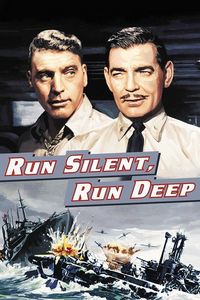
    (On Cable TV, March 2021) There were a lot of submarine movies made during the 1940s and 1950s, and it’s perfectly understandable if they tend to blur together. But that’s not the case with Run Silent Run Deep, a superior example of the form that never forgets that the point of submarine movies is people under pressure. The casting already makes the film distinctive: With none other than Clark Gable and Burt Lancaster in the lead roles, the film already feels more substantial. It gets better as both men play to their strengths, Gable as the revenge-obsessed commander fending off Lancaster as the ambitious second-in-command. Infighting is good for drama until everyone turns their guns (or rather torpedoes) to the true enemy in time for a thrilling third act. Rather good special effects help sell the illusion: the explosions are particularly satisfying. Thanks to director Robert Wise, the immersion of WW2 submarine life is convincing, and the film eventually has a tragic heft that helps further separate it from other similar WW2 dramas. There’s a straight line from Run Silent Run Deep to later examples like Crimson Tide, but the point is that it’s a film that just works — it’s engrossing and it doesn’t let up until the end.

  • Criss Cross (1949)

    Criss Cross (1949)

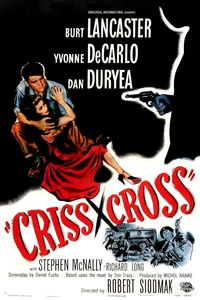
    (On Cable TV, March 2021) Any list of landmark film noirs will probably include Criss Cross, and for good reason: As a slickly made criminal thriller describing a heist job going badly, it features a striking sense of place for late-1940s Los Angeles, some clever moments, decent-enough direction and a fatalistic ending that exemplifies the core strengths of the genre. Burt Lancaster has one of his first major roles as a man drawn into a dangerous affair and an even more dangerous criminal plot, and if you’re paying attention, you’ll see Tony Curtis for a few brief moments as a dancer in his uncredited screen debut. (Curtis and Lancaster would later reunite on a few other films, including Trapeze and the terrific Sweet Smell of Success.)  Still, the main draw here is a script that doesn’t have any time for niceties or sentimentality. The location shooting in Los Angeles is brief but effective, further reinforced by special-effect work that lowers the difference between studio shooting and exteriors (most notably through some really good rear-screen projection). Director Robert Siodmak helped define what we think of as noir, and he’s purposeful with his material all the way to the dispiriting conclusion. The fog-drenched heist sequence is still a wonderful piece of work even today. See Criss Cross as a precursor to films such as Heat, certainly — or just as a great noir.

  • Take a Giant Step (1959)

    Take a Giant Step (1959)

    (On Cable TV, February 2021) It’s fascinating to go back in movie history and discover works that anticipate trends of later decades. While stories of black teenagers coming of age are now commonplace, there were virtually unknown in 1959, at least from mainstream movie studios. That makes Take a Giant Step all the more fascinating, even despite some clumsiness and a performance from young lead actor Johnny Nash that could be best qualified as earnest — it’s interesting by later, more naturalistic standards, but it does feel overly modern in a film that is otherwise pure 1950s filmmaking. There’s a lot to like in the way the film intelligently dissects pervasive racism even in so-called progressive environments, as a young black teenager in a northern US city gradually realizes that his coming-of-age also means being far more vulnerable to discrimination and isolation. Various characters all have a take on what this means, and the young protagonist’s quest lies in trying to fit the pieces together. Ruby Dee turns in a very likable performance as a housekeeper, as does Estelle Hemsley as the elderly voice of reason. Still, it’s the film’s willingness to engage in issues that still continues to impress 60 years later, more than the film’s lower-end production values or the varying acting style clashing in the film. While Burt Lancaster does not appear in the film, he was one of its producers who managed to bring Take a Giant Step from stage to film, and apparently had a hand in selecting Nash for the role — further cementing his reputation as an iconoclast in a leading man’s persona.

  • The Scalphunters (1968)

    The Scalphunters (1968)

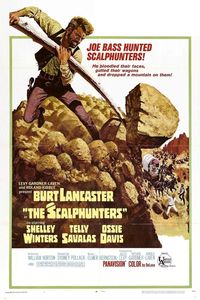
    (On TV, February 2021) The civil rights movement finally makes its way to the western genre in The Scalphunters, a film based on the relationship between a badly-educated white trapper and an escaped black slave as they confront Native Americans and scalp-hunters. Burt Lancaster once again stars in a film that pokes at his own image as a leading man — his character isn’t particularly smart, and he obviously starts out as a complete racist before learning better. Ossie Davis has a more likable role as a well-read runaway slave heading to Mexico but being treated as property by everyone he encounters, white or native. Telly Savalas (the only bald man in 1960s Hollywood!) rounds up the headliners as an antagonist to them both. The Scalphunters isn’t as preachy as many of its contemporaries, with enough humour and action to keep the lulls low. The sunny landscape is more serviceable than spectacular, but those were the 1960s — audiences knew what the west looked like, and focused more on what else the genre could do than show widescreen vistas. The Scalphunters, typically for a film directed by Sydney Pollack, was very much a film of its moments, using the western tropes to work out current events of the time.

  • Trapeze (1956)

    Trapeze (1956)

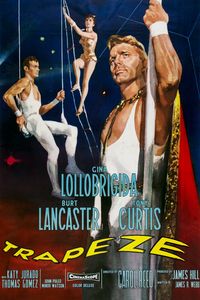
    (On Cable TV, February 2021) There are a few good reasons to have a look at Trapeze, but almost all of them start with the casting: Burt Lancaster as a crippled trapeze artist, Tony Curtis as an up-and-comer seeking guidance, and the deliciously-named Lola Lollobrigida as (obviously) the woman that comes between them. Probably the next-best reason is the trapeze footage, still impressive today due to the impressive physicality of the performers (some of it without stunt doubles), and the apparent danger of some of the acts. Considering that the story is about the pursuit of the elusive and dangerous triple somersault, visual danger appropriately reflects the stakes at play here. Otherwise, much of Trapeze runs along familiar tracks once you exclude the (rather impressive) Parisian circus aspect of the story: a veteran, an up-and-comer and the love triangle that takes place once a woman comes along. Director Carol Reed does his best in the circus ring, with the rest of the film being along more familiar lines. Still, the Lancaster/Curtis pairing is interesting as a preview to their far better-known Sweet Smell of Success, and Lancaster notches another film in a more interesting filmography than you’d expect from a multi-decade leading man.

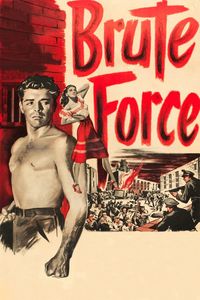
  • Brute Force (1947)

    Brute Force (1947)

    (On Cable TV, January 2021) If you’re looking for a midway point between prison movies of the 1930s and film noir of the 1950s, Brute Force fits the bill. Directed by Joe Dassin (who would become a noir auteur before his Blacklist-forced exile to Europe) and clearly playing rougher than movies from the previous decade, the film continues to codify tropes of the subgenre. Prisoners that aren’t that bad; a sadistic warden who’s worse than the prisoners (to the point of machine-gunning them with relish) and a daring escape plan that, in noir tradition, is doomed to failure. The ending moments of Brute Force are unusually harrowing and nihilistic for a film of that time—everyone is doomed to failure, and even the women outside the prison have their share of responsibility in leading their men to crime. Burt Lancaster shows up as the lead character in one of his first screen appearances, but the standout performer here is no less than Hume Cronyn, whose sadistic and violent prison warden character here completely undoes a screen persona with decades of meek appearances. All in all, Brute Force is a bit of a surprise—as brutal as its title promised, and occasionally a gripping piece of suspense and action.

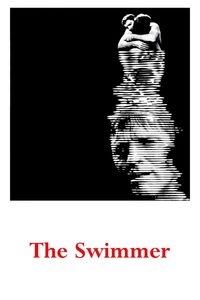
  • The Swimmer (1968)

    The Swimmer (1968)

    (On Cable TV, January 2021) For a superstar actor with great looks and a commanding presence, Burt Lancaster spent a good chunk of his career undermining his own screen persona and kicking around the idea of what a man’s man could be. The Swimmer is a surprisingly twisted film, but it does take a while to realize how much so. It starts with a scene that almost feels normal—a pool party, with a guy (Lancaster) making an unusual promise to his guests to “swim his way home,” going from one pool to another as he walks back to his house in his upscale neighbourhood. The stage is thus set for an episodic film in which every pool becomes a scene, our protagonist meeting acquaintances and strangers along the way. If the impressionistic cinematography between those pool scenes doesn’t clue you that something else is happening, then the various elliptical references to the protagonist’s past accumulate until there’s a definite mystery at the end of the road—what will be at the house once all the pool-hopping is done? It’s not a coincidence if characters keep commenting that the sunshine is going to be replaced by clouds and rain. As the film goes on, we piece enough things together to realize that the protagonist is cheerfully lying to himself and others, and by the time the final sequence hits, well, it’s not as if we’re surprised. (Still, the film could have done with an extra coda or two to explain things, such as how did he end up in the opening scene in the first place?) Directed with some nascent New Hollywood style by Frank Perry then Sydney Pollack, The Swimmer strikes me as the kind of film that could not have been made in Hollywood just a few years earlier—psychologically twisted, surprisingly dark and not entirely realistic despite being grounded in solid landscapes. Keep your eyes open for a first screen role for comedienne Joan Rivers.

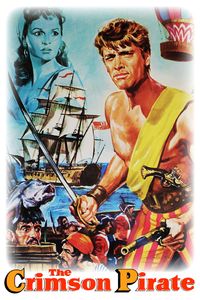
  • The Crimson Pirate (1952)

    The Crimson Pirate (1952)

    (On Cable TV, January 2021) In theory, I’m a good sport for most of the elements that make up The Crimson Pirate: I’m OK with pirate films, partial to tongue-in-cheek adventures, a big fan of swashbucklers, appreciative of Burt Lancaster, and someone who likes 1950s Technicolor Hollywood films quite a bit. Alas, The Crimson Pirate falls flat: It may have been a mood thing, or the circumstances of my viewing, or any other small thing—but I was more bored by the film than entertained by it. I find some explanation in reports that the film was abruptly changed (as in: within a 48-hour rewrite period) from straight-up swashbuckler to something more humorous. I was far more annoyed at the film’s obvious studio sets than for other films. In other words, I’m more willing than usual to blame me than the film for my disappointment—I’ll keep this first review short and try to catch the film again in a few months to see if my reaction is any better.

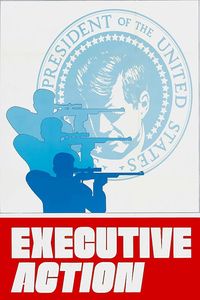
  • Executive Action (1973)

    Executive Action (1973)

    (On Cable TV, November 2020) As far as JFK assassination conspiracy fantasies go, nearly everyone remembers Oliver Stone’s bravura 1991 masterpiece JFK, but 1973’s Executive Action has faded from memory. I’m not necessarily saddened by that—As I’m editing this review in early 2021, the United States is experiencing an alarming tribal epistemology crisis, with truth taking a distant second place to political affiliations. (And lest you think that I’m making a “both sides” argument, let me set you straight: The right wing’s acceptance of nonsensical conspiracy theories has little equivalency on the other side of the aisle.) The result is thousands of excess mortalities in a national pandemic, an attempted political coup (incompetent because fantasy-based, but a coup nonetheless), a disturbing dismissal of norms and significant damage to American institutions. So, you may excuse me if my tolerance is nonexistent for such intentional blurring between fact and fantasy for political gains. At another time, I probably would have enjoyed screenwriter Dalton Trumbo’s skillful blend of fact and fiction, describing a shadowy cabal planning the assassination of JFK and subsequent coverup: the film is a masterclass in dramatization of a wild conspiracy theory, playing on universal fears and prejudice to tell all about men in control rather than a lone nut sending everything in chaos. From the opening narrative scroll to the final error-filled one, Executive Action is about sowing doubt, blocking objections and suspending disbelief. It can rely on strong actors such as Burt Lancaster and Robert Ryan, a sober execution and a surprisingly modern kaleidoscopic approach to its subject. In other words, it’s quite intriguing from a technical perspective and in its execution. But I simply cannot, right now, bring myself to feel any sympathy for its goals. I’ve had it up to there with conspiracy fiction now that I see it blend in the real world with people unable to make the difference between truth and politically motivated manipulation. Maybe I would have been more sympathetic five years ago. Hopefully, I will be able to be in five years.