Burt Lancaster

  • The Rainmaker (1956)

    The Rainmaker (1956)

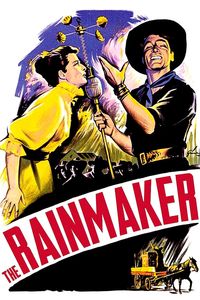
    (On TV, April 2020) There’s some serious star power at the top of the bill for dustbowl romantic comedy The Rainmaker: Katharine Hepburn plays a spinster pining for marriage, and her wishes for a suitable man are answered by none other than Burt Lancaster. He plays his always-travelling conman character (promising rain for a modest price) like a rough draft for the one he’d play three years later in Elmer Gantry. Meanwhile, well, Hepburn is as good as ever, yet about a decade too old to play a coquettish maid, and—being Hepburn—can’t help but being Hepburn even when it doesn’t make sense for the character. (The problems start with casting Hepburn as “plain”—look, Hollywood, even multiple-Oscar-winning Hepburn couldn’t play “plain.”) While the core of The Rainmaker is fine (a woman rediscovering herself thanks to a flamboyant stranger—I’m not saying “manic pixie dream dude” but I’m thinking it), the rest of it loses itself in not-always-interesting tangents and asides. This is probably an artifact of the film’s theatrical origins, just as is the over-the-top acting exhibited in the film. Now, I do like the result—manic Lancaster is the best Lancaster—but the film may be a hard sell for those not used to that kind of performance. Still, The Rainmaker is an interesting film for all sorts of reasons, maybe half of them not necessarily intended by the filmmakers.

    (On TV, September 2021) With the right script, there’s something fascinating in seeing well-known actors facing against each other. Katharine Hepburn and Burt Lancaster were two epochal actors, but The Rainmaker is the only film in which you’ll see them go head-to-head in roles hewing closely to their screen personas. She plays the clever spinster, pining for the right man but not too much. He plays a charismatic conman, with a business model of selling fancy decorations as devices fit to make it rain… and then moseying on to the next town. As the film begins, his hurried escape from a town suddenly opposed to his flim-flammery leads him right to Hepburn’s house. A short antagonistic romance begins, heightened by the difference on both actors’ acting styles. Unsubtly enough, rain ends up being a thematic stand-in for all sorts of things here – but never mind the symbolism, because we’re here for the stars. For Hepburn, the film is solidly in line with her progression from a spinster to a matriarch. For Lancaster, it’s one in a lengthy list of roles for which he used his leading-man good looks as a front for a deceitful character. This is a film where a second viewing can be more interesting than the first: it’s the push-and-pull of the romance that’s more interesting here than its resolution, especially if you think the characters are too mismatched for more than a brief but torrid affair. The Depression-era setting offers an interesting development of the western stories that would have been set in the same geographical area a few decades earlier. Nonetheless, I would recommend The Rainmaker for existing Hepburn/Lancaster fans – you get a lot more out of it as a clash of actors than as a standalone story.
  • Elmer Gantry (1960)

    Elmer Gantry (1960)

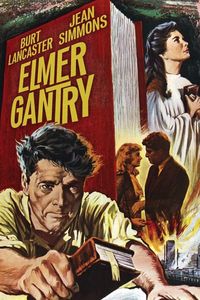
    (Criterion Streaming, March 2020) If you’re the kind of person to seek optimism in the most desperate situations, you can take a look south of the border in these desperate times and remind yourself that America isn’t solely composed of idiots—and more pointedly, there have always been sane voices in the wilderness highlighting the mistakes of the nation (past, ongoing and inevitable). Go back to 1960, for instance, and we already have Elmer Gantry as a mature, full-throated warning about the similarities between conmen and preachers. Burt Lancaster, never afraid to use his good looks in the service of questioning traditional masculinity, plays the titular Elmer, a fast-talking huckster who turns his talents to revivalist religion in order to woo a fetching young woman (Jean Simmons). Loosely adapted by writer-director Richard Brooks from a muckraking novel by Sinclair Lewis (Brooks won an Academy Award for the screenplay), Elmer Gantry isn’t content with merely making a link between confidence games and small-tent religious revivals—it’s a film that digs and digs into the characters, their unsavoury pasts, impure intentions, zealotry and mob vengeance to deliver a sobering statement on being taken by fast words and empty promises. Lancaster is terrific as a salesman turned fire-and-brimstone preacher, easily capturing audiences on both sides of the screen. (He also won an Oscar for it.) Elmer Gantry greatly benefits from his presence, and he helps the film overcome its excessive length. It probably doesn’t help that while Elmer Gantry confronts issues important to circa-1960 America, much of what it has to say is now common wisdom… or is it?

  • Sweet Smell of Success (1957)

    Sweet Smell of Success (1957)

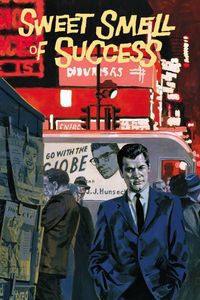
    (On Cable TV, February 2020) It can be a tough sell to make a movie about a pair of irredeemable villains, but Sweet Smell of Success takes up the challenge with vigour and delivers a compelling movie despite being unable to cheer for any of the two main characters. Tony Curtis has a welcome and somewhat atypical role (at the time; many more followed) as a morally bankrupt publicist who schemes to get in the good graces of an influential and just-as-terrible columnist played by Burt Lancaster. The casting here is a triumph—Curtis’s good looks being commented upon as a façade, and Lancaster being the incarnation of an “intellectual bully” towering over his co-star and glaring down on him through distinctive glasses. Both characters are profoundly immoral in their behaviour, and what saves the film from overwhelming darkness is the presence of a heroine to save (Susan Harrison, looking as cute as her character needs to be in order to earn our affections) and some terrific dialogue that still packs a punch even today. (This is where “The cat’s in the bag and the bag’s in the river” comes from!) The dialogue’s strength and the cohesion of the story are borderline miraculous in that Sweet Smell of Success was essentially being written as it was shot—but this is what happens when you have professionals working from a strong plan and keeping the polish to the end. While the film is light on murders, the noir atmosphere of the story is impossible to miss, what with corruption reigning and people making themselves worse in order to please the Great Corruptor. There’s a sombre atmosphere that makes the ending almost a relief. While the film does lose itself in a few tangents along the way, there’s a steady trickle of strong sequences even in the subplots (the attempt to blackmail another newspaper columnist being a highlight), and a sense of style in director Alexander Mackendrick’s approach that gives a modern urban grittiness to the result. It’s often subtle, but it’s there: The way “Now here you are, Harvey, out in the open where any hep person knows that this one… is toting THAT one… around for you” is handled is good stuff. You can quote that film for days, but what carries even longer is Curtis and Lancaster going at each other, with the audience rooting for no one in particular. Sweet Smell of Success often gets a mention as one of the top movies of the 1950s, and it’s not hard to see why.

  • Judgment at Nuremberg (1961)

    Judgment at Nuremberg (1961)

    (YouTube Streaming, December 2019) There is a place and a time for everything, including slow-paced dramas dealing with heady questions of shared responsibilities and war crimes. What I’m getting at is that you should give yourself plenty of time to get into Judgment at Nuremberg—at a staggering three hours and eight minutes of mostly courtroom dialogue, it’s a long sit. But you do get a lot for your time—starting with an all-star cast that starts with Spencer Tracy, Burt Lancaster and Marlene Dietrich, all the way to one of William Shatner’s earliest prominent roles. This film is a debate of ideas, as the American occupation struggles with the prosecution of war crimes at a time when Germany is becoming a crucial Cold War playground, and the US can be accused of having inspired some of the Nazi rhetoric. The battle between lawyers gets to some crucial issues, not the least of which is assigning blame for atrocities. Perhaps the most affecting moment of the film comes from well-known material—starkly-presented footage of concentration camps shortly after liberation, with piles of corpses and bulldozers doing mass burials out of health concerns. (Those images aside, be careful about seeing the film as fact—while it’s adapted from real-life events, nearly all the characters are deliberately fictional and condensed from the proceedings.)  Judgment at Nuremberg doesn’t pull any punches in its topic or depiction—it’s cinema as consciously codifying right and wrong, dismissing feeble objections to the contrary. Despite good-faith efforts to make the film cinematic, there is a lot here that could play as a theatrical piece, including a lengthy summation-as-judgment from Tracy that can be seen as a template for director Stanley Kramer’s climactic sequence in the later Guess Who’s Coming for Dinner. The leisurely pace, repetitive material and fixed location doesn’t work against the film as much as you’d think, though: there’s a moral argument here, and it’s not as much about finding right or wrong as it’s about how to establish right in such overwhelming fashion that there can be no lingering doubt about it. Judgment at Nuremberg does amount to an admirable piece of cinema, as compelling today as it was in 1961. But give yourself plenty of time to immerse yourself in it.

  • Separate Tables (1958)

    Separate Tables (1958)

    (On Cable TV, November 2019) It’s interesting how various genres of film age well (or not) due to different factors. Something often underestimated is thespian intensity, especially in those movies designed to be actor showcases. Separate Tables starts from strong dramatic material, being adapted from a pair of short theatre plays. This is most clearly seen in the strong dramatic unity of the result, taking place over a few days in a secluded hotel where two pairs of guests have largely separate subplots. On one side, a man (a typically intense Burt Lancaster) has to pick between his nice new girlfriend and his shrewish ex-wife (Rita Hayworth, glammed up to the point where she can be mistaken for Grace Kelly). The dialogue pyrotechnics here occasionally suggests Who’s Afraid of Virginia Wolfe?, with a conclusion that may surprise you. On the other main subplot, an officer with a mystery past (David Niven, up to his high standards) beguiles a spinster (Deborah Kerr, strongly de-glammed) trying to get away from the influence of her mother. The addition of a bit of romantic comic relief between two young lovers helps ease into the film before the dramatic intensity starts. Under Delbert Mann’s direction, the film benefits from clean images, unobtrusive direction and full leeway for actors to deliver on the material. The result was nominated for nine Academy Awards (including Best Picture) and won two acting awards. Clearly, this showcase certainly worked, and it helps Separate Tables to be worth a look even today.

  • The Killers (1946)

    The Killers (1946)

    (On Cable TV, October 2019) There’s a lot to love in The Killers for fans of classic noir, whether it’s the unusual structure, archetypical characters, glum script, or good dialogue. Burt Lancaster makes his film debut here, and Ava Gardner ignited her career thanks to her performance. It’s all very twisty with a man consenting to his own murder and the film flashing back to what could possibly explain such an event. The opening moments of the film (directly adapted from a Hemingway story) are immediately absorbing, with manly pursuit such as boxing and robbery being touched upon on the way to the end. In many ways, The Killers is pure noir to a fault—if you’re a fan of the genre as I am, you won’t need anything more to appreciate the film, while those who don’t care for noir (is that possible?) won’t see anything here to make them change their minds.

  • The Gypsy Moths (1969)

    The Gypsy Moths (1969)

    (On Cable TV, September 2019) Looking at director John Frankenheimer’s filmography and The Gypsy Moths’ production year, it’s hard to avoid thinking that it’s his attempt to come to grip with the New Hollywood that was beginning in earnest at the time. It takes a potentially white-knuckle topic (skydiving, at the time something so novel that you could charge admission for such shows) and ends up wrapping it in small-town existentialism, as the quiet lives of the locals are contrasted with the devil-may-care attitude of the nomadic protagonists. It’s not hard to see the clash of culture between the two Hollywoods here, especially when it features a pair of Classic Hollywood icons (Burt Lancaster as an aging daredevil, and Deborah Kerr in one of her last performances) playing off a pair of actors who would later become far better known (Gene Hackman, quite compelling; and Bonnie Bedelia whom most will recognize from performances twenty years later in Die Hard and Presumed Innocent). As an illustration of a pivotal time in American movies, it’s not uninteresting. As a straight-up drama, however, it does have problems: The skydiving sequences are compressed at the end of the film, the climactic sequence arguably comes twenty minutes before the end, the small-town drama takes forever to get to a point and can’t quite manage to become effective. Compared to other films of the period, it fails to engage fully with the social changes that were sweeping America, despite half-hearted nude sequences and adultery. Compared with three of the other four Lancaster/Frankenheimer collaborations, The Gypsy Moths feels limp and meandering for most of its duration, only becoming alive when shooting the skydiving sequences. Said sequences are still interesting, but they’ve been duplicated so often (in everything from Moonraker to both Point Break films) that they’ve lost their impact—not to mention the rise of skydiving as a recreational sport. The film’s most flawed aspect comes at the very end, when what should have been a climactic moment merely leads to an extended epilogue that doesn’t go anywhere that a better ending would have achieved in thirty seconds. Historical accounts of the film suggest that studio meddling may have been responsible for the film’s refusal to fully engage with its uncensored themes (and that’s probably true—not everyone knew what to make of the post-Hays-Code artistic freedom) but there’s a limit to the amount of interference in a project with a lopsided structure. The Gypsy Moths does amount to an interesting curio if you’re going for a complete Frankenheimer filmography (especially since he considered it one of his favourites) or an illustration of late-1960s changes in movie history, but overall, it’s a bit of a disappointment.

  • Birdman of Alcatraz (1962)

    Birdman of Alcatraz (1962)

    (On Cable TV, July 2019) There’s always something off-putting about bio-fiction that ennobles its subject beyond any reasonable bound. Watching Birdman of Alcatraz, for instance, you’d be ready to go to the barricades to understand why an intellect bright enough to write a book about birds and their diseases would remain locked up inside the American penal system with no hope of parole. Why, he seems so good-natured and mild-mannered! But, of course, that’s the magic of movies for you. Dig deeper in the Wikipedia entry for the Birdman of Leavenworth (for he had no birds once transferred to Alcatraz—that’s right, the film’s inaccuracies begin in the title itself!) and you’d find that the real story is quite different. The character in reality was a violent, short-tempered, abusive person, to say nothing of his younger sexual preferences. While the basic facts of the film’s narrative are based on reality, much of the details are wildly off, exaggerated when it suits the narrative (such as having a singular antagonist within the prison walls) and downplayed or elided when they don’t. Every character is prettier, smarter, kinder than reality. But that’s Hollywood for you. With Burt Lancaster in the lead and Lancaster-handpicked director John Frankenheimer at the helm, Birdman of Alcatraz goes for inspiration and amazement—if that character was able to achieve so much when locked up, then what’s stopping most of us? Taken on its own, the film is watchable enough … if it wasn’t for the gnawing suspicion that we’re not getting half the story.

  • The Train (1964)

    The Train (1964)

    (On Cable TV, May 2019) If there’s a subspecies of suspense movies that usually aged well, it’s those thrillers that deal with cold mechanical steel—cars, trucks, trains, planes. One of the best, The Wages of Fear, is dull right up until it onboards the trucks and then suspense feels as immediate as anything else since then. So it is that The Train also deals in rolling stock; plus it has Nazis as antagonists. The premise is different enough to be interesting, but simple enough to put in a few words: As the Allies advance toward Paris, Nazis are stealing artwork and stashing them on trains bound for Berlin. The resistance won’t have any of this—but the problem is that they can’t just blow up or derail the train without harming the artwork itself. In steps our protagonist, played by Burt Lancaster with his usual solidity. He’s a top resistance operative, but he’s not the artistic type: he couldn’t care less about the paintings, but events soon steer him toward pure vengeance. In the hands of veteran director John Frankenheimer, The Train is a steely action/adventure film, not particularly given to humour when there are more serious topics to tackle. The camera fluidly moves through trainyards, immersing us in the environment before blowing them up. There are some amazing shots in the film, including the bombing of an entire trainyard at Vaires. While the film does feel a bit long at times, Lancaster couldn’t be better, and the tension remains high as there’s a limit to the amount of mayhem that the resistance can do to stop but not destroy the artwork. The film’s spectacle arguably peaks before its climax, but the result is nonetheless satisfying.

  • Atlantic City, USA (1981)

    Atlantic City, USA (1981)

    (On Cable TV, April 2019) Cultural decades never end on December 31st of their tenth year—they linger on for a while and in retrospect often begin before they chronologically do. This is even truer for “The Seventies” in cinema, often used interchangeably with “New Hollywood”—a period in which American filmmakers understood that they could say anything without being beholden to the censorship of the Production Code or the aesthetic standards of glamorous Classic Hollywood. There was plenty of innovation during that decade, but also a lot of depressing and ugly films. Atlantic City, USA feels like one of the last echoes of that period, and another one of the reasons why the 1980s placed emphasis back on entertainment and spectacle. In it, director Louis Malle delivers a decidedly unglamorous vision of Atlantic City in the early eighties, focusing on an ensemble of characters eking out a meagre living in the shadow of the casinos. He does work with a great pair of lead actors at very different stages of their careers: Burt Lancaster and Susan Sarandon. Much of the story has to do with small-time scams and criminal enterprises—and not in a flashy film-noir way but as a disreputable grimy drama. Many of the characters are deluded in their own ways, leading to a very depressing result. While there are a few moments of comedy, it’s not fun to watch and not meant to be fun to watch. Given the film’s origins as a Franco-Canadian production, there are a surprising number of Canadian and French references in the story (starting with a lead character coming from Saskatchewan!), as well as Canadian actors in supporting roles. The film certainly has its fans—It figures on a few best-of lists, earned a few Academy Awards nominations, and got added early on to the National Film Registry. Still, Atlantic City, USA is perhaps best seen as one of the last statements made by New Hollywood before it got replaced by a far more commercial crowd-pleasing aesthetic. I’ll let others mourn for it.

  • From Here to Eternity (1953)

    From Here to Eternity (1953)

    (On Cable TV, May 2018) For all of the continued acclaim of From Here to Eternity as a classic piece of Hollywood Cinema, the film itself is often a disappointment. From its descriptions, you could maybe expect a sweeping drama set in pre-Pearl Harbor Hawaii, with high romance being interrupted by the beginning of the war. Alas, that’s just you going from the iconic beach scene and hazy memories of Michael Bay’s Pearl Harbor—the reality of From Here to Eternity has more to do with it being an adaptation of a gritty dramatic novel in which nobody gets a happy ending. On the menu: a sordid affair (one of many) between a traumatized housewife and an indecisive soldier; physical abuse in the military; a character falling for a high-end prostitute (oh, OK, “hostess”); and the Japanese on their way to ruin the melodrama right before the end. Also on the menu; terrifying dumb decisions from the characters to ensure that they will not get what they want (often dying in the process). As a period piece, From Here to Eternity is not that successful—until the Japanese attack, the film feels far too intimate to reflect the reality of living on a military base and the way it spends nearly all of its time in small sets does undercuts its bigger ambitions. The image of the beach romance suggested by the film’s reputation is far worse in context: Not only is the beach frolicking limited to a few seconds, it’s in support of an adulterous relationship that’s not particularly admirable, and it leads straight to a soliloquy of intense personal grief. Frame the picture of Burt Lancaster and Deborah Kerr smooching if you want, but don’t expect the film to heighten the fantasy. This being said, much of this reaction is a reaction to the film’s sterling reputation—taken on its own, From Here to Eternity does remain a good dramatic piece, anchored by able performances by Lancaster, Montgomery Clift and (especially) Frank Sinatra, with Kerr and Donna Reed on the distaff side. Still, reading about the film (and the changes from the original novel) is often more interesting than the film itself. Overinflated expectations or under-delivering period piece—I can’t decide for now (and I suspect that watching three WW2 movies in a row due to Memorial weekend doesn’t help), although I am glad to have seen it to complete that bit of Hollywood History.

  • Seven Days in May (1964)

    Seven Days in May (1964)

    (On Cable TV, May 2018) In between Seven Days in May, Dr. Strangelove and Fail-Safe, 1964 was a big, big year for black-and-white techno-thrillers in Hollywood. Dr. Strangelove distinguished itself through black comedy and Fail-Safe made few compromises in showing a nightmare scenario, leaving Seven Days in May as the more average film, although this is a relative term when discussing a film in which the United States government discovers an impending military coup and tries to defuse it before it’s too late. The black-and-white cinematography highlights the non-nonsense atmosphere that the film is going for, trying to make the unthinkable at least plausible. There is something admirable to the way the film builds not to an explosive guns-and-explosion confrontation, but to a quiet climax in which the would-be traitors are sent scurrying, and the country avoids a dramatic confrontation that would have had terrible consequences. The film works hard at instilling a basic credibility to its plotting, even with some then-near-future technological touches such as video screens. The tension is there, and being able to rely on capable actors such as Kirk Douglas, Fredric March (at the close of a long career), Ava Gardner or Burt Lancaster. Director John Frankenheimer made his reputation on thriller much like Seven Days in May, and is still effective today. Compared to its two other 1964 techno-thrillers, the film has aged very well—it may be hard to imagine nuclear war today, but overthrowing a president is still within the realm of possibility…