Burt Reynolds

  • Gator (1976)

    (On Cable TV, October 2021) If you believe the theory that seeing actors direct a film allows you a deeper glimpse in the things that interest them, then there’s a near-perfect alignment between Burt Reynolds’ screen persona and his directing debut in Gator. Following up shortly after White Lightning with the same roguish character, Gator is an unapologetic southern crime adventure, featuring Reynolds as a moonshiner once more asked to work for the authorities. This time around, he’s asked to go investigate a famously corrupt county, using his personal connection to the local boss to gather information. Of course, it escalates: the local crime lords are worse than expected, the federal agent working with him is assaulted, the female journalist working with him is threatened and before long it’s down to a climax in which hero and villain smash through beach stalls in a rather impressive display of stunt work. (Reynolds being a former stuntman, the film does have a few amazing shots: a boat ripping through swamp houses, or a character jumping through the air as their vehicle flips over.)  The opening moments of the film take us to a very atmospheric swampland, and the overall feeling of being in a southern state permeates the entire film. Compared to more modern films, Gator meters its thrills in small doses—there aren’t as many car chases as you’d expect, or as there were in White Lightning. But it’s still a film built for thrills. Reynolds is reliably charismatic as a star, and not bad as a director—although the script’s uneasy blend of comedy and violence is not really smoothed over by the direction. Still, it is a mostly-lighthearted adventure set against an unusual setting: it’s memorable in itself, and probably best seen alongside its prequel.

  • White Lightning (1973)

    White Lightning (1973)

    (On Cable TV, May 2021) Years before Smokey and the Bandit, Burt Reynolds was already playing the Bandit, or at least a reasonable facsimile thereof. Let’s see: In White Lightning, we find him playing a likable rogue — a moonshiner doing time, and recruited by a federal agency to go undercover so they can expose local law-enforcement officials as corrupt. Forced into driving moonshine and seducing a mobster’s girlfriend, he eventually takes on the local sheriff in a southern backwoods car chase that ends up being the climax of the film. There are differences with The Bandit, and the tone isn’t quite comic as the better-known film, but the basics are there and Reynolds does the rest in trying out the mannerisms fully exploited in the latter movie. Look at the credits and you’ll even see Hal Needham (future director of Smokey and the Bandit) doing stunts. The plot does get goofier as it goes on, which doesn’t set the best first impression but at least makes for a stronger back-half. A touch too long at 101 minutes but infused with a remarkable southern-state atmosphere, White Lightning would have been better if it had been more focused on Reynolds and the action. Exactly like what happened latter with Smokey and the Bandit.

  • I Am Burt Reynolds (2020)

    I Am Burt Reynolds (2020)

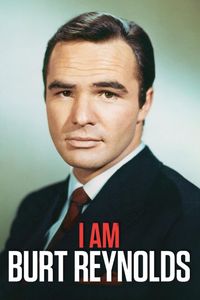
    (On Cable TV, April 2021) In keeping with Network Entertainment’s “I Am” series of documentary biopics, I Am Burt Reynolds ends up selecting a highly charismatic celebrity, although Burt Reynolds is slightly unusual in how he lived a full life and didn’t die prematurely, as most of the series’ subjects have. Still, the attraction here is Reynolds himself. A promising football player as a young man, he redirected his life to acting after a bad injury in the late 1950s and gradually became a superstar by the mid-1970s. This film doesn’t spend a lot of time on Reynold’s lengthy apprenticeship — it almost skips directly from post-college acting to 1972’s Deliverance, underplaying his fairly lengthy phase as a journeyman actor and occasional stuntman. But one thing that the film does capture in spades in Reynold’s extraordinary charisma, especially in talk-show appearances when he could be self-deprecating with the assurance of being an extraordinarily good-looking man. I am Burt Reynolds does feature dozens of snippets of Reynolds talking about himself, and nearly every single one of those is a funny one-liner. It’s not an exaggeration to say that Reynolds went directly from talk shows to stardom — his breakout role in Deliverance came on the heels of a casting based on his talk-show appearances, and so did his then-striking nude photoshoot for Cosmo magazine. The next ten years saw Reynolds at his best and biggest, culminating in the first two Smokey and the Bandits films. If the documentary serves one purpose, it’s to make contemporary audiences understand why Reynolds became such a sex symbol at that time—while contemporary standards have evolved and Reynolds may belong to a somewhat 1970s view of masculinity, you can understand through his appearances and footage why Reynolds was a hit—confident, funny, tough and clever at once. In keeping with other films in the series, this is a fundamentally sympathetic look at the character — his struggles with painkillers, money management and divorce are not underplayed, but there’s also far less darkness to Reynolds (who died at the ripe old age of 82) than with other subjects of the series. The glimpses at his life at the ranch reinforce that this is a documentary made by family and friends, as does the rather large place left for director Adam Rifkin to talk about Reynolds as the star of The Last Movie Star, which consciously aligned its character with the actor. The resulting documentary is a very decent homage to an often-underestimated actor and a grander-than-life personality. The lack of objectivity of the documentary is still in-keeping with the I am series, but there simply isn’t as much here to criticize in Reynolds himself.

  • Hooper (1978)

    Hooper (1978)

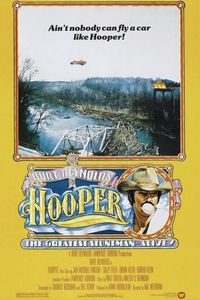
    (On Cable TV, January 2020) I repeat myself, but I’ll say it again: I’m astonished that there aren’t more movies about stuntmen. It’s a naturally dramatic premise, it’s Hollywood-related, it’s meta and it’s spectacular. What else do you need? At least there was a brief spate of such films back in the late 1970s, with Hooper being the best of them. It’s really not an accident if the film came from a collaboration between Burt Reynolds and director Hal Needham—both actors/former stuntmen who had a streak of successful collaboration on stunt-heavy comedies from Smokey and the Bandit to Stroker Ace, through one of my favourites The Cannonball Run. Hooper was the second of their big collaboration, and it’s as definitive a statement on the life and thrills of professional stunts as you can still imagine. The film goes into the nitty-gritty of the profession and the tolls it takes, the kind of personality it attracts, and the relationships between stuntmen and other people around them. The biggest surprise here is that the film is as much of a character study as it’s a showcase for big stunts, with a finale that collapses chimney stacks, blows up tanker trucks and has the protagonist jump over a damaged bridge. Reynolds is ridiculously charismatic here, and there’s a sense that he’s spending accumulated starpower to work with Needham in delivering an homage to their former profession. (It was several years in the making.) Then-veteran Needham seems to be having fun as well in staging action setpieces, poking fun at the Hollywood machine and letting Reynolds play in his element. The stunts, as befit such a film, are exceptionally impressive, especially in a post-CGI world—for a film dealing with danger, it’s appropriate to fear (even a little bit) for the characters and the stuntmen stepping in for the characters. And that, unfortunately, may clue us in as to why the late 1970s were the golden age for stunt movies—as special effects grew during the Modern Hollywood era, so did the artifice—while stuntpeople are still risking their lives for movies today (and still too often dying for it), no one will ever greenlight a project perceived as dangerous and even if they did, there would be so much CGI as to contradict the theme of a stunt film. Audiences simply wouldn’t believe it unless extraordinary care would be taken in selling the illusion. The other thing is simpler: Hooper does such a terrific job at exploring the world of stunts that it may never be equalled. Maybe it’s better not to attempt it.

  • Everything You Always Wanted to Know About Sex * But Were Afraid to Ask (1972)

    Everything You Always Wanted to Know About Sex * But Were Afraid to Ask (1972)

    (On DVD, September 2019) Time advances and leaves some things behind—watching writer-director Woody Allen’s Everything You Always Wanted to Know About Sex * But Were Afraid to Ask feels like a relic of an earlier era. Very loosely adapted from a then-bestselling sex advice book (the only material kept being the questions, answered by comic sketches penned by Allen), it’s an anthology film with the typical strengths and weaknesses of the form. Much of the subject matter has gone from shocking to boring in half a century flat, leaving only such things as humour and acting to keep the thing afloat. Fans of Allen’s nebbish persona will get a few treats along the way—the opening segment has him anachronistically riffing as a court jester with designs on the queen, while a later quite amusing segment has him face off against a mad sex research scientist and then a gigantic disembodied breast. Easily at its best when it’s at its most absurd, Everything You Always Wanted to Know About Sex * But Were Afraid to Ask hits a comic highlight in a sequence describing the inner workings of a male body during a one-night stand (featuring Burt Reynolds in what’s possibly his weirdest cameo), or when it lets Gene Wilder work through a bestiality premise to its dumbest conclusion. Much of the rest of the film, alas, is just dull. A sketch about a TV show based on fetishism must have felt old even back in 1972, while another about exhibitionism feels like a single joke extended over several long minutes. There’s a cross-dressing sequence that fails to get a single smile—the conflation between cross-dressing and homosexuality has aged poorly. Despite those misfires, this is one of Allen’s “earlier, funnier movies,” and it does give a glimpse at Allen’s glib genius, his madcap imagination (long since abandoned) and his most likable screen persona. This being said, Everything You Always Wanted to Know About Sex * But Were Afraid to Ask does remain more vulnerable than most of Allen’s early films to our changing perception of Allen as a highly problematic figure when it comes to sexual relationships—even if the age difference between him and his other co-stars such as Lynn Redgrave here is a “mere” eight years or so. Some things do age poorly … like Allen himself.

  • The Longest Yard (1974)

    The Longest Yard (1974)

    (On Cable TV, March 2019) Coming to the original The Longest Yard after seeing the Adam Sandler remake only underscores how the original was rougher and tougher. Stemming from the dark and gritty New Hollywood 1970s when even the heroes were criminals, the story multiplies premises by sticking an underdog football comedy inside a prison, with Burt Reynolds leading a team of inmates for a not-at-all-rigged game against the prison guards. I don’t care for either prison or football, but even I have to admit that there’s something intriguing in how the codes of two familiar subgenres are combined, then refocused as a star vehicle for Reynolds. The outlaw blue-collar comedy aesthetics of the 1970s make for a distinctive atmosphere, and do heighten the stakes in a way that the newer sanitized remake couldn’t manage. Reynolds himself is quite good: the film makes good use of his charisma, even when he shaves off his moustache for the role. Ironically, The Longest Yard stumbles in its last inning, as the climactic football game drags on interminably. But then again—I understand far less about football than I do about prison, and the film’s last-act indulgence in pure sports mechanics feels more like a sop to football fans than anything else. While both the 1974 and the 2005 versions share a surprising number of plot points, there’s no denying that the original is grittier, harsher and far more politically interesting as a stick-it-to-the-man transposition of social power dynamics onto the football field.

  • Smokey and the Bandit II (1980)

    Smokey and the Bandit II (1980)

    (Second viewing, On DVD, September 2017) While Smokey and the Bandit II is a noticeable step down from the first film, I find it fascinating to see that I remembered more of it from boyhood memories than the first film (specifically the end stunt sequences). As a grown-up, there’s almost no limit to the ways this sequel is worse than the original: The set-up makes no sense, the film sabotages itself in ensuring that it revisits the same dynamics from the first film, the irritation caused by Jackie Gleason’s character is magnified (and multiplied by the indulgent use of Dom Deluise) and the whole elephant plot device slows down what should have been a pedal-to-the-metal action comedy. The one thing that the sequel does better than the first is the final demolition derby: While none of the stunts make sense from a story perspective, it’s a special kind of fun to see director/stuntman Hal Needham go crazy with a hundred police cars ready to be scrapped and just film whatever metal-tearing silliness his team can conjure. Otherwise, it’s another excuse to see Burt Reynolds effortlessly charm audiences (although he first has to dig himself out of a contrived pit of overacted despair) and while his banter with Sally Field isn’t as strong this time around, there’s still a little bit of what was so special in the first movie. Otherwise, most reviewers since the film’s release have gotten it right: this is a pure cash grab of a sequel, unnecessary and not particularly well executed. If you’re out of time, just skip to the last twenty minutes or so to see the stunts.

  • Smokey and the Bandit (1977)

    Smokey and the Bandit (1977)

    (Second Viewing, On DVD, September 2017) I distinctly remember seeing Smokey and the Bandit when I was a boy, but other than a few curious moments of recognition or anticipation on this second viewing, I had forgotten nearly every detail of the film. Much of it isn’t too complicated, dealing with a cross-state beer run enlivened by a vengeful sheriff tracking down the woman who left his son at the altar. The transport truck moving the beer west isn’t nearly as interesting as the black Trans-Am (driven by Burt Reynolds, no less) running interference by attracting as much attraction as speedily as possible. Elements of the premise, these days, can benefit from historical annotations: That Coors wasn’t sold east of Oklahoma; that it spoiled within days due to lack of preservatives; and the various intricacies of police jurisdiction. But little of the technicalities matter when the point of Smokey and the Bandit is to stage stunt sequences, riff of Reynolds’s charm (less potent today—see the need for annotations—but still effective), feature Sally Field in a rather comic role and generally have fun sticking it to The Man. It’s really not subtle—Jerry Reed’s insanely catchy song “East bound and down” essentially acts as a Greek Chorus explaining the main points of the movie. Otherwise, Jackie Gleason’s antagonist is a pure caricature that starts grating early and never becomes more sympathetic. There’s some sweet comedy in the way the “legend” of the Bandit seems universal in the film’s universe, reaching minor characters via CB radio (a technology essential to the film’s atmosphere) and making them react in extraordinary ways to facilitate their progress. The stunts are fine as could be expected from stuntman-turned-director Hal Needham, the banter between Reynolds and Field is occasionally great, but it’s Smokey and the Bandit’s general atmosphere that remains compelling today, even if often on an anthropological level. 

  • The Cannonball Run (1981)

    The Cannonball Run (1981)

    (Second viewing, On DVD, September 2017) It’s funny what we remember from our childhood. Watching The Cannonball Run, which I last saw as a young boy in the early eighties, I had regular flashes of recognition or anticipation as I suspected what was about to happen. Of course, I’m not an eight-year-old boy any more, and my current liking of the film’s stunts and cultural references is somewhat tempered by its juvenile tone and wildly uneven script. Legendary action director Hal Needham knew how to direct stunts (there’s a pointed reference to his Smokey and the Bandit that reminds me that I should re-watch that one soon), and so the best moments of the film are the chases, fights and other action hijinks. A young-looking Jackie Chan brings a bit of his patented style to a desert brawl, and the film also features such legends as Burt Reynolds, Dean Martin, Sammy Davis Jr., Roger Moore (hilariously riffing on his James Bond turn), Peter Fonda, Farrah Fawcett and Adrienne Barbeau (I did remember their outfits) in various roles. I can still recognize some of those references by dint of having been born in the 1970s, but I wonder what younger viewers will make of them. Some of the comedy still works—I’m specifically thinking about the monologue explaining the rules of the transcontinental Cannonball Run, delivered with practised confidence by Brock Yates, the creator of the real-life Cannonball Run. Alas, this action/comedy charge is seriously hampered by the puerile humour (much of it sexist or racist) and uneven scripting. I strongly disliked Dom Deluise’s character(s), for instance, and gritted my teeth at the stereotypes passing off as jokes: seeing notorious Hong Kong native Jackie Chan cast as a Japanese makes no sense, and let’s really not talk about the middle-eastern Sheikh character. That’s not even getting close to the heavily sexist tone of the film—this is a film by boys for boys, and while I’d argue that there’s a place for cleavage-revealing spandex outfits in racing movies, much of the rest of the film (which plays off drug-facilitated kidnapping for laughs and sexiness, among many other things) is more off-putting than anything else. Add to that some primitive anti-government sentiments (as party-poopers) and you get the picture. For all that I like about the stunts in the film, The Cannonball Run is one of those intriguing but flawed movies that should be prime candidates for a polished remake. I promise I won’t complain too much as long as the worst issues with the original are corrected.

  • Striptease (1996)

    Striptease (1996)

    (On DVD, June 2009): Carl Hiaasen’s particular brand of comic crime fiction can be tricky to swallow even on the page, so it’s not much of a shock to find out that this straight-up adaptation somehow fails to click. His usual strategy of surrounding a competent character with a bunch of idiots may be successful in a novel, but here it creates a comedy vacuum around lead Demi Moore, which becomes a problem since most scenes revolve around her. Hiaasen’s all-knowing narration can’t be used, and the uneasy mixture of comedy and violence becomes even more uneasy on-screen (even after toning down the book’s gratuitously blood-thirsty ending) Worse yet are the problems that the film creates for itself: While a film about strip-teasing is expected to show some flesh, the entire club sequences lose their charms quickly, especially when they still grind the film to a halt about three different times: it doesn’t help that Hiaasen’s twisty plot is snipped to a only a few thin threads that don’t create much suspense. Still, the film isn’t the disaster one could expect: Ving Rhames is hilarious in one of his first big-screen roles, whereas Burt Reynolds hits a late-career peak as a particularly perverted politician. The Miami locations are often well-used, and the whole thing is over before anyone has time to be really displeased.