Busby Berkeley

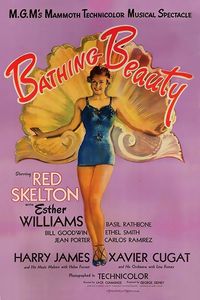
  • Bathing Beauty (1944)

    Bathing Beauty (1944)

    (On Cable TV, May 2021) There’s probably one heck of a box-set (or, these days, “digital collection”) in some distant future in which Red Skelton’s early-1940s films are brought together to give a better appreciation of the incredible run he had as a comic performer at the time. No, his broad ingratiating style isn’t to everyone’s liking. No, the films are not usually high art. But he usually gave it everything he had and he was blessed with some of the era’s most amazing actresses as co-leads, whether it’s Eleanor Powell, Ann Sothern, Lucille Ball, Virginia O’Brien or, in the case of Bathing Beauty, aquatic athlete Esther Williams. The story is contrived to the point of bewilderment (what with a newly married couple not consummating the marriage, and the husband chasing her back to the college she works at) but that’s part of the point, as Skelton plays a virtual stranger chasing a woman while claiming, “but I’m her husband!”  There’s quite a bit of idiot plotting required in making it work, but Skelton’s comedic style is one that easily accommodates such shenanigans as indulged by director George Sidney. As usual for a Williams film, there are a number of musical interludes and aquatic sequences that have cemented her enduring image. (The final sequence, choreographer by Busby Berkeley, is a favourite for re-creations and homages, especially in Berkeley retrospectives.)  There’s a silliness to the college comedy that feels timeless, some snappy tunes and an overall amiability that makes Bathing Beauty hard to dislike. It’s also, crucially, a good showcase for Skelton’s talents, and a reminder of why he was a box-office draw at that time.
  • Strike up the Band (1940)

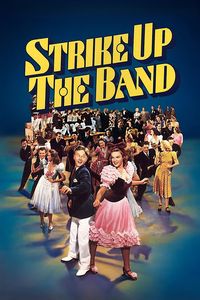
    Strike up the Band (1940)

    (On Cable TV, April 2021) Fifth in a series of ten movies that paired Judy Garland with Mickey Rooney, Strike Up the Band uses the couple’s most frequent formula: a series of contrivances leading them to put on a show in order to save something or someone or other. Clearly patterned on Babes in Arms (same stars, same premise) but with a slightly bigger panache to wow the audiences, the film is clearly meant to be familiar to the audiences at the time. Early-1940s Garland and Rooney had plenty of youthful sparkle and the camaraderie that came from working together so often. The plot itself is bland, but some of the numbers are still well worth seeing: with Busby Berkeley at the helm, it’s no surprise if the lavish, complicated dance number “Do the La Conga” is the film’s highlight, with plenty of dancers moving to a catchy rhythm. (There’s also a fun number with instrument-playing fruits — and it’s announced by the opening credits.)  It’s an early production of the Arthur Freed unit that would go on to make many of MGM’s most celebrated musicals, so there’s clearly the spark (if not quite the polish) of later well-known productions. For film buffs, Strike Up the Band is a bridge between Garland/Rooney’s “Andy Hardy” teen movies and the musical super-productions she would later star in. It’s amiable enough to be worth a watch — and some of the numbers are memorable.

  • Small Town Girl (1953)

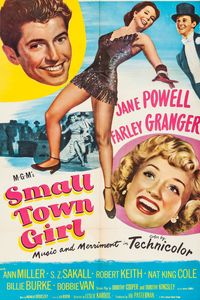
    Small Town Girl (1953)

    (On Cable TV, January 2021) The best movie musicals of the 1950s manage to combine an interesting premise with great individual set-pieces, and while Small Town Girl isn’t much more than a second-tier MGM musical, you can clearly see how one feeds into the other to create something remarkably entertaining. Of course, I’m twice-biased in saying so: Ann Miller is one of my favourite stars of that period, and the film provides her with both a meaty role as a romantic antagonist and a pair of good dance numbers. Furthermore, I’ve been curious about the “Take Me to Broadway” hopping dance that opens That’s Entertainment II for a while, and this is the film it comes from. The premise is not that bad, especially when measured against so many of the Broadway musicals of the time: Here, a rich young man eloping with his fiancée (Miller) is caught speeding through a small town, and the local judge orders him to remain detained in the town jail for thirty days. Attempts to lighten the sentence are (relatively) successful, and so from his vantage point on the main square, he becomes part of the town’s day-to-day life to the point of falling for the judge’s daughter and having serious second thoughts about his fiancée. (Which is just as well, since she’s a shallow fortune chaser who starts making plans with another man while he’s inside. Just so there’s not discomfort with the plot.)  There are other attractions as well — Bobby Van is magnificent in the exhausting “Street Dance” in which he hops around town, S. Z. Sakall turns in a great supporting role, and an uncredited Busby Berkeley provides choreography. Small Town Girl is not meant to be particularly deep or spectacular—this was clearly a B-grade effort for MGM—but it works more often than not, and offers further proof that in its heyday, the movie musical could be perfectly entertaining even when it wasn’t at its best.

  • Footlight Parade (1933)

    Footlight Parade (1933)

    (On Cable TV, January 2021) Hailing from the first half-decade of Hollywood movie musicals, Footlight Parade pales in comparison to later films in the same vein, but still packs a few moments of fun. Featuring none other than James Cagney as a producer of live shows trying to compete with those newfangled movie musicals, it’s an opportunity to see Cagney in a rare non-gangster film during that decade. (He started as a musical star but accidentally became better known for gangster roles.)  The story is a somewhat standard comic backstage musical, and in keeping with later films from codirector Busby Berkeley, keeps most of its musical highlights for the last act. The story has to do with a producer putting together three big numbers for a single night, and the steps taken to find stars and ultimately protect the secrecy of the numbers by locking up the entire crew for three days. While Footlight Parade is primarily directed by Lloyd Bacon, the imprint of Berkeley on the musical number is unmistakable, especially during the “By a Waterfall” number featuring three hundred dancers executing kaleidoscopic figures in a swimming pool. It’s impressive but reminiscent of other numbers—I had far more fun during the comedic (and hummable) “Honeymoon Hotel” number clearly showing the Pre-Code nature of the film. Other artefacts of the film’s production year include a surprising number of bare legs, some barely avoided profanity and passing acknowledgement of prostitution, especially in the “Shanghai Lily” number. Ruby Keeler looks wonderful in early scenes with glasses, while Dick Powell has an early role here as a romantic lead. Still, it’s Cagney borderline manic dialogue, especially in the first half, that holds most interest in terms of acting: much of the film’s later half simply rolls off the musical numbers after the buildup. Footlight Parade doesn’t look as impressive when compared to its contemporaries (even 42nd Street seems more satisfying) or later, savvier takes on movie musicals. But it still has its own kick, and that’s more than enough to warrant a watch by movie musical fans.

  • Billy Rose’s Jumbo (1962)

    Billy Rose’s Jumbo (1962)

    (On Cable TV, November 2020) Musicals had practically gone out of vogue by the early 1960s and genre epicentre MGM was clearly looking to recapture some of their past glory with Billy Rose’s Jumbo, a wide-scale musical set in the colourful world of the circus. Film scholars tell us that the project was in development for decades, starting in the 1930s, before the studio greenlit the film. The result is clearly meant to be expansive—with its succession of numbers taking advantage of circus iconography (Busby Berkeley was involved, in what I believe was his last film project), it’s meant to be a throwback to the glory days of MGM musicals. The result is not bad—especially for the 1960s, where the quality of musicals generally took a nosedive—but it does take a while to build up some interest. Doris Day stars as the daughter of the circus owner, with none other than Jimmy Durante playing her father. (There’s even a recreation of his classic “What elephant?’ gag.)  Both have impressive solo circus numbers, but I’m not smart enough to guess what part of their performances was theirs and what (if anything) was done by a double. Billy Rose’s Jumbo is watchable enough from a twenty-first century perspective, but if anyone tried to guess its production year, they’d probably peg it as a mid-1950s film—which explains why it wasn’t a box-office success and why it did not reignite the MGM musical era. That’s too bad for the filmmakers and studio, but, on the other hand, it has produced a musical for the ages, a bright colourful take on the circus world that you can very well pair with the more serious The Greatest Show on Earth for a double-shot of 1950s circuses.

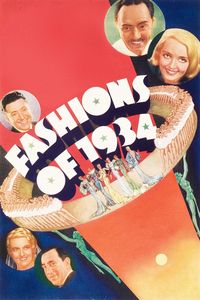
  • Fashions of 1934 (1934)

    Fashions of 1934 (1934)

    (On Cable TV, November 2020) This may sound a bit sad to those who don’t like movies (although what’s the point in caring what these people say?) but one of the greatest things about having an encyclopedic knowledge of film and favourite actors is that you can sit down to watch a film without any idea of who’s in it, and be pleasantly surprised at who appears on screen, almost as if they were friends or something. (Look up Dunbar’s number and wonder at how many of those 150 spots are taken up by actors’ personas.) So it is that I sat down to watch Fashions of 1934 without any expectations other than this was going to be one of those solid 1930s musicals. But then William Powell and Bette Davis both walk on-screen, and you know you’re going to have a better time than expected. Now, let’s not go overboard: Fashions of 1934 is, at best, a representative film of its genre and era. It’s decently funny at times, does showcase contemporary fashions, moves briskly at 78 minutes and throws in a few kaleidoscopic dance numbers from Busby Berkeley. The musical numbers are spectacular (with a special mention to the bit in which dancers with feather fans transform themselves into a gigantic flower and then seamlessly changing into a maiden emerging from a foamy sea), the dialogue can be quite amusing and Powell is up to his usual standards. The Pre-Code nature of the film is best seen in the saucy jokes and the scantily clad dancers (oh, and mention of pornographic pictures for sale on the streets of Paris)—those would disappear months later with the imposition of the Hays Code. When you throw in all of those elements, the one thing that strikes out is Davis herself—Fashions of 1934 was so early in her career that it features a misguided attempt to make her a blonde-haired sexpot: her vivaciousness shines through what little dialogue she has, but even the film seems to forget about her for minutes at a time. The script is a bit scattershot, and it’s clear that it’s far too focused on its musical numbers—especially in its last third—to allow Powell or Davis to develop their screen persona. Still, it’s an enjoyable watch: not an essential example of its era, but a look at what Warnes Studios could do in the musical genre as a matter of everyday business. Powell and Davis are just icing on the cake even if they’re not used to their fullest extent.

  • Gold Diggers of 1935 (1935)

    Gold Diggers of 1935 (1935)

    (On Cable TV, September 2020) Despite clearly tying itself to Gold Diggers of 1933, the follow-up Gold Diggers of 1935 is a different beast in many ways. The plot is completely different, as could be expected—while a theme of good-natured “gold-diggers” (though they’re rather prefer being called “wealth seekers” or simply “aiming to marry high”) is carried through, the plot itself is different and doesn’t carry any of the characters. More importantly, this film came in right after the imposition of the prurient Hays Code dictating the material that could or could not be shown, and as a result the film feels considerably tamer than its prequel. Which doesn’t entirely invalidate it, of course: Once again, the light comedy material holds the picture long enough until the distinctive Busby Berkeley musical numbers have a chance to wow audiences. While “I’m Going Shopping with You” makes for an early funny song, the film moves in higher gear with “The Words Are in My Heart,” a number that echoes the neon violins of the previous film by undulating movie grand pianos as far as the eye can see. Still, the masterpiece of Gold Diggers of 1935 has to be “Lullaby of Broadway,” which is a self-contained number describing a day in the life of Broadway, with numerous tight stylized shots of people waking up, going to work and going to the shows afterward. It’s quite a good capper to a relatively average film, although those who are interested in 1930s movie musicals will eventually see this one even if for no other reason than to see Berkeley at work. Having such names as Dick Powell, Adolphe Menjou or Gloria Stuart doesn’t hurt, though. There would be two other instalments in the Gold Digger series, but Gold Diggers of 1935, along with the 1933 original, remains the best known of them.

  • Gold Diggers of 1933 (1933)

    Gold Diggers of 1933 (1933)

    (On Cable TV, September 2020) In some ways, Gold Diggers of 1933 is very similar to the other top musicals of the period: It was a time, only a few years out of the silent film era, when you could still feel the giddiness of film producers in wowing audiences with dazzle-dazzle singing and dancing. The story takes place on/near Broadway, as many musicals of the time did, in order to provide audiences a familiar frame of reference as to how the music was integrated in the film. Recognizable names such as Ruby Keeler, Ginger Rogers and Dick Powell are in the cast, as the story focuses on four women trying to marry rich and make it big. Perhaps more interestingly to modern audiences, it’s a pre-Code film, meaning that it features scantily-clad women and a playful attitude toward risqué subject matter that wouldn’t fly even two years later. (Indeed, its direct sequel Gold Diggers of 1935 would be far tamer in that regard, the Hays Code having taken over Hollywood by then.) While Mervyn LeRoy directs the comedy material of this musical comedy, the dance numbers are directed by Busby Berkeley, whose touches become more and more apparent as the film goes on. “We’re in the Money” kicks things off with a memorable tune sung by Rogers, “Pettin’ in the Park” is pure pre-Code hilarity, but the film really reaches its apex during “The Shadow Waltz,” especially during a moment where the dancers carry neon-lit violins and the overhead camera shot practically turns to animation. “Remember My Forgotten Man” concludes things with fewer pyrotechnics, but more striking result. Worth noting is how, in a decade known for escapism, the Great Depression is an integral part of the plot (and the songs, given that “We’re in the Money” imagines an end to the Depression), giving us a tiny glimpse at life outside Hollywood fantasies. Being like the other musicals of the time isn’t a bad thing when most of them still hold up nicely today, and Gold Diggers of 1933 does have a few added qualities.

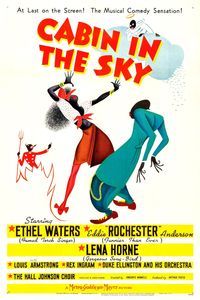
  • Cabin in the Sky (1943)

    Cabin in the Sky (1943)

    (On Cable TV, July 2020) What’s historically important about Cabin in the Sky is that it was one of the very few black-dominated musicals at a time when major film studios were reluctant to even put black performers on-screen at all. The story is a religious-themed (but funny) parable about God and the devil battling it out over a man’s soul, but the film exists for the decent musical numbers, showing a very different rhythm than other musical comedies of the time. Clearly, the reason to see the film is for Lena Horne as a sexy seductress… whew! This being said, she’s not the star here: Ethel Waters has more to do (musical wise) and deserves the spotlight. Elsewhere in the cast, Louis Armstrong shows up playing the trumpet. Cabin in the Sky is billed as Vincente Minelli’s first solo directorial effort even if some of the musical numbers are directed by Busby Berkeley. The worth of the performances that the film captures easily outweighs the sometimes-racist plot elements (and the other assorted stereotypes, such as facing off the mammy against the town harlot). It’s easy to make comparisons between this and Stormy Weather, as both were rare examples of black-cast MGM musicals in successive years—Cabin in the Sky is stronger on plot, but weaker in just about everything else, most crucially dancing and music. Still, both make a compelling case for a parallel universe in which black cinema from studios would be kick-started decades before the blaxploitation era—and it’s hard not to notice how these musicals play on an entirely different and more uplifting register.

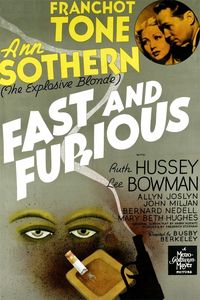
  • Fast and Furious (1939)

    Fast and Furious (1939)

    (On Cable TV, July 2020) I was slightly mistaken in recording this Fast and Furious—I thought I was recording the 1954 Corman film—but it turns out to be a nice little surprise: a husband-and-wife amateur sleuth story very much in the vein of The Thin Man. It turns out to be the last in an MGM trilogy explicitly modelled on the more successful Powell/Loy series, except half-heartedly executed with different lead actors every time. In this instalment, Franchot Tone and Ann Sothern play the bickering couple to good effect, even though you’ll still miss William Powell in the lead. Fast and Furious is notable for having been directed by Busby Berkeley, but it does not have any of the musical numbers for which he’s best known. The resulting murder mystery is a bunch of hooey (even the characters pretty much run the gamut of suspects to exhaustion), the relationship between the characters is merely fine… and yet, it’s fun and short at merely 73 minutes. There are some good comedy moments involving summer in the city, lions in a hotel, an ex-asylum attendant, and a querulous user of in-room services. Plus, the setting being a fantasy upper-class version of the 1930s doesn’t hurt. While the 1930s had several much better films in the same amateur-sleuth genre, Fast and Furious is very satisfying even as a second-tier example of the form.

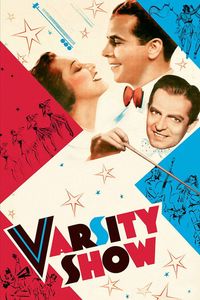
  • Varsity Show (1937)

    Varsity Show (1937)

    (On Cable TV, May 2020) When measured against other musicals of the late 1930s, Varsity Show definitely comes across as a second-tier film. It doesn’t have snappy songs, barely ekes out a rousing finale thanks to Busby Berkeley, breaks no ground in matters of originality, and while it sports a fine Dick Powell, the rest of the cast isn’t particularly remarkable. (Well, except for Mabel Todd, very cute as a bespectacled blonde “class pest.”) On the other hand, Varsity Show does keep viewers’ attention and has a lot to offer if you’re willing to engage with it. Part of its fun is how it combines the archetypical “let’s put on a show” structure of a movie musical with the college campus culture of the 1930s—meaning that if you ever wondered what it would feel like to walk down a campus a few decades ago, then Varsity Show has a Hollywoodized answer for you. William Keighley’s direction is surprisingly interesting in the first few minutes, despite substandard actors—there are some Altmanesque ensemble cast-juggling and quick cuts to briskly introduce characters within the film’s 80 minutes. The first half of the film has strong comic moments, as students looking to put on a show hired an alumnus now on Broadway—while unaware that his last three shows have been a failure and he needs out of Manhattan fast. For twenty-first century viewers, there’s something utterly fascinating in seeing students from the 1930 complain about the stodginess of an authority proposing ideas that were in vogue back in the… 1910s.  The second half of Varsity Show cranks up the musical numbers as the troupe goes to New York City and the show does go on. It concludes with one of Busby’s signature epic numbers, where human figures are a mere component of something much bigger. Some of the film’s sauciest moments bring to mind pre-code film—I could have sworn at times that this was an early-1930s film. For all of those reasons—Varsity Show is not a great musical, but it’s a fun one as long as you’re indulgent.

  • Take Me Out to the Ball Game (1949)

    Take Me Out to the Ball Game (1949)

    (On Cable TV, March 2020) Part of the fun of watching Hollywood history is seeing talented performers getting paired up even when the match isn’t quite harmonious. Frank Sinatra—brilliant singer. Gene Kelly—terrific dancer. Both of them together? Well, you have to see Take Me Out to the Ball Game how they play together… and having Esther Williams as the female lead doesn’t hurt either. A prestige song-and-dance show from MGM (in Technicolour!), it blends its leads’ skills with America’s sport and the usual trappings of musical comedies. The highlight is the theme song, but there are a few good moments elsewhere too: Esther Williams inevitably dips into a pool at some point, and while director Busby Berkeley’s imprint on the film is faint (he only shot a small portion of it, and the rest was reportedly completed by Kelly and Stanley Donen), there are still traces of it in the finished product. On the other hand, there’s some weird stuff as well: the references to suicide and pedophilia in the middle of an upbeat wolf-whistling song are a bit off-putting to say the least. Also not quite as controlled for twenty-first century viewers: double standards in how a determined woman is portrayed compared to the equally persistent male characters. Ah well—this is from the late 1940s, after all. Still, a muddled average and no high peaks means that Take Me Out to the Ball Game suffers in comparison to other Sinatra/Kelly vehicles like On the Town and Anchors Aweigh. They can’t all be perfect. In this case, it still means we get Sinatra singing and Kelly dancing.