
Candice Bergen

  • Book Club (2018)

    Book Club (2018)

    (On TV, December 2020) Cinema should be for everyone, and that includes demographic groups far, far away from mine. Thus enters Book Club, a romantic comedy featuring and aimed at women of retirement age. As four decades-long friends have their mutual social life revolve around a book club, their newest pick is Fifty Shades of Grey, and things pick up from there—from rekindling loveless marriages to golden age online dating to reuniting with an old flame, Book Club keeps things at a naughty titter (which isn’t much, but it’s the thought that counts). Perhaps the film’s most valuable contribution is allowing a cast made of Diane Keaton, Jane Fonda, Candice Bergen and Mary Steenburgen (superb, no matter the age) to play against each other, and provide some representation for a demographic often neglected in mainstream cinema. (Let’s also admire the intricate joke of having Don Johnson play in a film where Fifty Shades of Gray is explicitly mentioned.) The material doesn’t rise much above mediocrity and the humour barely pokes at the PG-13 level, but Book Club is still somewhat endearing – this is a fun group of actresses, and they are apparently having fun here.

  • Let Them All Talk (2020)

    Let Them All Talk (2020)

    (On Cable TV, December 2020) How did Let Them All Talk go so wrong? It has a genius-level director, an impeccable cast (even just with Meryl Streep, Candice Bergen and Dianne Wiest), the backdrop of an ocean liner, a writer-as-protagonist, the always-cute Gemma Chan, and yet it all falls flat. One of my favourite settings in fiction is the ocean liner – a vast but enclosed space in which dramas can play out on a very romantic stage. But director Steven Soderbergh somehow manages to make it all look and feel so banal. The dialogue is trite and uninteresting, the characters are bland and over-privileged (Oh, no, you based your book on my life and my life is now ruined – get a grip over yourself) and the directing is both flat and unremarkable. Really, it’s as if Soderbergh went on an all-destroying mission to leech away all energy from what he had at his disposal. Part of it can be explained by the film’s production, heavy on naturalistic light and staging, as well (more crucially) on rambling improvised dialogue. But that’s the price to pay for Soderbergh’s unquenchable thirst for experimentation: Sometimes, you get a masterpiece, and other times, you get the antithesis of that. At least there’s Chan to make it slightly better.

  • The Group (1966)

    The Group (1966)

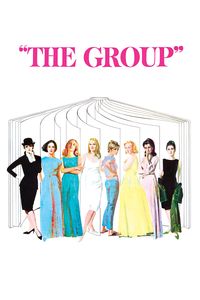
    (On Cable TV, June 2020) In adapting Mary McCarthy’s bestselling novel to the screen, The Group runs into a few problems, most of them having to accommodate an ensemble cast of eight women, plus the men who usually make trouble in their lives. Even at 150 minutes, it’s a bit of a challenge—especially since the story spans years from 1933 to 1940 and multiple heartbreaks as the eight women don’t quite achieve their idealistic goals after graduation. It’s not exactly the most riveting of premises, but seeing Sidney Lumet’s name as director drew me in, and the rest of the film gradually grew on me. The film is clearly a 1960s feminist drama—the well-educated, intelligent protagonists have dreams of intellectual lives that are gradually ground down by the demands of marriage, children and household. You could pretty much tell the same story about just any graduate class since then. It does feel melodramatic and overdone by today’s standards, but you can feel how daring The Group could have been to a mid-1960s audience. As you’d guess from the premise, men don’t come across particularly well here—and bring much of the drama. With such a large cast, some of the names are familiar: Candice Bergen, Hal Holbrook and Larry Hangman, most notably. Director Lumet manages the action effectively with the succinct script he’s given—among other things, there’s an interesting visual device of typewritten alumni letter updates typed on screen as context. With such a sprawling melodrama, there was bound to be something interesting for everyone—in my case, having a look at a drunken playwright and a literary agency. Nowadays, The Group would be best adapted as a TV series—in trying to retain the novel’s details, the film does rush through a lot and delivers mere bites of drama. Still, it does have an impact.