Cate Blanchett

  • The House with a Clock in Its Walls (2018)

    The House with a Clock in Its Walls (2018)

    (On Cable TV, August 2019) Jack Black has been experiencing a weird career renaissance lately—from being a critical darling in the 1990s to an overexposed laughingstock in the 2000s–2010s (with the notable exception of School of Rock), he’s now bouncing back in the niche of kids-friendly comedies such as the Goosebumps, Jumanji, Kung-Fu Panda series and now The House with a Clock in its Walls. Older, more restrained, goateed whenever necessary, he’s now able to project some useful menace, nuance and wisdom. While aimed at kids, The House with a Clock in Its Walls is layered enough to be interesting to the entire family, as a young orphan comes to live with an eccentric uncle in a house with many, many secrets. Blending old-school tropes with a modern environment, this is a family comedy that works effectively (in 105 minutes) at creating an intriguing atmosphere. The menace is palpable, but it ultimately results into a family-united dynamic. Cate Blanchett has a minor but satisfying role as a witch, Renée Elise Goldsberry makes an impression as another witch, while director Eli Roth takes a much-needed break from gory horror in order to deliver PG-rated entertainment with some genre savvy. The House with a Clock in Its Walls is not a great movie, but it’s likable enough, spectacular enough and uses Jack Black to great effect. It would be churlish to ask for more.

  • Ocean’s Eight (2018)

    Ocean’s Eight (2018)

    (On Cable TV, January 2019) Like many, I’m not overly happy with the recent tradition of relaunching franchises with gender-flipped casts—it smacks of opportunism, and a cheap way to revive franchises that have otherwise run their courses. But even grouchy me had a hard time resisting the charm of Ocean’s Eight, which resurrects the modern Ocean’s comedic heist franchise with a mostly female cast. Headlined by Anne Hathaway (going back to a sympathetic character after a too-long detour playing out-of-persona unlikable characters), the ensemble cast tears into the usual heist plot mechanics with gusto, with everybody getting a choice moment or two. Plot-wise, this isn’t anything we haven’t seen before, although it should be noted that rather than head for banks or casinos like their male colleagues, the women of Ocean’s Eight head for jewelry at a high-end fashion event … because why not. This enjoyable follow-up has a snappy rhythm thanks to director Gary Ross, and even the post-heist material doesn’t drag on too much despite wallowing in useless complications. (But it wouldn’t be a heist movie if they went for a simple approach.) The ensemble cast is at the top of their game, what with Sandra Bullock going head-to-head with Cate Blanchett, Helena Bonham-Carter throwing in a bawdy French dialogue wordplay that is not adequately translated in the subtitles, as well as younger actresses such as Mindy Kaling, Rihanna and Awkwafina having good moments. It’s not meant to be profound or sophisticated beyond surface appearance, but Ocean’s Eight is a fun heist movie, and I quite liked it.

  • Thor: Ragnarok (2017)

    Thor: Ragnarok (2017)

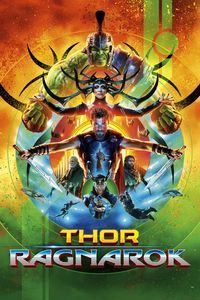
    (Video On-Demand, April 2018) I really wasn’t expecting Thor: Ragnarok to be anything more than a self-imposed completionist task on the way to Avengers: Infinity War. I found the first two Thor movies to be among the weakest of the MCU so far, both dull and imbued of their own nonsensical self-importance. Thor-the-character I liked largely because of Chris Hemsworth’s charm, and Loki is fine as one of the MCU’s most compelling antagonists, but the rest of the series was a chore—a small-town battle in the first film made for a poor high point, whereas the second film’s gleeful waddling in its own uninteresting mythology had me despairing about its self-referentiality. But a change of pace can do wonders, and it doesn’t take a long time for Ragnarok to highlight its difference. Under screenwriter/director Taika Waititi’s particular sensibilities, Thor become much funnier, much looser, and far more interesting. The ponderous visual atmosphere becomes influenced by rock music iconography, and a pitch-perfect use of The Immigrant Song makes for a showcase opening sequence that tells out that it’s fine to forget about the two previous movies. As a matter of fact, the opening of Ragnarok is so jolly, fast paced and self-deprecating that it made me worry that the film would be an insubstantial series of jokes without weight. But as it turns out, the film actually becomes more efficient once its charming hooks are deeply embedded: As the film builds its dramatic tension, the humour is balanced by action and drama and the result is quite effective despite almost completely destroying one of the MCU’s major settings along the way. It helps that Hemsworth meets a worthwhile match in Tessa Thompson’s Valkyrie in terms of charisma—once you factor in Jeff Goldblum as an antagonist, Cate Blanchett proving that she can do darkly sexy and surprise appearances by a few MCU regulars, the film remains great good fun throughout. Waititi knows how to make a film that moves (his Valkyrie sequences are visually spectacular and innovative, which isn’t something we often say within the MCU), and the trip to another planet isn’t a distraction from the overall series. Ragnarok leaps over its limp prequels to become one of my favourite MCU films, which really wasn’t something I was expecting when I started to watch it.

  • Truth (2015)

    Truth (2015)

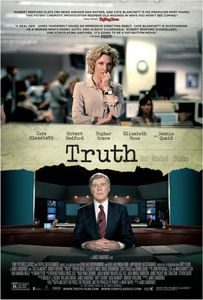
    (On Cable TV, July 2017) In many ways, Truth is a tough movie to watch. Whereas other movies will eulogize journalists as fearless truth seekers whose work helps change the world, this 2015 film uses the 2004 Killian documents controversy to deliver a story uniquely suited to 2017’s sadly post-truth era. It’s about journalists doing their best to report explosive documents on a presidential candidate … and then being unable to defend themselves against accusations of biased reporting. Based on journalist Mary Mapes’s memoir of the events, Truth is a stomach-churning docudrama about the nitty-gritty of reporting in a politically charged environment and how truth itself can be elusive despite everyone’s best efforts. Led by the always-excellent Cate Blanchett as Mapes and Robert Redford as a convincing Dan Rather, Truth takes us behind the scenes of TV investigative journalism in all of its quirks in marrying reporting with TV presentations. Alongside them, Topher Grace delivers one of his most animated performances, while Bruce Greenwood, Elizabeth Moss and Dennis Quaid have valuable input in smaller roles. It’s often absorbing viewing, but don’t expect an All the President’s Men triumphant finale here as much of the film’s second half is spent dealing with allegations of partisanship, and the ending offers little certitude in who was right. As 2017 unfolds alongside a misleading chorus of “fake news” allegations, Truth takes on a particularly bittersweet quality for anyone who’d like sanity and reason to come back to the mainstream discourse—it feels like an exposé of the primitive tactics that have since then been weaponized to a virulent degree. But then again, movies don’t owe anyone any comfort.

  • Coffee and Cigarettes (2003)

    Coffee and Cigarettes (2003)

    (On Cable TV, July 2016) This is not a conventional movie, being composed of several black-and-white vignettes in which two (occasionally three) characters argue over caffeine and smokes. The first two segments were shot as short films years before the others, and it shows as latter instalments become more textured and creative. Director Jim Jarmusch is obviously going for something experimental here, and the result will be far more interesting to those with a fondness for art-house cinema. Coffee and Cigarettes features an impressive group of thespians, with particular acknowledgements for Cate Blanchett’s double performance, Alfred Molina trying to get through to Steve Cooghan and Bill Murray for his innate Bill Murrayness. (Strangely enough, two of the film’s most striking actresses, Joie Lee and Renée French, haven’t done many other roles.) As intriguing as the central concept may sound, Coffee and Cigarettes doesn’t quite achieve its potential. The low-grade hostility between its characters is wearying, everything stays too mild-mannered and the philosophical tangents are profoundly uninteresting. (Although I’ll make an exception for “I know how a Tesla coil works!”) Fortunately, the film doesn’t have to be watched straight through: it’s easy (and even fun) to take it in a piece per day every day for a bit more than a week. There isn’t much to link the segments together, and this way you avoid the “that again!” feeling from watching too many similar short films.

  • Carol (2015)

    Carol (2015)

    (On Cable TV, July 2016) Let me tell you how little I cared about Carol: After renting it via video on-demand, I fell asleep midway through and didn’t come back to it before its 48-hour availability period expired. Six months later, I happened to catch its second half on Cable TV just to say I’d seen it to the end. To be fair, it’s a good film. Competently directed by Todd Haynes, it convincingly re-creates wintry 1950s New York in presenting the then-scandalous love affair between a high-class wife and a humble shopgirl/photographer. Strikingly enough, Carol manages to avoid the aren’t-we-better-now back-patting, or the tragic-forbidden-romance angle in which so many historical same-sex romances run aground. Even though it features stars such as the always-exceptional Cate Blanchett and It Girl Rooney Mara, it doesn’t shy away from explicit love scenes. As such, it’s a quiet triumph. Still, movie viewers with shorter attention spans will fiddle a long time while the film glacially moves through its story, rarely surprising or exciting. While there’s a bit of a thriller-ish subplot later on, Carol otherwise behaves almost exactly as it would have had it been put together in the 1950s. It would, of course, have been far more scandalous then, but that’s sort of the point of the film. I don’t think Carol will mind all that much if it leaves me cold: other reviewers have liked it a lot more than I did, and that’s good enough—it’s a big movie universe, and there’s a place for everything.

  • Cinderella (2015)

    Cinderella (2015)

    (In French, Video-On-Demand, September 2006) It’s easy to feel cynical about Disney’s newest mania in remaking their animation classics in live-action form: it reeks of mindless exploitation, of post-creative consumerism and bankrupt innovation.  But it’s always best to see the result before kvetching, and Cinderella makes the disarming choice to revisit the original but keep its heartfelt core.  So it is that there’s barely a hint of snark or revisionism here, and the film consciously seeks to re-tell the same story while hitting the same points along the way.  This version of Cinderella, for instance, wisely provide a lot more background on the happy childhood of its heroine, making it even more affecting when she’s relegated to the status of menial labour.  It expands subplots, adds character depth, tones down the musical numbers, doesn’t completely anthropomorphise its animal relief and messes just enough with the glass slipper climax to keep things interesting for viewers who (ahem) have toddler-watched the original fifty times in the past 18 months.  Cate Blanchett is deliciously evil at the wicked stepmother, but Lily James holds her own as the titular Cinderella.  Then there’s the amazing production design of the film, presenting a sumptuous fairy tale to the screen: There are images here fit to wow anyone, from the Swarovski glass slipper to the golden Pumpkin carriage to amazing castle flybys.  Nearly every frame is a painting (to borrow a phrase) and the beautiful result deserves to be watched.  As a result, the two Cinderella films each get to keep their own identity, which is as good as one can hope for in a remake.  Not only good on its own, Cinderella manages not to desecrate anything in its wake.  Kids will enjoy it (although one notes that it aims at a slightly older audience than the original), but so will their parent.  

  • The Talented Mr. Ripley (1999)

    The Talented Mr. Ripley (1999)

    (Netflix Streaming, April 2015) I’m not sure why I’ve waited fifteen years before seeing The Talented Mr. Ripley.  I’m not fond of stories in which the protagonist is a serial murderer, but there’s a bit more to this film than simply rooting for an anti-hero.  Part of the attraction now, of course, is seeing five actors at the beginning of their career, from Jude Law’s magnetic presence to Matt Damon’s versatile lead performance, to Cate Blanchett and Gwyneth Paltrow in young ingénue roles, to an early good turn by Philip Seymour Hoffman.  The other big asset of the film, of course, is the period detail.  An impersonation thriller taking place amongst Americans living in late-1950s Italy, The Talented Mr. Ripley can be, at its best, an immersion in a romanticized time and place.  It only becomes darker and more thrilling after a (too) leisurely prologue, then drags on a touch too long as it places its protagonist in ever-more desperate circumstances, all the way to a heartbreaking final act of violence.  Slickly directed by Anthony Minghella from a now-classic novel by Patricia Highsmith, it’s a thriller that plays with questions of identity, aspirations, repression and the nature of affection.  It’s lovely and ugly, with good tension and complex plot engines.  The Talented Mr. Ripley has aged gracefully, and remains just as good today as it must have been sixteen years ago.

  • Blue Jasmine (2013)

    Blue Jasmine (2013)

    (Video on Demand, January 2014) If the mark of a great actor is making us sympathize with character we would otherwise find exasperating, then Cate Blanchett truly deserves honors for her performance in Blue Jasmine. The story of a woman struggling with life after the end of her lavish marriage to a convicted Wall Street fraudster, Blue Jasmine is a character study more than anything else; Blanchett faithfully reflects the multiple contradictory facets of the scripted protagonist and the result can be as affecting as they are maddening. Setting Blue Jasmine in San Francisco after a long series of films taking place in Europe, Allen doesn’t do much with the city, but keeps the focus on the idiosyncrasies of his lead character, and the interactions she has with the ones surrounding her. Despite glimmers of redemption, it doesn’t end well, or even as anyone would hope: By the time the film ends, it’s a mercy that we’re not shown more, because there is no happy ending possible. And yet, despite the lead character’s self-destroying flaws, Blanchett keeps our sympathy throughout. Allen’s self-effacing direction helps, and the able supporting cast knows their place. While Blue Jasmine‘s lack of a conclusion leaves without satisfaction, the journey has its moments.

  • Robin Hood (2010)

    Robin Hood (2010)

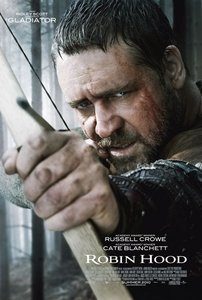
    (In theatres, May 2010) The chequered development process that led from a script called Nottingham to this stone-faced “historical” take on Robin Hood may explain a lot about the deadened result, but as viewers we can only see what’s on-screen and wonder what went wrong.  The first bad idea is the pretence of a “historical” look at a legend: It didn’t work in the dour and grimy King Arthur, and it’s not any more pleasant here. (To compare and contrast, the similarly-themed The Last Legion wasn’t very good either, but it had the good idea of being a lot more fun).  This isn’t director Ridley Scott’s first foray in pseudo-realistic historical action, and Robin Hood is just as dirt-dominated as similar sequences in Gladiator and Kingdom of Heaven: you can practically feel the plague coming just by watching the film.  But the realism is just surface deep: By the end of the story, in which Robin Hood saves Maid Marian from unexplainable danger during a D-day like French invasion off the cliffs of Dover and then practically writes the Magna Carta from notes left by his lost-lost father, well, we’ve left realism buried somewhere in the copious dirt.  (It won’t take a military strategist to find something suspiciously wrong about an invasion force picking a narrow stretch of beach right in front of impassable cliffs as a landing area.)  While Russell Crowe is fine as Robin Hood and Cate Blanchett can do no wrong as Maid Marian, the film too often feels like a school assignment sucking all the fun out of reasonably entertaining source material.  After watching this joyless take on Robin Hood, I felt a sudden need to go and re-watch Costner’s now-old-enough-to-be-classic Robin Hood: Prince of Thieves all over again.

  • The Aviator (2004)

    The Aviator (2004)

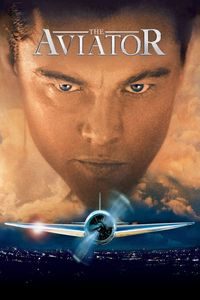
    (In theaters, December 2004) It’s always a pleasure to see Martin Scorsese at work again, and he does much to please both fans and general audiences with Howard Hughes biography The Aviator. Leonardo DiCaprio may not be such a good casting choice as Hughes (he look too frail and, later, far too young), but his performance is impressive. Mogul in most sense of the terms, the historical figure of Hughes is unequalled when it comes to the richness of available dramatic material: His love life was a parade of celebrities, his legal battles were legendary and his personal problems were, shall we say, gigantic. The Aviator is seldom as absorbing as when it races through Hugues’ good days as a fascination with Hollywood leads him to a life-long passion for airplanes and then on to the civil aviation business. The script has its weaknesses, but they’re often paved over by a Casino-strength Scorsese ably assisted by top-notch editing. The Aviator runs into repetitive sequences later on, as Hugues’ descent in Obsessive-Compulsive Disorders gets the better of a grander-than-life character. Many sequences then run too long, and keep on making a point long after which it’s been understood. (Ironically, the film focuses too much on Hughes’ disorders to give a more complete picture of his personality as a businessman, a playboy and an inventor: I wonder if it hadn’t been better to stick to the accepted chronology of Hughes’ life, in which his worst OCD episodes developed much later in life) Still, The Aviator still leaves an impression of superior film-making. Blame Cate Blanchett, whose dynamite interpretation of Katharine Hepburn deserves both an Oscar and a separate biopic of its own. (Kate Beckinsale’s Ava Gardner is also quite good, but Gwen Stephani is over-hyped as Jean Harlow) Blame the seamless visual effects. Blame the Beverly Hills crash sequence, itself a spectacular action scene. Blame the lavish production. But perhaps best of all, blame a director who understands how to portray a character who finds deep joy while flying in a film titled, indeed, The Aviator.