Chadwick Boseman

  • Da 5 Bloods (2020)

    (Netflix Streaming, October 2021) Don’t misunderstand me when I say that Spike Lee could have had an exemplary career as a pure entertainment filmmaker: He’s one of the most vital voices in American cinema and he wouldn’t be Spike Lee without constant engagement on social issues. But as many entries on his filmography suggest (25th hour, Inside Man, Oldboy), he could have made it solely on technical competence in delivering entertaining films. But his special genius lies elsewhere, in combining this entertainer’s instinct with works of social import. His latest two films, BlacKkKlansman and Da 5 Bloods, end up being among the best of his career in blending accessible narratives with pointed social issues. His latest film begins with exactly the right interview snippet: Mohammed Ali discussing how “I ain’t got no quarrel with those Vietcong,” thus putting the central idea of the film right up there: why would black soldiers serve a country that marginalized them so much? The way to illustrate this tension goes through a hard-to-resist premise: what if American soldiers went back to Vietnam fifty years later to find the remains of their commanding officer… and a crate filled with gold? The early moments of Da 5 Bloods present themselves as something of a romp, as our elderly veterans (led by Delroy Lindo) take in the sights of a westernized Saigon and head over to their adventure. But pay attention to the flashbacks and the foreshadowing about landmines because the film becomes darker in a single moment and its second half is a far more thrilling contemporary adventure in which, as usual, finding the gold isn’t nearly as difficult as keeping it. Jean Reno has a small but enjoyable role, while Chadwick Boseman makes a remarkable appearance (one of his last) and Hollywood newcomer Sandy Hương Phạm provides a remarkable emotional linchpin to the film. It gets overly violent at times (even though: hey, it’s a war film) but engrossing throughout even as it switches gears as it goes on. It’s a really good film, and doesn’t skimp on the American racial divide either. Da 5 Bloods is another success for Spike Lee, who seems to be getting a second or even third wind as a filmmaker.
  • 21 Bridges (2019)

    (Amazon Streaming, September 2021) As much as standalone thrillers have gone out of favour compared to superhero movies or fantasy films, there will always be an audience for them, and 21 Bridges is a decently entertaining example of the form. (Considering that the film was produced by Marvel directors Joe and Anthony Russo, this line from superhero films to this thriller isn’t as tendentious as you’d think.)  The titular idea has The New York Police Department shutting down the 21 bridges connecting Manhattan to the rest of the world to contain and catch two suspects who have been involved in a deadly firefight with a group of police officers. NYPD is rabid about cop-killers, and our lead character is a cop with a history of shooting suspects — that makes him a trusted man to complete the assignment. The clock is ticking (the bridges can’t stay closed once the morning commute starts) and the suspects are moving, but there’s just one detail that doesn’t add up: Why would two small-time criminals stumble upon 300 pounds of cocaine at the same time as a group of heavily armed police officers? The answer to that propels the last and most interesting act of the film. Headlined by one of Chadwick Boseman’s final performances, 21 Bridges isn’t quite a perfect film: After a strong opening, it meanders for a while before coming back in focus in time for a good third act. J. K. Simmons also turns in a reliably good performance, although it’s just a bit too easy to guess much about where the film is going to end based on a flashy scene early in the narrative — why would someone of Simmon’s stature be there for a walk-on role? The subject matter of the film isn’t anything we haven’t seen in other corrupt-cop thriller, but it has its moments. What doesn’t quite work as intended, though, is the decision to make the protagonist a habitual suspect-killer: Attitudes toward abusive cops have thankfully changed in the past two years, and there’s a cloud of ambiguity over the story that probably wasn’t meant to be quite as pronounced upon release. Still, director Brian Kirk can bring things to a boil when it counts, and fans of corrupt police thrillers are likely to appreciate the result.

  • Ma Rainey’s Black Bottom (2020)

    Ma Rainey’s Black Bottom (2020)

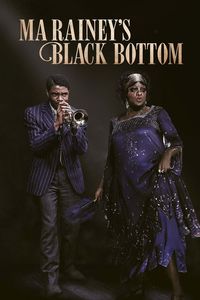
    (Netflix Streaming, March 2021) You’re not mistaken if you detect an atmosphere of theatricality to Ma Rainey’s Black Bottom — after all, the film is an adaptation of one play in August Wilson’s Century Cycle, the same cycle that includes Fences. This time, Denzel Washington produces the film, which revolves around a contentious recording session by a 1920s (fictional) black jazz band and their (real) headliner Ma Rainey. The strong space/time unity of the film manifests itself by the characters arriving at the recording studio, where they’ll spend most of a day scratching vinyl in-between Rainey’s surliness, her stuttering nephew, the trumpeter’s aggressivity, greed-fuelled white studio owners and the laid-back veteran musicians making up the rest of the main cast. Given the slow, sure, dialogue-heavy pacing of Ma Rainey’s Black Bottom, it’s no surprise if some of the film’s most enjoyable moments consist in hanging with musicians on a job, just doing their things and talking about this or that. The minutia of music-making is given a solid period patina with credible historical details. As the final ironic shot drives home, the racial component of the film’s setting is never too far away. Paradoxically, Ma Rainey’s Black Bottom becomes less interesting when it reminds itself that it has to have a plot. By the violent climax, everyone feels bad about it all. Nonetheless, the way to get there is often a delight, with carefully written dialogue allowing the actors to show themselves at their best. Viola Davis—garishly made-up in diva garb—is a force of nature as a singer who’s just had enough of any nonsense. Meanwhile, Chadwick Boseman gets one last good role as a musician looking for a fight. While the result may not be particularly spectacular, there’s a lot to like here, and it’s a solid first entry in what is supposed to be nine films to be made from Wilson’s Century Cycle, complementing the already-existing Fences. I’m already looking forward to the rest of it.

  • Get on Up (2014)

    Get on Up (2014)

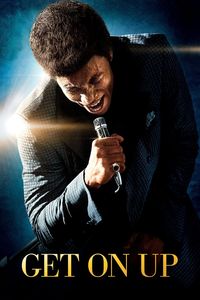
    (In French, On TV, May 2020) There are a few problems with the idea of a James Brown theatrical biography, most of them revolving around who’s ever going to even try playing Brown; and second, how can you even try to fit Brown’s eventful, occasionally scabrous life in a film fit to show in cineplexes? Get on Up at least gets the first part right: a pre-stardom Chadwick Boseman makes for a mesmerizing Brown, nailing the physical portion of his persona and letting Brown’s vocals do their job during performances. The rest of the film… suffers from the predictable issues. Brown’s life and career were long enough that trying to do them justice would take us on a whirlwind tour of profound social change in addition to his own actions along the way—a tall order for something that’s not a miniseries. But 139 minutes is all the film will allow itself, and the squeeze required to fit everything in that time is prodigious. Hailing from backwoods rural America, Brown’s rise to notoriety is nothing short of miraculous, but Get on Up does manage to point out that the very same excess of self-confidence that led to his fame also led to considerable problems later in life in his relationships with women, bandmates, employees and the law itself. What’s not so successful is the scattershot, nonlinear approach to the events of Brown’s life that the script follows and director Tate Taylor tries to execute—it’s often difficult to know where Brown is emotionally because the film can’t always lay the required groundwork in a sequence. Considering this, the back-and-forth approach may mask the conventional aspect of this music biopic, but doesn’t bring any new or worthwhile effect to the film. Another device that doesn’t work as intended is Boseman-as-Brown occasionally addressing the camera—it should give us an idea of what’s inside his head but, in the end, doesn’t give us much more than if those moments had been skipped. It’s those flaws that make Get on Up an interesting, but not quite successful biopic—sure, you get the basics, but not necessarily a well-rounded portrait of a man that was, by all accounts, far more complicated than here. At least it does have the music—anyone could do much worse than listening to even a standard biopic filled with Brown’s greatest hits.