Charles Laughton

  • This Land Is Mine (1943)

    This Land Is Mine (1943)

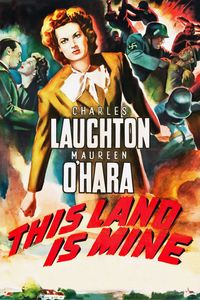
    (On Cable TV, April 2021) It took an exiled Frenchman to credibly portray the horrors of Nazi occupation to an American audience, and that’s why This Land is Mine still ranks today as one of the finest WW2 films made during WW2 itself. Narratively, it shows the Nazi occupation of France on a very personal level by focusing on a small town and some of its inhabitants. A great set of actors is up to the task — George Sanders as an informer, Maureen O’Hara as a teacher but especially Charles Laughton as a cowardly teacher who finds hidden reserves of courage under adversity. Clean directing from Jean Renoir and a striking script do the rest of the work. Renoir resists the temptation to get caricatural about both the French and the Nazis, and the result is something this lives on as something more than propaganda. The entire film works pretty well, but the ending is suitably poignant. This Land Is Mine remains a mild surprise and a great discovery.
  • Island of Lost Souls (1932)

    Island of Lost Souls (1932)

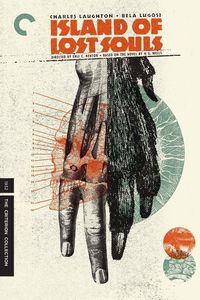
    (On Cable TV, April 2021) By now, I don’t really need another reminder about the vitality of Pre-Code movies, but Island of Lost Souls is an eloquent example of how movies of that era can feel modern — you wouldn’t see anything like this until the 1960s. The source material practically begs for grown-up treatment: H. G. Wells’ The Island of Dr. Moreau may be 125 years old at this point, but it’s still a potent exploration of disturbing ideas and visuals, with enough material questioning the idea of a creator and social conditioning to still feel dangerous to authorities both religious and secular. Such material demands artistic freedom, and filmmakers in 1932 certainly tried to get away with a lot — Island of Lost Souls is shot like a horror film, with horrible revelations and the still-surprisingly downbeat finale that the material required. The great Charles Laughton plays Dr. Moreau with his typically compelling style, making him a far more interesting figure than the bland antagonist played by Richard Arlen. But if you’re looking for one reason to see the film, just one — it’s got to be Kathleen Burke as “Lota, the Panther Woman” — clearly coded to be a wild, animalistic figure, she looks amazingly modern with long curly dark hair and a demeanour that’s nowhere near how “proper” actresses were directed at the time — she’s like a piece of 1980 cinema thrown half a century back in time and it’s no wonder if she still has a following nowadays. Skeptics beware: Island of Lost Souls is still surprisingly good—It’s not such a heresy to say that there still hasn’t been a better screen adaptation of Wells’ source material, especially considering the debacle that was the 1996 Marlon Brando film.

  • Jamaica Inn (1939)

    Jamaica Inn (1939)

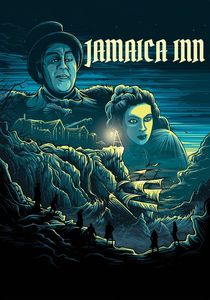
    (On Cable TV, November 2020) I like Alfred Hitchcock and I like Charles Laughton, but if my understanding of Jamaica Inn’s troubled production history is correct, the on-screen result is what remains after a spectacular clash of egos. As the story goes, Hitchcock took Daphne Du Maurier’s novel (the first of three adaptations of her stories, followed by Rebecca and The Birds), but had trouble with Laughton-the-producer-and-actor, who wanted to transform a dreary gothic novel into something funnier, more eccentric and not quite some faithful to the original. The result is, for lack of a better word, often weird. The still-unnerving premise (an innocent woman discovering that she’s in the middle of a village of marauders, attracting ships to a treacherous coast where the ships run aground, then, killing the survivors and selling the cargo) runs into a semi-comic performance by Laughton and bizarre touches of humour. The film can’t quite make up its mind about whether it has revelations to tell us, and the ending just gets more and more ludicrous, as the heroine is kidnapped by a lusty villain because… well, there’s no real good explanation, since his plan is untenable from the get-go. This is really not top-tier Hitchcock, and probably not second-tier either—while the film was a commercial success and stands as the last of Hitchcock’s British period before going to Hollywood with Rebecca, it’s weaker than many of Hitchcock’s other 1930s films. Aside from the always-interesting Laughton, special mention should be made of the heroine being played by Maureen O’Hara in one of her early leading roles. The 2014 Cohen Media Group restoration of the film is nothing short of terrific—great image quality and clear sound make this a joy to watch — if it wasn’t for the content!

  • The Private Life of Henry VIII. (1933)

    The Private Life of Henry VIII. (1933)

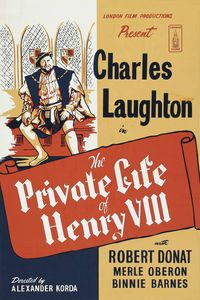
    (On Cable TV, May 2020) Alexander Korda was a foreign-born British film producer who sought glory in many ways, and not necessarily his own personal glory. His filmography is packed with movies that extolled British virtues and crowd-pleasing entertainment that revitalized British cinema itself. He believed that movies could effectively influence minds, and he got an early reward for this belief in The Private Life of Henry VIII when that film triumphed at the box office, and won the first-even Academy Awards given to a non-American film. Later on, the uncouth and gluttonous portrait of Henry VIII as depicted in the film became, unfairly, how newer generations began to perceive the historical character. It certainly helped that the king was played by none of that Charles Laughton, looking quite young at times: it became his breakout role and the one that won him an Oscar. Surprisingly enough, this is a black-and-white historical epic that has aged far better than you’d expect—it’s often a gentle comedy even in the opening credits, as one character is said to be of no interest in being a “respectable lady.” The irreverent touches of humour continue throughout the film, with some moments playing in a very iconoclastic fashion. Better than expected, The Private Life of Henry VIII gets a few honest laughs: the chicken-eating scene is funny, as is the divorce negotiation sequence. The humour partly comes from the early matter of love and marriage in a royal context, partly from the court’s difficulties in adjusting to a difficult king, and also partly because of Laughton’s performance itself. Far less stuffy than a history lesson, The Private Life of Henry VIII clearly reached its audience and continues to do so—but be wary of thinking that this is a historically accurate film.

  • Les Misérables (1935)

    Les Misérables (1935)

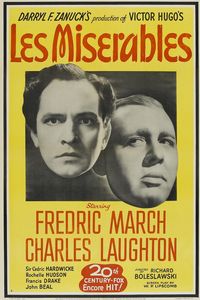
    (On Cable TV, March 2020) A few reasons explain why Hollywood was churning out so many adaptations of classic works of literature in the 1930s. For one thing, it suddenly could—the arrival of sound meant that dialogue could be used without interrupting the flow of the film with title cards. For another, keep in mind that the movie industry had been born out of vaguely disreputable origins by moguls marginalized from the more respectable sectors of American industry—as a result, they were eager for cultural recognition as purveyors of fine arts, and adapting classic novels was a shortcut to that. Thirdly, such films were great showcases for the many disciplines of studio cinema—set-building, costumes, makeup and classical actors. Fourthly, but not lastly, such films had a built-in audience: the classics were part of the curriculum, audiences could recognize familiar titles and Hollywood made money. Considering all of the shortcuts that were often taken at the time (simplification of plotting, if not outright amputation; iffy special effects; acting taken straight from the stage), it’s a wonder that many of them turned out to be quite good, even to today’s audiences. And that finally takes us to the 1935 version of Victor Hugo’s Les Misérables, which somehow manages to cut down the massive original novel into something adequate within 103 minutes, featuring great production values and able actors like Fredric March and Charles Laughton in lead roles. While this is in no way a faithful adaptation, it’s a well-executed costume drama for the masses, and part of the film’s fun for those familiar with the Hugo novel are spotting the ways in which the story was cut to fit. While purists will howl, the result is rather entertaining—even today.

  • Ruggles of Red Gap (1935)

    Ruggles of Red Gap (1935)

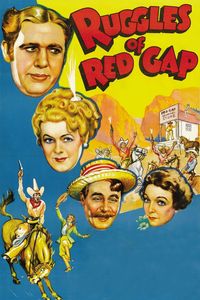
    (On Cable TV, January 2020) I had a hard time staying interested in Ruggles of Red Gap despite elements that should have made it interesting. Blame mood if you want, but this story of an English butler going to America to eventually become a successful immigrant felt unusually turgid and dull. Coming from the first decade of sound cinema, much of the stiffness can be excused away—movies of the time aren’t always exceptionally dynamic, and the theatrical lineage of the story (first a novel, then a stage musical, then two silent movies) translates into a film that doesn’t move much. My lack of interest in the film is even more inexplicable given that it features the great Charles Laughton and one of my favourite early-Hollywood actresses Zasu Pitts. It’s a generally lighthearted comedy, and it ends on a somewhat stirring adoption of American freedoms by an immigrant who, until then, has always lived his adult life on other peoples’ terms. In short, Ruggles of Red Gap should have made much more of an impression but didn’t. I may revisit it under different circumstances to see if it works better.

  • The Hunchback of Notre Dame (1939)

    The Hunchback of Notre Dame (1939)

    (On Cable TV, October 2019) I’m clearly showing my age when I say that it’s weird to see a big-budget live-action version of The Hunchback of Notre Dame when it’s so readily compared to the Disney version. I know—it’s an unfair comparison, especially to the original Victor Hugo novel or the 1923 silent film. But it’s not entirely without foundation: The 1939 version, after all, codified many of the elements that even the 1996 Disney version reappropriates for its own use. There are a few other interesting things as well: Charles Laughton is quite good as the titular hunchback, even in the grotesque makeup he has to wear for the entire film. Meanwhile, Maureen O’Hara is spectacular as Esmeralda. Then there is the lavishness of the production, which doesn’t skimp on the massive crowds and the expansive sets that its premise requires, revolving around Notre Dame Cathedral and the rest of Paris as it does. (It was, at the time, one of the most expensive movies ever made by RKO studios.) There’s a little bit of weirdness in having the story interrupt itself to explain the power of the printing press, but that’s forgivable in its own way. This 1939 version of The Hunchback of Notre Dame is a big-budget spectacular in all senses of the word, and that quality does make it watchable even today.

  • The Barretts of Wimpole Street (1934)

    The Barretts of Wimpole Street (1934)

    (On Cable TV, April 2019) As far as early-sound era movie adaptations of theatrical material go, there’s a lot to like in The Barretts of Wimpole Street. It combines the best aspects of films at the time (actors, setting) with the traditional strengths of theatre (strong sustained drama, good dialogue) for a result that has held up rather well. Norma Shearer is fine as the film’s heroine, inspired from real events, but it’s Charles Laughton who steals the show as a reprehensibly overprotective father. Coming in right at the edge between Pre-Code filmmaking and the constraints of the Production Code, the necessity of bending the film to the censorship adds a layer of mystery to the film’s final moments that would have been blunted by a more direct approach, as we must wonder if the villain has really said that what we think he meant. (Spoiler: he totally did—Laughton even boasted about “the gleam in my eye.”)  I can find plenty of faults with The Barretts of Wimpole Street (such as the lack of interest in the eight [!] other kids and its detour into romance-upon-romance) but I can’t really argue with the final results. Amusingly enough, the film may have been nominated for a Best Picture Academy Award, but its enduring claim to fame was being one of the films that inspired the famous HICKS NIX STIX FLIX Variety headline.

  • Witness for the Prosecution (1957)

    Witness for the Prosecution (1957)

    (On Cable TV, June 2018) I haven’t watched that many movies starring Marlene Dietrich yet, but Witness for the Prosecution is the first when I really get what Dietrich was about—it certainly helps that it flashes back to a cabaret sequence. Looking spectacular in her mid-fifties, she feels actively dangerous as the titular witness willing to do what it takes to achieve what she wants. Not that she’s the sole highlight of the film—Charles Laughton is incredibly likable as a barrister taking on a difficult case and never quite certain of everyone’s motives. The script, adapted from an Agatha Christie short story, is nicely paced to introduce the characters before getting down to the business of thrills and unexpected plot twists. Witness for the Prosecution does amount to a satisfying film, perhaps too brightly lit as a court drama to be pure film noir but certainly willing to get its inspiration from the depths of human cruelty. If director Billy Wilder has made a bad movie, I haven’t yet seen it. 

  • Mutiny on the Bounty (1935)

    Mutiny on the Bounty (1935)

    (On Cable TV, March 2018) For a mid-thirties production, Mutiny on the Bounty still manages to impress thanks to expansive filmmaking, a solid story and good character work. While historically dubious (read the Wikipedia entry for the latest thinking regarding the real-life incident, markedly more sympathetic to captain Blight, not to mention the sad aftermath of the mutiny), the story itself does have a certain narrative drive, and the way the film portrays the events manages to be impressive—the shot in which hundreds of Tahitians converge to the water to greet the English visitors is still remarkable today. The heart of the film remains between Clark Gable as Fletcher Christian and Charles Laughton as Captain Blight—both actors hold their own. While creaky by modern standards, much of Mutiny on the Bounty can be watched effortlessly today … and that’s no small achievement for a film pushing eighty.

  • The Night of the Hunter (1955)

    The Night of the Hunter (1955)

    (On Cable TV, December 2017) When watching older movies, it’s natural to assume certain parameters. Aside from the occasional noir movie, themselves neutered by the restrictions of the Hays Code, most films from the fifties are presumed to be fairly soft—neutered in themes, gentle in approach, straightforward in presentation. The Night of the Hunter has endured because it is most definitely not those things. Anchored by a strong menacing performance from Robert Mitchum (in a role that clearly anticipates his turn in Cape Fear), the film soon disposes of its central female character, then turns its attention to mortal child endangerment. What’s more, director Charles Laughton applies nightmarish expressionist style to its hard-core thriller plot for a surreal experience that has as much to do with sheer style as substance. A popular and critical dud upon release, The Night of the Hunter has grown in stature since then for obvious reasons: it’s a film ahead of its time, precise in its impact and still quite impressive to take in.