Charlotte Rampling

  • Zardoz (1974)

    Zardoz (1974)

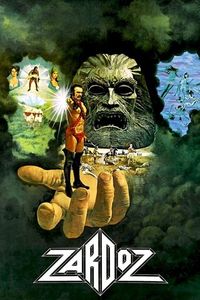
    (On DVD, November 2021) For years, Zardoz taunted me from my unseen-DVD shelf. A gift from a definitely mischievous friend, the film’s reputation fascinated and repelled me in equal measure. The early 1970s were not the best years for big-screen Science Fiction: New Hollywood only had a use for SF as a post-apocalyptic backdrop, and if you only had 1970–1976 to pick from, you would quickly understand why mainstream audiences and pop-culture commentators positively hated SF prior to Star Wars: films both naïve and downbeat showing a tiny flash of the genre’s possibilities, seemingly designed either for kids or masochists. Zardoz, seen from one angle, is exactly that. It’s stupid, untrustworthy of its audience, wallowing in brain-dead clichés and stealing everything from other better films. It has Sean Connery in a red leather thong outfit, and it doesn’t take five minutes for the immortal quote “The gun is good. The penis is evil.” to gobsmack any audience. Writer-director-producer John Boorman goes for some truly strange yet bland material here, taking a dull dystopian story and wrapping it up in weird surreal execution. Which ends up being the film’s saving charm, because despite the considerable silliness of its premise, Zardoz is often rescued by its over-the-top ridiculousness or from some genuinely interesting moments of craft. Boorman wasn’t a neophyte even at that early stage of his career, and that often shows in some still-interesting visual effects, oddly compelling scenes, fractured storytelling and audacious bets that don’t quite pay off. The film is bookended by an intriguing opening narration and a rather effective flashforward coda, but what’s in between varies quite a bit. The images are often of the I-can’t-believe-I’m-seeing-this (“Connery, how could you?” only rivals “Charlotte Rampling, how could you?”) and while that doesn’t make Zardoz a good movie, it does lend it an unforgettable quality that does elude many of the better Science Fiction films of that era. Now seen, I’m shifting Zardoz to the seen-DVD shelf… but it’s not done taunting me.
  • The Verdict (1982)

    The Verdict (1982)

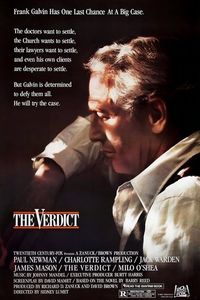
    (Disney Streaming, August 2021) The unsung hero of The Verdict is whoever who took the decision to cast Paul Newman in the lead role — what best way to portray a lawyer past his prime than to cast an aging movie idol? Newman still looks fantastic, of course (compare and contrast with how he looks in the roughly contemporary Absence of Malice), but the deliberate grey hairs, added fat and slower demeanour tell us everything we need to know, even before his character gets thrown out of a funeral in the opening scene. What follows, in keeping with the tone set early on, is an examination of justice with a jaundiced but not entirely cynical eye — as our burnt-out protagonist is handed an easy settlement but decides to push matters to a civil trial, and quickly gets enmeshed in dirty tactics and counter-tactics. If The Verdict remains compelling viewing today, it’s how it skirts the edges of an uplifting film with a gritty look at the less admirable aspects of civil law. Our protagonist isn’t above stealing mail; his opponent will spy on him; and in the film’s defining sequence, a slam-dunk testimony and piece of evidence that would, in another film, be the final blow are here (with some heavy dramatic license) judged inadmissible and struck from the record. But to get back to a crowd-friendly idealistic finale, it turns out that even inadmissible evidence can’t just be erased from memory. While the pacing of the film is a bit slow, especially at first, veteran director Sidney Lumet does keep good control over his material, gradually unfolding the layers of complexity in David Mamet’s narrative. (Unusually for Mamet, this first screenplay is adapted from existing material, and so his distinctive dialogue is not really present.)  Good supporting turns from Charlotte Rampling and the irreplaceable James Mason help round out the acting talent involved. The Verdict, then a box-office success and Oscar favourite from cerebral material and a strong narrative, is almost unusual today — but fret not, it’s still very enjoyable and the circa-1980 period has aged rather well… like its star.

  • Euphoria (2017)

    Euphoria (2017)

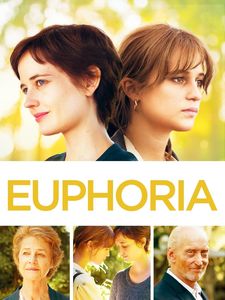
    (On Cable TV, February 2021) I hate when a promising concept is extinguished by the weight of pedestrian execution, and the latest example of that is found in Euphoria, a low-budget drama that delights in being as dull as it can be after a promising beginning. Although, let’s not overpraise those opening moments: As two estranged sisters reunite, the mystery that accumulates through their interactions and strange behaviour is already overshadowed by a heavy ponderousness. This is going to be an overwrought drama, quickly says the film through its execution. Before long, we have both the explanation to the mystery and nearly the last interesting thing about Euphoria: One of the women is mortally sick and has chosen to go, accompanied by her sister, to a secluded euthanasia clinic when she’ll be able to live her last days in peace before undergoing a fatal injection. It’s a sign of the script’s overwrought melodramatic tendencies that this (including the terminal cancer) is all explained to the protagonist once they’re already at the clinic rather than at any reasonable moment before then… you know, like normal people would do. But no — Euphoria is about creating a pressure cooker of an environment in which the sisters can hash out their recriminations, childhood traumas and repressed feelings in time for a conclusion that isn’t nearly as climactic as the filmmakers hoped for. Despite the acting talent of Alicia Vikander and Eva Green, the film struggles to make it past the finish line, weighed down by a graceless exploration of familiar themes that completely forgets the spark of mystery that led its first few minutes. Director Lisa Langseth is clearly trying for artistic drama here and succeeds too well: the film feels interminable even at less than two hours, and not even Charlotte Rampling as a therapist nor Charles Dance as another terminally-ill patient can quite manage to save the film even if they manage to make us temporarily interested again. It’s a bad, bad sign for a film when you start wishing for the lead character to die so that it can finally end. I still think that there was potential here for something much better — and a purely theatrical take on the same elements may be far more effective than a film that seems to exhaust itself in aimless meanderings. But as it is, Euphoria is anything but exhilarating.