Cicely Tyson

  • The Heart Is a Lonely Hunter (1968)

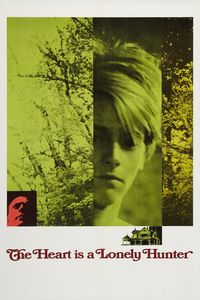
    The Heart Is a Lonely Hunter (1968)

    (On Cable TV, April 2021) Hollywood has always been in love with social-issue films, but until the mid-1960s there was only a very narrow range of social issues worth discussing under the Production Code. Things improved in a hurry from the mid-1960s onward, as the code was replaced by ratings, and the range of permissible, even desirable topics expanded at the same time as moviegoers expected more from American studios. But in films like The Heart Is a Lonely Hunter, you can almost feel the repressed pile-up of social issues crowding each other for recognition — disabilities (physical, sensorial and cognitive), fatal diseases, racism, sexism, alcoholism, classicism, discrimination, sexual awakening, suicide and small-town violence all show up in the strange brew of this melodramatic adaptation of a best-selling 1940 novel. If it sounds like a lot, it is a bit much at times — especially as the film tries to keep up with a busy novel in barely more than two hours. If it’s any comfort, the cast is reliably more interesting than the narrative: Alan Arkin as a deaf-mute protagonist, Sondra Locke’s screen debut, and appearances by Cicely Tyson and Stacy Keach. Still, the film does feel like what we’d call Oscar-bait these days — a comparison that’s made easier by the film’s two Academy Awards nominations (for Arkin and Locke) among other recorded honours. It doesn’t exactly make The Heart Is a Lonely Hunter compelling viewing, though — unless you like that kind of overdone drama at a time when Hollywood was expanding its palette of permissible topics without necessarily getting more subtle about how to tackle them.
  • A Man Called Adam (1966)

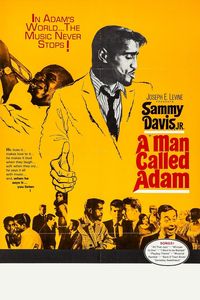
    A Man Called Adam (1966)

    (On Cable TV, February 2021) I started watching A Man Called Adam with the intention of paying tribute to Cicely Tyson—who had died a few days before—but was quickly hooked by Sammy Davis Jr.’s performance as a difficult jazz musician having trouble keeping his life together. Tyson is very good in a role that anticipates a later generation of black actresses, but Davis is incandescent in a dramatic role far removed from his comedic fare. The film obviously aims to portray a realistic slice of life for black jazzmen in the 1960s, and the somewhat disappointing production values (4:3 ratio, fuzzy black-and-white visuals, unpolished direction from Leo Penn) add to the cinema-vérité atmosphere of the result. A Man Called Adam takes on explicitly racial themes (anticipating some of the most celebrated mainstream movies of the next few years) and makes them an integral part of a jazz movie. The musical aspect of the film can’t be sufficiently praised, with performances by a few musical legends (Louis Armstrong, Mel Tormé, Frank Sinatra Jr.) along with seasoned actors such as Ossie Davis and Ja’net DuBois. The film doesn’t shy away from the racism experienced by its protagonists, especially when it comes to policemen and club owners as they tour the south. But the protagonist doesn’t take it lying down, which eventually counts as a fatal flaw leading to an ending that feels inevitable. A Man Called Adam is not always easy to watch — the protagonist is remarkably self-destructive in the “tortured artist” mould (along with a Defining Trauma that seems almost too convenient) and viewers will echo the supporting characters who often just have enough of the protagonist’s nonsense. The film itself is uneven: despite being progressive in the ways it openly discusses racism, the stop-and-start rhythm of the film is not helped along by the pauses required by the (great) musical performances, or the quasi-caricatures often featured. Still, I’m happy to have watched it — A Man Called Adam is more memorable than many other films of its time, and I’ve gained a whole new appreciation for Davis, along with an impressive turn from Tyson.

  • How it Feels to be Free (2021)

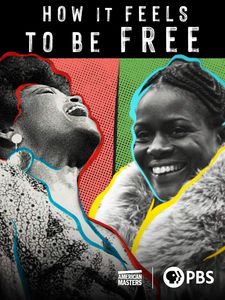
    How it Feels to be Free (2021)

    (On TV, January 2021) One of the unexpected benefits of a deep dive in Hollywood history is knowing what people are talking about when they bring up half-forgotten, underappreciated or ill-served artists of the past. When How it Feels to be Free set out to shine a spotlight on six black female entertainers of previous generations, I was on semi-solid ground: I don’t need to be told about Lena Horne, Nina Simone and Pam Grier’s greatness, and I was at least able to nod in recognition at the praise for Abbey Lincoln, Diahann Carroll and Cicely Tyson. Six homages in two hours is a lot, but director Yoruba Richen manages to be both specific and sweeping, talking directly about each one of its six entertainers and still using them as a group to make larger points about discrimination, representation and inspiration. Historical footage is blended with contemporary interviews with a decent roster of stars (Halle Berry, Lena Waithe, Samuel L. Jackson, Lena Waithe, co-producer Alicia Keys, etc.) and heirs. Part of the reason to watch the film is getting a reminder about why these women were so fantastic, part of it is digging deeper into some biographies and discovering equally great people (including getting a crash course in Lincoln’s activism, Carroll’s groundbreaking work in TV and Tyson’s own brand of race-aware role selection). The film works itself up to a powerful argument in favour of diversity on the production side of the entertainment world, pointing out that some stories will never be told accurately if they don’t come from those different perspectives. I enjoyed the result quite a bit, and not just in the scope of the film itself: In between watching How it Feels to be Free and writing this review, Cicely Tyson died and the loss hit me harder than merely being told that she was the star of Sounder. It was important to capture why she was remarkable that before it was too late.

  • Sounder (1972)

    Sounder (1972)

    (On Cable TV, April 2019) It’s unfair to compare a wholesome family drama like Sounder to the blaxploitation movement of the early 1970s … or is it? At a time when (white) studio producers were consciously trying to appeal to black audiences, the obvious play was to go for gritty urban stories that could empower black audiences and bring in white moviegoers. It wasn’t as obvious to make a wholesome family movie taking place in 1933 rural Louisiana, detailing the struggles of a poor family on a hardscrabble farm trying to keep it together after the father is imprisoned for stealing much-needed food. The mood of this Martin Ritt-directed film is calm, loving, triumphant over quotidian struggles. It’s a film that openly preaches for the value of education and kinship as a way to climb out of poverty, uniting against misfortune, racism and adverse circumstances. Even modern audiences will find much to appreciate in its honest appraisal about the impact of incarceration on families: you could show Sounder alongside other more modern films without feeling out of place. While nominated for a Best Picture Academy Award, Sounder is now most likely remembered as a footnote, except when discussing the history of black-themed movies (thank you TCM for showing it), which seems regrettable considering how inspiring the film can be. It also features career-best performances from Cicely Tyson and Paul Winfield. It’s also quite optimistic in its own way: Unusually for a drama that plays so much emphasis on the family dog (whose name is the film’s title), it doesn’t even die at the end!