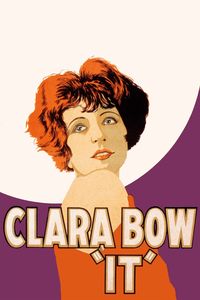
Clara Bow

  • It (1927)

    It (1927)

    (On Cable TV, October 2020) Awareness is knowing that an It Girl refers to the starlet of the moment—the one who may develop into a major talent. Knowledge is knowing that the expression derives from the 1927 film, and originally referred to Clara Bow. Expertise is seeing the film and realizing that the “It” of the title is that elusive magnetism that some people have and some don’t… which brings us closer to the more familiar definition. Sometimes called the first concept film, It adapted a then-popular novella by Elinor Glyn (who shows up briefly in the film, as characters comment on her magazine piece) to take advantage of cross-market popularity. The story isn’t all that complex, as it features a rich man falling for an attractive shopgirl and dealing with the social complications that this entails. But the story is far less important than, well, the It girl herself—Even nearly a century later, Clara Bow remains an incredibly striking presence, one that (with a more modern haircut) would still get heads turning today. (Ironically, she would retire six years after It, and spend the rest of her life away from Hollywood.) As a romantic comedy, It is serviceable, but it’s best seen as a splendid illustration of the power of personal magnetism—any film that features charisma as its central narrative hook must have a star that can follow through, and Clara Bow was indeed the It Girl of the time.

  • Wings (1927)

    Wings (1927)

    (On Cable TV, February 2018) Given Wings’ place in history as “The First Oscar-Winning Picture” (Lies! It tied with Sunrise, no matter what the Academy now says!), you could be forgiven to think that it would be a stuffy silent picture. The reality is that, proudly establishing the Oscar tradition, it’s a big-budget crowd pleaser of the first order, following three characters in war until the tear-jerking moment that makes it all worthwhile. Epic in length (the dialogue cards not helping, it’s nearly two-and-a-half-hours long) and spectacular in its depiction of WWI air combat, Wings still works rather well as a war movie. The narrative strings are familiar (hmmm, maybe “timeless” is a better word here) and the film, even in the late twenties, knew well enough to include a romantic triangle in the middle of its war story. Richard Arlen and Charles Rogers star as the airmen (with a short appearance by Gary Cooper), but the real star here is the original “It girl” Clara Bow, still remarkably fetching even ninety years later. There are a number of highlights to the movie—the air sequences are surprisingly good (much of the footage was actually shot from the cockpit), and there’s an impressive infantry sequence with plenty of perceived danger. Director William A. Wellman also gets a few choice shots on the ground as well—the Paris bar sequence is good enough to be emulated even today (viz; The Last Jedi’s similar glide through a gambling joint) and the special-effects-driven “bubbles” interlude marks an impressionistic moment in an otherwise well-grounded film. Reading about the film, it seems almost incredible that Wings (one of the first Oscar winners!) was for decades regarded as “a lost film” until it was found again in 1992. Now safely remastered in high resolution, it looks brilliant and further reinforces the idea that we’re living in a golden age of movie-watching, being able to see movies that even our parents and grandparents couldn’t see. I won’t try to claim that Wings is essential viewing for contemporary audiences (even my patience was tested by the running time), but it’s far more interesting than I expected from digging so deep in the Oscar archives.