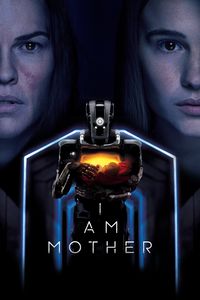
I Am Mother (2019)
(Netflix Streaming, December 2020) While, in theory, I’m a strong proponent of complex science fiction narratives in movies, and while I’m not averse to dark stories, and while I’m a not-so-recovered former film critic for a Science Fiction magazine who kept bemoaning the pap that Hollywood churned out, there is something that’s keeping me from liking I Am Mother as much as I should. It starts promisingly enough, with a robot bringing up an embryo as a daughter, in a bunker clearly sealed off from a post-apocalyptic landscape. But there’s only so much mileage you can make out of that restrained premise, and before long the darker nature of the script comes into focus as a survivor from outside (Hilary Swank!) comes knocking at the door, and the robot demonstrates highly Machiavellian traits. The narrative gets darker as it goes along, with the expected evidence of previous child-rearing attempts and complex power games between human and robot. I think that most of my objections to the film have to do with a lack of disbelief in its premise – at regular intervals, I found myself second-guessing the basic assumptions of the film, its direction, its means or its justifications. That is not how to have a healthy film/audience relationship, but I am Mother never managed to win me over. As it trekked over its recovering post-apocalyptic landscape, I kept glancing aside at story paths not taken, at more optimistic viewpoints and at ways the film could have been more compelling. Oh, it’s skillfully put together: the special effects are fantastic for a mid-to-low-budget Australian production, Clara Rugaard is quite good in the lead role and there are plenty of ideas scattered around. But I was simply never on board with what the film tried to do, no matter how much I wanted to.